
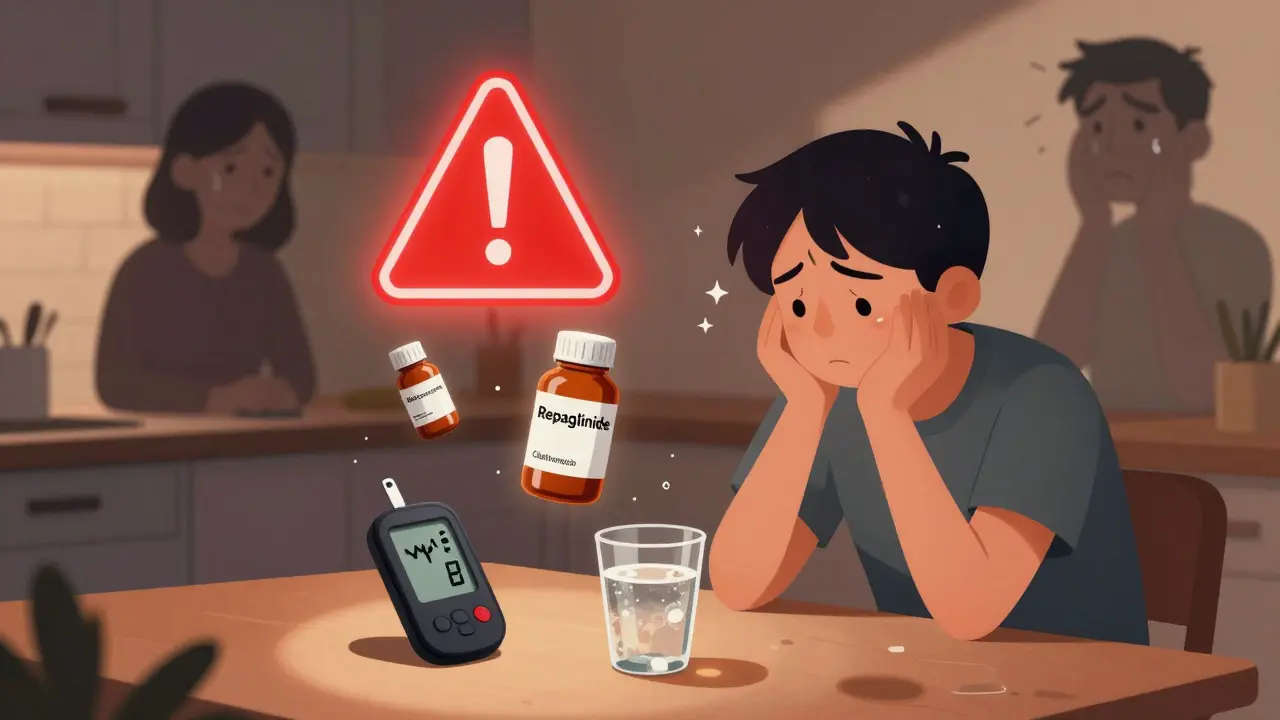
When you're managing diabetes, taking the right medications is only half the battle. The real danger often comes from what happens when those drugs mix with others-some you might not even think of as risky. A simple cold medicine, an antibiotic, or even a steroid for inflammation can throw your blood sugar out of whack in ways that are hard to predict. And unlike side effects you can feel right away, these interactions often sneak up on you until your glucose levels spike or crash. The American Diabetes Association updated its 2025 Standards of Care to warn that some drug combinations aren't just risky-they're dangerous.
Why Some Diabetes Drugs Don't Play Well Together
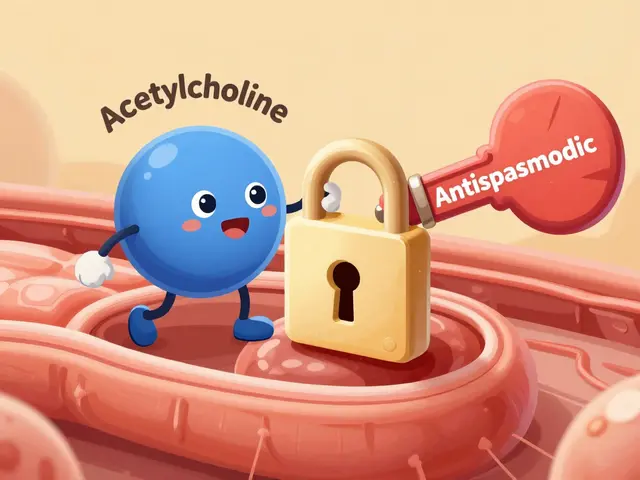
Not all diabetes medications work the same way. Some force your pancreas to make more insulin. Others help your body use insulin better. A few block sugar from being reabsorbed in your kidneys. But when you stack them with other drugs, things get messy. The biggest culprits are medications that interfere with liver enzymes, especially CYP3A4, CYP2C8, and CYP2C9. These enzymes break down many diabetes drugs. If another drug slows them down, your diabetes medication builds up in your system-and that can mean too much insulin, too fast.Take repaglinide, for example. It’s a meglitinide, a fast-acting insulin booster. If you take it with ketoconazole (an antifungal) or clarithromycin (an antibiotic), your body can’t clear repaglinide properly. Blood sugar plummets. There have been real cases of patients ending up in the ER with confusion, sweating, and shaking-all because of a routine prescription they didn’t realize could interact.
Nateglinide, another meglitinide, is mostly broken down by CYP2C9. That means drugs like fluconazole (a common yeast infection treatment) or sulfa antibiotics can do the same thing. The risk isn’t theoretical. A 2023 study in the Journal of Clinical Endocrinology & Metabolism found that patients on nateglinide plus CYP2C9 inhibitors had hypoglycemic episodes 3.7 times more often than those on other combinations.
Insulin and Rosiglitazone: A Dangerous Duo
Insulin is powerful. It lowers blood sugar fast. But when you pair it with rosiglitazone (a thiazolidinedione), you’re asking for trouble. Rosiglitazone makes your body more sensitive to insulin. That sounds good, right? But it also causes fluid retention. Add insulin’s tendency to promote sodium retention, and you get swelling in the legs, shortness of breath, and sometimes heart failure. The FDA restricted rosiglitazone in 2010, and since then, most guidelines have outright discouraged combining it with insulin. Yet, some patients still get this combo-often because their provider didn’t realize how strong the interaction is.One patient in her late 60s, diagnosed with type 2 diabetes, was prescribed insulin for high fasting glucose. Two months later, she was admitted with worsening edema. Her doctor had added rosiglitazone to “help with insulin resistance.” Her weight had gone up 14 pounds in six weeks. Her ejection fraction dropped from 55% to 38%. That’s not just a side effect-it’s a medical emergency.
What About the Newer Drugs?
The good news? The newer classes of diabetes drugs are much safer when mixed with other medications. GLP-1 receptor agonists (like semaglutide or liraglutide) and SGLT-2 inhibitors (like empagliflozin or dapagliflozin) don’t rely heavily on liver enzymes to be processed. They work in the gut or kidneys, and they’re less likely to interfere with other drugs. That’s why the ADA now recommends combining a GLP-1 RA with insulin instead of using insulin alone. It’s not just about better blood sugar control-it’s about reducing low blood sugar episodes by 40% compared to insulin-only regimens.Even better, GLP-1 RAs and SGLT-2 inhibitors don’t increase the risk of hypoglycemia on their own. That makes them ideal partners for other medications. You can safely add them to metformin, sulfonylureas (with caution), or even insulin if needed. They also have side effects that help-weight loss, lower blood pressure, heart and kidney protection. That’s why many doctors now start with one of these before adding older drugs.

Surprising Triggers: Non-Diabetes Drugs That Mess With Blood Sugar
You might not think of a steroid for your arthritis or a diuretic for high blood pressure as diabetes risks. But they are. Corticosteroids like prednisone trigger the liver to pump out more glucose. If you’re on insulin or sulfonylureas, your body can’t keep up. Blood sugar soars. Some patients need to double their insulin dose for a few days after starting steroids. And if they don’t monitor closely, they risk diabetic ketoacidosis.Then there’s quinine. Yes, the stuff in tonic water. It’s been used for leg cramps, and it can cause severe hypoglycemia-even in people without diabetes. If you’re on a sulfonylurea like glyburide, quinine can make your blood sugar drop dangerously low. The FDA issued a warning in 2018 after multiple hospitalizations. Even one glass of tonic water every night could be enough to tip the balance.
And don’t forget about beta-blockers. They mask the symptoms of low blood sugar-tremors, rapid heartbeat, sweating. So you might not feel it coming until you’re dizzy or confused. That’s why doctors often avoid giving beta-blockers to people with frequent hypoglycemia. If you need one for high blood pressure, your doctor should pick one that doesn’t hide symptoms, like carvedilol or nebivolol.
What You Should Never Combine
There are a few combinations the ADA explicitly warns against:- DPP-4 inhibitors with GLP-1 receptor agonists-They do the same thing. Taking both is pointless and increases side effects like nausea and pancreatitis without added benefit.
- Insulin with rosiglitazone-As explained, this raises heart failure risk.
- Meglitinides with strong CYP3A4 or CYP2C8 inhibitors-This includes azole antifungals (ketoconazole, itraconazole), macrolide antibiotics (clarithromycin, erythromycin), and some HIV drugs.
- Metformin with contrast dye for CT scans-This can cause lactic acidosis in people with kidney issues. You must stop metformin 48 hours before and after the scan.
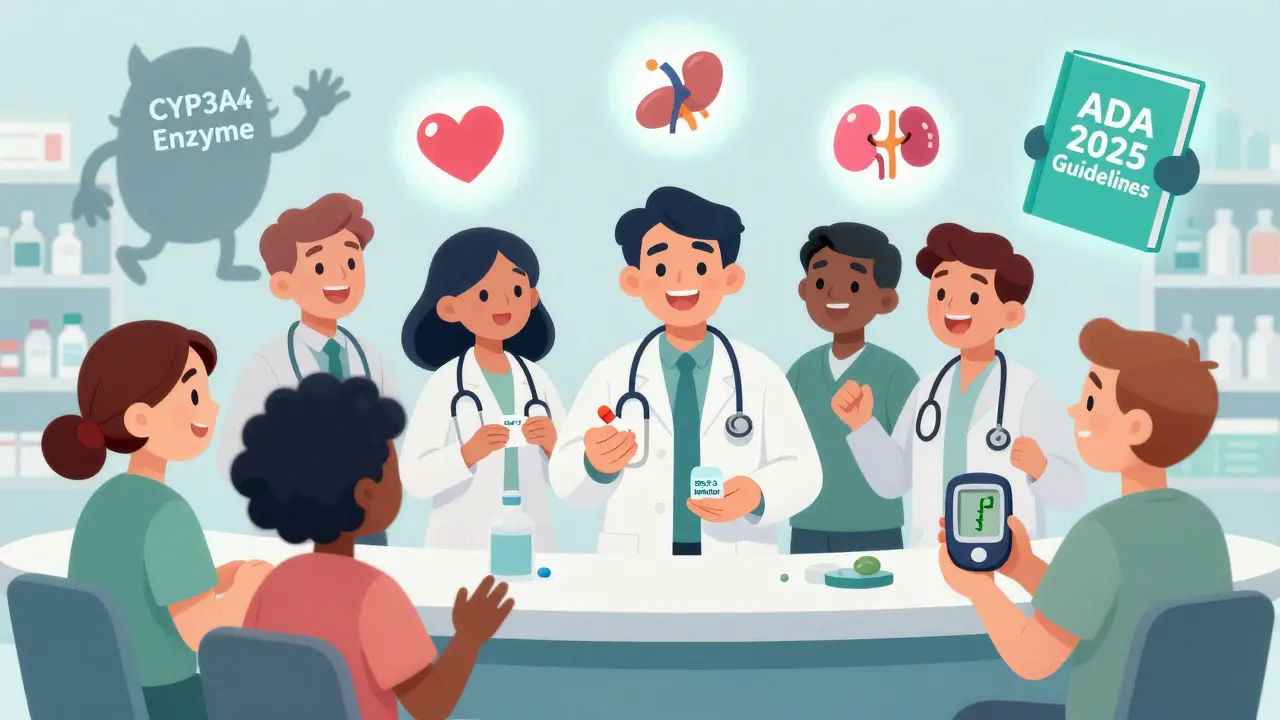
How to Stay Safe
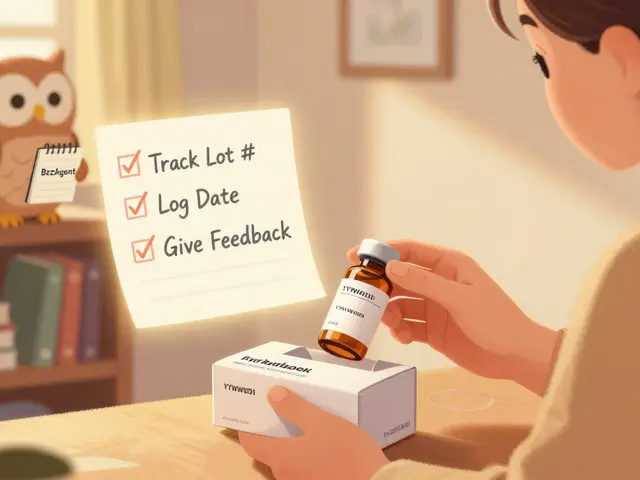
The best defense? Know your meds and track your blood sugar.- Always tell your doctor and pharmacist every medication you take-including over-the-counter pills, supplements, and herbal remedies.
- Keep a written list of your drugs and why you take them. Update it every time something changes.
- Check your blood sugar more often when starting a new drug, especially antibiotics, steroids, or pain relievers.
- Learn the signs of low blood sugar: sweating, shaking, dizziness, hunger, confusion. If you’re on a drug that masks these (like a beta-blocker), ask your doctor about alternatives.
- Use a glucose meter that logs trends. If your numbers start drifting without a clear reason, talk to your provider. It might be a hidden interaction.
There’s no magic bullet. But with awareness, you can avoid the traps. Most dangerous interactions are preventable if you’re informed. Don’t assume your doctor knows every interaction-many aren’t even listed in standard drug guides. You’re your own best advocate.
What About Supplements and Herbal Products?
They’re not safe just because they’re natural. St. John’s Wort, for example, speeds up the breakdown of many diabetes drugs, making them less effective. That can lead to high blood sugar without warning. On the flip side, garlic, ginseng, and fenugreek can lower blood sugar. If you’re on insulin or sulfonylureas, adding these can push you into hypoglycemia. Always mention supplements to your provider-even if you think they’re harmless.What’s Next?
Research is moving fast. Scientists are now studying how drug transporters like P-glycoprotein affect DPP-4 inhibitors. These are the pumps that move drugs in and out of cells. If a new antibiotic blocks them, it could change how your diabetes drug works-even if it doesn’t touch liver enzymes. That’s why future guidelines will likely include more transporter-based warnings.For now, stick to the basics: know your drugs, track your numbers, and speak up. Your life depends on it-not just the medication you take, but how you take it.
Can I take over-the-counter painkillers with my diabetes medication?
Most NSAIDs like ibuprofen or naproxen are generally safe with diabetes drugs, but they can affect kidney function-especially if you’re on metformin. If you have kidney issues, avoid long-term use. Acetaminophen is usually the safer choice. Always check with your pharmacist before taking any OTC pain reliever, especially if you’re on multiple medications.
Is it safe to combine GLP-1 RAs with insulin?
Yes, and it’s often recommended. Combining GLP-1 receptor agonists with insulin lowers blood sugar more effectively than insulin alone-and with fewer low blood sugar episodes. Studies show a 30-40% reduction in hypoglycemia risk. Weight loss and heart protection are added benefits. This is now a standard approach in newer treatment guidelines.
Why can’t I take two different DPP-4 inhibitors together?
DPP-4 inhibitors all work the same way: they block an enzyme that breaks down GLP-1, a hormone that helps lower blood sugar. Taking two of them doesn’t make the effect stronger-it just increases side effects like nausea, diarrhea, and pancreatitis risk without any added benefit. The American Diabetes Association explicitly advises against this combination.
Can antibiotics cause low blood sugar in diabetics?
Yes, especially certain types. Macrolides like clarithromycin and azole antifungals like ketoconazole can cause severe hypoglycemia when taken with meglitinides (repaglinide, nateglinide) or sulfonylureas. This isn’t rare-it’s been documented in multiple case reports. Always ask your pharmacist if a new antibiotic could interact with your diabetes meds.
Do I need to stop metformin before a CT scan?
Yes-if the scan uses iodinated contrast dye. This dye can temporarily impair kidney function, and metformin builds up in the body if your kidneys aren’t working well. That raises the risk of lactic acidosis, a rare but life-threatening condition. Your doctor will tell you to stop metformin 48 hours before the scan and not restart until 48 hours after, once kidney function is confirmed normal.

Lyle Whyatt
February 8, 2026 AT 21:26Man, this post is a godsend. I’ve been on metformin and Januvia for years, and last winter I got prescribed clarithromycin for a sinus infection. Didn’t think twice-until I started sweating buckets at 3 a.m. and my glucose dropped to 48. ER visit. They said I was lucky I didn’t pass out driving. Never take antibiotics without asking your pharmacist about interactions anymore. This stuff isn’t theoretical-it’s life-or-death.
And honestly? Most doctors don’t even know the full list. I had to Google CYP3A4 inhibitors after my pharmacist flagged it. If you’re diabetic, you’re your own best advocate. Period.
Random Guy
February 9, 2026 AT 22:15bro i took tylenol with my metformin and my sugar went from 120 to 380 in 2 hours. what the actual f
Tatiana Barbosa
February 10, 2026 AT 14:36So many people think diabetes is just about insulin and sugar. Nah. It’s a whole system. The liver, the kidneys, the gut, the enzymes-they’re all talking to each other, and one wrong drug can throw off the whole conversation.
GLP-1 RAs? Game-changer. I switched from sulfonylureas to semaglutide + metformin last year. No more 3 a.m. panic attacks from low blood sugar. Lost 22 lbs. My BP dropped. My A1C went from 8.2 to 5.9. And I didn’t even try hard.
But here’s the kicker: people still get prescribed insulin + rosiglitazone. Like, in 2024? That’s like prescribing cigarettes for asthma. I’ve seen it. A 68-year-old woman with 30 lbs of fluid retention. Heart failure. All because someone thought ‘more insulin sensitivity = better.’ No. It’s a trap.
And don’t even get me started on St. John’s Wort. My cousin took it for ‘anxiety’ and her metformin stopped working. Her sugars went nuts. She thought it was ‘just natural.’ Natural doesn’t mean safe. It means unregulated. And unregulated = dangerous.
Know your meds. Track your numbers. Talk to your pharmacist. They’re the real MVPs.
Susan Kwan
February 11, 2026 AT 05:31Of course the ADA updated guidelines. Took them long enough. I’ve been telling my endo for years that clarithromycin + repaglinide is a death combo. He said ‘it’s rare.’ Turns out, it’s not rare. It’s just ignored.
Also-beta-blockers. Yeah. I’m on nebivolol. Because my doc actually listened. The others? They just shrug and say ‘it’s fine.’ It’s not fine. You can die without knowing you’re dying.
Brandon Osborne
February 11, 2026 AT 10:06You people are overreacting. I’ve been on insulin for 15 years. I take ibuprofen, NyQuil, even Sudafed. Nothing happened. You’re all just scared of medicine. Maybe if you stopped obsessing over every little pill, you’d live longer.
Also, GLP-1 drugs are expensive. Not everyone can afford them. So stop acting like everyone should just upgrade their meds like it’s a smartphone.
Real talk: diabetes is hard. But you don’t need to turn every OTC drug into a villain.
John McDonald
February 11, 2026 AT 14:11Brandon, you’re missing the point. This isn’t about fear-it’s about awareness. I’m on glimepiride. Took azithromycin last year for bronchitis. Didn’t check. Woke up at 4 a.m. shaking, confused, slurring words. Thought I was having a stroke. Turned out, it was hypoglycemia. Took 20 minutes to get sugar into me. My wife called 911.
Now I have a list. On my fridge. Next to my meter. Every new med? I check it. I text my pharmacist. It takes 2 minutes.
You don’t have to be scared. Just be smart.
Tom Forwood
February 13, 2026 AT 00:07Y’all gotta stop treating diabetes like it’s a solo sport. It’s a team sport. You got your doc, your pharmacist, your meter, your journal, your family, your weird aunt who swears by apple cider vinegar.
Here’s the thing: the real danger isn’t the drugs. It’s the silence. People don’t tell their doctors about the turmeric capsules they take. Or the ginseng tea. Or the ‘natural’ sleep aid that’s actually melatonin + valerian root.
I’ve seen patients crash because they thought ‘it’s just a supplement.’
Bottom line: if it’s not FDA-approved for diabetes, it still affects your diabetes. Always speak up. Always ask. Always log.
Jacob den Hollander
February 13, 2026 AT 19:15Just want to say-thank you for this. I’m 42, type 2, on metformin and a GLP-1. My mom had type 1. She died because no one told her prednisone could spike her sugars so fast. She was in the hospital for pneumonia. Got steroids. Didn’t adjust insulin. Went into DKA. They found her unconscious.
That’s why I track everything. Every. Single. Pill. Even the ones I get at the gas station. I screenshot my meds list and send it to my pharmacist every time something changes.
You think this is overkill? No. This is survival.
Elan Ricarte
February 15, 2026 AT 09:10Let’s be real: the pharmaceutical industry doesn’t want you to know how many of these interactions exist. Why? Because if you knew, you’d stop taking half your meds. And they’d lose billions.
They slap ‘may interact’ on a label like it’s a warning sticker on a toaster. Nah. It’s a landmine.
And don’t get me started on how they market insulin + TZDs like it’s a ‘synergistic combo.’ Synergistic? More like ‘synergistic heart failure.’
Also-why is quinine still in tonic water? It’s literally a blood sugar assassin. But hey, it makes your gin and tonic taste nice. Priorities, right?
Ashlyn Ellison
February 15, 2026 AT 21:48My doctor told me to stop metformin before my CT. I didn’t. I thought it was overkill. Got lactic acidosis. ICU for 3 days. Don’t be me.
Tori Thenazi
February 16, 2026 AT 01:42Have you heard about the new FDA alert? It’s not just CYP enzymes. It’s the P-glycoprotein transporters. They’re like the bouncers at the club. If a new drug blocks them, your diabetes med can’t get into the cell. So you think it’s working… but it’s not. And you’re not told. This is why diabetes deaths are rising. It’s a cover-up. Big Pharma knows. Your doctor doesn’t. I read the raw data. It’s terrifying.
Angie Datuin
February 17, 2026 AT 22:42Thanks for sharing this. I’m on insulin and just started amoxicillin. I’ve been checking my sugars every 2 hours. It’s a lot of work, but better than the ER.
Camille Hall
February 19, 2026 AT 09:25GLP-1s changed my life. No more hypoglycemia. No more midnight panic. I’m not just managing diabetes-I’m living again. And yeah, they’re pricey. But I’d rather pay $800 a month than $800,000 in hospital bills.
Also-tell your doctor if you drink tonic water. I didn’t. Thought it was ‘just soda.’ Now I know. One glass = 100 mg of quinine. That’s enough to make sulfonylureas dangerous. I’m switching to seltzer.
John Watts
February 21, 2026 AT 01:26Biggest takeaway: you don’t need to be a scientist to stay safe. Just be consistent.
1. Keep a list.
2. Update it.
3. Ask your pharmacist before taking anything new.
4. Check your sugar when you start a new med.
That’s it. No magic. Just discipline. And yeah, it’s annoying. But so is being in the hospital.
Randy Harkins
February 21, 2026 AT 07:46Thank you for writing this. 🙏 I’ve been on Januvia and metformin for 4 years. Just got a new Rx for azithromycin. Checked the interaction checker. Boom. Red flag. Called my pharmacist. She said, ‘Skip it. Try amoxicillin instead.’ I did. No issues.
You’re not paranoid if you’re alive. 💪