
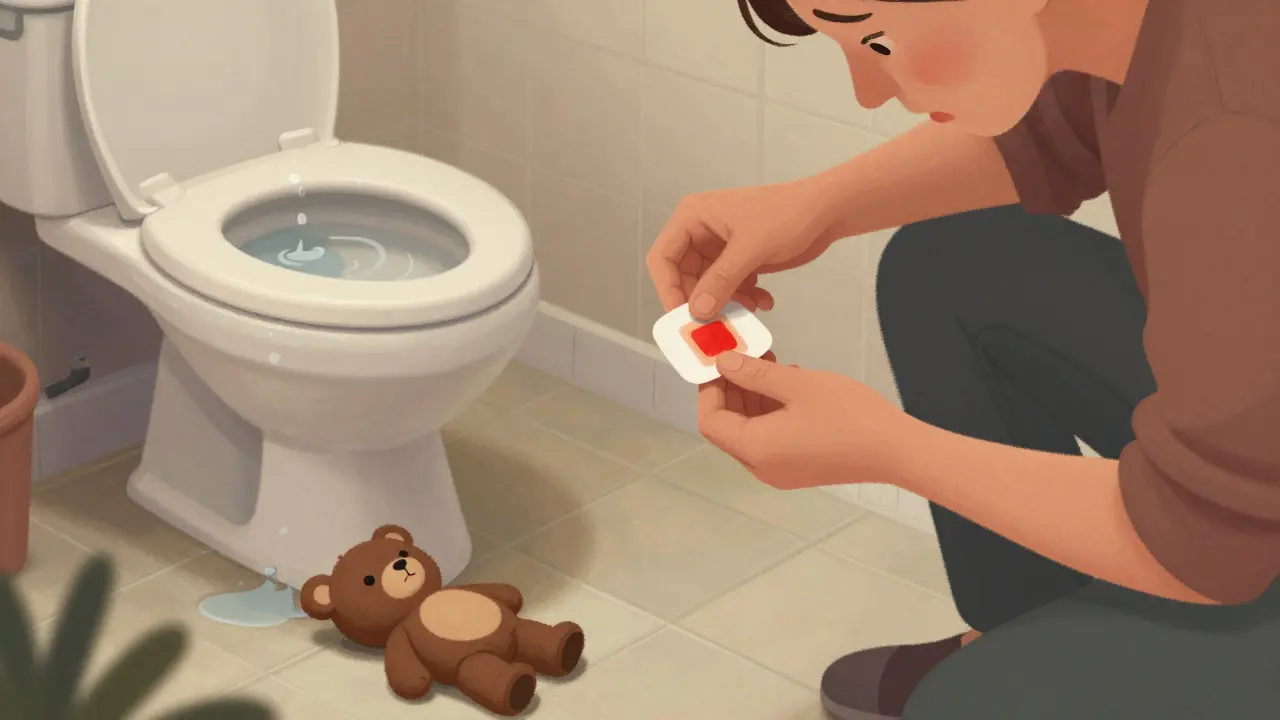
Most people think flushing old pills down the toilet is a quick fix. But it’s not. In fact, for nearly every medication you have sitting in your bathroom cabinet, flushing is the worst thing you can do. It pollutes waterways, harms aquatic life, and often doesn’t even remove the drug from the system. So why does the FDA even have a list of medications you’re allowed to flush?
There’s a very short list - and it’s only for emergencies
The FDA doesn’t encourage flushing. Not even close. Their official guidance says: use a drug take-back program first. Always. But there’s a tiny exception - a list of 15 active ingredients that are so dangerous, the risk of someone accidentally overdosing on them outweighs the environmental harm of flushing. These aren’t your everyday painkillers or antidepressants. These are drugs that can kill a child or pet with one dose.If you have one of these medications and you can’t get to a take-back site, flushing is the last-resort option. Not because it’s safe for the environment - but because it’s safer for your family.
What’s on the FDA Flush List (2024 Update)
The list hasn’t changed much since 2023, but it’s tighter than ever. Here’s what’s included:- Buprenorphine - found in SUBOXONE, BELBUCA, BUTRANS, ZUBSOLV
- Fentanyl - ABSTRAL, ACTIQ, DURAGESIC patches, FENTORA, ONSOLIS
- Hydromorphone - EXALGO extended-release tablets
- Meperidine - DEMEROL
- Methadone - DOLOPHINE, METHADOSE
- Morphine - ARYMO ER, AVINZA, EMBEDA, KADIAN, MORPHABOND ER, MS CONTIN, ORAMPH SR
- Oxymorphone - OPANA, OPANA ER
- Tapentadol - NUCYNTA, NUCYNTA ER
- Sodium oxybate - XYREM, XYWAV
- Diazepam rectal gel - DIASTAT, DIASTAT ACUDIAL
- Methylphenidate transdermal system - DAYTRANA
That’s it. Only these. No ibuprofen. No Zoloft. No metformin. No Adderall. If it’s not on this list, don’t flush it. Not even once.
Why these drugs? The real danger isn’t addiction - it’s accidental exposure
People assume the FDA picked these because they’re addictive. That’s not the main reason. The real issue is how quickly they can kill someone who didn’t mean to take them.A single fentanyl patch - the kind used for chronic pain - contains enough drug to kill two adults. In 2022, the FDA recorded 217 accidental exposures in children under 12. Nine of them died. In most cases, the drug came from a trash can, not a medicine cabinet. A child finds a patch, thinks it’s a sticker, and sticks it to their skin. Within minutes, they’re unresponsive.
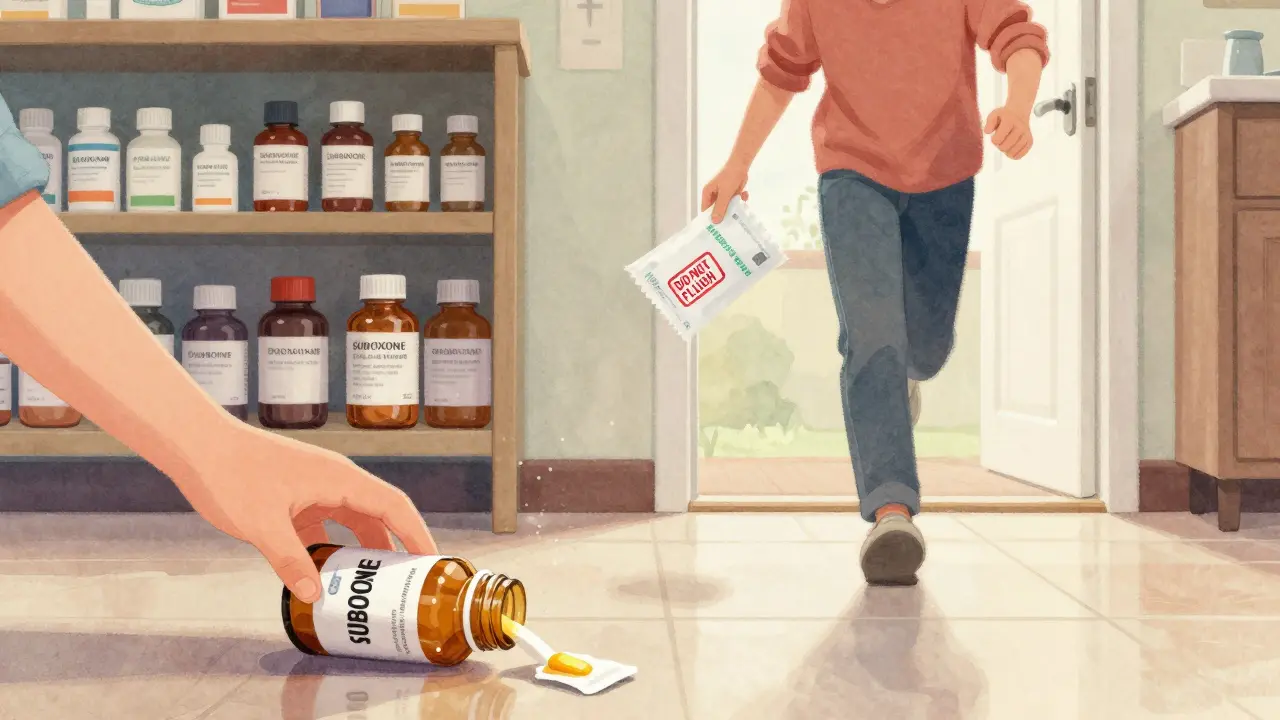
Same with buprenorphine. It’s used to treat opioid addiction - but if a toddler gets into a bottle of SUBOXONE strips, it can shut down their breathing. Methadone? One tablet can stop a child’s heart. These aren’t drugs you want lying around in a house with kids, pets, or even curious teens.
That’s why the FDA says: if you can’t get to a take-back site, and you’re worried someone might find it - flush it. It’s not ideal. But it’s better than a funeral.
How to flush correctly - step by step
Flushing isn’t just dumping pills in the toilet. There’s a right way - and a wrong way.- Check the label - Look for the FDA Flush List on the packaging or the FDA website. If it’s not listed, don’t flush.
- Confirm take-back options first - Use the DEA’s Take-Back Locator to find the nearest drop-off site. Many pharmacies, police stations, and hospitals offer year-round collection.
- Only flush if no other option exists - If you live in a rural area with no take-back site within 50 miles, and you’re worried about access, then flushing is your safety net.
- For patches: fold them first - Fentanyl, buprenorphine, and DAYTRANA patches must be folded in half with the sticky sides together. This prevents accidental skin contact and reduces environmental leaching.
- Flush immediately - Don’t store the pill or patch. Don’t wait. Flush it right away.
- Remove personal info - Before tossing the empty bottle or box in the trash, scratch off your name, prescription number, and dosage. Identity theft risks are real.
What happens if you flush something that’s not on the list?
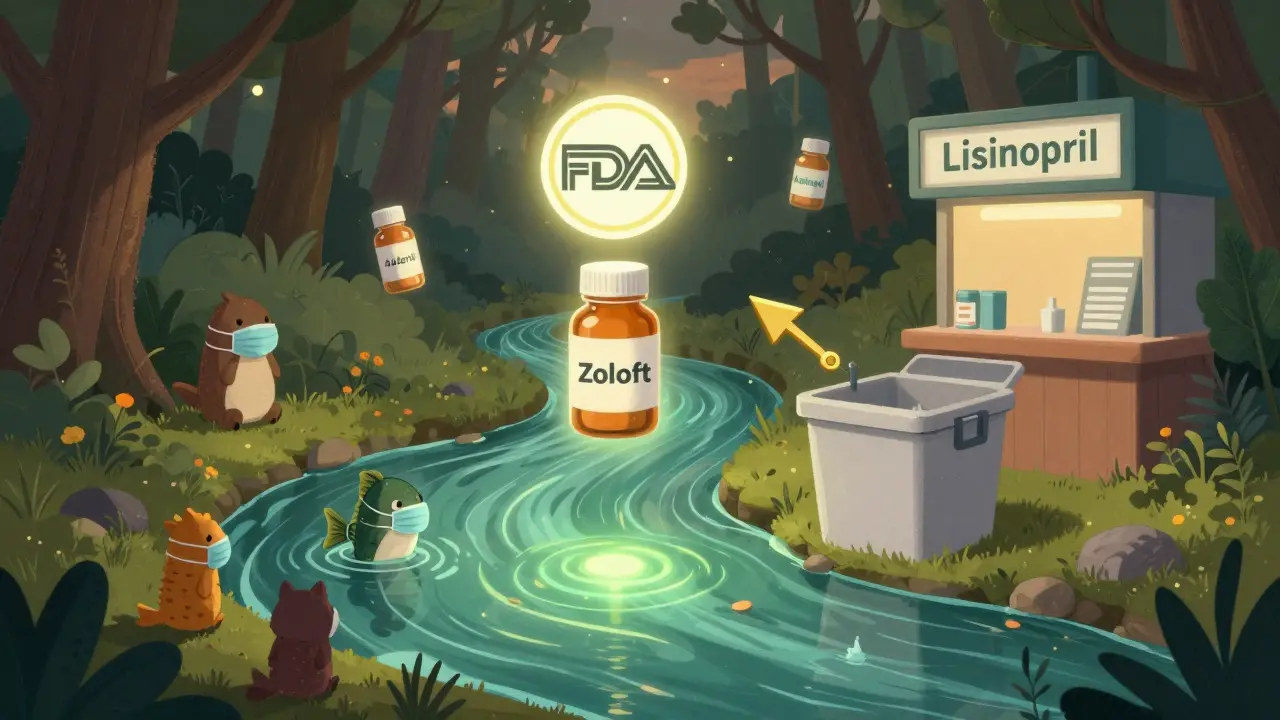
You’re not just breaking a rule - you’re contributing to a growing environmental problem. The EPA estimates that over 90% of pharmaceuticals in waterways come from household flushing and sink disposal. Even tiny amounts can disrupt fish reproduction, alter behavior in aquatic life, and build up in the food chain.And here’s the kicker: flushing non-listed drugs doesn’t even solve the safety problem. Most wastewater treatment plants can’t remove these chemicals. So if you flush your Xanax or lisinopril, it ends up in rivers, lakes, and even drinking water - while still being accessible to anyone who rummages through your trash.
There’s no benefit. Only risk.
What to do instead (the real solution)
The best way to dispose of any medication - even those on the flush list - is through a take-back program. There are over 12,000 authorized collection sites across the U.S. Many are open year-round. Some are even in grocery stores or pharmacies.Need to find one? Go to the DEA’s website. Search by zip code. You’ll find locations near you. If you’re in a rural area, check with your local pharmacy. Many now offer prepaid mail-back envelopes for free.
And if you can’t get to a site? For medications not on the flush list, mix them with something unappealing - coffee grounds, cat litter, dirt - put them in a sealed container, and toss them in the trash. Don’t crush pills. Don’t dissolve them. Just hide them. That’s enough to deter a curious child or pet.
Why this list keeps changing
The FDA doesn’t add drugs lightly. In 2021, they removed 11 medications from the list because safer formulations became available. For example, newer extended-release opioids now come with abuse-deterrent coatings that make them harder to crush or dissolve. That reduces the risk of accidental overdose - so they no longer need to be flushed.But they’re also watching for new threats. In early 2024, the FDA announced they’re reviewing whether to add new transdermal patches - like buprenorphine patches - to the list after 17 cases of accidental exposure in children last year. They’re also evaluating whether any current drugs can be removed based on improved safety features.
This isn’t static. It’s science-driven. And it’s constantly evolving.
What about pharmacies and hospitals?
They can’t flush anything. Ever. Under EPA rules, healthcare facilities must treat pharmaceutical waste as hazardous material. They’re required to use licensed disposal companies. Flushing is illegal for them. That’s why you’ll never see a hospital throwing pills down the drain.It’s a double standard - but it’s intentional. Households are the only place where accidental exposure is a real, immediate threat. Institutions have protocols. Homes don’t.
How many people actually know this?
Not many. A 2023 survey by the National Community Pharmacists Association found that 67% of Americans didn’t know how to properly dispose of medications. Over 40% admitted to flushing pills that weren’t on the FDA list.And it’s not just ignorance. Many people are scared. They’ve heard stories of loved ones overdosing. They don’t trust take-back programs. They think flushing is the only way to make sure the drugs are gone.
That’s why education matters. Every time you talk to a friend, neighbor, or family member about this - you might be saving a life.
Final reminder: Flush only if you must
The FDA’s Flush List isn’t a permission slip. It’s a safety net. It exists because some drugs are so deadly, the risk of keeping them in the house is greater than the risk of flushing them.But for 99% of medications you own - flushing is never the answer. Take-back programs are free, safe, and widely available. If you’re unsure, call your pharmacy. They’ll tell you what to do.
Don’t guess. Don’t assume. Don’t flush unless it’s on the list - and you have no other option.


Jodi Harding
January 17, 2026 AT 12:25My cousin’s 3-year-old found one in the trash. He’s lucky he’s alive.
Danny Gray
January 19, 2026 AT 07:44Meanwhile, your toilet’s probably full of microplastics from your ‘eco-friendly’ toothbrush. Priorities, people.
Tyler Myers
January 19, 2026 AT 11:15Who benefits? The same companies that made the drugs. The same ones who lobbied to keep take-back sites scarce. You think this is about safety? It’s about control. And they’re using your fear to keep you docile.
They don’t want you to know you can sue them. They don’t want you to know your water’s already poisoned by their chemicals. Flushing is just the latest PR stunt to make you feel like you’re doing something.
Zoe Brooks
January 20, 2026 AT 04:38We need more of this info. Not just for safety - for peace of mind. 💙
Kristin Dailey
January 20, 2026 AT 07:35Wendy Claughton
January 22, 2026 AT 04:47Also, the DEA locator link? Saved my life. Found one 2 miles away. I’m going tomorrow.
Stacey Marsengill
January 23, 2026 AT 10:24They don’t care about your child. They care about liability. And your compliance.
That’s why they gave you a list. So you’d stop asking questions.
Aysha Siera
January 23, 2026 AT 22:00rachel bellet
January 24, 2026 AT 15:16Pat Dean
January 26, 2026 AT 13:12Don’t flush. Don’t drop off. Burn them. In your backyard. Make them disappear. No trace. No paper trail. No corporate control.
Jay Clarke
January 28, 2026 AT 13:11So I flushed it. And I cried. And I didn’t feel guilty. Because I wasn’t trying to save the planet. I was trying to save my sanity.
Selina Warren
January 28, 2026 AT 20:34