
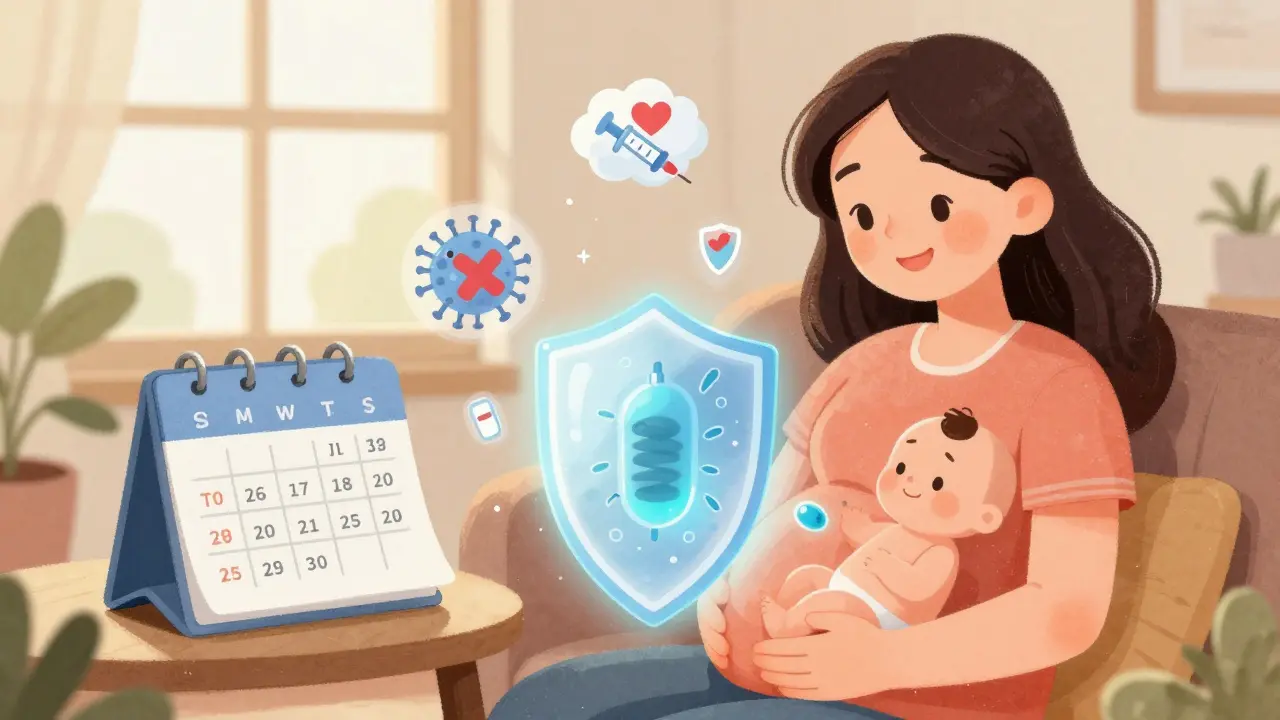
When you’re pregnant, every decision feels bigger. What you eat, what you take, even the temperature of your coffee - it all matters. And when it comes to vaccines, confusion is common. Are they safe? When should you get them? Will they protect your baby, or put them at risk? The answers aren’t complicated, but they’re often buried under outdated myths and fear-based rumors. The truth is, vaccines during pregnancy aren’t just safe - they’re one of the most powerful tools you have to protect both yourself and your newborn.
Why Vaccines Matter During Pregnancy
Your immune system changes during pregnancy. It doesn’t shut down, but it does shift. That’s normal. But it also means you’re more vulnerable to certain infections. A bad case of the flu, whooping cough, or even COVID-19 can lead to serious complications - preterm labor, hospitalization, or worse. And your baby? They’re not born with protection against these diseases. Their own immune system won’t be ready to fight them off until they’re months old. That’s where vaccines come in. When you get vaccinated while pregnant, your body makes antibodies. Those antibodies cross the placenta and give your baby a shield before they’re even born. It’s called passive immunity. And for newborns, it’s life-saving. Studies show that babies whose moms got the Tdap vaccine during pregnancy are 78% less likely to get whooping cough in their first two months. That’s critical because whooping cough can be deadly for infants under six months.Which Vaccines Are Safe During Pregnancy?
Not all vaccines are created equal. Some are safe. Some aren’t. And the difference comes down to one thing: whether they contain live viruses. Safe vaccines during pregnancy:- Influenza (flu) vaccine - This is an inactivated shot, not the nasal spray. It’s safe in any trimester. Get it as soon as it’s available each year, ideally by October. The CDC found that during the 2020-21 flu season, pregnant people who got the flu shot were 40-60% less likely to be hospitalized with flu. And their babies? They had 41-63% less chance of getting the flu in their first six months.
- Tdap vaccine - This protects against tetanus, diphtheria, and pertussis (whooping cough). You need it during every pregnancy, between 27 and 36 weeks. Why then? That’s when your body produces the most antibodies, and they have the best chance to cross to your baby. Studies show babies born to moms who got Tdap at 27-30 weeks had 1.4 times more protective antibodies in their blood than those whose moms got it earlier.
- COVID-19 mRNA vaccines - Pfizer-BioNTech and Moderna are both recommended during pregnancy. Data from over 139,000 pregnant people in the CDC’s v-safe registry showed no increased risk of miscarriage, preterm birth, or birth defects. In fact, unvaccinated pregnant people were 96% more likely to be hospitalized with severe COVID-19 during the 2021 surge.
- RSV vaccine (Abrysvo) - Approved in 2023, this one-dose shot is given between 32 and 36 weeks during RSV season (September to January). It cuts the risk of your baby being hospitalized for RSV-related lung infections by 81.8% in the first 90 days of life. A 2023 study in the New England Journal of Medicine confirmed this protection lasts through six months.
- MMR (measles, mumps, rubella)
- Varicella (chickenpox)
- Nasal flu spray (LAIV)
- Live attenuated vaccines in general
Timing Matters - When to Get Each Vaccine
Getting the right vaccine at the wrong time can mean less protection for your baby. Here’s the ideal window for each:- Flu shot - Anytime during pregnancy, but aim for September or October. Flu season runs October to May, and you want peak protection during the winter months.
- Tdap - Between 27 and 36 weeks. The sweet spot? 27 to 30 weeks. If you get it too early (before 20 weeks), your baby gets 37% fewer antibodies.
- COVID-19 vaccine - You can get it any time. If you’re in your first trimester and it’s been over 6 months since your last dose, talk to your provider about an updated booster.
- RSV vaccine - Only during September through January, and only between 32 and 36 weeks. Outside that window, it’s not effective.
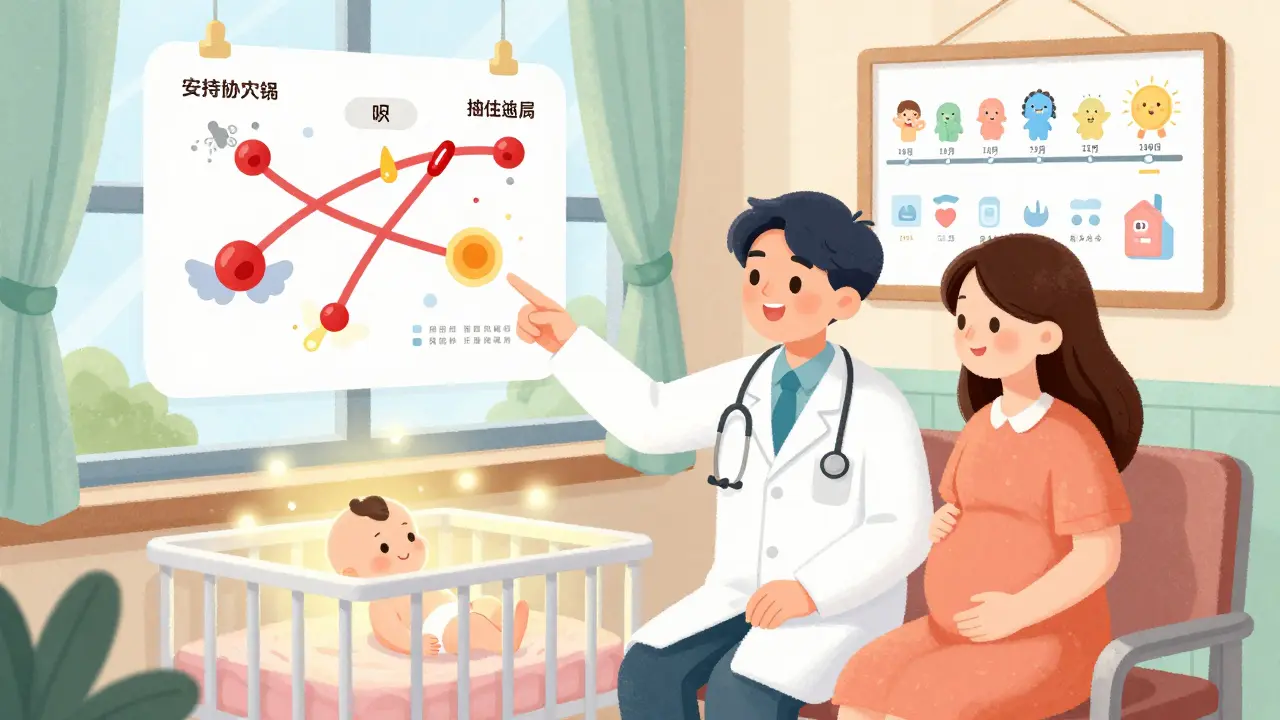
How Do We Know These Vaccines Are Safe?
The fear isn’t new. People worry about ingredients, long-term effects, or whether the vaccine will "overload" the baby. But here’s what the data says:- Over 1.5 million pregnant people received the flu vaccine between 2010 and 2022 in the U.S. No safety concerns were found.
- Over 1.2 million pregnant people got Tdap. No link to birth defects, preterm birth, or low birth weight.
- The CDC’s v-safe pregnancy registry tracked 139,897 pregnant people who got COVID-19 vaccines. 84.6% had no pregnancy complications. The most common side effect? Sore arm.
- For the RSV vaccine, a study of 3,215 people on BabyCenter found 92% reported no side effects. Of the 8% who did, symptoms were mild - headache or tiredness - and gone in 1-2 days.
What About Breastfeeding?
If you’re breastfeeding, you’re not off the hook - but you don’t need to wait. All the vaccines listed above are safe while nursing. In fact, getting vaccinated while breastfeeding helps protect your baby through antibodies in your milk. It’s not as strong as placental transfer, but it still adds another layer of defense. And if you missed a vaccine during pregnancy? Get it right after birth. The flu shot, Tdap, and COVID-19 vaccines are all safe while breastfeeding. You’ll protect yourself, and you’ll keep your baby safer too.
Common Concerns - And the Real Answers
- "Will the vaccine make me sick?" - The flu shot can’t give you the flu. The Tdap vaccine might cause soreness or a low-grade fever. That’s your immune system working, not the vaccine harming you.
- "What about aluminum or formaldehyde?" - These are in trace amounts, far below what your body handles naturally every day. Your body processes them without issue.
- "What if I’m allergic?" - If you’ve had a severe allergic reaction to a vaccine ingredient before, talk to your provider. But allergies to eggs, gelatin, or latex are rarely a problem with these vaccines.
- "Can I get all of them at once?" - Yes. You can get the flu shot, Tdap, and RSV vaccine during the same visit. No evidence shows that combining them reduces effectiveness or increases side effects.
What’s Next? The Future of Pregnancy Vaccines
The science is moving fast. A new vaccine for Group B Strep (GBS) is in Phase III trials and could be available by 2027. GBS is a leading cause of sepsis in newborns. A vaccine given during pregnancy could prevent thousands of cases. There’s also a universal flu vaccine in development. Current flu shots change every year because the virus mutates. The new mRNA-based candidate could protect against multiple strains at once - meaning one shot per pregnancy might be enough. Globally, only 15-25% of pregnant people in low-income countries get these vaccines. The WHO wants to raise that to 70% by 2030. Progress is happening - in the U.S., Tdap coverage jumped from 14% in 2012 to 60% in 2022. That’s thanks to better provider recommendations and clearer guidelines.What to Do Now
If you’re pregnant right now:- Check your vaccination record. Did you get Tdap in your last pregnancy? You still need it again.
- Ask your provider: "Which vaccines do I need now?" Don’t wait for them to bring it up.
- Get the flu shot if it’s fall or winter. Get Tdap if you’re between 27-36 weeks. Get RSV if you’re in that window and it’s September-January.
- Write down the vaccine name, date, and lot number. Keep it with your prenatal records.
- If you’re unsure, ask for the CDC’s pregnancy vaccine fact sheets. They’re free, clear, and updated yearly.
Are flu shots safe during pregnancy?
Yes. The inactivated flu shot is safe during any trimester and is recommended every year during flu season. It reduces your risk of hospitalization from flu by 40-60% and protects your baby from flu for the first few months after birth. The nasal spray version is not recommended during pregnancy.
Can I get the COVID-19 vaccine while pregnant?
Yes. mRNA vaccines (Pfizer and Moderna) are safe and strongly recommended during pregnancy. Data from over 139,000 pregnant people showed no increased risk of miscarriage, preterm birth, or birth defects. Unvaccinated pregnant people were 96% more likely to be hospitalized with severe COVID-19 during the 2021 surge.
When should I get the Tdap vaccine during pregnancy?
Get the Tdap vaccine between 27 and 36 weeks of pregnancy, ideally between 27 and 30 weeks. This timing ensures the highest levels of protective antibodies are passed to your baby. You need it during every pregnancy, even if you’ve had it before.
Is the RSV vaccine safe for pregnant people?
Yes. The RSV vaccine (Abrysvo) was approved in 2023 and is recommended between 32 and 36 weeks of pregnancy during September through January. It reduces the risk of your baby being hospitalized for RSV-related lung infections by 81.8% in the first 90 days of life.
What vaccines should I avoid during pregnancy?
Avoid live vaccines like MMR (measles, mumps, rubella), varicella (chickenpox), and the nasal flu spray (LAIV). These are not recommended during pregnancy because they contain weakened live viruses. If you need any of these, get them at least 28 days before trying to conceive.
Can I get vaccines while breastfeeding?
Yes. All vaccines recommended during pregnancy are also safe while breastfeeding. Getting vaccinated after birth helps protect your baby through antibodies in your breast milk. If you missed a vaccine during pregnancy, get it right after delivery.




Paul Barnes
January 20, 2026 AT 22:17Let me just say-this article is meticulously researched, properly cited, and structurally sound. No fluff. No hyperbole. Just data. The CDC stats on Tdap efficacy? 78% reduction in pertussis? That’s not a suggestion-it’s a public health imperative. Flu shot efficacy in newborns? 63% lower infection rates? If you’re skipping these, you’re not being cautious-you’re being reckless with biology. I’ve read peer-reviewed meta-analyses that don’t hold up to this level of clarity.
Jacob Cathro
January 22, 2026 AT 03:48ok so like… i get that vaccines are ‘safe’ and all but… like… why do they keep adding new ones?? first it was flu, then Tdap, now RSV, now covid… next thing u know they’ll be giving us a ‘baby immune booster’ shot every 3 months?? 🤡 i’m just sayin’… when did pregnancy become a full-time vaccine schedule?? 🤯
sagar sanadi
January 23, 2026 AT 03:59so you say vaccines are safe because 1.5 million people took them? lol. that’s how they said asbestos was safe too. and thalidomide. and lead paint. science changes. corporations fund studies. who’s paying for this ‘research’? big pharma? think about it. your baby’s brain is developing. you really wanna inject aluminum and formaldehyde into that? i’d rather trust nature. and my grandma’s herbal tea.
kumar kc
January 23, 2026 AT 23:51If you’re pregnant and skipping vaccines, you’re not being brave. You’re being selfish.
Thomas Varner
January 24, 2026 AT 21:55Okay, I’m just sitting here… reading this… and I’m… honestly… kind of emotional? Like, I didn’t realize how much protection these vaccines actually give the baby before they’re even born. I thought it was just about mom. But the passive immunity thing? The 81.8% drop in RSV hospitalizations? That’s… that’s like giving your newborn a force field. I didn’t know that. And I’m not even pregnant. I just… I’m glad this exists. Thank you for writing this. Really.
Art Gar
January 24, 2026 AT 23:13While the empirical evidence presented is statistically robust and methodologically sound, one must nonetheless exercise epistemological caution in accepting institutional recommendations without critical scrutiny of potential conflicts of interest, longitudinal surveillance gaps, and the absence of placebo-controlled trials in pregnant cohorts. The precautionary principle, while often dismissed as alarmist, remains a foundational tenet of medical ethics.
clifford hoang
January 25, 2026 AT 20:07they’re not telling you the truth about the microchips in the needles 😭 they say it’s for "tracking" but really it’s to monitor your baby’s brainwaves. i’ve seen the leaked documents. 🤫 and the aluminum? it’s not just in the shot-it’s in the air they pump into the hospital rooms. you think that’s a coincidence? 🤔 they want your baby to be docile. the RSV vaccine? it’s just phase 1 of the global infant compliance program. 🚨 #VaccineTruth #FreeTheBabies
Nadia Watson
January 26, 2026 AT 13:41I’m a nurse in Chicago, and I’ve seen too many babies in the NICU from whooping cough. One little girl, 8 weeks old, intubated because her mom didn’t get Tdap. She’s fine now, but her parents are devastated. Please, if you’re pregnant-get the shots. Not because I say so. Because I’ve held their tiny hands. And I know what’s coming if you wait. You’re not just protecting yourself. You’re protecting someone who can’t ask for help yet.
thomas wall
January 27, 2026 AT 02:26It is both lamentable and deeply concerning that the public discourse surrounding prenatal immunization has devolved into a cacophony of misinformation and emotional manipulation. The scientific consensus is unequivocal: the benefits of these vaccines vastly outweigh any hypothetical risks. To equate medical science with corporate conspiracy is not only intellectually bankrupt-it is morally irresponsible. One does not safeguard life by rejecting reason.
Shane McGriff
January 28, 2026 AT 17:00Hey, I just had my second kid last year and I wish I’d read this before my first pregnancy. I skipped the RSV shot because my OB said "it’s new, let’s wait." Turned out my son got RSV at 10 weeks-spent 12 days in the hospital. We didn’t know it was preventable. If you’re reading this and you’re pregnant, don’t wait for your doctor to bring it up. Bring it up yourself. Ask for the fact sheets. Write it down. You’re not being pushy-you’re being smart. And if your provider rolls their eyes? Find a new one. This isn’t optional. It’s basic care.
Manoj Kumar Billigunta
January 30, 2026 AT 02:33I’m from India, and in my village, most pregnant women don’t even know about these vaccines. My sister got Tdap because her city hospital told her. Her baby is healthy. No fever, no cough. I told my cousin in the village. She’s getting it next week. This info saves lives. Not just in the US. Everywhere. Thank you for writing this clearly. No jargon. Just truth.
Andy Thompson
January 30, 2026 AT 18:53so you want me to trust the same government that lied about WMDs and the moon landing? and you think i’m gonna let some lab in california inject my baby with mRNA? nah. we’re not lab rats. this is America. i’ll protect my family with vitamins and prayer. and if my kid gets sick? at least he’ll die free.