
Vegan Medication Ingredient Checker
Check Your Medication
Enter a medication name or ingredient to see if it contains animal-derived components and possible vegan alternatives.
Results
Based on information from the article "Medication Considerations for Vegans and Vegetarians: Hidden Animal Ingredients" and Pill Clarity database.
Most people assume that if a pill or supplement is sold in a health store, it’s safe for their lifestyle-whether they’re vegan, vegetarian, or just trying to avoid animal products. But here’s the truth: half of all supplements contain hidden animal ingredients that aren’t listed anywhere on the label. And it’s not just about what’s in the capsule-it’s about what the capsule is made of.
What’s Really in Your Pills?
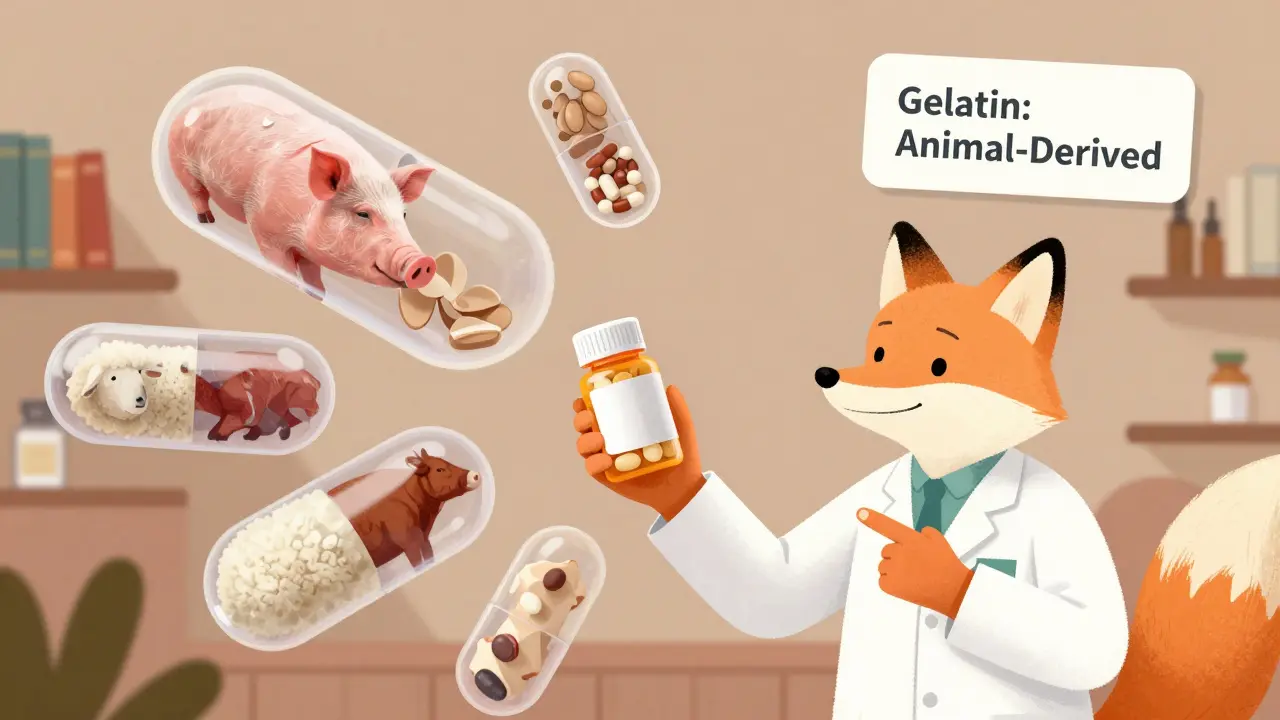
You might think gelatin is just a harmless binder, but it’s not. It’s made from boiling down the skin, bones, and tendons of pigs, cows, and chickens. About 90% of all capsules you find in pharmacies use gelatin. That means if you’re taking a capsule, there’s a very high chance it’s made from animal parts-even if the contents are plant-based. Magnesium stearate is another common one. It’s used to stop pills from sticking together during manufacturing. Sounds harmless, right? But in about 65% of cases, it’s made from animal fat. Same with stearic acid (E570). It’s listed on labels as a “lubricant,” but it usually comes from cow, sheep, or pig fat. The Viva Organization confirms this: it’s not just a filler-it’s a direct animal byproduct. Then there’s lanolin. It’s in 80% of Vitamin D3 supplements. People think Vitamin D3 is just a vitamin. But unless it says “vegan” or “algae-derived,” it’s almost certainly made from sheep wool grease. That’s right-sheep. The same substance used in lotions and lip balms. Dr. Vegan says plant-based Vitamin D3 exists and is made from green algae. It’s just harder to find. Glycerin, squalane, and collagen? All animal-derived. Glycerin can come from animal fat. Squalane used to come from shark liver oil (though now some is plant-based). Collagen? Always from cows, fish, or chickens. Glucosamine and chondroitin? Made from shellfish or cow cartilage. These aren’t rare ingredients-they’re standard.Medications That Are Almost Always Non-Vegan
Some medications don’t just have hidden animal ingredients-they’re built around them. Here are a few you might be taking:- Premarin-a hormone therapy for menopause. Made from the urine of pregnant mares. Yes, horses.
- Armour Thyroid-a thyroid medication. Made from ground-up pig thyroid glands.
- Heparin-a blood thinner. Sourced from pig intestines.
- Creon or Viokace-pancreatic enzymes. Made from pig pancreas.
- Vascepa-a fish oil-based heart medication. Made from anchovies and sardines.
- Propofol-an IV anesthetic. Contains egg phospholipids.
Are There Vegan Alternatives?
Sometimes, yes. Sometimes, no. For thyroid meds, synthetic levothyroxine (T4) is vegan. It’s made in a lab and doesn’t use animal tissue. But if your doctor prescribed Armour Thyroid, there’s no direct vegan version. Switching to levothyroxine works for many people, but not everyone. Some feel worse on the synthetic version. That’s a real dilemma. Heparin? No vegan substitute exists. It’s too complex to replicate synthetically. If you need a blood thinner and you’re vegan, you’re stuck. You have to choose between your ethics and your health. Propofol? Also no vegan version. It’s used in hospitals during surgery. Egg phospholipids are critical to how the drug works. No plant-based version has been approved. But here’s the good news: gelatin capsules? Easily swapped for cellulose-based shells. Magnesium stearate? Can be made from palm oil. Lanolin in Vitamin D3? Replaced by algae. Many pharmacies now carry vegan versions of common supplements. You just have to ask.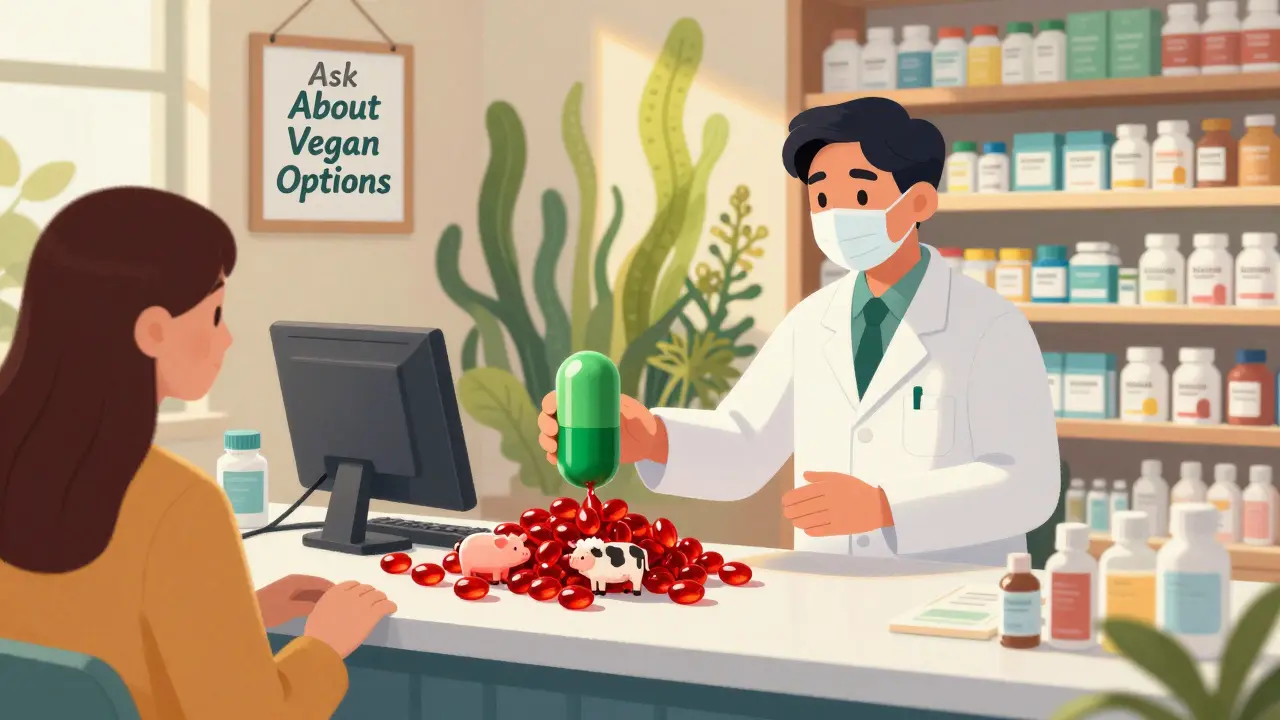
How to Find Vegan-Friendly Medications
The system isn’t built for vegans. Labels don’t say “contains animal fat.” You have to dig. Start with your pharmacist. Don’t say, “Is this vegan?” That’s too vague. Say: “I need this medication without gelatin, magnesium stearate, lanolin, glycerin from animal sources, or stearic acid.” Be specific. Pharmacists hear this more often now-especially since Pill Clarity (formerly VeganMed) started helping people in 2021. Check the Pill Clarity database. They’ve verified over 1,200 medications as animal-free. Their website lists which versions of common drugs use plant-based ingredients. You can ask your pharmacist to look it up for you. For supplements, look for “vegan-certified” labels. Or better yet, check the source. Vitamin D3? If it doesn’t say “algae-derived,” assume it’s lanolin. Omega-3? If it’s fish oil, skip it. Algae-based omega-3s exist and are just as effective. PETA has a free downloadable list of animal-derived ingredients. Print it. Bring it to your next pharmacy visit. It’s easier than trying to remember 15 chemical names.Why This Isn’t Just About Ethics
Some people think this is just a “lifestyle choice.” It’s not. For many vegans, taking an animal-derived medication feels like a betrayal of their values. For others, it’s a health issue. Some report digestive upset, skin reactions, or anxiety when taking animal-based ingredients-even if they’re not allergic. And it’s not just vegans. People with religious restrictions, allergies, or ethical concerns about animal testing are also affected. That’s why Pill Clarity rebranded in 2023. They’re not just helping vegans anymore. They’re helping anyone who wants to know what’s really in their medicine.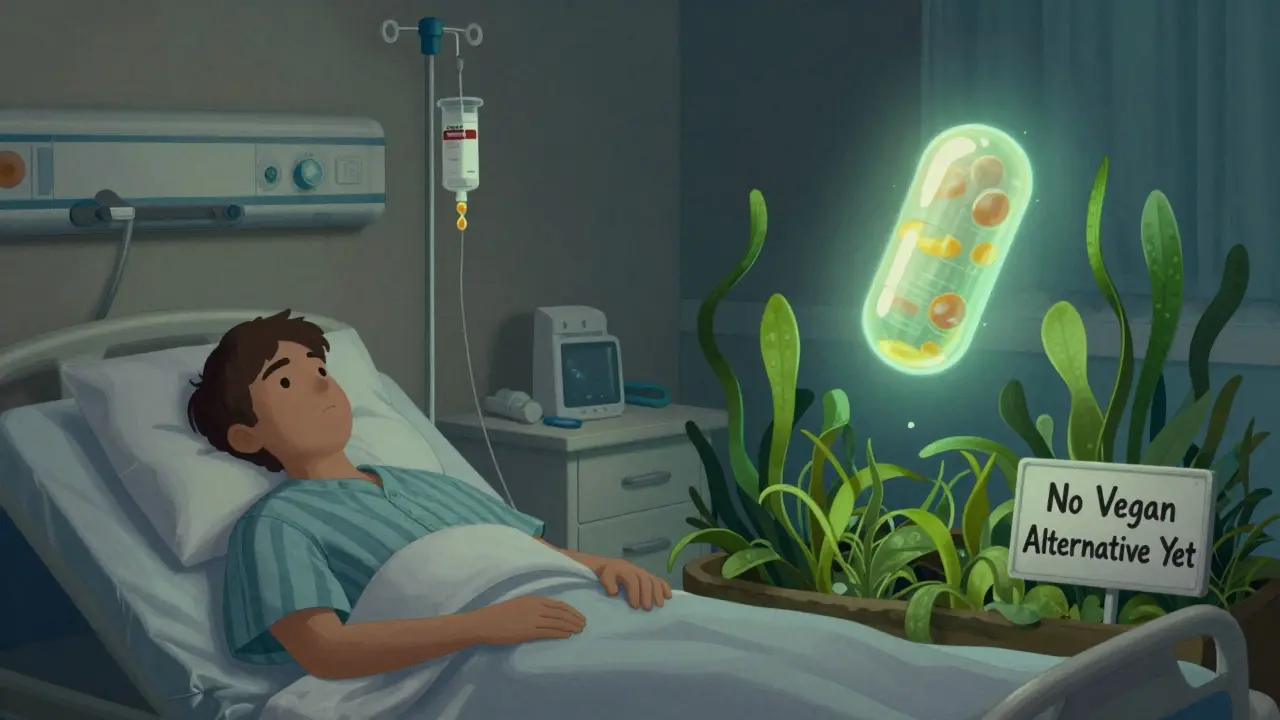
What You Can Do
- Ask your doctor to prescribe levothyroxine instead of Armour Thyroid if thyroid support is needed.
- Switch to algae-based Vitamin D3 and omega-3 supplements.
- Request capsule-free forms (tablets, liquids) to avoid gelatin.
- Use Pill Clarity’s free online tool to check your prescriptions.
- When ordering supplements online, read the ingredient list. If it says “stearic acid,” “magnesium stearate,” or “gelatin,” call the company and ask for the source.
What’s Changing
The American Pharmacists Association is developing official guidelines for pharmacists to help vegan and vegetarian patients. Those guidelines are expected to roll out in 2024. That means pharmacies will soon be trained to answer these questions-not just shrug and say, “I don’t know.” More companies are making vegan capsules. More labs are producing synthetic versions of animal-derived drugs. The market for plant-based medicine is growing. In 2022, 3% of U.S. adults identified as vegan. That number is rising. And the industry is starting to notice. You’re not alone. Thousands of people are asking the same questions. And now, there’s a path to answers.Are all gelatin capsules made from pigs?
No, but most are. Gelatin capsules can be made from pigs, cows, or chickens. Pig gelatin is the most common because it’s cheaper and more flexible. Some manufacturers use fish gelatin, but that’s still animal-derived. The only vegan option is cellulose-based capsules made from plant fibers. Always ask for “vegetarian capsules” or “vegan capsules” at the pharmacy.
Can I find vegan Vitamin D3?
Yes. Traditional Vitamin D3 is made from lanolin, which comes from sheep’s wool. But plant-based D3 is made from green algae. It’s just as effective and is labeled as “vegan” or “algae-derived.” Brands like DEVA, Garden of Life, and Viridian offer these. Always check the label-don’t assume.
Is there a vegan alternative to heparin?
Not yet. Heparin, a blood thinner, is extracted from pig intestines. Scientists are working on synthetic versions, but none are approved for use in humans. If you need heparin, there’s no vegan substitute. Talk to your doctor about managing your condition with other medications if possible, but don’t stop taking it without medical advice.
Why don’t drug labels list animal ingredients?
Because the FDA doesn’t require it. Food labels must say if something contains animal products, but drug labels only need to list active ingredients and a few major inactive ones. Gelatin, stearic acid, and glycerin are considered “excipients”-and they’re exempt from full disclosure. That’s why you have to ask your pharmacist directly.
What should I say to my doctor to get vegan meds?
Be clear and specific. Say: “I follow a vegan lifestyle and need medications that contain no animal-derived ingredients, including gelatin, magnesium stearate, lanolin, glycerin, or stearic acid.” Don’t just say “I’m vegan.” That’s too vague. Doctors and pharmacists need exact terms to search for alternatives. Bring a printed list of animal-derived ingredients if needed.



Shruti Chaturvedi
March 14, 2026 AT 06:43Also, I'm from India and we have a ton of plant-based traditions. It's kinda sad that modern medicine ignores that. We've been using turmeric, neem, and ashwagandha for centuries without pig fat in the capsules.
Katherine Rodriguez
March 16, 2026 AT 03:26Stop pretending this is a moral victory. It's a comfort ritual.
Devin Ersoy
March 17, 2026 AT 00:20And don't even get me started on algae-based D3. It costs 3x more. You're not changing the system. You're just paying a premium for a placebo of ethics.
Scott Smith
March 17, 2026 AT 12:54But here's the good news: more people are asking. More pharmacies are stocking vegan capsules. I had a customer last week who brought a printed list of 12 ingredients to avoid. I looked up every single one. We found a vegan version of his blood pressure med. He cried. That's why this matters. Not because it's 'pure' - because it's about informed consent.
tynece roberts
March 18, 2026 AT 08:51also i switched to algae d3 and it cost me 18 bucks. 18 bucks for a bottle that lasts 3 months. but like. worth it. i feel less guilty. even if it doesnt change anything. i just dont wanna be part of the sheep industry. i dont even like sheep. they look dumb.
Hugh Breen
March 19, 2026 AT 23:56You’re not just fighting for veganism. You’re fighting for transparency. For dignity. For the right to know what’s inside your body.
I’ve been vegan for 12 years. I’ve called 17 pharmacies. I’ve sent 5 emails to drug companies. I’ve cried in the aisle of Whole Foods because I couldn’t find a vegan glucosamine. And now? Now we have Pill Clarity. Now pharmacists are being trained. Now people are talking.
This isn’t about being ‘perfect.’ It’s about being seen. And you? You’re helping people feel seen. Thank you. 🌱💚
Byron Boror
March 21, 2026 AT 08:02And stop using PETA as a source. That organization is a cult. They don't care about health. They care about outrage.
Lorna Brown
March 21, 2026 AT 15:40This isn't about 'lifestyle.' It's about systemic exclusion. If we can create synthetic insulin, why can't we create synthetic heparin? If we can engineer plant-based proteins that mimic meat, why can't we engineer a blood thinner that doesn't require pig intestines?
The answer isn't 'we can't.' It's 'we haven't tried hard enough.' And that's the real failure.