

Most people think sunscreen is simple: slap it on, go outside, done. But if your sunscreen isn’t doing what it’s supposed to, you’re not just risking a sunburn-you’re putting your skin at real risk for long-term damage. The truth is, OTC sunscreens are powerful drug products, not just beauty items. And if you don’t understand SPF, broad spectrum, or when to reapply, you’re probably wasting your money-and your skin’s health.
What SPF Actually Means (And Why Higher Isn’t Always Better)
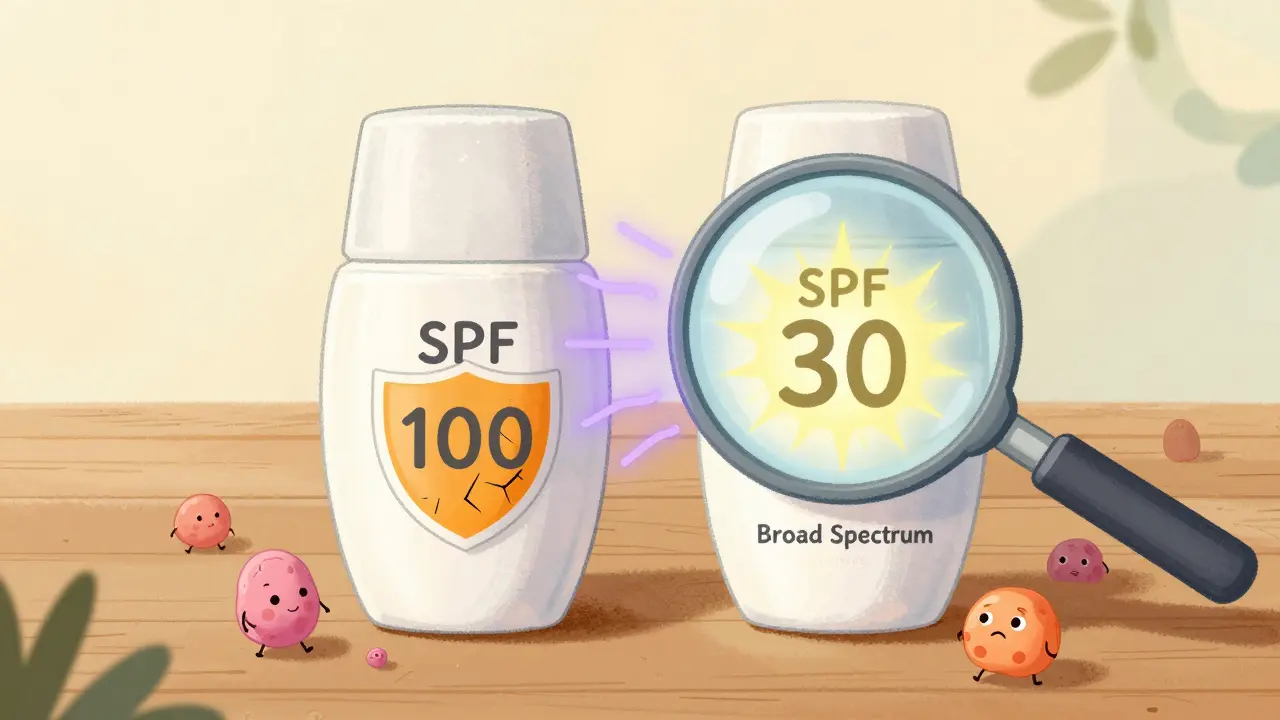
SPF stands for Sun Protection Factor. It’s not a measure of how long you can stay in the sun. It’s a ratio. Specifically, it tells you how much UVB radiation gets through compared to unprotected skin. SPF 30 means only 1 out of 30 UVB rays reaches your skin-that’s 96.7% blocked. SPF 50? 98% blocked. SPF 100? 99% blocked. The jump from SPF 30 to 50 is significant. From 50 to 100? Almost nothing.
The FDA requires all OTC sunscreens to meet strict testing standards under ISO 24444:2019. That means the SPF number you see on the bottle is backed by human testing with 20 volunteers, not just lab simulations. But here’s the catch: SPF only measures UVB protection. That’s the burning ray. It doesn’t tell you anything about UVA-the aging ray that penetrates deeper, causes wrinkles, and contributes to skin cancer.
That’s why SPF alone is misleading. A sunscreen labeled SPF 80 with no broad spectrum claim? It’s basically useless for long-term skin health. You’ll avoid sunburn, but your skin is still getting hammered by UVA rays. And that’s why the FDA now requires broad spectrum labeling for any sunscreen claiming SPF 15 or higher.
Broad Spectrum: The Real Game-Changer
Broad spectrum isn’t marketing jargon. It’s a legal term defined by the FDA. To earn it, a sunscreen must pass a critical wavelength test that proves it protects against UVA rays up to 370 nanometers. That’s the minimum needed to cover the full UVA range. Many sunscreens claim “UVA protection” without meeting this standard. If it doesn’t say “broad spectrum” on the label, it’s not enough.
Here’s what that means in practice: A 2025 Consumer Reports test of 107 sunscreens found that mineral sunscreens-often marketed as “natural” or “reef-safe”-averaged just 55 out of 100 in UVA protection. Meanwhile, top-performing chemical sunscreens like La Roche-Posay Anthelios hit 92. Why? Because mineral filters like zinc oxide and titanium dioxide need to be formulated precisely to block UVA. Many budget brands don’t use enough, or the particles aren’t properly coated, leaving gaps.
And don’t fall for the “SPF 100” myth. That product might block 99% of UVB, but if it’s not broad spectrum, you’re still exposed to damaging UVA. The American Academy of Dermatology (AAD) says SPF 30+ broad spectrum is all you need for daily use. Going higher doesn’t give you more protection-it just gives brands more to market.
Mineral vs. Chemical: What Actually Works Better
There are two types of active ingredients in OTC sunscreens: mineral (zinc oxide, titanium dioxide) and chemical (avobenzone, octinoxate, oxybenzone). Mineral sunscreens sit on top of the skin and reflect UV light. Chemical ones absorb it and convert it to heat.
Mineral sunscreens are great for sensitive skin. They start working immediately and are less likely to cause irritation. But here’s the problem: many mineral formulas don’t provide enough UVA protection. Consumer Reports found that mineral sunscreens averaged just 34.2 out of 100 in protection scores. Brands like Blue Lizard and CeraVe got decent marks for gentleness, but their UV blocking fell short. One tested mineral sunscreen labeled SPF 30 actually blocked like SPF 4.
Chemical sunscreens? They’re more effective. Avobenzone, when stabilized with other filters like octocrylene, gives strong UVA coverage. La Roche-Posay, Supergoop!, and Neutrogena’s Ultra Sheer line consistently top independent tests. But they do have downsides. Oxybenzone has been linked to coral reef damage, leading to bans in Hawaii and Key West. Some people report stinging eyes or breakouts. And if you’re pregnant or have melasma, dermatologists like Dr. Michele Green recommend mineral formulas because zinc oxide has anti-inflammatory properties.
So which should you pick? If you have oily or acne-prone skin, go chemical. If you have rosacea, eczema, or are using retinoids, choose mineral. But don’t assume mineral = better protection. Always check the label: broad spectrum + SPF 30+ is non-negotiable.
How Much to Apply (And Why You’re Probably Using Too Little)
Here’s where most people fail. The FDA requires sunscreens to be tested using 2 mg of product per square centimeter of skin. That’s about 1/4 teaspoon for your face alone. For your whole body? A full ounce-the size of a shot glass.
Most people use less than half that. And that cuts protection drastically. If you use only half the recommended amount of SPF 30, you’re getting the protection of SPF 7. That’s not a typo. It’s math.
Try this: Squeeze out four pea-sized dollops for your face and neck. Rub them in slowly. Wait 15 minutes before applying makeup. If you’re using a spray, spray each area twice and rub it in. Sprays are convenient, but they’re easy to miss spots. A 2024 study found that 63% of spray users had unprotected patches on their necks and ears.
And if you’re using a tinted sunscreen? Don’t rely on the color to cover you. The tint is for appearance, not protection. Use the same amount as you would for a clear formula.
Reapplication: The Most Ignored Rule
Every sunscreen-mineral or chemical-needs reapplication every two hours. That’s not a suggestion. That’s the rule. Even “water-resistant” sunscreens only last 40 or 80 minutes in water or sweat. And once you towel off? You’ve lost up to 80% of the protection.
Here’s the hard truth: only 14.3% of beachgoers reapply sunscreen as recommended. And on social media, 72% of users admit they skip reapplication during long days outside. That’s why skin cancer rates keep rising.
Reapplication isn’t just about sun exposure. UV rays penetrate windows. If you drive to work or sit near a window at home, you’re still getting UVA exposure. Daily use matters. A 2023 AAD study found that people who use sunscreen every day reduce their risk of melanoma by 50%.
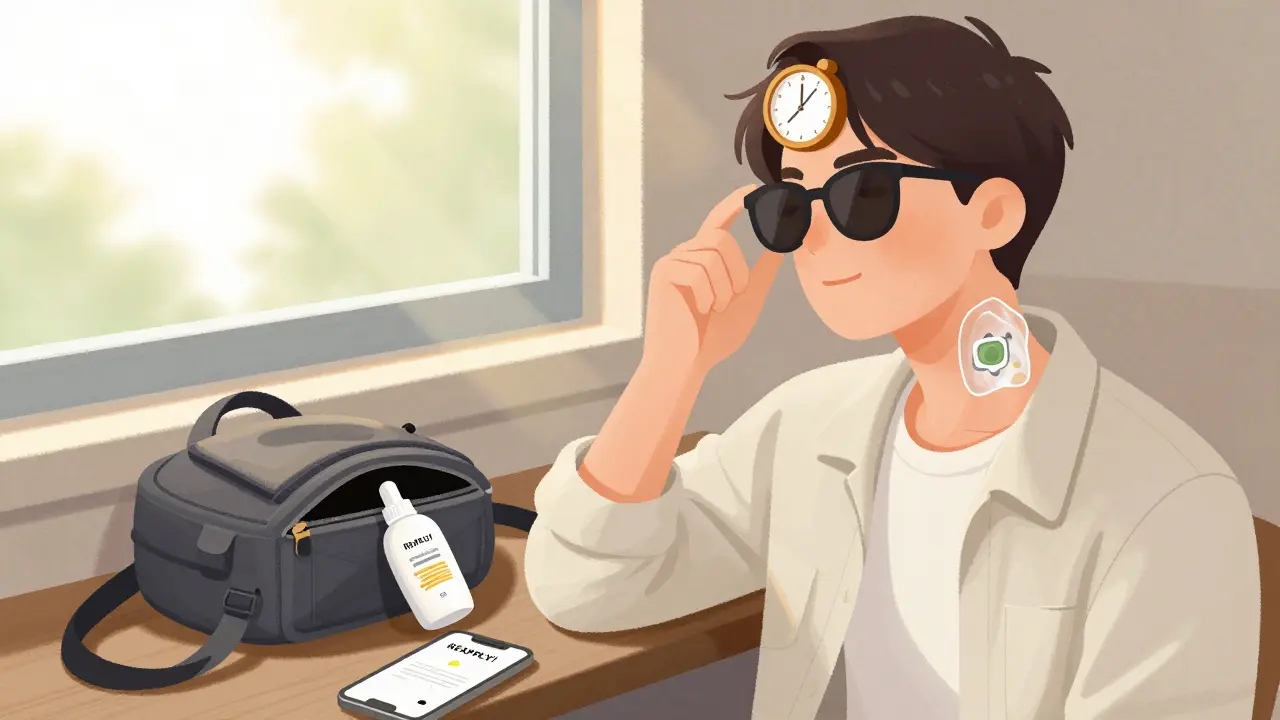
Forgetting? Set a phone alarm. Keep a mini bottle in your bag. Use a stick for touch-ups on your nose and ears. If you’re wearing makeup, try a powder sunscreen with SPF 30 or higher. Brands like Colorescience and Sun Bum make them.
What’s Changing in 2025 and Beyond
The FDA is finalizing new rules this year. By 2025, only two ingredients-zinc oxide and titanium dioxide-will be considered “generally recognized as safe and effective” (GRASE). Twelve others, including oxybenzone and octinoxate, will likely be banned unless manufacturers prove they’re safe. That’s why you’re seeing so many “reef-safe” labels now.
Also, new testing will require sunscreens to pass UVA protection tests matching European standards. That means even more brands will have to improve their formulas.
On the tech side, wearables like Shade Smart (launching Q2 2025) will sync with your phone and alert you when it’s time to reapply based on UV index, location, and skin type. For now, though, you still have to do the work.
What to Look for on the Label
- SPF 30+ - Non-negotiable.
- Broad Spectrum - Must be on the label.
- Water-resistant (40 or 80 minutes) - Check the fine print.
- Active ingredients - Zinc oxide (5%-25%) or avobenzone (3%) are strong performers.
- Expiration date - Sunscreen loses potency after 3 years. Discard if it’s expired or smells off.
Avoid products with added fragrance, alcohol, or parabens if you have sensitive skin. And skip anything labeled “sunblock”-that term is banned by the FDA because it implies total protection, which doesn’t exist.
Real User Experiences: What Works and What Doesn’t
On Amazon and Reddit, users consistently praise Supergoop! Unseen Sunscreen for disappearing on darker skin tones. Others swear by EltaMD UV Clear for acne and rosacea. But complaints are loud: CeraVe Mineral SPF 30 leaves a chalky residue. Vichy’s tinted sunscreen oxidizes orange. And too many mineral sunscreens just don’t block enough UVA.
One user on r/SkincareAddiction tested 12 sunscreens with a UV camera app. The results? Even dermatologist-recommended brands missed spots on the eyelids, jawline, and neck. The solution? Apply twice. Let it dry. Apply again. It’s extra work, but it’s the only way to know you’re covered.
Final Rule: Don’t Guess. Check.
OTC sunscreens are one of the most effective tools we have to prevent skin cancer. But they only work if you use them right. SPF 30, broad spectrum, reapplied every two hours. That’s the golden rule. No exceptions.
Don’t buy based on price, scent, or TikTok trends. Buy based on the label. If it doesn’t say broad spectrum, put it back. If it’s past its expiration, toss it. And if you’re unsure? Ask your dermatologist. They’ve seen what happens when sunscreen is used wrong-and they’ve seen what happens when it’s used right.
Is SPF 100 better than SPF 50?
No. SPF 50 blocks 98% of UVB rays. SPF 100 blocks 99%. That’s only a 1% difference. But SPF 100 products often give a false sense of security, leading people to stay in the sun longer without reapplying. The American Academy of Dermatology recommends SPF 30-50 for everyone. Higher numbers don’t mean longer protection-they just cost more.
Do I need to wear sunscreen on cloudy days?
Yes. Up to 80% of UV rays penetrate clouds. UVA rays, which cause aging and skin cancer, are especially strong on overcast days. Daily sunscreen use is recommended even if you’re not going outside. If you sit near a window, drive, or walk your dog, you’re exposed.
Are mineral sunscreens safer for the environment?
It’s complicated. Mineral sunscreens with zinc oxide and titanium dioxide don’t contain oxybenzone or octinoxate, which are banned in Hawaii and Palau for damaging coral reefs. But not all mineral sunscreens are reef-safe. Some still use nanoparticles or other chemicals. Look for non-nano zinc oxide and avoid products with added fragrances or oxybenzone. The safest bet? Choose a sunscreen labeled “reef-safe” and verified by third-party testing.
Why does my sunscreen pill under makeup?
Pilling happens when the sunscreen doesn’t absorb fully before you apply foundation. It’s often caused by layering too many products too quickly. Wait 15 minutes after applying sunscreen before putting on makeup. Use a lightweight, non-greasy formula. Some sunscreens, like those with niacinamide (e.g., Caravee Hydrating Sheer), are designed to work under makeup without pilling.
Can I use last year’s sunscreen?
Most sunscreens expire after three years. If it’s past the expiration date, smells strange, or has changed texture (separated, clumpy, or too runny), throw it out. UV filters break down over time, especially if stored in heat. A 2024 study found that sunscreens left in a hot car lost up to 40% of their effectiveness in just one month.



Kal Lambert
March 17, 2026 AT 11:19Melissa Starks
March 17, 2026 AT 14:05becca roberts
March 18, 2026 AT 14:22Emily Hager
March 18, 2026 AT 17:39Ayan Khan
March 20, 2026 AT 14:12Suchi G.
March 21, 2026 AT 11:48Paul Ratliff
March 23, 2026 AT 00:50David Robinson
March 24, 2026 AT 02:18Michelle Jackson
March 25, 2026 AT 21:13Melissa Stansbury
March 27, 2026 AT 14:33Andrew Muchmore
March 27, 2026 AT 17:13SNEHA GUPTA
March 28, 2026 AT 18:06Paul Ratliff
March 30, 2026 AT 16:13