
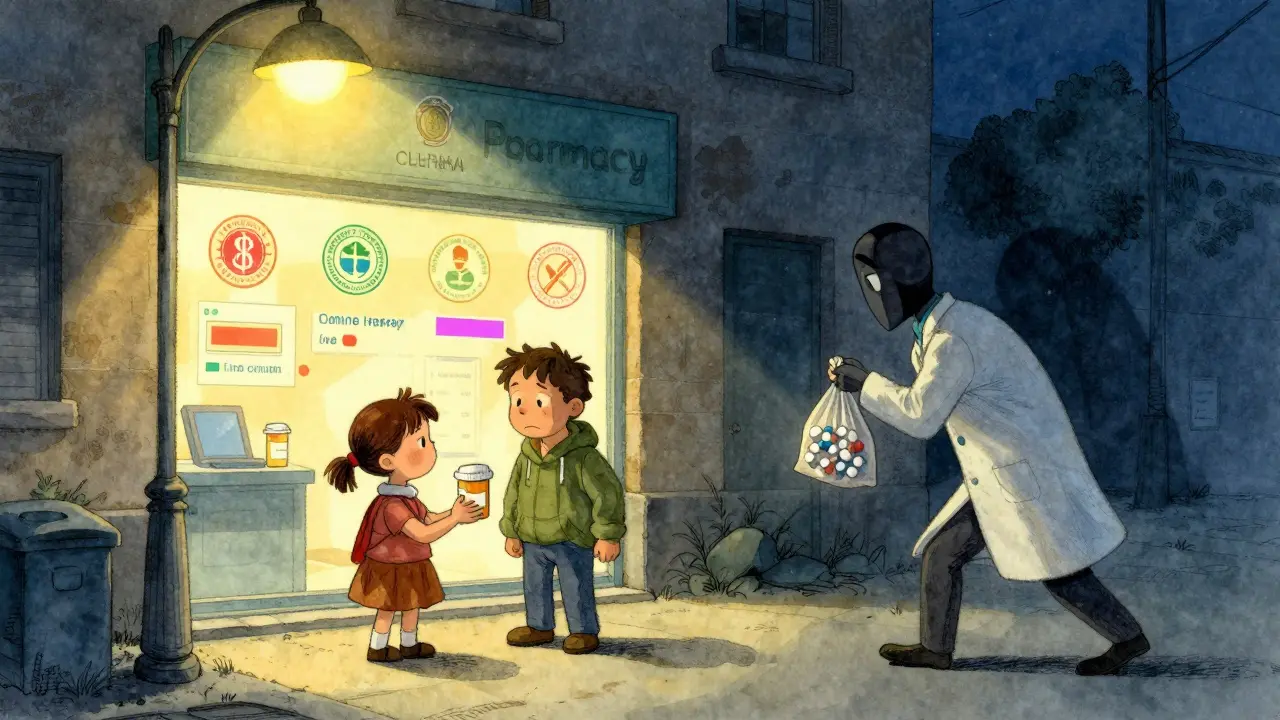
Every year, millions of people in the U.S. buy prescription medications online. Some of them never stop to ask: Is this pharmacy real? The answer matters more than you think. Illegitimate pharmacies don’t just sell fake pills-they sell dangerous ones. The FDA estimates that 1% to 3% of the $575 billion U.S. prescription drug market comes from unlicensed sources. That’s between $5.75 billion and $17.25 billion in potentially life-threatening drugs floating around. And it’s getting worse. In 2023, enforcement actions against fake online pharmacies jumped 22% from the year before.
What Makes a Pharmacy Licensed?
A licensed pharmacy isn’t just a business with a website and a logo. It’s a facility that meets strict legal and professional standards. Each state has its own board of pharmacy that issues licenses. These boards don’t just check paperwork-they verify that pharmacists have passed the NAPLEX (North American Pharmacist Licensure Examination) with a minimum score of 75 out of 150. Many states also require a second exam on state laws, like California’s CPJE. Without these, a pharmacy can’t legally dispense medication.But it’s not just about the pharmacist. The pharmacy itself must be inspected. It needs proper storage conditions, secure recordkeeping, and a physical address where regulators can visit. A licensed pharmacy must have a pharmacist on-site or available by phone at all times. That’s not a suggestion-it’s the law in 45 states.
How to Verify a Pharmacy: A Simple 5-Step Check
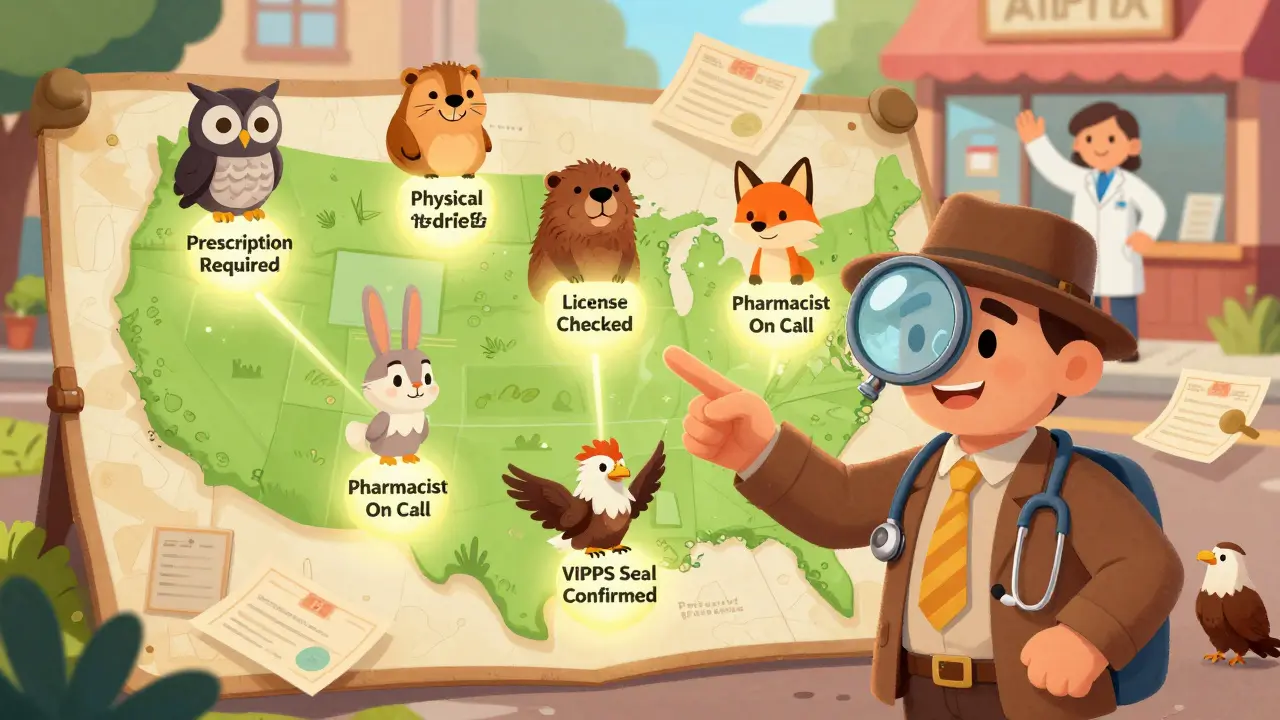
You don’t need to be a pharmacist to spot a fake. Here’s what to do before you click “buy.”- Check if they require a prescription. Legitimate pharmacies never sell controlled medications without a valid, up-to-date prescription from a licensed doctor. If a site offers to write you a prescription after a 5-minute online quiz, walk away.
- Look for a physical address. Use Google Maps Street View. If the address is a warehouse, a residential home, or doesn’t exist at all, it’s a red flag. Real pharmacies have storefronts or licensed distribution centers.
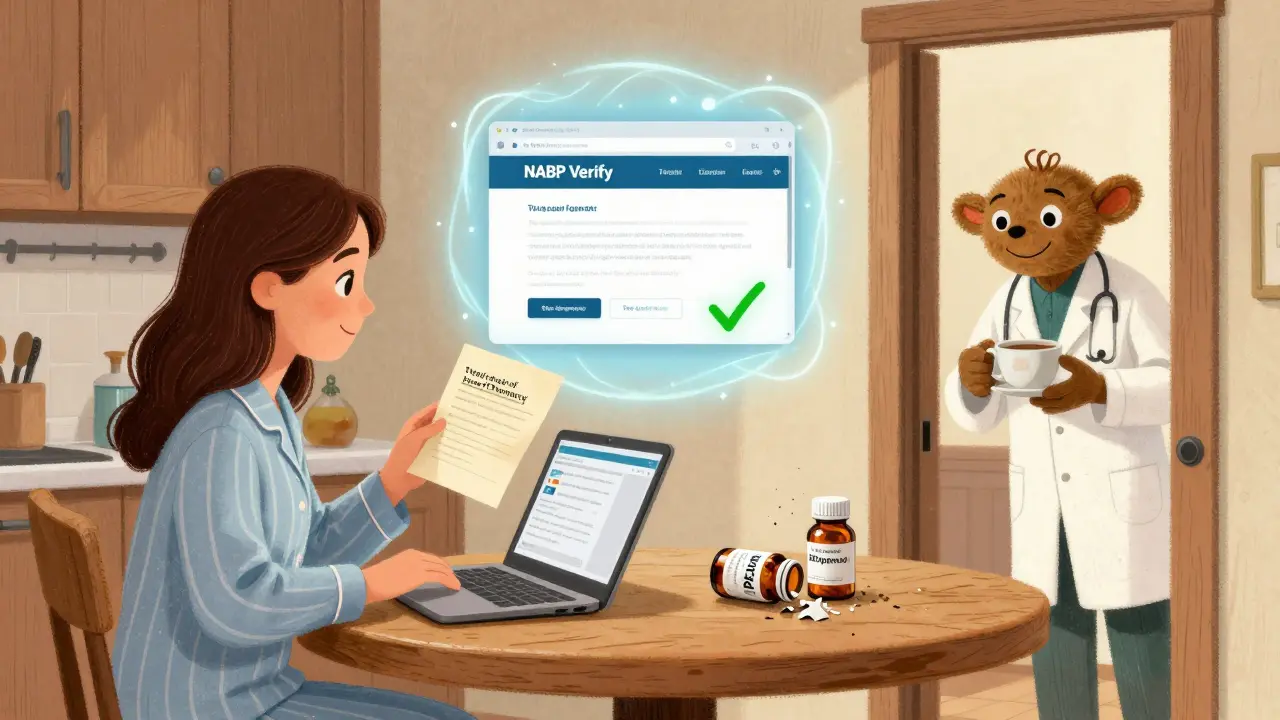
- Verify the license. Go directly to your state’s board of pharmacy website. In California, you enter the license number (not the prefix). In Florida, it’s free and instant. The NABP Verify program lets you search across 50+ states at once. Look for the license status: active, not suspended or expired.
- Confirm pharmacist availability. A real pharmacy will list a pharmacist’s name and contact info. If you can’t reach a pharmacist by phone or chat, the pharmacy isn’t compliant.
- Look for VIPPS or LegitScript. The Verified Internet Pharmacy Practice Sites (VIPPS) seal from NABP means the pharmacy has passed a rigorous review. LegitScript, backed by ASHP, identifies 98.7% of fraudulent online pharmacies. If neither is visible, assume it’s not safe.
A 2023 University of Florida study found that 92% of people could complete this verification in under five minutes. The trick? Don’t rely on what’s on the website. Go straight to the official state or NABP site.
Why State Licenses Aren’t Enough
Some pharmacies operate in one state but ship drugs across borders. That’s where things get messy. A pharmacy licensed in Texas might be selling to someone in New York without ever being checked by New York’s board. That’s why the Verified Pharmacy Program (VPP) was created in 2020. It lets pharmacies apply once for multi-state compliance. But it’s not automatic-it costs around $1,850 to set up and requires annual inspections.And here’s the problem: 17 states require fingerprint-based background checks for pharmacists. Others accept online checks. One state charges $65.75. Another, $35.25. This patchwork system makes it hard for consumers to know what’s normal. That’s why the NABP Verify program exists-to cut through the noise.
The Real Danger: Fake Seals and Scam Websites
Fraudsters are getting smarter. They copy official logos. They use fake license numbers. They even create websites that look exactly like real ones. In 2023, the Better Business Bureau reported a case where a consumer lost $850 to a site that displayed a fake NABP accreditation seal. The seal was slightly off-bigger font, wrong color. Most people didn’t notice.That’s why you must cross-check. Don’t trust the seal on the pharmacy’s site. Go to NABP’s official site and search for the pharmacy by name. If it’s not listed there, it’s not legitimate-even if it looks perfect.
And don’t be fooled by “FDA approved” labels. The FDA doesn’t approve pharmacies. It approves drugs. A pharmacy can be selling FDA-approved drugs-but still be illegal if it’s not licensed.
What Happens When You Buy from a Fake Pharmacy?
It’s not just about wasting money. Counterfeit drugs can contain:- Too little active ingredient (so the drug doesn’t work)
- Too much active ingredient (causing overdose)
- Toxic fillers like rat poison, chalk, or floor cleaner
- Completely different drugs (e.g., sildenafil sold as a heart medication)
NABP’s 2022 enforcement data showed that unlicensed pharmacies are 4.7 times more likely to dispense the wrong medication and 8.2 times more likely to be involved in controlled substance diversion. That means someone could get addicted to pills they didn’t even ask for.
In March 2024, a woman in California used the state’s license verification portal and discovered her pharmacy’s pharmacist-in-charge had resigned months earlier. The pharmacy was still operating without a licensed pharmacist on duty. She switched providers-and likely avoided a serious error.
What’s Changing in 2024 and Beyond
The system is slowly improving. In January 2024, NABP launched Phase 2 of its InterConnect system, which gives real-time license status updates across 43 states. California now requires out-of-state pharmacies shipping to residents to provide an 800-number for pharmacist access. The FDA has pledged $15 million to improve detection of fake online pharmacies by 2026.But experts warn it’s not enough. Dr. Kevin T. Fuji from Pacific University points out that the average consumer spends just 2.7 minutes checking a pharmacy’s legitimacy. Most people stop at the first “Verified” badge they see. That’s why NABP predicts a national standard will emerge by 2027-cutting current verification complexity by 60%.
Final Advice: Don’t Guess. Verify.
Buying medication online is convenient. But convenience shouldn’t override safety. Here’s what to remember:- Never buy from a site that doesn’t require a prescription.
- Always check the license on your state’s official pharmacy board website.
- Use NABP Verify or LegitScript to confirm legitimacy across states.
- If you’re unsure, call the pharmacy and ask to speak to the pharmacist.
- Report suspicious sites to the FDA’s MedWatch program or your state board.
Legitimate pharmacies want you to verify them. They’ll welcome the questions. Fake ones will avoid them. Trust your instincts. And never assume a website is safe just because it looks professional.
How do I know if a pharmacy is licensed in my state?
Go directly to your state’s board of pharmacy website. Most states have a "Verify a License" tool where you can search by pharmacy name, pharmacist name, or license number. For example, in California, you enter the license number without the prefix. In Florida, verification is free and instant. Never rely on links from the pharmacy’s own website-always type the official state board URL yourself.
Is NABP Verify worth the $125 annual fee?
For consumers, NABP Verify is free to use. The $125 fee applies only to pharmacists and pharmacies who want ongoing monitoring of their license status across states. For you, the public, it’s a free tool to check if a pharmacy is licensed in any of the 50+ participating states. It’s one of the most reliable ways to confirm legitimacy, especially if you’re buying from an out-of-state online pharmacy.
Can I trust a pharmacy that says it’s "FDA approved"?
No. The FDA approves individual drugs-not pharmacies. A pharmacy can sell FDA-approved medications but still be operating illegally if it lacks a state license. If a site claims "FDA approved," it’s misleading you. Look for the VIPPS seal from NABP or LegitScript verification instead. Those are real indicators of legitimacy.
What should I do if I bought medicine from a fake pharmacy?
Stop using the medication immediately. Contact your doctor or pharmacist to discuss potential risks. Report the pharmacy to the FDA’s MedWatch program and your state’s board of pharmacy. If you paid with a credit card, dispute the charge. Keep the packaging and any documentation-it may help investigators track down the operation. Even if nothing bad happened, your report could prevent others from being harmed.
Are online pharmacies more likely to be fake than brick-and-mortar ones?
Yes, but not because all online pharmacies are bad. The issue is that it’s easier for fraudsters to set up fake websites than to open a physical store. The FDA estimates 1 in 4 online medication sellers operate without a license. Brick-and-mortar pharmacies are harder to fake-they need real space, staff, inspections, and state oversight. Still, always verify even your local pharmacy if you’re unsure. A license should be visible on the wall or available on request.
Why do some pharmacies have different license numbers?
Each state issues its own license, so a pharmacy operating in multiple states will have multiple license numbers. A pharmacy in Texas has a Texas license number. The same pharmacy in California has a separate California number. If you’re buying from an online pharmacy, make sure it has a valid license in your state. Don’t assume a license from another state covers you.

Adam M
March 17, 2026 AT 06:07Stop buying meds online. Period. If you need a prescription, see a doctor. No excuses. This whole ‘online pharmacy’ thing is just asking for trouble.
Real pharmacies have walls. A front desk. A pharmacist who knows your name. Not some website with a fake seal.
Ali Hughey
March 19, 2026 AT 00:17🚨 ALERT 🚨
The FDA doesn't approve pharmacies? 😱
Then WHO IS WATCHING?!?!
WHAT IF THEY'RE ALL FAKE?!
WHAT IF YOUR PILL HAS RAT POISON?!
WHAT IF YOUR HEART MED IS ACTUALLY FLU MED?!
WHAT IF THE PHARMACIST IS A ROBOT?!
WHAT IF THE 'VERIFIED' SEAL IS A PHISHING PAGE?!
WHAT IF THE STATE BOARD WEBSITE IS COMPROMISED?!
WHAT IF THE NABP DATABASE IS HACKED?!
WHAT IF THE INTERNET ITSELF IS A SCAM?!
WE'RE ALL BEING POISONED, ONE CLICK AT A TIME. 🤯💊💀
Alex MC
March 20, 2026 AT 18:42I appreciate how thorough this breakdown is. It’s easy to overlook the small details-like checking the license number directly on the state site instead of clicking a link on the pharmacy’s page.
Small habits save lives. I’ve started doing the 5-step check every time, even for refills.
It takes less than 3 minutes. Worth it.
rakesh sabharwal
March 21, 2026 AT 13:03It’s frankly appalling that consumers are expected to navigate this labyrinthine regulatory patchwork. The very notion that a layperson must cross-reference 50+ state boards to ensure pharmaceutical integrity is a testament to systemic collapse.
The VPP initiative? A Band-Aid on a hemorrhage.
Real reform requires federal consolidation-not yet another voluntary seal that costs $1,850 to obtain.
Until then, we’re all playing Russian roulette with our pharmacokinetics.
Amisha Patel
March 21, 2026 AT 18:18Thanks for sharing this. I didn’t know about LegitScript.
I’ll use it next time I order my blood pressure meds.
Also, I never realized the FDA doesn’t approve pharmacies.
Good to know.
Buddy Nataatmadja
March 23, 2026 AT 10:08My cousin in Bali buys all her meds from a site that ships from Thailand. She swears by it-cheaper, faster.
She’s been on the same meds for 8 years. No issues.
Maybe not everyone who’s online is a scammer?
Just saying.
Hugh Breen
March 24, 2026 AT 11:59OMG I just checked my pharmacy and guess what? They’re NOT on NABP Verify 😱
I almost cried.
I’ve been taking my insulin from them for 3 years.
I’m switching TODAY.
Thank you for this post. You saved my life. 🙏💙💊
Byron Boror
March 25, 2026 AT 19:48Why are we even talking about this? America’s got the best healthcare system in the world. If you’re buying meds online, you’re probably just lazy.
Go to a real pharmacy. Pay the price. Stop looking for shortcuts.
Stop enabling fraud by being cheap.
It’s not rocket science.
Richard Harris
March 27, 2026 AT 01:59Just checked my local pharmacy’s license-turns out their pharmacist left last year and they’re still operating. I had no idea.
Thanks for the tip on the state board site. I’ll be calling them tomorrow.
Hope they fix it before someone gets hurt.
Kandace Bennett
March 27, 2026 AT 19:07Ugh. So this is what happens when you let people from other countries run your healthcare? 😒
At least in the U.S., we have standards. Most of these online scams are based overseas anyway.
Just say no.
And if you’re still buying from them? You’re part of the problem.
Katherine Rodriguez
March 28, 2026 AT 11:54I’ve been buying from the same site for 5 years and never had a problem. Stop scaring people. If it works, why fix it?
Also why are we even talking about this? Nobody reads this stuff anyway.