Portal Hypertension: Causes, Risks, and How to Manage It
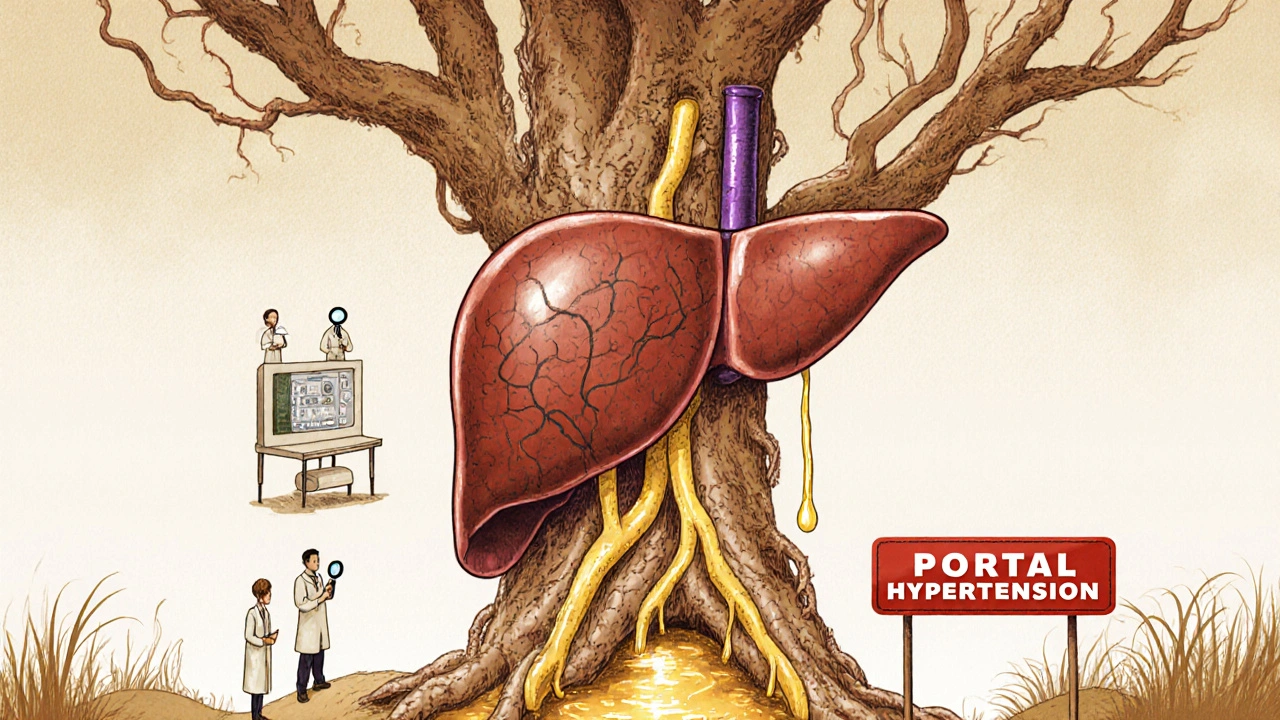
When blood can’t flow easily through the portal hypertension, a condition where blood pressure rises in the portal vein that carries blood from the intestines to the liver. It’s not a disease on its own—it’s a warning sign that something’s wrong with your liver. This happens mostly because scar tissue from long-term damage—like cirrhosis, a late-stage liver disease where healthy tissue turns to scar—blocks the normal flow. Think of it like a clogged pipe: the pressure builds up behind the blockage, and suddenly, blood finds other, weaker paths to get through.
Those alternative paths aren’t built for high pressure. Veins in your esophagus or stomach swell and become fragile—this is called variceal bleeding, a life-threatening complication where swollen veins rupture. You might not feel anything until you vomit blood or pass dark, tarry stools. Fluid also leaks into your belly, causing ascites, a buildup of fluid in the abdomen that makes you feel bloated and uncomfortable. These aren’t random side effects—they’re direct results of portal hypertension pushing fluid and blood where they shouldn’t go.
Most cases tie back to chronic liver problems. Alcohol abuse, hepatitis B or C, fatty liver disease—these are the usual suspects. But portal hypertension doesn’t wait for you to be ready. It sneaks up, often without symptoms at first. By the time swelling or bleeding happens, the damage is already advanced. That’s why knowing the risks matters. If you have liver disease, your doctor should monitor your pressure, even if you feel fine. Medications like beta-blockers can lower the pressure and reduce bleeding risk. In severe cases, procedures like TIPS (a tiny stent placed in the liver) help reroute blood flow. It’s not about curing it—it’s about stopping the next crisis.
You’ll find real stories here—not theory. People who managed ascites with diet and diuretics. Those who avoided variceal bleeding by taking beta-blockers consistently. Others who learned how to spot early signs before it turned emergency. This isn’t just medical jargon. It’s about what actually works when your body is under stress from liver damage. Below, you’ll see practical guides on treatment options, cost help for meds, and how to live with the complications without losing control.
-
19 Nov
- Recent
- Popular