
Children's Antihistamine Dosing Calculator
Safe Antihistamine Dosage Calculator
This calculator helps determine appropriate antihistamine dosages for children based on FDA guidelines and current medical recommendations.
Important Safety Note: This calculator provides general guidance only. Always consult with your pediatrician before administering any medication to children, especially infants. Never exceed recommended doses.
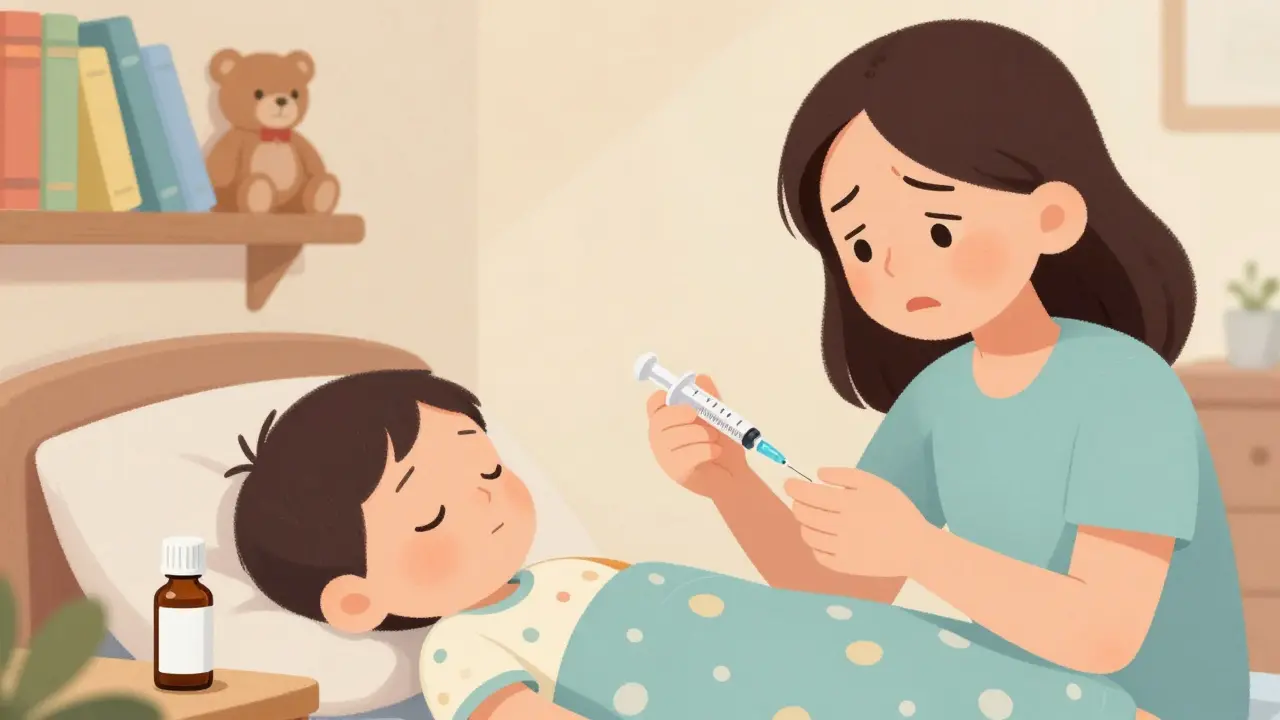
When your child breaks out in hives, has a runny nose from pollen, or wakes up with puffy eyes, it’s tempting to reach for an antihistamine. But giving the wrong dose-or the wrong kind-can be risky. Not all antihistamines are made the same, especially for kids. What works for a teenager might be dangerous for a toddler. And what’s safe for a 3-year-old? That’s not the same as for a 6-month-old. The truth is, many parents give antihistamines without knowing the real risks, especially with older, more common options like Benadryl. But the medical community has changed its stance-and the safest choices today aren’t the ones you remember from your own childhood.
Why First-Generation Antihistamines Are Risky for Kids
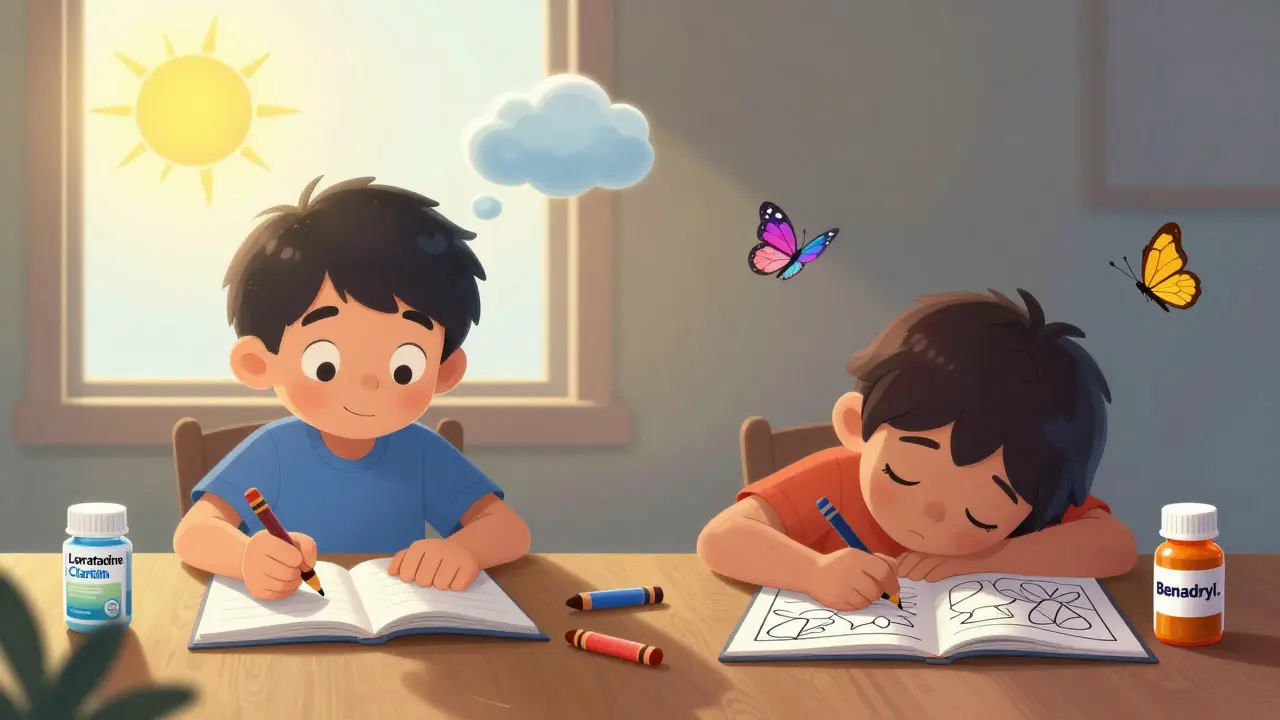
You’ve probably heard of diphenhydramine. It’s the active ingredient in Benadryl. It’s cheap, easy to find, and works fast. But for children, especially under age 2, it’s no longer the go-to choice. Why? Because it crosses the blood-brain barrier easily. That means it doesn’t just block allergy symptoms-it affects the brain. In kids, this can cause extreme drowsiness, confusion, dry mouth, fast heartbeat, or even agitation. In rare cases, it can lead to seizures or breathing problems.
The FDA warned against using diphenhydramine in children under 2 years back in 2008. That warning still stands. Even for kids over 2, it’s not ideal. Studies show that 50-60% of children who take it become drowsy. That’s not just sleepy-it can mean trouble focusing, slower reaction times, and disrupted learning. Some parents use it as a sleep aid. That’s a dangerous habit. The American College of Allergy, Asthma, and Immunology says this practice increases overdose risk by 300% in children under 2.
And here’s something most people don’t realize: liquid Benadryl comes in 12.5 mg per 5 mL. But chewable tablets? They can be 12.5 mg or 25 mg. If you assume they’re all the same, you’re already at risk of giving too much. One parent in a 2023 hospital report gave a 4-year-old two 25 mg chewables thinking it was the right dose. That’s 50 mg total-over double the recommended amount for that age. The child ended up in the ER with a racing heart and confusion.
The Shift to Second-Generation Antihistamines
Today, the best options for children are second-generation antihistamines: cetirizine (Zyrtec) and loratadine (Claritin). These don’t cross the blood-brain barrier as easily. That means they’re much less likely to cause drowsiness or confusion. In fact, only 10-15% of kids on cetirizine feel sleepy, and just 6.9% on loratadine do. That’s a big difference.
They also last longer. One dose of cetirizine or loratadine works for 24 hours. That means fewer doses, fewer chances for error, and less disruption to a child’s day. For chronic allergies-like seasonal hay fever or year-round dust mite sensitivity-these are the clear winners.
But here’s the catch: they’re not instant. Diphenhydramine starts working in 15-30 minutes. Cetirizine takes 1-2 hours. That’s why doctors still keep diphenhydramine on hand-for sudden, severe reactions like anaphylaxis, under medical supervision. But for everyday use? Cetirizine and loratadine are the standard.
Exact Dosing by Age and Weight
Dosing isn’t just about age. It’s about weight. A 20-pound toddler needs a different amount than a 50-pound 5-year-old. And liquid formulations? Always use the measuring device that comes with the bottle. A kitchen teaspoon can be off by 20-50%. That’s not a small mistake-it’s a dangerous one.
Here’s what current guidelines say:
- Infants under 6 months: Cetirizine is not FDA-approved, but experts like Dr. Eric Macy recommend starting at 0.125 mg per kg per day (about 1 mg for an 8 kg baby) if needed for severe hives. Always consult a pediatrician first.
- Infants 6-11 months: 0.25 mg per kg per day. For a 9 kg baby, that’s about 2.25 mg daily. Most liquid formulations are 1 mg per mL, so that’s 2.25 mL once daily.
- Children 2-5 years: 5 mg daily. That’s 1 teaspoon of Zyrtec liquid (1 mg/mL) or ½ teaspoon of Claritin liquid (5 mg/5 mL). Chewables? Make sure they’re 5 mg each. Some are 10 mg-don’t assume.
- Children 6-11 years: 5-10 mg daily. Start with 5 mg. If symptoms aren’t controlled after a few days, increase to 10 mg. Never exceed 10 mg in one day.
- Children 12+ years: 10 mg daily. This is the adult dose.
Loratadine follows similar weight-based logic. For kids 2-5 years: 2.5 mL of liquid (5 mg/5 mL) daily. For 6-11 years: 5 mL daily. No need to adjust for weight unless the child is very small or large for their age.
And never use adult tablets for kids. A 10 mg tablet is too strong for a 3-year-old. Always use the pediatric formulation. If you’re switching from liquid to chewables, double-check the mg per tablet. Some brands make 5 mg, others make 10 mg. Read the label.
What to Avoid at All Costs
There are three big mistakes parents make-and they’re all avoidable.
- Using antihistamines as sleep aids. This is the most dangerous myth. Antihistamines aren’t safe sleep medicine for kids. They can cause paradoxical reactions-hyperactivity, irritability, hallucinations-especially in young children. The AAP says this practice is linked to more ER visits than any other misuse.
- Giving multi-symptom formulas. Products like Zyrtec-D or Claritin-D contain decongestants like pseudoephedrine. These are not approved for children under 6. They can raise blood pressure, cause rapid heartbeat, and interfere with sleep. Even if the child has a stuffy nose, avoid these. Use a saline spray instead.
- Using expired or unmarked medication. Liquid antihistamines lose potency after 30 days once opened. If you can’t find the original bottle or the label is faded, throw it out. Don’t guess.
Also, don’t mix antihistamines. If your child is on cetirizine daily, don’t give Benadryl on top of it. You’re doubling the dose without knowing it. Stick to one antihistamine unless your doctor says otherwise.

When to Call a Doctor
Antihistamines help with mild allergies. But if your child has:
- Swelling of the lips, tongue, or throat
- Difficulty breathing
- Wheezing or chest tightness
- Loss of consciousness
That’s not an allergy-it’s an emergency. Call 911 or go to the ER immediately. Antihistamines won’t stop anaphylaxis. Epinephrine will. Keep an EpiPen on hand if your child has a known severe allergy.
Also, call your pediatrician if:
- The allergy symptoms don’t improve after 3-5 days of daily antihistamine use
- Your child becomes unusually drowsy, irritable, or confused
- You suspect you gave the wrong dose
And if your child is under 2 years old? Always check with a doctor before giving any antihistamine-even one that’s considered safe.
What’s Coming Next
Research is ongoing. The FDA is requiring new safety studies for all antihistamines used in children under 2. Results are expected by 2025. There’s even a clinical trial underway (NCT04567821) to see if cetirizine can be safely approved for babies under 6 months. If it passes, we could see official approval by 2026.
Right now, the trend is clear: pediatricians are moving away from first-generation antihistamines. In 2023, 94.7% of pediatric allergists followed guidelines that put cetirizine or loratadine first. That number is still rising. The old ways aren’t just outdated-they’re risky.
The bottom line? Don’t treat allergies with what you remember from your childhood. Use the safest, most evidence-backed options. Read labels. Measure precisely. And when in doubt-call your doctor. It’s better to be safe than sorry.
Can I give my 8-month-old Zyrtec for hives?
Yes, but only under a doctor’s guidance. Cetirizine (Zyrtec) is FDA-approved for children 6 months and older. For an 8-month-old, the typical starting dose is 0.25 mg per kg per day. For example, if your baby weighs 8 kg, that’s about 2 mg daily (2 mL of the 1 mg/mL liquid). Always use the measuring device that comes with the bottle. Never use a kitchen spoon. If symptoms don’t improve in 2-3 days, contact your pediatrician.
Is Benadryl safe for toddlers over 2 years?
It’s not recommended as a first choice. While it’s not illegal to give Benadryl to toddlers over 2, it’s not the best option. It causes drowsiness in up to 60% of children and can lead to confusion or agitation. It also wears off in 4-6 hours, meaning you’ll need to give it multiple times a day-increasing the risk of dosing errors. Cetirizine or loratadine are safer, longer-lasting, and more predictable. Save Benadryl for emergencies like sudden hives or bug bites, and only if your doctor approves.
How do I know if I gave my child too much antihistamine?
Signs of overdose include extreme drowsiness, dry mouth, flushed skin, dilated pupils, blurry vision, racing heartbeat, difficulty urinating, or unusual agitation. In infants, it can look like lethargy or poor feeding. If you suspect an overdose, call Poison Control at 1-800-222-1222 immediately. Do not wait for symptoms to get worse. Keep the medication bottle handy when you call-they’ll need the exact name and strength.
Can I use children’s Zyrtec for my 1-year-old if I reduce the dose?
Yes, but only if you measure precisely. Children’s Zyrtec liquid is 1 mg per mL. For a 1-year-old weighing 10 kg, the dose is 2.5 mg daily-that’s 2.5 mL. Never guess. Use the syringe that came with the bottle. If you don’t have it, ask your pharmacy for a new one. Don’t use a regular medicine cup or spoon. Also, make sure you’re not using adult Zyrtec tablets. Those are 10 mg each-too strong for a toddler.
Why do some pediatricians still prescribe diphenhydramine?
Some doctors still prescribe it for acute reactions-like a sudden allergic rash or bug bite-because it works fast. But even then, it’s used sparingly and only for short-term relief. Most pediatric allergists now reserve it for cases where second-generation antihistamines aren’t enough, or in hospital settings where they can monitor the child. For daily use, it’s outdated. The guidelines from Boston Children’s, Children’s Hospital Colorado, and the American Academy of Allergy, Asthma & Immunology all point to cetirizine or loratadine as the standard.


Ray Foret Jr.
March 9, 2026 AT 16:51Samantha Fierro
March 10, 2026 AT 03:27George Vou
March 10, 2026 AT 12:22Scott Easterling
March 12, 2026 AT 09:52Mantooth Lehto
March 13, 2026 AT 17:53Melba Miller
March 15, 2026 AT 00:32Katy Shamitz
March 16, 2026 AT 14:39Nicholas Gama
March 17, 2026 AT 17:10Mary Beth Brook
March 19, 2026 AT 10:53Neeti Rustagi
March 21, 2026 AT 04:16Dan Mayer
March 21, 2026 AT 04:55Janelle Pearl
March 21, 2026 AT 21:10Philip Mattawashish
March 23, 2026 AT 16:35Tom Sanders
March 25, 2026 AT 16:00Jazminn Jones
March 27, 2026 AT 05:20