Medication Flushing Guide & Relief Finder
Select the medication class you are taking to understand why flushing happens and how it can be managed.
Mechanism: Vascular Smooth Muscle Relaxation
These medications are designed to open your blood vessels to lower blood pressure. When they work, they can cause the vessels in your face to dilate, leading to redness.
Mechanism: Rapid Vasodilation
Nitrates act very quickly to widen blood vessels to improve blood flow to the heart. This rapid shift often causes an immediate, vivid flush.
Mechanism: Prostaglandin Release
Niacin triggers the release of prostaglandins, hormone-like substances that tell blood vessels to open up. This is a common sign the vitamin is being absorbed.
Mechanism: Histamine Release
Certain painkillers trigger mast cells to release histamine, which widens blood vessels and often causes an accompanying itchy sensation.
Mechanism: Direct Vascular Reaction
Specifically with Vancomycin, rapid infusion can cause "Red Man Syndrome" due to quick histamine release. This is typically a reaction to speed, not a true allergy.
⚠️ Critical Safety Warning
If flushing is accompanied by difficulty breathing, swelling of the lips/tongue, or a sudden drop in blood pressure, seek emergency medical attention immediately as these may be signs of anaphylaxis.
Imagine sitting in a meeting or at a dinner table when, suddenly, your face, neck, and chest feel like they've been hit by a wave of heat. Within seconds, you're bright red, and everyone around you can see it. This isn't just a moment of embarrassment; for many, it's a predictable, frustrating side effect of the very medications they need to stay healthy. Facial flushing from medications is a physiological reaction where blood vessels in the upper body dilate, increasing blood flow to the skin's surface and causing sudden redness and warmth. While it usually isn't dangerous, it can be socially distressing and physically uncomfortable.
Why do some medications cause your face to flush?
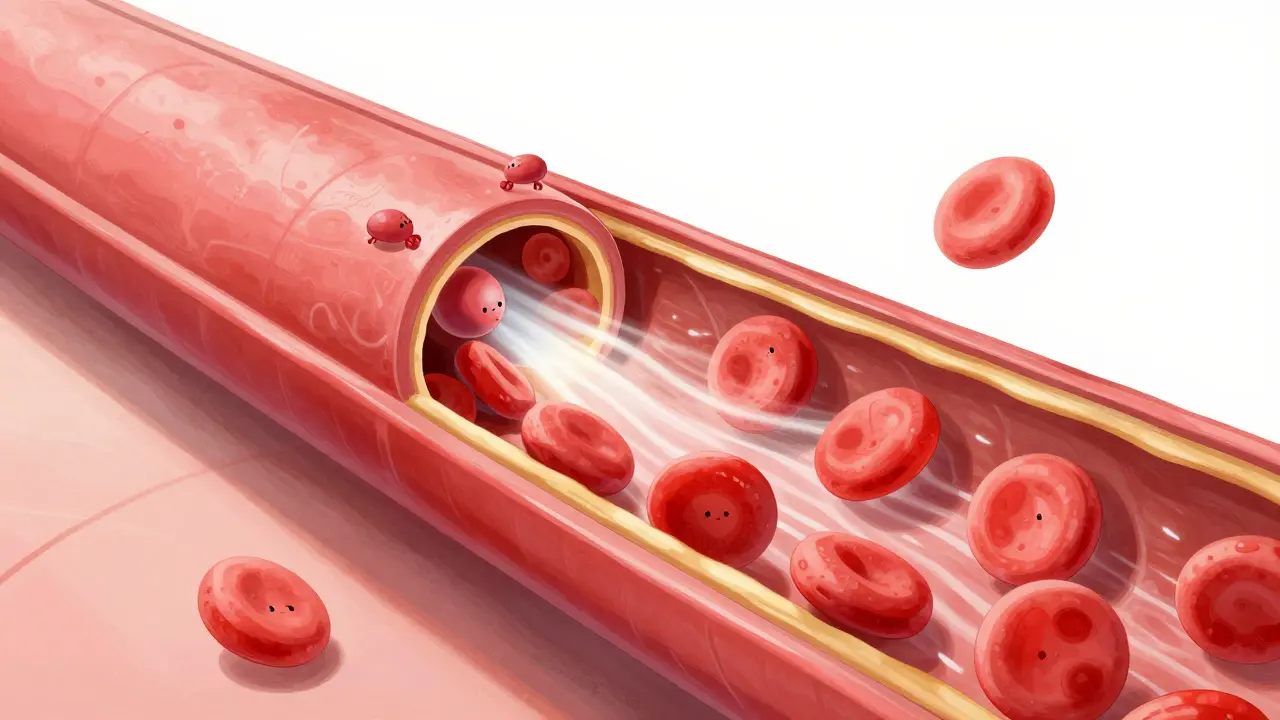
Flushing happens because of how certain chemicals interact with your blood vessels and nervous system. Most drugs that cause this effect are facial flushing from medications triggers that act as vasodilators. These are substances that relax the smooth muscles in your vessel walls, allowing more blood to flow through. When this happens in the thin skin of your face, the result is a vivid red glow.
The process isn't always the same. Some drugs cause a "dry flush," where the skin just turns red. Others trigger a "wet flush," which includes sweating. For instance, when you take Niacin (Vitamin B3), the body releases prostaglandins, which are hormone-like substances that tell your blood vessels to open up. This specific reaction is so common that it's often used as a marker for how the body is absorbing the vitamin.
Other medications work by releasing histamine. This is the same chemical your body releases during an allergic reaction. When certain painkillers or antibiotics enter the system, they can trigger mast cells to dump histamine into the bloodstream, causing the blood vessels to widen instantly. In these cases, the flushing is often accompanied by an itchy sensation.
Common medication triggers you should know
Many different types of prescriptions can trigger a flush. It's rarely a sign that the drug isn't working; rather, it's often a sign that the drug is doing exactly what it's designed to do-like lowering your blood pressure by opening up your vessels.
Heart and Blood Pressure Medications
Since these drugs are designed to relax blood vessels to lower pressure, flushing is a very common side effect. Calcium Channel Blockers, such as amlodipine or nifedipine, are frequent culprits. Similarly, nitrates used for chest pain, like nitroglycerin, act quickly on the vascular system and can leave you looking flushed almost immediately after use.
High-Potency Vitamins and Cholesterol Drugs
As mentioned, Nicotinic acid is famous for the "niacin flush." Even though it helps manage cholesterol, the intensity of the redness can be so severe that many people stop taking it. Interestingly, taking a bit of aspirin beforehand can reduce this effect, though it only cuts the intensity by about 30%.
Painkillers and Antibiotics
Opioids like morphine can cause flushing through that histamine release we talked about. If you've ever felt itchy and red after a strong pain medication, that's likely the cause. In the world of antibiotics, Vancomycin is a primary example. When given too quickly via IV, it can cause "Red Man Syndrome," where the face and upper body turn bright red. This is usually a matter of the infusion speed rather than a true allergy.
Hormonal and Cancer Treatments
Drugs like tamoxifen, used for breast cancer, or various GnRH agonists used for prostate tumors, can shift your internal thermostat and trigger flushing. Similarly, Sildenafil (the active ingredient in Viagra) is a potent vasodilator that frequently causes a warm, red face as it redirects blood flow.
| Drug Class | Common Examples | Primary Mechanism |
|---|---|---|
| Calcium Channel Blockers | Amlodipine, Nifedipine | Vascular smooth muscle relaxation |
| Nitrates | Nitroglycerin, Isosorbide dinitrate | Rapid vasodilation |
| B-Vitamins | Nicotinic Acid (Niacin) | Prostaglandin release |
| Opioids | Morphine, MS Contin | Histamine release |
| Antibiotics | Vancomycin, Rifampin | Direct vascular reaction / Infusion rate |
How to find relief from medication flushing
The good news is that you don't have to just "deal with it." Depending on why you're flushing, there are several ways to cool down and reduce the redness.
Medical interventions
If the flushing is severe, your doctor might suggest a secondary medication. For those whose flushing is linked to anxiety or a hyperactive nervous system, Beta-blockers can be a lifesaver. They dampen the body's stress response and keep the blood vessels from overreacting. Another option is clonidine, which changes how your body responds to noradrenaline, effectively "turning down the volume" on the blushing response.
For histamine-driven flushes (like those from opioids), simple H1 or H2 blockers (antihistamines) can stop the reaction before it starts. If you're dealing with something more chronic, like flushing from a specific endocrine issue, somatostatin analogs like octreotide can help by blocking the secretion of the chemicals that cause the redness.
Procedural options
When medication isn't enough or isn't an option, some people turn to dermatology. Botulinum toxin (Botox) can actually be injected into the facial skin to paralyze the tiny nerves that trigger the blush. This usually provides relief for about six months. Alternatively, vascular lasers can target and remove the small, permanent red blood vessels that make flushing look more intense.
Lifestyle changes to minimize the glow
While the medication is the primary trigger, other things in your environment can act like "fuel on the fire." If you're already prone to medication-induced flushing, these factors can make an episode much worse.
- Watch your diet: Spicy foods and very hot beverages can trigger a flush. Be careful with Monosodium Glutamate (MSG), often found in processed foods, as it's a known trigger for many people.
- Manage your temperature: Extreme heat or sudden cold can shock your system and cause your vessels to dilate. Try to keep your environment stable.
- Be mindful of alcohol: Alcohol is a natural vasodilator. For some, especially those with a specific enzyme deficiency common in Asian heritage, alcohol causes an immediate flush. This can be even more intense if you're taking certain antibiotics or diabetes meds like chlorpropamide.
- Reduce stress: Anxiety releases adrenaline, which can complicate how your blood vessels react to medication. Deep breathing or biofeedback can help keep your vascular system calm.

When to talk to your doctor
Most medication flushing is a harmless nuisance, but you should always keep your healthcare provider in the loop. You should definitely call them if the flushing is accompanied by difficulty breathing, swelling of the lips or tongue, or a sudden drop in blood pressure. These could be signs of a serious allergic reaction (anaphylaxis) rather than a simple pharmacological side effect.
If the flushing is affecting your mental health or making you want to skip doses of your medication, don't suffer in silence. Your doctor might be able to adjust your dose, change the timing of when you take the pill, or switch you to a different medication in the same class that doesn't have the same effect on your skin.
Can I stop the niacin flush with aspirin?
Yes, taking aspirin or indomethacin before your dose of nicotinic acid can help. However, it doesn't eliminate the flush entirely; research shows it typically reduces the intensity by about 30%.
Is 'Red Man Syndrome' a real allergy to Vancomycin?
Not usually. It is typically a predictable pharmacological reaction caused by the rapid release of histamine. The best way to prevent it is to slow down the infusion rate of the medication.
Will Botox really stop my face from flushing?
It can. By paralyzing the nerves that control the dilation of the facial blood vessels, Botox can prevent the redness from appearing. The effects are temporary and usually last around six months.
Why does Sildenafil cause facial flushing?
Sildenafil is a PDE5 inhibitor that works by relaxing smooth muscles and increasing blood flow. Since it affects blood vessels throughout the entire body, it often causes systemic vasodilation, which manifests as a red, warm face.
Are there any natural ways to treat medication flushing?
While there isn't a "cure" for the medication's effect, you can manage it by avoiding triggers like spicy foods, alcohol, and extreme temperatures, and by using stress-management techniques to keep your nervous system stable.
Next Steps for Management
If you're currently dealing with these symptoms, start by keeping a "flush log." Note what medication you took, the dose, the time of day, and any other factors like what you ate or your stress level. This data is gold for your doctor.
For those on blood pressure medication, ask your physician if a different calcium channel blocker might be more tolerable. For those on niacin, discuss the timing of your aspirin dose. Remember, the goal is to find a balance where your primary health condition is treated without sacrificing your comfort and confidence.