For decades, chronic hepatitis C was a slow-burning fire in the liver - silent, persistent, and often deadly. People lived with it for years, unaware until cirrhosis, liver cancer, or liver failure showed up. Treatment used to mean weekly injections of interferon, brutal side effects like depression and fatigue, and only a 50% chance of clearing the virus after nearly a year. But that was then. Today, chronic hepatitis C is no longer a life sentence. It’s a curable infection - and the change happened faster than almost anyone expected.
How Hepatitis C Turns Chronic
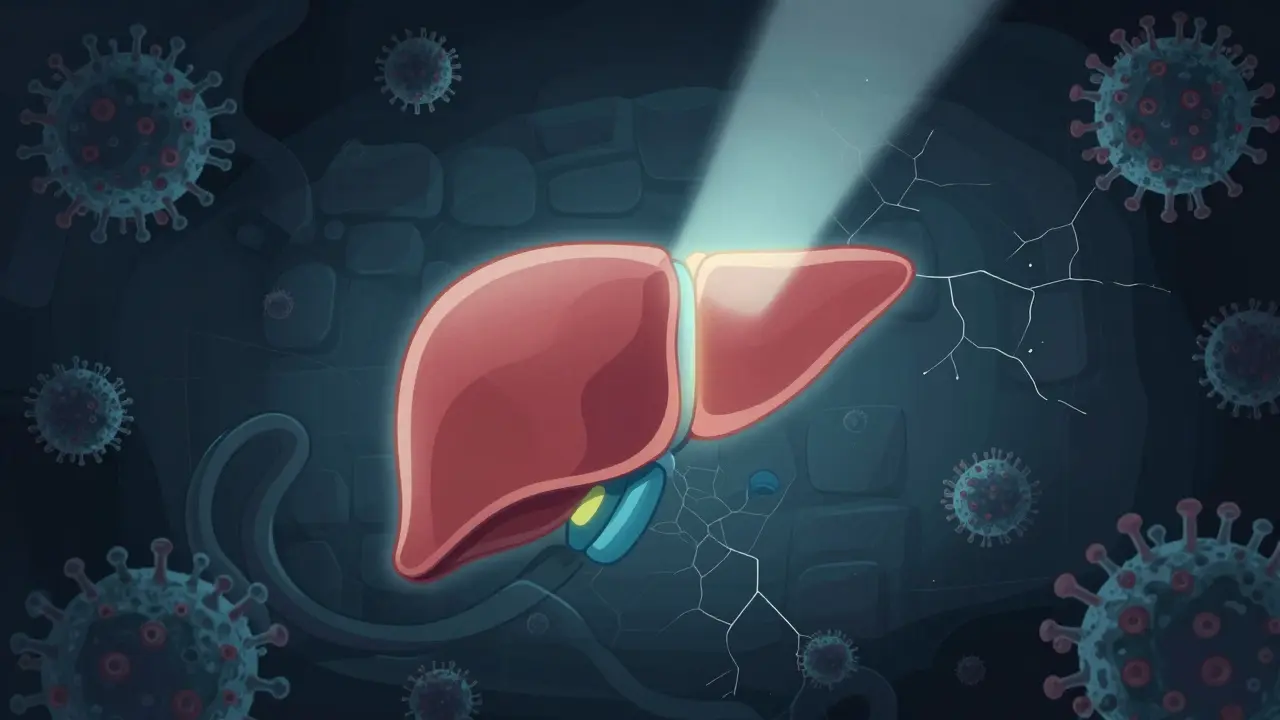
Hepatitis C is caused by the hepatitis C virus (HCV), which attacks liver cells. In about 75% of people who get infected, the immune system can’t clear the virus. Instead, it settles in and keeps reproducing, often for decades. That’s chronic hepatitis C. During this time, the liver tries to repair itself, but constant damage leads to scarring - fibrosis. Over time, fibrosis becomes cirrhosis, where the liver hardens and loses function. About 1 in 5 people with chronic hepatitis C will develop cirrhosis within 20 years. Some will go on to develop hepatocellular carcinoma, the most common form of liver cancer. The scary part? Most people feel fine. No jaundice. No pain. No obvious symptoms. That’s why so many are diagnosed only after routine blood tests or when something goes terribly wrong.The Game-Changer: Direct-Acting Antivirals (DAAs)
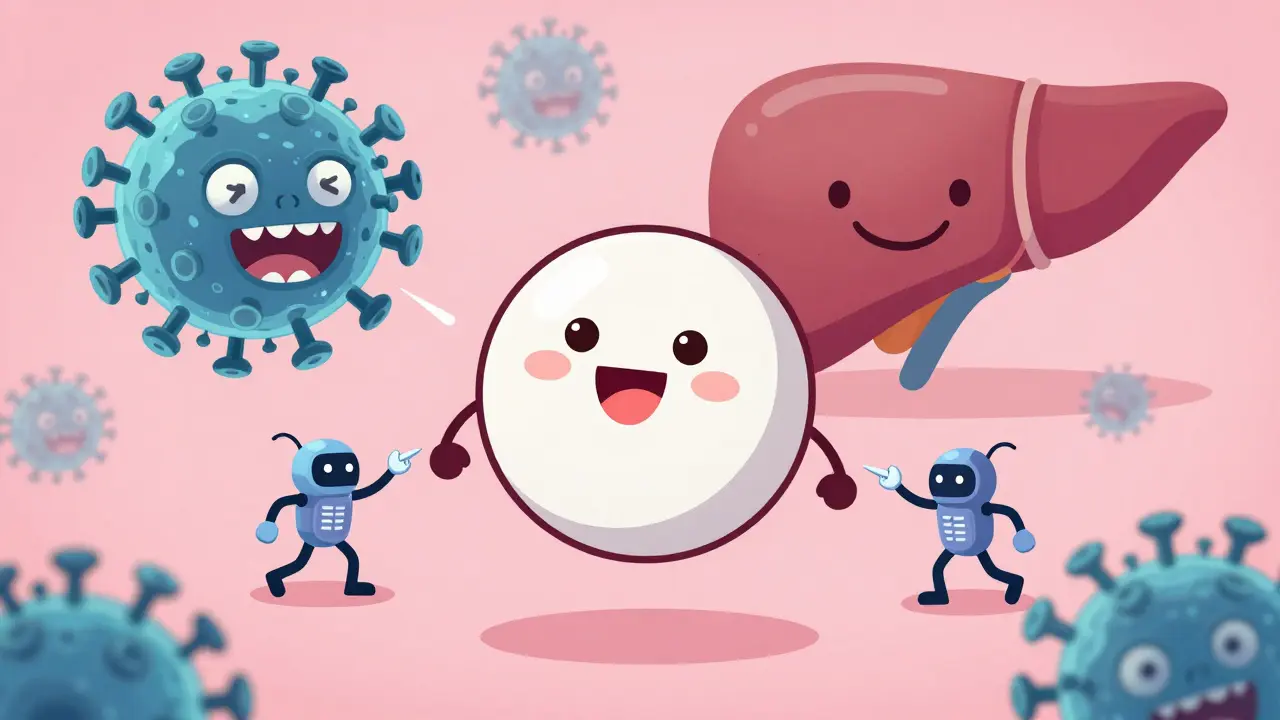
Everything changed after 2013, when the first direct-acting antivirals (DAAs) hit the market. These aren’t like old-school treatments. They don’t boost your immune system. They don’t cause you to feel like you have the flu for months. Instead, they go straight to the virus and shut it down at the molecular level. There are three main types of DAAs, each targeting a different part of the hepatitis C virus:- NS3/4A protease inhibitors - like glecaprevir and voxilaprevir - block the virus from cutting its proteins into working pieces.
- NS5A inhibitors - like velpatasvir and pibrentasvir - stop the virus from assembling new copies of itself.
- NS5B polymerase inhibitors - like sofosbuvir - prevent the virus from copying its RNA, which it needs to survive.
95% Cure Rate - And It’s Real
The numbers don’t lie. Today’s DAA regimens cure more than 95% of people with chronic hepatitis C. That’s not a guess. It’s what the CDC, WHO, and dozens of peer-reviewed studies confirm. In clinical trials, some regimens like sofosbuvir/velpatasvir and glecaprevir/pibrentasvir reached 99% cure rates in people who’d never been treated before. And it’s not just lab results. Real people are living proof. On Reddit’s hepatitis community, over 90% of users who shared their treatment stories reported being cured with minimal side effects. One person wrote: “Cured in 12 weeks with Epclusa. Only side effect was mild fatigue the first week.” Even people with advanced liver disease - those with cirrhosis or who’ve had a liver transplant - now have high cure rates. Before DAAs, transplant patients had a 25% chance of clearing the virus. Now, it’s 94%.How This Protects Your Liver
Curing the virus doesn’t just mean you’re no longer infectious. It means your liver gets a chance to heal. When the virus is gone, inflammation stops. Fibrosis stops progressing. In 70% of patients, the liver actually starts reversing the scarring within five years. That’s not just a theory - it’s shown in liver biopsies and non-invasive scans like FibroScan. The long-term benefits are massive:- 90% lower risk of liver failure
- 75% lower risk of liver cancer
- 80% lower risk of death from liver disease
What the Drugs Are - and What They’re Not
You’ll hear names like Epclusa, Mavyret, and Vosevi. These are brand names. The real power is in the drug combinations:- Epclusa - sofosbuvir + velpatasvir. Works for all genotypes. 12 weeks for most.
- Mavyret - glecaprevir + pibrentasvir. Can be done in 8 weeks for people without cirrhosis.
- Vosevi - sofosbuvir + velpatasvir + voxilaprevir. Used only if you’ve failed a previous DAA treatment.
Side Effects? Almost None
The biggest surprise for most patients? How easy it is. The CDC reports that over 90% of people experience no side effects beyond mild fatigue or a headache. Less than 5% stop treatment because of side effects. That’s nothing compared to interferon, where 70% of patients quit early due to nausea, depression, or flu-like symptoms. Some people worry about drug interactions. That’s valid. DAAs can react with certain heart medications, seizure drugs, or HIV treatments. But this is manageable. Your doctor checks your other meds before prescribing. In most cases, adjustments are simple - swap one pill for another, or change the timing.Cost: A Real Barrier, But Not Impossible
Let’s be honest. The price tag scared people at first. When Sovaldi launched in 2013, a 12-week course cost $94,500. That made headlines - and outrage. Today, prices have dropped dramatically. In the U.S., the list price for a full course is around $74,700, but very few pay that. Insurance covers most patients. Manufacturer assistance programs help the uninsured. In Australia, these drugs are subsidized through the PBS - meaning patients pay less than $30 per script. In low-income countries, generic versions are available for as little as $50 per treatment. Gilead and other manufacturers have committed to making these drugs accessible globally. More than 10 million people have been cured since 2013. The real problem isn’t the drug cost - it’s access to testing and diagnosis. Only 20% of people with hepatitis C worldwide even know they’re infected. That’s the biggest barrier to elimination.
Who Can Get Treated?
The good news? Almost everyone. DAAs work for:- People with or without cirrhosis
- Those with HIV or kidney disease
- People who inject drugs
- Post-liver transplant patients
- Children as young as 3
What Happens After You’re Cured?
Once you’ve completed treatment and your blood tests show no virus for 12 weeks (called SVR12), you’re considered cured. That’s permanent. The virus doesn’t come back. But here’s what you still need to do:- Get regular liver checks if you had cirrhosis before treatment - the cancer risk doesn’t vanish overnight.
- Avoid alcohol. It still damages your liver, even if the virus is gone.
- Use clean needles if you inject drugs. You can get reinfected.
- Practice safe sex if you have other STIs - hepatitis C can still spread, though it’s rare after cure.
Why This Matters for the Future
The World Health Organization wants to eliminate hepatitis C as a public health threat by 2030. That means reducing new infections by 90% and cutting deaths by 65%. We have the tools. We have the cure. What’s missing is screening. In high-income countries like Australia, Canada, and parts of Europe, treatment rates are above 60%. In low-income regions, it’s under 15%. People are still dying from a disease we can cure with a 12-week pill. The solution isn’t more drugs. It’s more testing. More outreach. More integration into primary care. Doctors in rural clinics, emergency rooms, and even needle exchange programs are now trained to test and treat hepatitis C. The learning curve is short. One program in Washington State found that after just four hours of training, primary care providers could prescribe DAAs correctly 95% of the time.Final Thoughts
Chronic hepatitis C used to be a life sentence. Now, it’s a brief chapter. The science is solid. The outcomes are proven. The treatment is simple. The cure is real. If you’ve ever been told you have hepatitis C - or if you think you might have it - don’t wait. Get tested. If you’re positive, ask about DAA treatment. There’s no reason to live with this virus anymore. Your liver will thank you. And so will your future self.Can hepatitis C come back after being cured with DAAs?
No. Once you achieve a sustained virologic response (SVR12) - meaning no detectable virus 12 weeks after finishing treatment - you are cured. The virus does not return. However, you can be reinfected if you’re exposed again, especially if you continue injecting drugs or have unprotected sex with someone who has hepatitis C.
Do I still need liver scans after being cured?
Yes, if you had cirrhosis before treatment. Even after curing the virus, the risk of liver cancer remains elevated for several years. Doctors recommend ultrasound scans every 6 months for at least 3-5 years after cure. If your liver was healthy before treatment, regular monitoring isn’t usually needed.
Are generic DAA medications as effective as brand names?
Yes. Generic versions of sofosbuvir, velpatasvir, and pibrentasvir have been tested in multiple countries and show the same cure rates as brand-name drugs - over 95%. The active ingredients are identical. The only differences are in inactive fillers and packaging. In low-income countries, generics are the main way people access treatment.
Can I drink alcohol after being cured of hepatitis C?
It’s strongly advised to avoid alcohol. Even after the virus is gone, your liver may still have scarring. Alcohol speeds up liver damage and increases your risk of liver cancer. The safest choice is no alcohol at all. If you do drink, limit it to very small amounts - and talk to your doctor first.
How do I know if I have hepatitis C?
The only way to know is through a blood test. Most people have no symptoms. If you were born between 1945 and 1965, had a blood transfusion before 1992, injected drugs, or have unexplained liver enzyme elevations, you should get tested. A simple antibody test comes first. If it’s positive, a second test checks for active virus (HCV RNA).
Is hepatitis C treatment covered by insurance?
In most countries with public healthcare systems - including Australia, Canada, and parts of Europe - treatment is fully covered. In the U.S., most private insurers and Medicaid/Medicare cover DAAs, but some require prior authorization or proof of liver damage. Patient assistance programs from drug manufacturers can cover costs for those without insurance.