
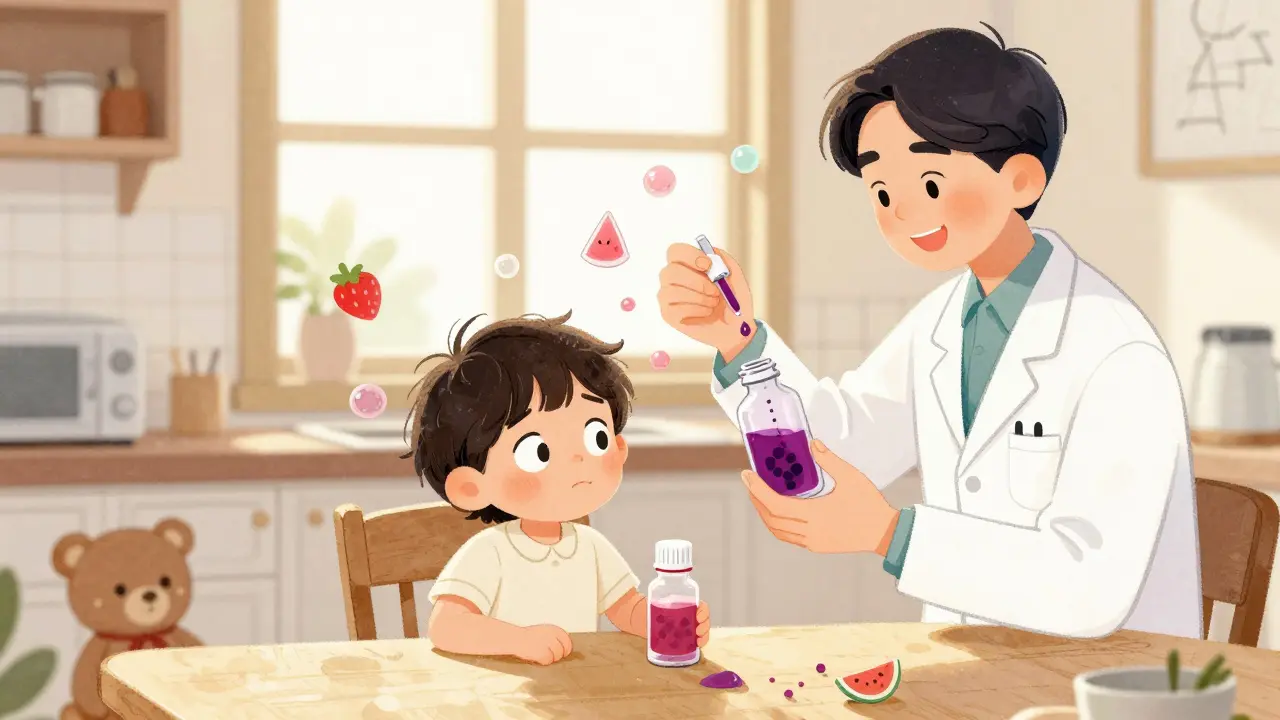
Imagine your child needs antibiotics for an ear infection. The prescription is clear, the dosage is correct, and the doctor explained everything. But when you open the bottle, your child grimaces, turns away, and starts crying. You try mixing it with juice. They spit it out. You beg. You bribe. You feel guilty. This isn’t just a parenting struggle-it’s a public health issue. Medication adherence in children is one of the most overlooked problems in pediatric care, and taste is the #1 reason kids refuse to take their medicine.
Why Taste Matters More Than You Think
More than 78% of children have trouble sticking to their medication schedule, and nearly half of those problems come down to one thing: bad taste. Liquid antibiotics like Amoxicillin, Augmentin, and Azithromycin are often bitter, chemical, or burning in the mouth. Kids don’t just dislike the flavor-they actively resist it. Some spit it out. Others gag. A few even develop a fear of taking medicine altogether. This isn’t just about discomfort. When kids skip doses or refuse medication, infections don’t clear. Antibiotic resistance grows. Hospital visits increase. Parents lose sleep. Doctors get frustrated. And the cycle repeats with the next prescription. The FDA calls palatability a “key factor in successful therapeutic intervention.” That’s not a fancy phrase-it’s a warning. If a child won’t swallow the medicine, it doesn’t matter how good the science behind it is.How Flavoring Services Work
Flavoring services are simple: a pharmacist adds a safe, kid-approved flavor to a liquid medication right before dispensing it. No special equipment. No extra steps. Just a few drops of grape, bubblegum, or watermelon flavoring mixed into the bottle. These flavoring systems, like FLAVORx, are designed specifically for pharmacy use. They’re sugar-free, dye-free, and don’t interfere with the medication’s strength or safety. That’s critical. Some parents try mixing medicine with juice or yogurt-but that can change how the drug is absorbed. Flavored syrups might contain sugar that interacts with antibiotics. Citrus juices can reduce effectiveness. Flavoring services avoid all that. Pharmacists don’t guess which flavor works. They follow proven guidelines. The top five medications that get re-flavored are:- Amoxicillin
- Augmentin
- Azithromycin
- Cefdinir
- Clindamycin
- Grape
- Bubblegum
- Strawberry
- Watermelon
- Cherry
The Numbers Don’t Lie
The data on flavoring services is hard to ignore. - Before flavoring: 76% of children didn’t take their medicine as prescribed. After flavoring: just 20% refused. That’s a 74% drop in non-compliance. - Compliance rates jumped from 53% to over 90% when flavoring was added, according to the National Community Pharmacists Association. - Intermountain Healthcare rolled out FLAVORx in all their pharmacies in 2023. Their goal? “Ensure patients are adherent and receive the best outcomes.” They charge $1.50 per prescription. That’s less than a coffee. These aren’t theoretical numbers. These are real results from real clinics. When taste is fixed, kids take their medicine. When they take their medicine, they get better faster. Fewer complications. Fewer follow-up visits. Fewer antibiotics misused.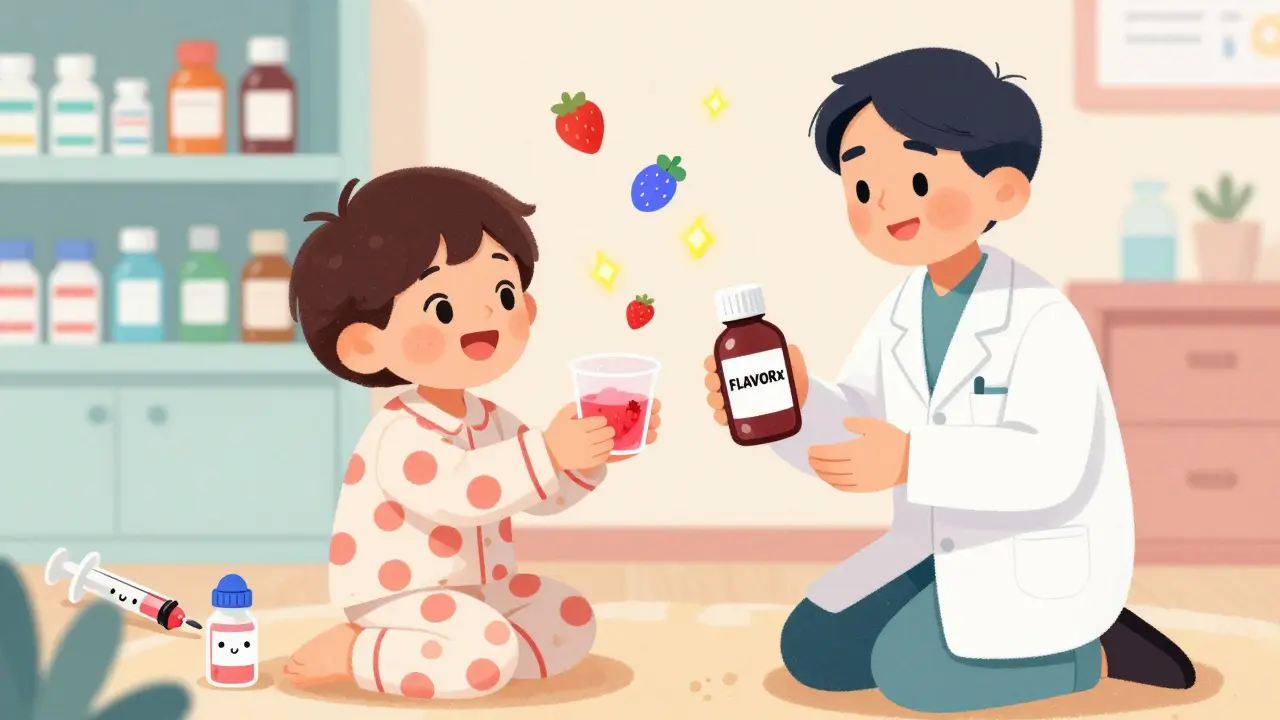
Flavoring vs. Other Solutions
Some parents turn to chewable tablets or dissolving pills. Those work well-if they exist for the right medication. But not all drugs come in those forms. Antibiotics? Mostly liquid. Allergies? Liquid. Seizure meds? Liquid. And even when tablets are available, kids under five often can’t swallow them. Mixing medicine with food? Risky. Some foods block absorption. Others change how the drug works. A study in Africa found 42% compliance with liquid antimalarials versus 91% with pre-packed tablets. That’s a huge gap. But tablets aren’t always an option. Flavoring fills that gap. Flavoring doesn’t replace better formulations-it complements them. It’s the fastest, cheapest, most widely available fix we have right now.What Pharmacists Need to Know
Not every liquid medicine can be flavored. Some are too thick. Some react chemically. Some lose stability. That’s why pharmacists need training. They don’t just pick a flavor and pour it in. They check compatibility. They consult databases. They call manufacturer support lines if unsure. The process takes 1-2 minutes. It’s built into standard compounding workflows. Pharmacies that offer this service report higher customer satisfaction. Parents remember the pharmacy that made medicine bearable. They come back. They refer friends. One pharmacy in Mississippi said flavoring became a key part of their pediatric care brand. The biggest barrier? Awareness. Most parents don’t know this service exists. They find out after weeks of fighting over medicine. That’s tragic. Pharmacists need to proactively ask: “Would you like us to add a flavor to this?”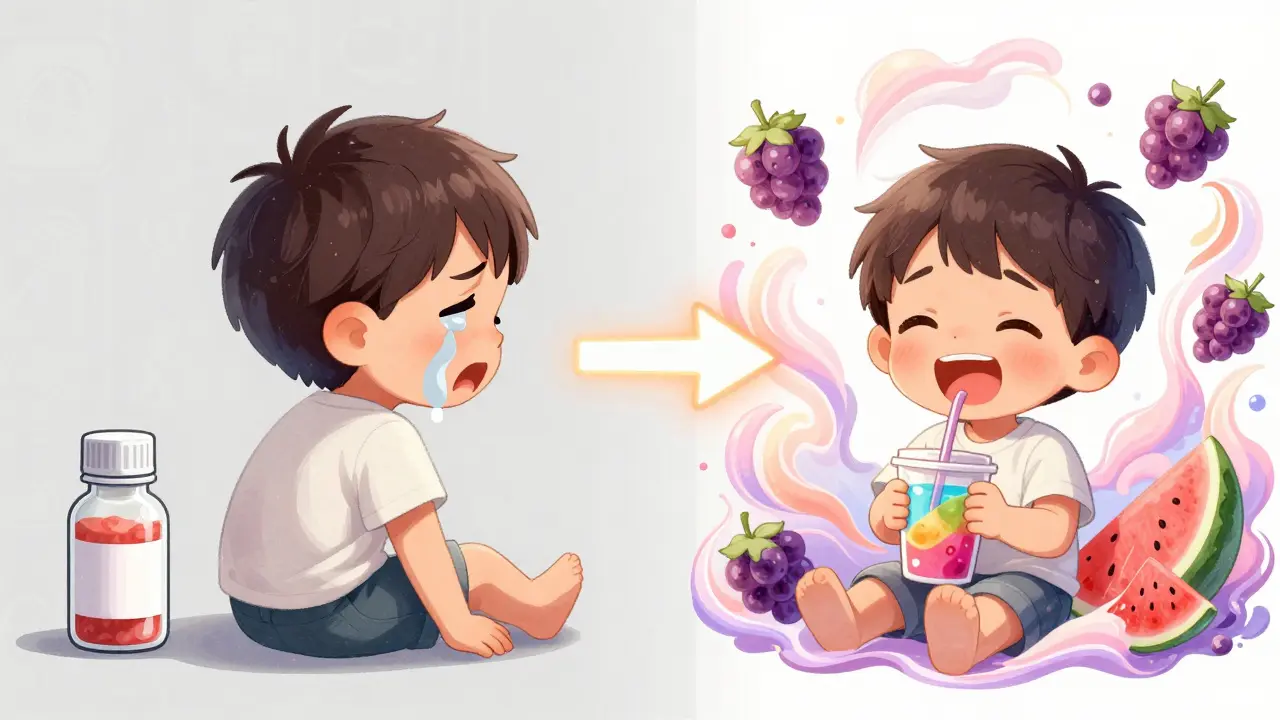
Limitations and Cautions
Flavoring isn’t magic. It won’t fix every adherence problem. Some kids still refuse. Some medications are too bitter, even with flavoring. A few children develop strong preferences-like only taking grape-flavored medicine-and struggle when switching to a new drug without that flavor. Experts also warn that relying on flavoring alone might delay better long-term solutions. Drug manufacturers need to design better-tasting formulations from the start. But until that happens, flavoring is the best tool we have. And yes-some pharmacists still don’t offer it. But that’s changing. More health systems are adopting it. More parents are asking for it. The trend is clear.What Parents Should Do
If your child is struggling with medicine:- Ask the pharmacist if flavoring is available. Don’t wait until the third failed dose.
- Let your child pick the flavor. It gives them ownership.
- Don’t mix medicine with food unless the pharmacist says it’s safe.
- Keep a note of which flavors work best-some kids develop favorites.
- If the pharmacy doesn’t offer it, ask them to start. Demand drives change.
The Bigger Picture
Pediatric medication adherence isn’t just about pills and syringes. It’s about dignity. About reducing fear. About giving kids a voice in their own care. Flavoring services do something rare in medicine: they make the system work for the child, not the other way around. This isn’t a luxury. It’s a necessity. When 90% of kids take their medicine because it tastes good, everyone wins. The child gets better. The family gets peace. The system gets efficiency. And the medicine? It finally does what it’s supposed to do.Can any liquid medication be flavored?
Most liquid medications can be flavored, but not all. Some formulations are too thick, chemically unstable, or react with flavoring agents. Pharmacists check compatibility before adding flavor. Common antibiotics like Amoxicillin and Azithromycin are ideal candidates. Always ask your pharmacist to confirm it’s safe for your child’s specific medication.
Is flavoring safe for children with allergies?
Yes. Leading flavoring systems like FLAVORx are sugar-free, dye-free, and free of common allergens like nuts, gluten, and dairy. They’re designed to be safe for children with food sensitivities. Always confirm the specific product’s ingredients with your pharmacist, but most systems are built with pediatric safety as a top priority.
Does flavoring change the dose or effectiveness of the medicine?
No. Flavoring agents are added in tiny, precise amounts that don’t alter the concentration, potency, or absorption of the medication. The dosage remains exactly as prescribed. Studies show no difference in drug levels or treatment outcomes when flavoring is used properly.
How much does flavoring cost?
At most community pharmacies, flavoring costs around $1.50 per prescription. Some pharmacies include it for free as part of their pediatric care services. It’s one of the most affordable interventions in medicine-and one of the most effective for improving adherence.
Can I flavor my child’s medicine at home?
It’s not recommended. Mixing medicine with juice, syrup, or food can change how the drug is absorbed or reduce its effectiveness. Some combinations are dangerous. For example, grapefruit juice can interfere with certain antibiotics. Always use professional flavoring services approved by your pharmacist to ensure safety and accuracy.
Why don’t all pharmacies offer this service?
Some pharmacies haven’t adopted it due to lack of awareness, training, or perceived low demand. But as more parents ask for it and health systems like Intermountain Healthcare prove its value, adoption is growing. If your pharmacy doesn’t offer it, ask them to start. Patient demand is the biggest driver of change.
Elizabeth Ganak
December 27, 2025 AT 13:05my little one used to cry every time i tried to give her amoxicillin... then we tried strawberry flavoring and she started asking for it like it was candy. no more battles, no more guilt. just a happy kid and a mom who finally got some sleep.
Nicola George
December 27, 2025 AT 18:24so let me get this straight - we’re paying $1.50 to make poison taste like a carnival? brilliant. next they’ll charge us extra to make the syringe glow in the dark. at least we’re not medicating our kids with glitter.
Andrew Gurung
December 28, 2025 AT 08:44OMG YES 😭 my daughter used to throw up every time she took azithromycin... then we did bubblegum and she started singing "I love my medicine!" like it was a Disney song. i cried. i’m not ashamed. this is witchcraft and i’m here for it 🍬✨
Paula Alencar
December 29, 2025 AT 21:25It is imperative to recognize that the adoption of flavoring services represents not merely a cosmetic intervention, but a paradigmatic shift in pediatric pharmacotherapy - one that centers the child’s lived experience as a legitimate and non-negotiable variable in therapeutic efficacy. The data, as presented, is unequivocal: when dignity is integrated into dosage form, adherence transforms from a behavioral challenge into an act of autonomous participation. This is not convenience - it is ethical care.
Kishor Raibole
December 31, 2025 AT 00:47While the statistical improvements are commendable, one must consider the broader implications of institutionalizing flavoring as a standard. Are we not, in effect, conditioning children to associate medication with artificial sweetness, thereby creating a psychological dependency on palatability rather than fostering intrinsic compliance? This is a slippery slope toward pharmaceutical infantilization.
Janice Holmes
January 1, 2026 AT 09:33Let’s be real - this isn’t about flavor. It’s about Big Pharma’s silent collusion with compounding pharmacies to monetize desperation. They don’t want better formulations. They want $1.50 per bottle. And now? Parents are being sold a lie: that taste is the problem, not the fact that 90% of pediatric antibiotics are still designed like chemical warfare agents. 🧪💸
John Barron
January 1, 2026 AT 13:07Actually, the real issue is that 78% of pediatric meds are still liquid because manufacturers refuse to invest in solid-dose alternatives for under-5s - which is a $2.3B market opportunity they’re ignoring. Flavoring is a Band-Aid on a broken supply chain. Also, did you know that grape flavor can interact with statins? 🤯 Just saying - this whole thing is a pharmacovigilance time bomb. 🚨
Anna Weitz
January 2, 2026 AT 10:04It’s not about taste it’s about control the system makes kids powerless so we slap on strawberry and call it progress but the real revolution is letting kids choose their own treatment not their own flavor
Will Neitzer
January 3, 2026 AT 16:34While the anecdotal evidence and localized success stories are compelling, a comprehensive meta-analysis of randomized controlled trials across diverse socioeconomic populations is still lacking. The cited compliance figures from Intermountain Healthcare, while impressive, derive from a single integrated health system with high baseline patient education levels. Generalizability to rural, low-income, or non-English-speaking communities remains unverified. Furthermore, the long-term behavioral implications of flavor-based reinforcement - particularly regarding future medication aversion when flavors are unavailable - warrant prospective longitudinal study. Until such data are published, this intervention should be classified as a palliative, not a curative, strategy.
Olivia Goolsby
January 3, 2026 AT 22:52Wait - so we’re giving kids candy-flavored antibiotics... and you’re calling this progress? What’s next? Sugar-coated chemo? Flavored insulin? You know what happens when you make medicine taste good? Kids start hoarding it. They start stealing it. They start asking for it when they’re not sick. This isn’t healthcare - it’s a sugar-fueled pharmaceutical carnival run by people who think a child’s compliance can be bought with artificial strawberry. And now? The FDA is complicit. You’re not fixing adherence - you’re creating a generation of medicine addicts who think pills are treats. 🍭💉