
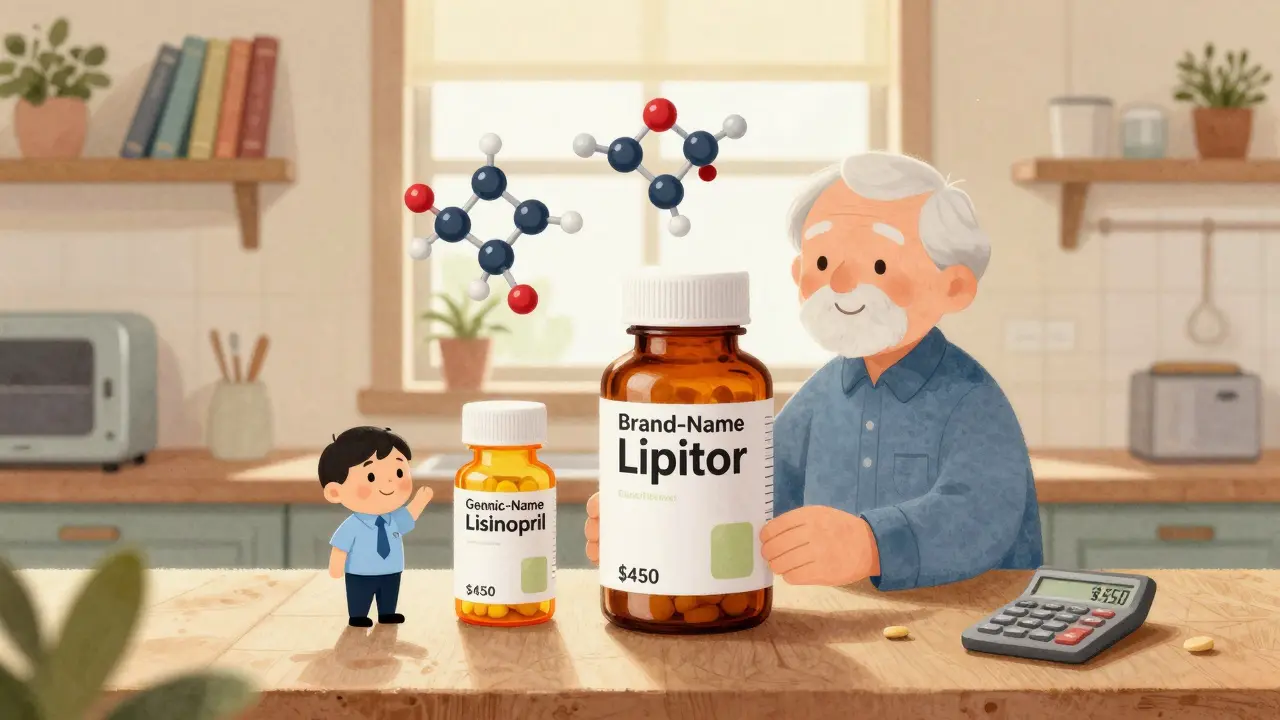
Switching to generic medications can save you hundreds, even thousands, of dollars a year - without putting your health at risk. If you’ve ever looked at your prescription bill and thought, “Why is this so expensive?”, you’re not alone. The truth is, most brand-name drugs cost 80-85% more than their generic versions. And yet, they work the same way. The FDA requires generics to contain the exact same active ingredients, in the same strength, and delivered the same way as the brand-name drug. That means your blood pressure pill, your thyroid med, your cholesterol treatment - if it’s generic - is chemically identical to the name-brand version you’re paying way more for.
What Makes a Generic Drug Really a Generic?
A generic drug isn’t a copycat. It’s not a cheaper version that’s kind of the same. It’s the same. The active ingredient - the part that actually treats your condition - must match the brand-name drug down to the molecule. The FDA doesn’t allow any wiggle room there. What’s different? The inactive stuff: the color, the shape, the filler, the flavor. These don’t affect how the drug works. They’re just there to make the pill look or taste different. That’s why your generic version of lisinopril might be a blue oval instead of a white round tablet. It’s still lisinopril. Still lowers blood pressure. Still saves you money.
The FDA requires every generic to prove it’s bioequivalent to the brand. That means in tests with healthy volunteers, the generic must be absorbed into your bloodstream at the same rate and to the same extent as the brand. The acceptable range? 80% to 125%. For most drugs, that’s plenty. But for drugs with a narrow therapeutic index - like warfarin, levothyroxine, or phenytoin - the range is tighter, 90% to 111%. These are the ones where even small changes in blood levels can matter. That’s why doctors sometimes recommend sticking with the same manufacturer for these meds.
How Much Can You Actually Save?
Let’s get real about the numbers. A 30-day supply of brand-name Lipitor (atorvastatin) can cost up to $450. The generic? Around $0.50 at major U.S. pharmacies. That’s not a typo. $0.50. Same drug. Same effect. Same risk profile. Same FDA approval. Same manufacturing standards. You’re paying $449.50 for the brand name and the logo.
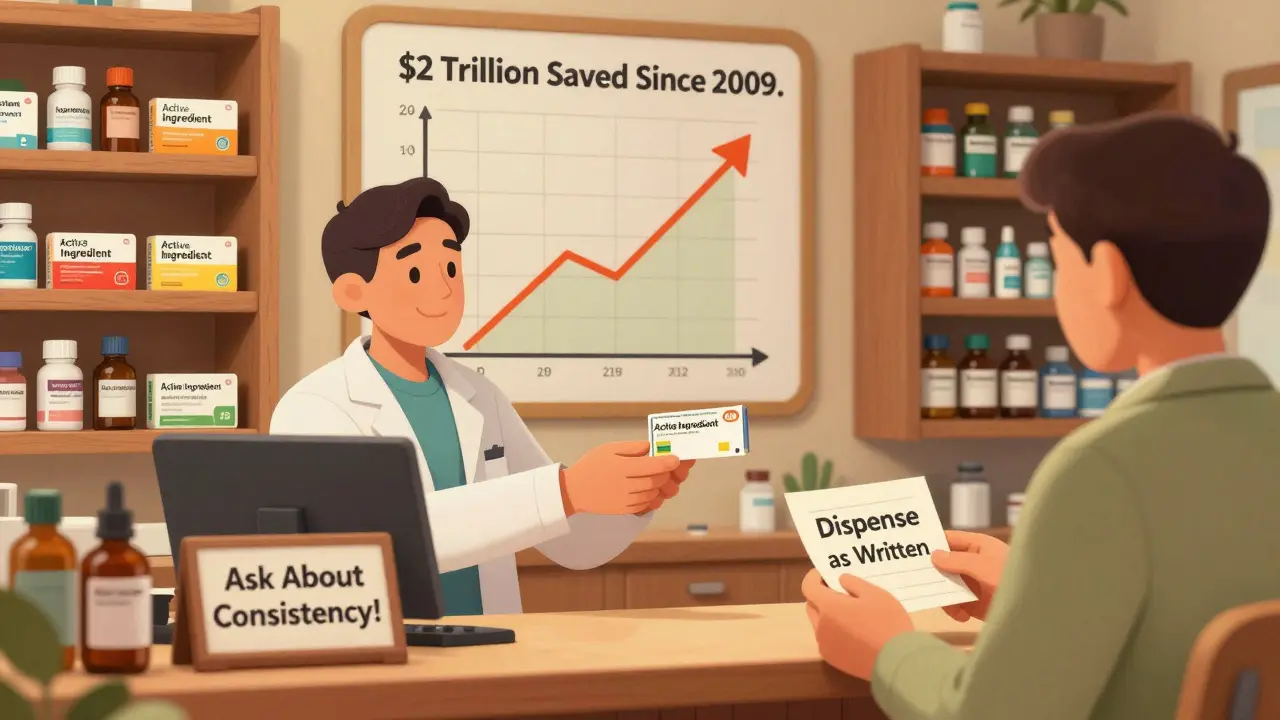
Plavix (clopidogrel)? $380 for the brand. $1.20 for the generic. Metformin? $10 for the brand. $4 for the generic. Even expensive drugs like Eli Lilly’s Trulicity, which just lost patent protection in 2024, will soon have generics priced at a fraction of the original cost. Since 2009, generics have saved the U.S. healthcare system nearly $2 trillion. That’s not just corporate savings - it’s money back in your pocket.
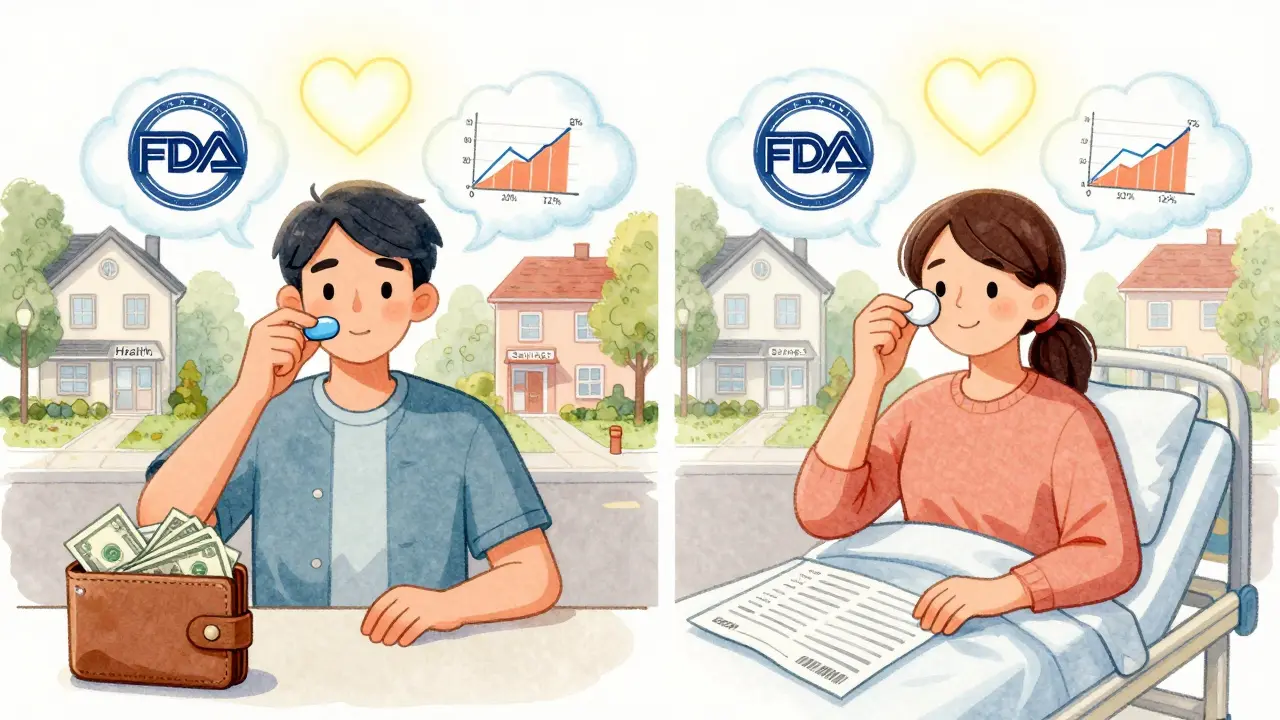
And it’s not just about cost. People who switch to generics are more likely to keep taking their meds. GoodRx data shows 89% of users stick with their prescriptions when using generics, compared to just 67% who stay on brand-name drugs because they can’t afford them. Skipping doses because of cost? That’s how you end up in the hospital. Generics help you stay healthy - and out of expensive medical situations.
Are Generics Always Safe? The Exceptions
For the vast majority of people, generics are just as safe and effective as brand-name drugs. A 2020 study in Nature Communications looked at 17 cardiovascular drugs and found generics were linked to fewer deaths in 10 of them. Another large 2024 study tracking 2.3 million patients found no difference in heart attack or stroke risk between brand-name and generic statins - as long as patients stayed on the same generic manufacturer.
But there are a few cases where caution is needed. Levothyroxine, used for thyroid conditions, is one. A 2022 Drugs.com analysis of over 1,800 patient reviews found 23% reported inconsistent symptom control with generic versions, compared to 8% with Synthroid. Why? Because even tiny changes in thyroid hormone levels can cause fatigue, weight gain, or heart palpitations. The FDA allows multiple generic manufacturers for levothyroxine, and slight differences in inactive ingredients can affect absorption in sensitive individuals. If you’re on thyroid meds, stick with the same brand or generic - don’t switch back and forth.
Same goes for antiepileptic drugs. A study in Neurology found a 12% higher chance of seizure recurrence after switching between different generic versions of the same drug. For people with epilepsy, consistency matters more than cost. If you’re stable on a brand, talk to your doctor before switching. If you’re on a generic and doing fine? Don’t change it.
And then there’s warfarin. This blood thinner has a narrow window - too little and you clot; too much and you bleed. A JAMA Internal Medicine study showed that switching between generics increased INR instability by 18%. That’s why many doctors recommend staying with one manufacturer if you’re on warfarin. It’s not about quality - it’s about consistency.
What You Should Ask Your Pharmacist
You don’t have to guess. When you get your prescription, ask three simple questions:
- Is this generic made in an FDA-inspected facility? (You can check the FDA’s Drugs@FDA database if you want to verify.)
- Are there multiple generic makers for this drug? (More options usually mean lower prices.)
- Is this a narrow therapeutic index drug? (If yes, ask if you should stick with one brand or generic manufacturer.)
Pharmacists are trained to help you navigate this. A 2023 University of Michigan study found that patients who got a short counseling session from their pharmacist about generics had 32% better adherence and 27% fewer medication problems. That’s not just helpful - it’s life-changing.
How to Spot Unwanted Switches
One of the biggest complaints about generics isn’t that they don’t work - it’s that the pill changes without warning. You’ve been taking a white, oval pill for months. Then you pick up your refill and it’s a blue, round one. You didn’t ask for a switch. Your doctor didn’t change it. But your pharmacy did. And suddenly, you feel off.
This happens because pharmacies often switch to the cheapest generic available. That’s fine - unless you’re sensitive to the filler or coating. The FDA says these changes don’t affect safety. But your body might notice. A 2021 study found that 65% of adverse event reports tied to generics came from unexpected manufacturer changes, not poor quality.
How to avoid this? Ask your pharmacist to stick with the same manufacturer. Or write “Dispense as written” on your prescription. Or better yet, ask your doctor to specify the manufacturer on the script. You have the right to request consistency.
When to Stick With Brand-Name
There’s no shame in choosing the brand-name drug if it’s the right choice for you. If you’ve been on a brand for years and feel great - and you can afford it - there’s no need to switch. If you’ve tried a generic and had side effects that didn’t go away - talk to your doctor. Maybe it’s not the drug - it’s the filler. Maybe you need a different generic. Or maybe you need the brand.
The goal isn’t to always pick the cheapest. The goal is to pick the one that works for you - safely and affordably. For most people, that’s a generic. For a small group - those on thyroid meds, antiseizure drugs, or blood thinners - consistency matters more than cost. And that’s okay.
What’s Changing in 2026?
The FDA is tightening rules to make generics even more reliable. By 2026, 95% of generic applications must include data from continuous manufacturing processes - a newer, more precise way to make drugs that reduces batch-to-batch variation. This is a direct response to the 2022-2023 shortages of amoxicillin and Adderall, which were caused by unreliable supply chains.
Also, the PRESCRIPTION Act, passed in 2023, is pushing states to require pharmacists to substitute generics unless the doctor says no. That means more people will be offered generics - and more people will save money.
Biosimilars - generic versions of complex biologic drugs like Humira or Enbrel - are also hitting the market. These aren’t simple pills. They’re injectables made from living cells. But they’re still cheaper. And the FDA says they’re as safe and effective as the originals. By 2030, biosimilars could save the U.S. $300 billion.
Final Thought: Generics Aren’t a Compromise - They’re a Smart Choice
You don’t have to sacrifice safety to save money. Generics aren’t second-rate. They’re regulated just as strictly as brand-name drugs. The FDA inspects their factories just as often. They’re held to the same standards. The only difference? The price tag.
For 90% of prescriptions filled in the U.S., generics are the standard. And for good reason. They work. They’re safe. And they keep people healthy without bankrupting them.
If you’re on a long-term medication, ask your doctor or pharmacist: “Is there a generic version? And if so, can we stick with one manufacturer?” That’s how you save money - without taking any risks.
Are generic drugs as safe as brand-name drugs?
Yes, for the vast majority of medications. The FDA requires generics to have the same active ingredients, strength, dosage form, and route of administration as the brand-name drug. They must also prove they’re bioequivalent - meaning they work the same way in your body. The FDA inspects manufacturing facilities for generics just as often as for brand-name drugs. Over 90% of prescriptions in the U.S. are filled with generics, and studies show they’re just as safe and effective for most conditions.
Why do some people say generics don’t work as well?
In rare cases, people report differences - especially with narrow therapeutic index drugs like levothyroxine, warfarin, or antiepileptic medications. These drugs require very precise blood levels. Even small changes in how the drug is absorbed - caused by different inactive ingredients - can affect how you feel. Switching between different generic manufacturers can also cause issues. If you notice symptoms after switching, talk to your doctor. You may need to stick with one brand or generic manufacturer.
Can I ask my pharmacist to give me the same generic every time?
Yes. You can ask your pharmacist to dispense the same generic manufacturer each time. You can also ask your doctor to write “Dispense as written” or specify the manufacturer on your prescription. This is especially important for drugs with a narrow therapeutic index. Many pharmacies will honor this request - especially if you explain you’ve had issues with switches before.
Why are generics so much cheaper?
Generics are cheaper because they don’t need to repeat expensive clinical trials. The original brand-name drug company spent millions developing the drug and proving it’s safe and effective. Once the patent expires, other companies can make the same drug using the existing data. They only need to prove bioequivalence - which costs far less. They also don’t spend money on marketing, TV ads, or fancy packaging. That savings gets passed on to you.
Should I switch from a brand-name drug to a generic?
For most people, yes - and it’s often the best choice. But if you’re on a drug with a narrow therapeutic index, or if you’ve had problems switching before, talk to your doctor first. Don’t switch without checking. If you’re stable on your current medication - brand or generic - there’s no need to change. But if cost is a barrier, switching to a generic can help you stay on your meds and avoid worse health outcomes down the line.
If you’re paying hundreds a month for a prescription, ask yourself: Is it the drug - or the brand name - you’re paying for? The answer might save you more than money. It might save your health.





Iona Jane
January 16, 2026 AT 10:10Jaspreet Kaur Chana
January 18, 2026 AT 00:39Sohan Jindal
January 18, 2026 AT 04:53Frank Geurts
January 18, 2026 AT 16:36Annie Choi
January 20, 2026 AT 03:01Arjun Seth
January 20, 2026 AT 11:02Mike Berrange
January 20, 2026 AT 12:12Amy Vickberg
January 21, 2026 AT 14:27Ayush Pareek
January 21, 2026 AT 15:42Nishant Garg
January 23, 2026 AT 03:13Nicholas Urmaza
January 24, 2026 AT 01:19Gloria Montero Puertas
January 26, 2026 AT 01:08Tom Doan
January 27, 2026 AT 20:07