
18
Dec
Melatonin-Sedative Interaction Risk Calculator
Risk Assessment Tool
Calculate your risk of dangerous drowsiness when combining melatonin with sedatives based on medical guidelines.
Your Risk Assessment
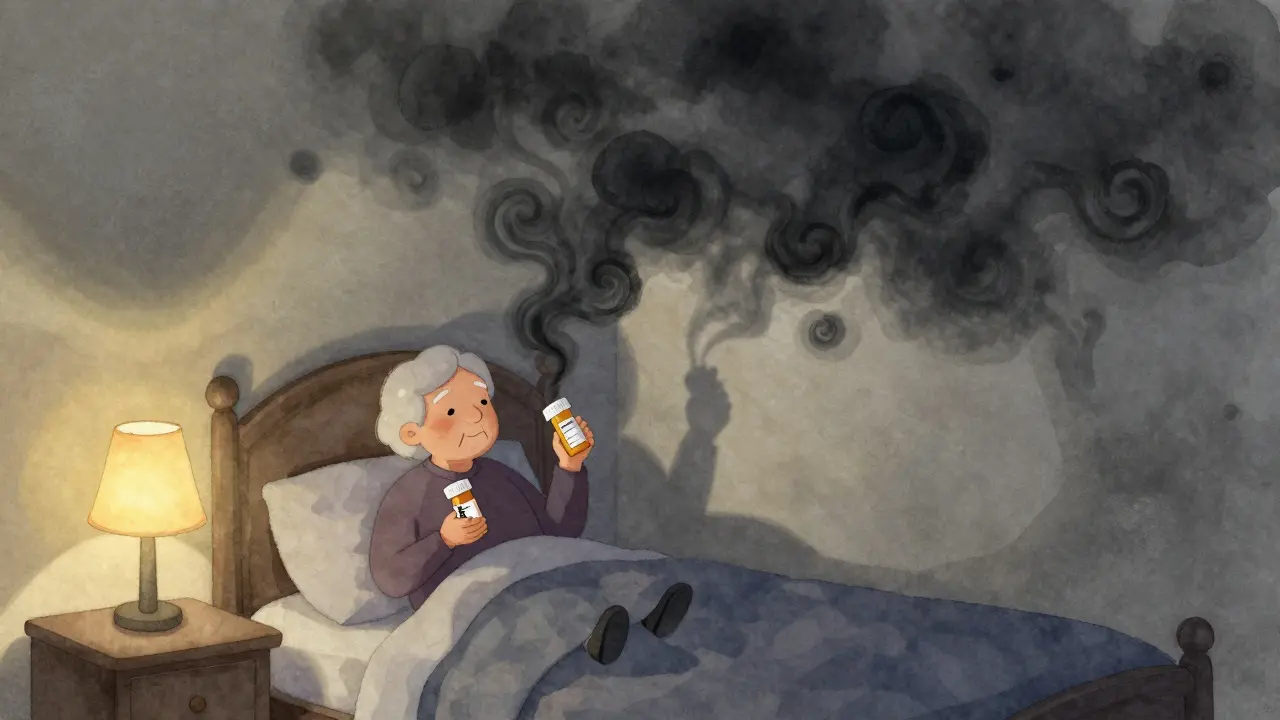
Many people turn to melatonin to help fall asleep, thinking it’s just a natural hormone and therefore harmless. But when you mix it with prescription sedatives - like Ambien, Xanax, Valium, or even some antidepressants - the results can be dangerous. The drowsiness doesn’t just add up. It multiplies.
Why Melatonin Isn’t Just a ‘Natural’ Sleep Aid
Melatonin is a hormone your body makes naturally to signal bedtime. Supplements mimic this signal, helping reset your internal clock. But unlike vitamins or herbal teas, melatonin works directly on your brain’s sleep centers. It binds to receptors that slow down nerve activity, making you feel sleepy. That’s why it’s effective - and why it’s risky when combined with other sedatives. The problem? Most people don’t realize melatonin has pharmacological effects. It’s not regulated like a drug in the U.S., so you can buy it anywhere - pharmacies, gas stations, Amazon. But that doesn’t mean it’s safe to mix. The European Medicines Agency treats it like a medicine. In the U.S., it’s treated like a supplement. That gap in regulation leaves people guessing.What Happens When Melatonin Meets Sedatives?
Sedatives - whether they’re benzodiazepines, non-benzodiazepine sleep pills, opioids, or even some antihistamines - all slow down your central nervous system. Melatonin does the same thing. When you combine them, the effect isn’t 1 + 1 = 2. It’s more like 1 + 1 = 3 or 4. A 2020 study in the Journal of Clinical Sleep Medicine found that mixing melatonin with benzodiazepines increased the risk of respiratory depression by 47%. That’s more than doubling the risk you’d get from just taking two prescription sedatives together. Respiratory depression means your breathing slows to dangerous levels. In severe cases, it can lead to coma or death. Real-world stories back this up. One Reddit user took 3mg of melatonin with 0.5mg of Xanax and woke up 14 hours later with no memory of the night. Another drove their car after taking melatonin with zolpidem and ended up in a ditch. These aren’t rare cases. A 2022 ConsumerLab survey found that 28% of people who took melatonin with sedatives did so without talking to a doctor. Of those, 37% experienced unintended oversedation - and 4% needed emergency care.Who’s at Highest Risk?
Older adults are especially vulnerable. The American Geriatrics Society’s 2023 Beers Criteria explicitly warns against combining melatonin with benzodiazepines in people over 65. Why? Because aging slows how your body processes both substances. The result? Higher blood levels, longer effects, and a 68% higher risk of falls. One fall can mean a broken hip, hospitalization, or worse. People taking multiple medications are also at risk. If you’re on an antidepressant like fluoxetine, an antipsychotic like quetiapine, or even an opioid for pain, melatonin can push your system into over-sedation. Even common OTC sleep aids like diphenhydramine (Benadryl) can interact. Melatonin doesn’t just play nice with prescription drugs - it amplifies them.
How Much Is Too Much?
Dose matters. Most melatonin supplements sold in the U.S. contain 3mg, 5mg, or even 10mg. But clinical studies show that doses between 0.3mg and 0.5mg are just as effective for sleep regulation - and far safer when combined with other sedatives. The American Academy of Sleep Medicine now recommends that if a doctor approves combining melatonin with a sedative, the melatonin dose should be cut to 0.3-0.5mg. The sedative dose should also be lowered by at least 25%. Why? Because the interaction is unpredictable. What’s safe alone can become dangerous together. Also, timing matters. Melatonin peaks in your bloodstream within 30 to 60 minutes. Its effects can last 4 to 6 hours. If you take it with a sedative that lasts 8 hours, you’re looking at 10+ hours of drowsiness. The Cleveland Clinic advises allowing at least 8 hours of sleep after combining the two - not the usual 7.What Should You Do Instead?
If you’re relying on melatonin and sedatives together, you’re treating symptoms - not the root cause. Chronic insomnia isn’t usually caused by low melatonin. It’s often linked to stress, poor sleep habits, anxiety, or underlying medical conditions. Cognitive Behavioral Therapy for Insomnia (CBT-I) is now the first-line treatment recommended by the American College of Physicians. It’s more effective than any pill. Studies show it improves sleep quality in 70-80% of patients and the benefits last long after treatment ends. Unlike pills, CBT-I doesn’t carry interaction risks or dependence. If you’re already taking a sedative, talk to your doctor about tapering off. Many people don’t realize they’ve become dependent. Withdrawal can be tough, but it’s safer than continuing a dangerous combo.
Safety Rules You Can’t Ignore
Here’s what you need to do right now:- Don’t combine melatonin with any sedative without talking to your doctor or pharmacist. This includes prescription meds, OTC sleep aids, and even alcohol.
- Check your labels. Since 2021, the European Medicines Agency requires all melatonin products to carry a warning: “Do not combine with sedatives.” The FDA is moving toward the same rule by mid-2024.
- Use the lowest effective dose. Start with 0.3mg. Most people don’t need more.
- Wait at least 5 hours between taking melatonin and other sedatives. The Mayo Clinic recommends this buffer to reduce overlap.
- Avoid driving or operating machinery for at least 8 hours after taking melatonin with any sedative. Even if you feel fine, your reaction time is impaired.
- Use time-released melatonin if you must combine. A 2023 study in Sleep Medicine Reviews found it reduces interaction risks by 31% compared to immediate-release versions.





Allison Pannabekcer
December 18, 2025 AT 11:42Wow, this is one of those posts that makes you pause and rethink everything. I used to take melatonin with my nightly Xanax because I thought it helped me sleep deeper. Turns out, I was just setting myself up for a nightmare. After reading this, I finally called my doctor and we cut my melatonin down to 0.3mg and adjusted my dose. No more 14-hour blackouts. Seriously, if you’re doing this, stop. Talk to someone.
Alana Koerts
December 18, 2025 AT 14:08Study says 47% increase in respiratory depression? That’s not even statistically significant if the sample size was under 200. Also, melatonin’s not even a real drug so why are we treating it like one? The FDA’s just scared of supplements losing money.
Edington Renwick
December 19, 2025 AT 09:01Alana, you’re missing the point. It’s not about stats-it’s about people waking up in ditches. I had a cousin who took melatonin with Ambien and ended up in the ICU. He didn’t even remember calling 911. This isn’t a debate. It’s a public health blind spot.
Dominic Suyo
December 19, 2025 AT 09:34Let’s be real-this whole ‘natural doesn’t mean safe’ thing is just corporate propaganda. You think Big Pharma didn’t push this narrative to kill off the supplement market? Melatonin’s been around since the 80s. If it was that dangerous, we’d all be dead by now.
Chris Clark
December 21, 2025 AT 02:37Im not a doc but i used to work in a pharmacy and we had a guy come in every week buyin 10mg melatonin and a bottle of zolpidem. He said he felt ‘more rested’ but his wife told us he’d sleepwalk and talk incoherently for hours. We stopped sellin him the melatonin after he tried to buy it with a fake prescription. This is real. People dont get it until its too late.
pascal pantel
December 22, 2025 AT 11:51The pharmacokinetic synergy between melatonin and GABAergic agents is well-documented in CNS depressant literature. The CYP1A2 and CYP2C19 metabolic pathways are competitively inhibited, resulting in prolonged half-life and amplified sedative burden. You’re not just stacking effects-you’re inducing pharmacodynamic potentiation. This isn’t anecdotal. It’s biochemistry.
William Storrs
December 23, 2025 AT 19:27If you’re reading this and you’re taking melatonin with anything else-stop. Just stop. You don’t need to be perfect. You just need to be safe. Talk to your doctor. Try CBT-I. It’s not magic, but it’s real. And you deserve to wake up feeling like yourself, not like you got hit by a truck.
Alisa Silvia Bila
December 24, 2025 AT 10:25I’m 72 and take a low-dose benzodiazepine. I started 0.5mg melatonin last year because my sleep was spotty. I didn’t realize how much it was slowing me down until I tripped getting out of bed. This post saved me. Now I only take 0.3mg and wait 6 hours between meds. My balance is better. My mind is clearer. Thank you for writing this.
Sarah McQuillan
December 25, 2025 AT 23:02Europe treats melatonin like a drug? That’s just socialist overreach. In America we have freedom to choose. If I want to mix melatonin with my wine and Xanax, that’s my business. The government shouldn’t be telling adults what to take.
James Stearns
December 27, 2025 AT 11:01It is a matter of profound concern that the regulatory disparity between the European Medicines Agency and the U.S. Food and Drug Administration permits the uncontrolled dissemination of a neuroactive substance with documented synergistic risks. The American public, in its collective ignorance, treats pharmacological agents as if they were confectionery. This is not liberty-it is negligence.
Nina Stacey
December 28, 2025 AT 03:38i just wanted to say thank you for this post because i didnt know melatonin could do this and i was taking it with my antidepressant and now im scared but also kinda glad i found out before something bad happened. i called my dr and we talked about cbt i and im starting next week. i dont know if i can do it but im trying. thanks for being real.
Kevin Motta Top
December 28, 2025 AT 14:20CBT-I works. I did it for 8 weeks. No pills. No melatonin. My sleep improved more than it ever did with Ambien. The hardest part was stopping the bedtime scrolling. The rest? Easy.
William Liu
December 30, 2025 AT 00:29My mom took 5mg melatonin with her sleeping pill and didn’t wake up for 18 hours. She’s fine now, but I’ll never let her touch it again.