
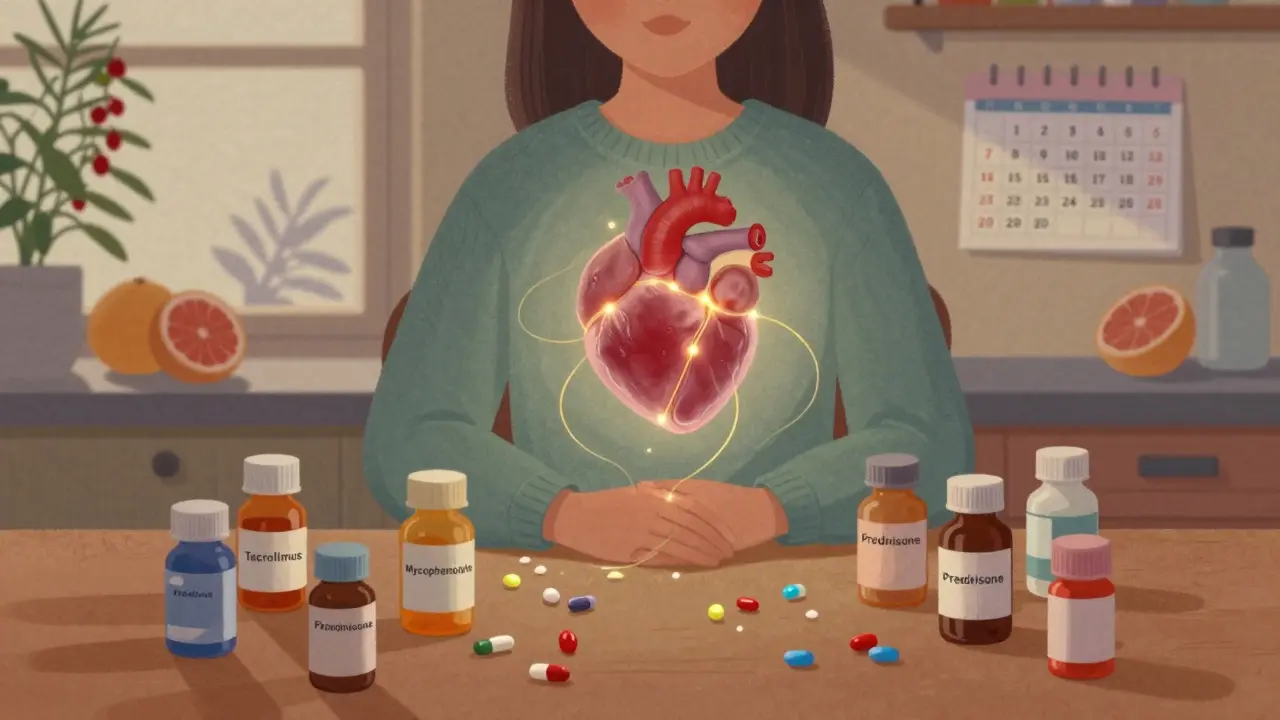
Living with a transplanted organ means more than just surviving - it means managing a delicate balance between keeping your body from rejecting the new organ and avoiding the harsh side effects of the drugs that make it possible. For over 60 years, immunosuppressant drugs have turned what was once a death sentence into a second chance. But those drugs come with a heavy price tag: constant monitoring, dangerous interactions, and lifelong side effects that reshape your daily life.
Why You Can’t Stop Taking These Drugs
Your immune system is designed to attack anything it doesn’t recognize - including a new kidney, liver, or heart. Without drugs to calm it down, your body will destroy the transplant within days. That’s why nearly all transplant recipients take immunosuppressants for life. The only exceptions? Identical twins. In every other case, the immune system sees the new organ as an invader. There’s no way around it - not yet. The standard treatment today is a triple combo: a calcineurin inhibitor (usually tacrolimus), an antimetabolite (often mycophenolate), and a steroid (like prednisone). This mix keeps rejection rates low. In fact, 92% of U.S. kidney transplant patients take tacrolimus because it’s more effective than older drugs like cyclosporine. One-year graft survival jumped from 76% with cyclosporine to 83% with tacrolimus in the landmark ELITE-Symphony trial. But that success comes with trade-offs.How These Drugs Work - And Why They’re So Dangerous
Each drug targets a different part of your immune system. Tacrolimus and cyclosporine block T-cells from activating - the same cells that would otherwise attack your new organ. Mycophenolate stops lymphocytes from multiplying. Steroids like prednisone shut down inflammation across the board. And newer drugs like sirolimus slow down cell growth entirely. But here’s the catch: these drugs don’t know the difference between a bad invader and a good one. They weaken your entire immune system. That’s why you’re more likely to get infections, develop cancer, or suffer organ damage. The narrow window between too little and too much is razor-thin. For tacrolimus, the ideal blood level is 5-8 ng/mL in the first year. Go above that, and your kidneys start to fail. Drop below, and your body rejects the transplant.The Most Common Drug Interactions - And How They Can Kill You
Almost every medication you take can interfere with your immunosuppressants. Why? Because most of them are broken down by the same liver enzyme: CYP3A4. If another drug blocks this enzyme, your tacrolimus level spikes. If another drug speeds it up, your level crashes. Take antifungals like fluconazole. They can boost tacrolimus levels by up to 200%. That’s not a typo. A simple yeast infection treatment could send your blood levels into toxic territory - leading to kidney failure or seizures. On the flip side, rifampin (used for tuberculosis) can slash tacrolimus levels by 90%. One missed dose adjustment, and your body starts attacking the transplant. Even over-the-counter stuff can be risky. St. John’s wort? It reduces tacrolimus levels. Grapefruit juice? It increases them. Antibiotics like clarithromycin? Dangerous. Even some heartburn meds like omeprazole can interfere. That’s why transplant centers require you to list every pill, supplement, and herbal remedy you take - even if you think it’s harmless.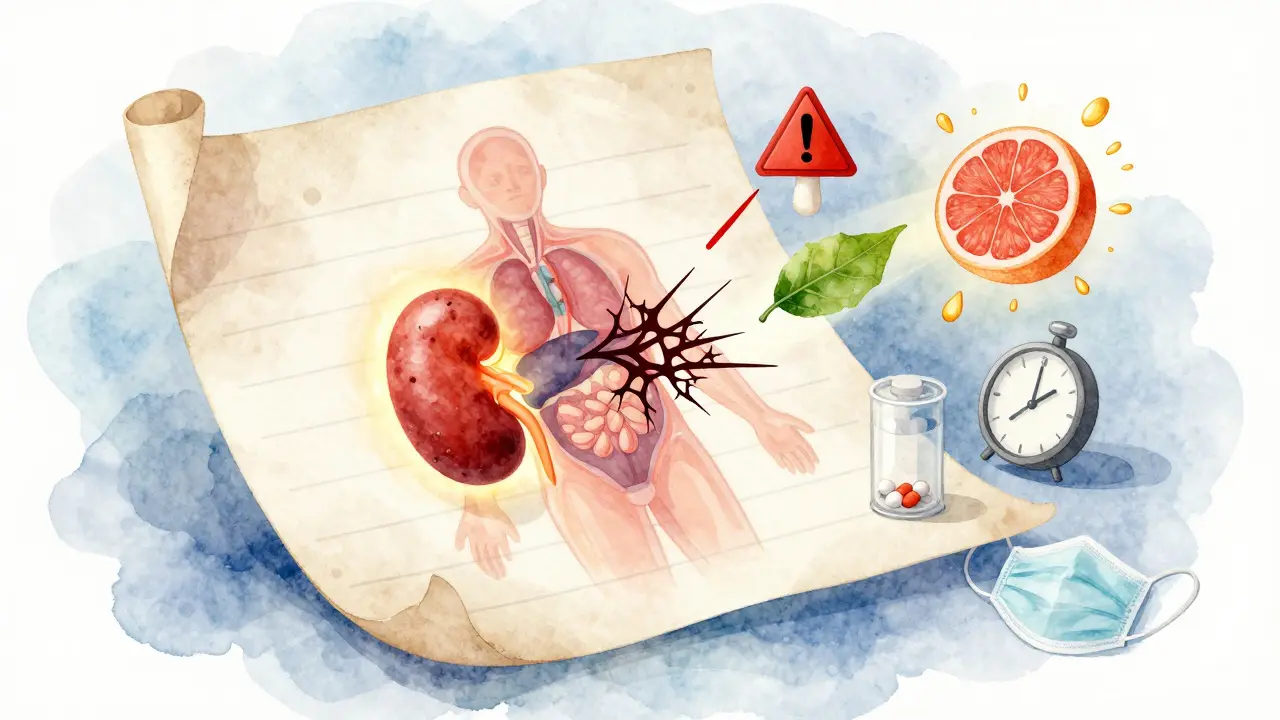
The Side Effects You Can’t Ignore
Side effects aren’t just annoying - they’re life-altering. And they don’t go away. Tacrolimus is linked to new-onset diabetes after transplant (NODAT). About 1 in 4 recipients develop it. That means daily blood sugar checks, insulin shots, and dietary restrictions - all on top of your transplant care. Mycophenolate causes stomach issues in up to half of users. Diarrhea, nausea, vomiting - it’s so common that many patients stop taking it. But if you do, rejection risk shoots up. Switching to azathioprine helps some, but then you risk low white blood cell counts - leaving you vulnerable to infections. Steroids are the worst for quality of life. They cause weight gain - often 15 to 20 pounds in the first six months. Your face swells into a round, puffy moon. Your back humps up. Your skin bruises easily. Muscle weakness sets in. And after years? Bone density plummets. One in three heart transplant patients ends up on osteoporosis drugs because their bones are so fragile. Sirolimus is less toxic to the kidneys, but it brings its own problems: mouth sores, high cholesterol, and slow wound healing. One patient on Reddit said switching to sirolimus improved his kidney function - but now he’s on statins and deals with painful ulcers every week.The Hidden Costs: Cancer, Infections, and Mental Health
Your risk of cancer doubles after a transplant. Skin cancers - especially nonmelanoma types - affect 23% of liver transplant patients. Other common cancers include lymphoma, Kaposi sarcoma, and HPV-related cancers - which occur 100 times more often than in the general population. Infections are relentless. You can’t eat raw sushi. You avoid crowded places. You wear masks in airports. A fever above 100.4°F isn’t just a cold - it’s a red flag that could mean sepsis. One study found 85% of transplant recipients have had at least one serious infection since their surgery. And then there’s the mental toll. Chronic fatigue hits 72%. Sleep problems? 68%. Emotional swings - known as “steroid rage”? 54%. Patients describe feeling like strangers in their own bodies. One person on Reddit said, “I don’t recognize myself in the mirror anymore.”How to Survive the Regimen
Most patients take 8 to 12 pills a day, at specific times. Miss one, and rejection risk climbs. Take too much, and your kidneys fail. That’s why adherence is everything. Transplant centers use electronic pill dispensers to help. In one study, adherence jumped from 72% to 89% when patients used them. Blood tests are non-negotiable. In the first few months, you’ll get your tacrolimus level checked twice a week. Then weekly, then monthly - for life. You’ll also need monthly blood counts, quarterly cholesterol panels, and biannual glucose tests. You’ll be told to avoid raw foods, undercooked meat, and unpasteurized dairy. You’ll need to get annual skin checks. You’ll be urged to get vaccinated - but not live vaccines. You’ll be asked to live within two hours of your transplant center for the first year. Most U.S. programs require this. It’s not optional.
New Hope on the Horizon
There’s progress. In 2023, the FDA approved voclosporin - a new calcineurin inhibitor with fewer kidney side effects. Early data shows 24% less kidney damage than tacrolimus. Belatacept, a newer drug that doesn’t rely on CYP3A4, cuts heart disease and cancer risk by 25-30% over seven years. The trade-off? Higher rejection rates early on. The biggest breakthrough? Tolerance. In a 2023 study, 15% of kidney transplant patients achieved “operational tolerance” - meaning they stopped all immunosuppressants without rejection. It’s still rare, but it’s proof that a future without lifelong drugs is possible. Steroid-free protocols are also gaining ground. 85% of top transplant centers now stop steroids within two weeks for low-risk patients. That’s already cutting diabetes, bone loss, and weight gain by 35-40%.What You Need to Remember
This isn’t a one-time fix. It’s a lifelong commitment. The drugs save your life - but they also change it. The goal isn’t to eliminate side effects. It’s to manage them so you can still live. Talk to your team. Tell them about every symptom, every supplement, every change in your routine. Don’t skip blood tests. Don’t stop pills because you’re tired of them. Non-adherence causes 22% of late graft losses. You’re not alone. Over 186,000 Americans are living with transplants right now. Most of them are on these same drugs, fighting the same battles. The science is advancing. The side effects are brutal. But with the right care, many people live full, active lives - even with all the pills, the tests, and the fear.Can I stop taking immunosuppressants if I feel fine?
No. Even if you feel great, stopping these drugs will almost certainly cause your body to reject the transplanted organ. Rejection can happen suddenly and without warning. Most transplant recipients must take immunosuppressants for life - there are no exceptions unless you’re part of a rare clinical trial showing operational tolerance.
What should I do if I start a new medication?
Always check with your transplant team before starting any new medication - including over-the-counter drugs, supplements, or herbal remedies. Even common items like St. John’s wort, grapefruit juice, or ibuprofen can dangerously alter your immunosuppressant levels. Your pharmacy or transplant coordinator can help you verify safety.
Why do I need blood tests so often?
Immunosuppressants like tacrolimus have a very narrow range between effective and toxic. Too low, and your organ gets rejected. Too high, and your kidneys or nerves get damaged. Regular blood tests ensure your levels stay in the safe zone. Monitoring frequency decreases over time, but it never stops - even decades after your transplant.
Are there alternatives to steroids?
Yes. Many transplant centers now use steroid-free or early steroid withdrawal protocols, especially for low-risk patients. This reduces weight gain, diabetes, and bone loss. Alternatives include higher doses of other immunosuppressants or newer drugs like belatacept. Talk to your team about whether you qualify for a steroid-free plan.
Can immunosuppressants cause cancer?
Yes. Long-term immunosuppression increases cancer risk by weakening your immune system’s ability to detect and destroy abnormal cells. Skin cancers are the most common, followed by lymphoma and HPV-related cancers. Regular skin checks, sun protection, and cancer screenings are essential parts of post-transplant care.
How do I know if my transplant is being rejected?
Rejection often has no symptoms - especially in the early stages. That’s why regular blood tests and biopsies are so important. When symptoms do appear, they can include fever, fatigue, swelling, pain near the transplant site, or a sudden drop in organ function (like reduced urine output for kidney recipients). Never ignore a fever above 100.4°F - it could be your first warning sign.
What’s the long-term outlook for transplant recipients?
While survival has improved dramatically, transplant recipients still have a lower life expectancy than the general population. About 65% of kidney transplant recipients survive 10 years, compared to 85% of healthy peers. The main causes of death are heart disease, infection, and cancer - all linked to long-term immunosuppression. But with careful management, many live full, active lives for decades.

Oladeji Omobolaji
January 22, 2026 AT 13:37Man, I just read this and thought about my cousin who got a liver transplant last year. He’s on like 12 pills a day and still gets sick every other month. I didn’t realize how much of a daily war this is. Respect to anyone doing this.
Laura Rice
January 22, 2026 AT 15:45you ever just wanna scream because you can’t eat a goddamn grapefruit without your doctor sending you a 10-page warning? i miss fruit. i miss freedom. i miss not having to think about my meds before i take a nap.
Stacy Thomes
January 23, 2026 AT 00:51YOU ARE NOT ALONE. I’ve been on this ride for 8 years. Some days I feel like a robot with a heartbeat. But I’m here. I’m alive. And I’m gonna keep fighting. You got this. 💪
Susannah Green
January 24, 2026 AT 22:34Important note: St. John’s Wort isn’t just risky-it’s a hard stop. I had a patient who took it for ‘mild anxiety’ and his tacrolimus levels dropped to 0.8 ng/mL within 72 hours. He nearly lost his kidney. Always, always check with your pharmacist-even if it’s ‘just a supplement.’
Anna Pryde-Smith
January 25, 2026 AT 02:26So let me get this straight-you’re telling me I have to live like a lab rat for the rest of my life, afraid of grapefruit juice and sunshine, just so I don’t die? And the ‘solution’ is more drugs? This isn’t medicine-it’s a life sentence with a side of side effects.
Vanessa Barber
January 26, 2026 AT 10:00Interesting how they call it a ‘second chance’ like it’s a gift. It’s not. It’s a contract you didn’t sign. You don’t get to say no to the side effects. You don’t get to say no to the 6 a.m. blood draws. You just get to live. And that’s it.
dana torgersen
January 26, 2026 AT 22:44im not a doctor but… like… if the body sees the organ as an invader… why not just… train it? like… immunotherapy? i feel like we’re treating symptoms not the root… like… maybe if we just… gave it time? idk. maybe im dumb.
Dawson Taylor
January 26, 2026 AT 22:48The biological imperative of immune recognition is not a flaw to be circumvented, but a fundamental feature of vertebrate physiology. The current pharmacological paradigm is a necessary compromise, not a failure. The emerging paradigm of operational tolerance-though statistically rare-represents a paradigm shift toward physiological integration rather than chemical suppression.
Kerry Evans
January 27, 2026 AT 10:57People who don’t take their meds are irresponsible. You think your ‘I’m tired of pills’ is a valid reason to risk someone else’s organ? That’s not just selfish-it’s a death sentence for the donor’s legacy. If you can’t handle the responsibility, you shouldn’t have accepted the transplant in the first place.