
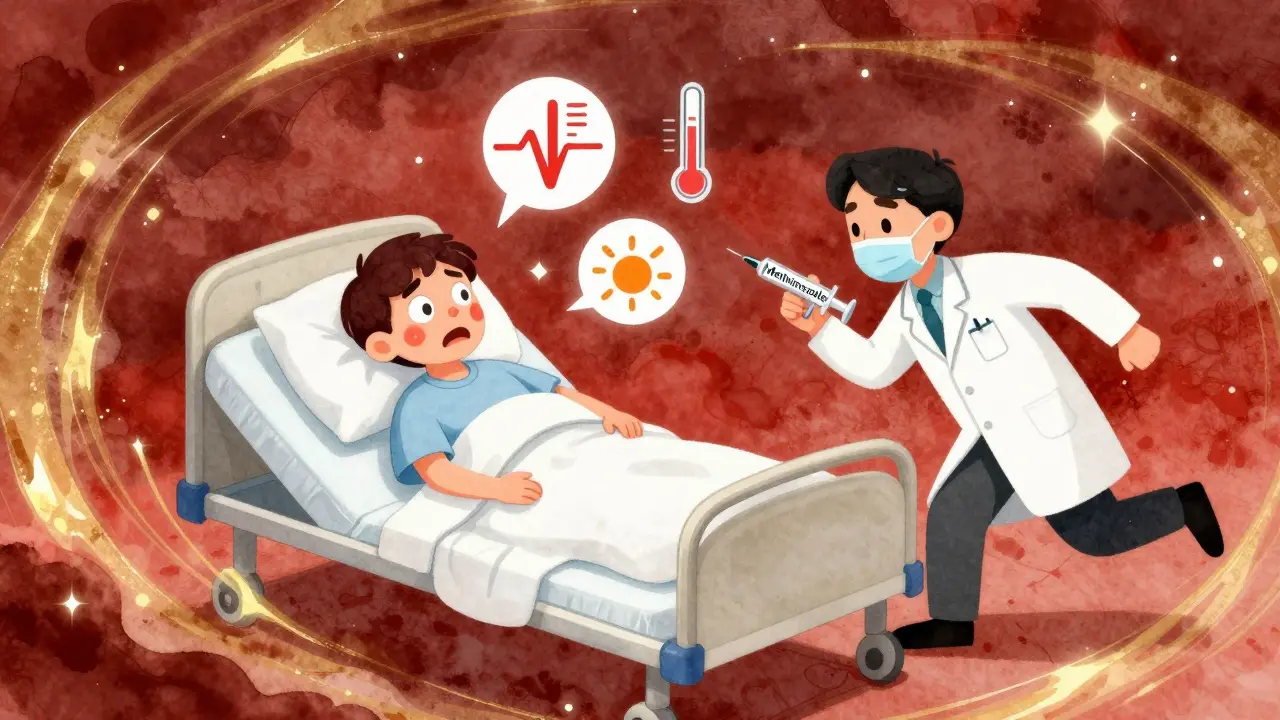
Thyroid storm isn’t just a bad case of hyperthyroidism. It’s a full-body meltdown. One minute, someone might feel anxious or sweaty after skipping their meds. The next, they’re in the ICU, burning up, heart racing at 160 beats per minute, confused or comatose, with vomiting, diarrhea, and jaundice. This isn’t a slow decline-it’s a sprint toward death if not treated immediately. Thyroid storm kills. Without treatment, nearly everyone dies. Even with the best care, 8 to 25% of patients won’t make it. And the clock starts ticking the moment symptoms appear.
What Exactly Is Thyroid Storm?
Thyroid storm, also called thyrotoxic crisis, happens when the body is flooded with too much thyroid hormone-T3 and T4-all at once. It’s not the same as having Graves’ disease or an overactive thyroid that’s been going on for months. That’s manageable. Thyroid storm is the explosion. The system overloads. Cells go into hyperdrive. Metabolism goes off the rails. Organs can’t keep up.
It’s rare-only about 0.2 cases per 100,000 people each year. But among people already diagnosed with hyperthyroidism, 1 to 2% will experience it. The signs aren’t subtle. Fever spikes to 104°F (40°C) or higher. Heart rate surges past 140 bpm. Blood pressure goes wild-systolic above 180, diastolic dropping. You’ll see shaking, sweating, and extreme agitation. Some patients become psychotic. Others slip into coma. Diarrhea? Common. Jaundice? Happens in nearly half. Liver enzymes rise. Kidneys struggle. Everything is screaming for help.
What Triggers It?
Thyroid storm doesn’t come out of nowhere. It’s triggered by a stressor that pushes an already unstable system over the edge. The biggest culprit? Untreated or poorly managed hyperthyroidism. About 60 to 70% of cases happen because someone stopped their meds, didn’t get follow-up care, or their dose was never right.
Infection is the second most common trigger-especially pneumonia or sepsis. Surgery, even something routine like a tooth extraction, can set it off if thyroid levels aren’t controlled first. Trauma, including a blow to the neck, can physically rupture the thyroid and dump hormones into the bloodstream. Stroke, heart failure, diabetic ketoacidosis, and pulmonary embolism are also known triggers.
Pregnancy and the postpartum period carry higher risk. So does radioactive iodine therapy-sometimes, a week after treatment, the thyroid starts dumping stored hormones all at once. And yes, emotional stress-like the death of a loved one or a violent accident-can be enough to tip the balance.
How Do Doctors Diagnose It?
There’s no single blood test that says, “This is thyroid storm.” Instead, doctors use a scoring system-most commonly the Burch-Wartofsky Point Scale. It adds up symptoms: fever, heart rate, mental status, GI issues, and more. A score above 45 means thyroid storm. Below 25? Unlikely. Between 25 and 45? Suspicious-needs urgent workup.
Lab tests confirm the chaos: free T4 is often more than 2.5 times the upper limit. T3 is triple normal. TSH? Undetectable. But you don’t wait for results to start treatment. If the clinical picture matches, you act now. Delaying even an hour can cost a life.
Other tests are critical too: CBC for infection, liver enzymes for jaundice, kidney function, blood gases for acidosis, and electrolytes. Low potassium? Common. High glucose? Often seen. Every test helps map the damage.
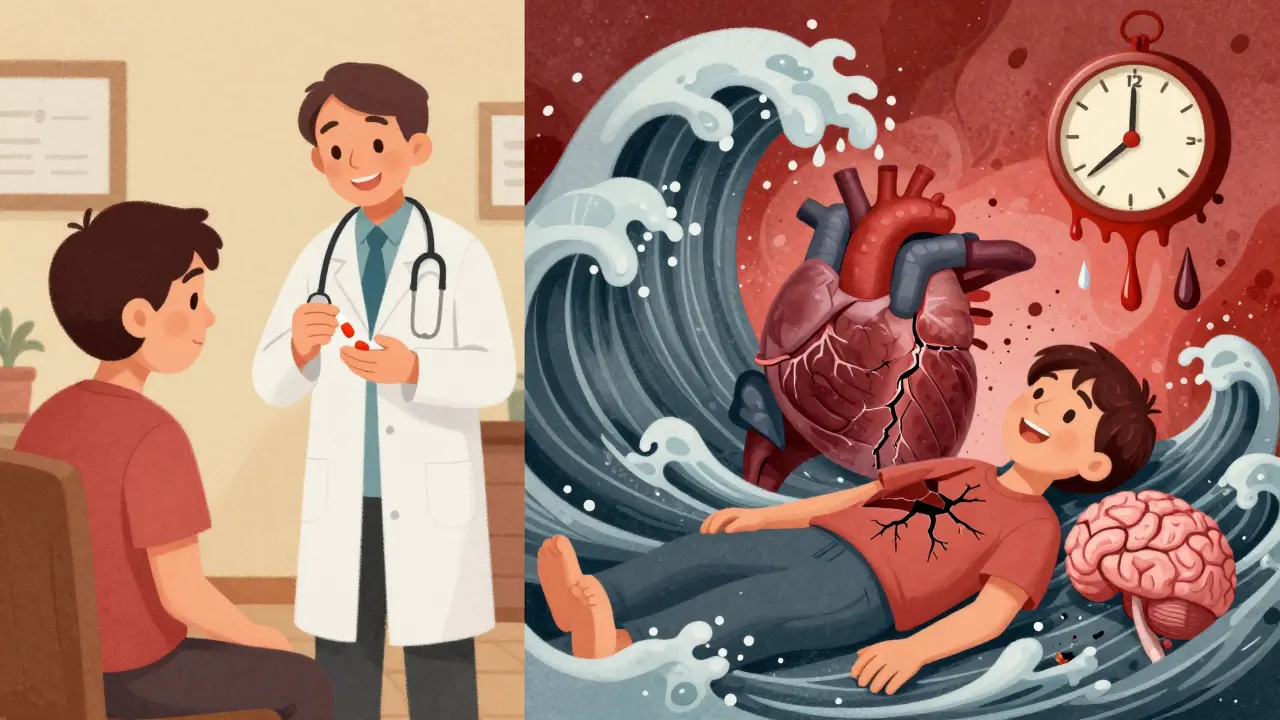
ICU Treatment: The Four-Pronged Attack
There’s no magic bullet. Survival depends on hitting four targets at once-fast.
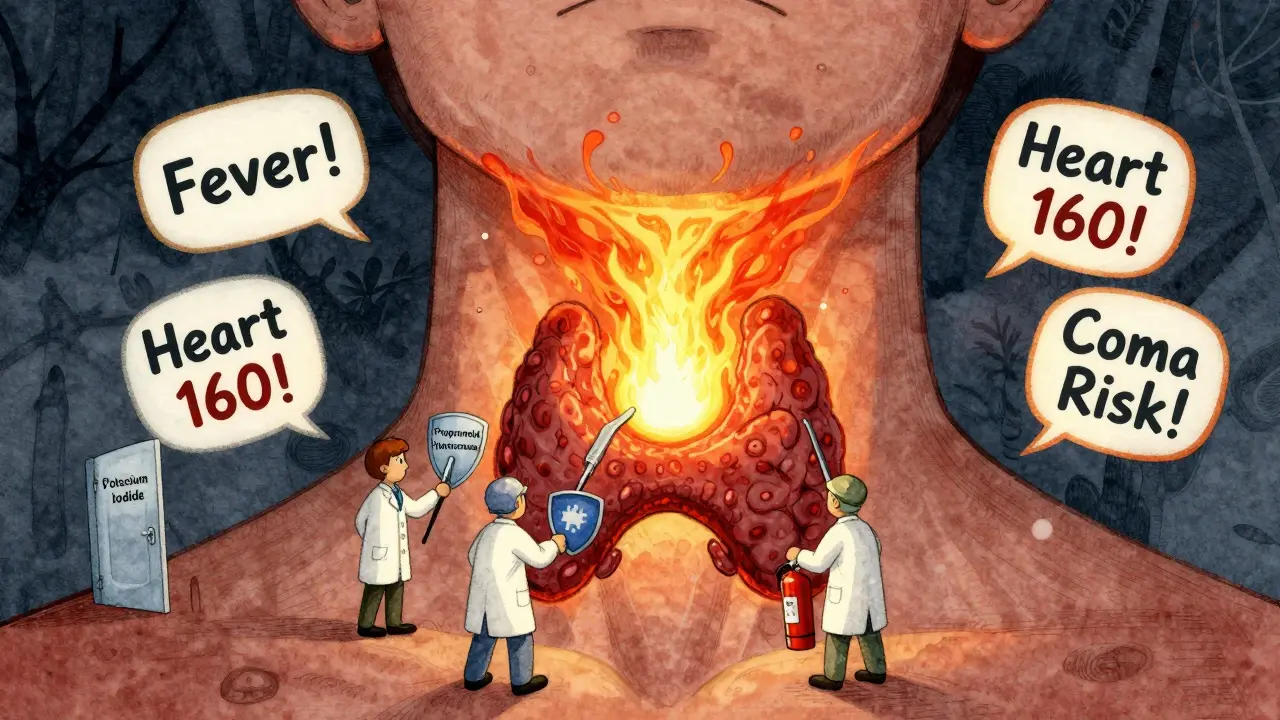
- Stop hormone production. Methimazole is the go-to drug-60 to 80 mg loaded upfront, then 15 to 20 mg every 4 to 6 hours. If methimazole isn’t available, propylthiouracil (PTU) is used instead, with a massive 600 to 1,000 mg initial dose. Both block new hormone creation.
- Block hormone release. One hour after the antithyroid drug, potassium iodide (500 mg every 6 hours) or sodium iodide (1 g daily) is given. This shuts down the thyroid’s ability to dump more hormones. It’s like slamming a door after the flood has started.
- Slow the heart and calm the body. Propranolol is the beta-blocker of choice. IV doses of 1 to 2 mg every 5 minutes can drop heart rate from 170 to 100 in minutes. Oral doses of 60 to 80 mg every 4 to 6 hours keep it controlled. This doesn’t fix the root problem-but it buys time. It prevents heart attack, stroke, and cardiac arrest.
- Reduce inflammation and hormone conversion. Hydrocortisone (100 mg IV every 8 hours) does two things: prevents adrenal failure (which often happens under extreme stress) and blocks the body from turning T4 into the more powerful T3. Acetaminophen is used for fever. Ice packs, cooling blankets, and avoiding NSAIDs (which can hurt the liver) are standard.
Fluids are critical. Patients are dehydrated from sweating, vomiting, and diarrhea. Two to three liters of IV saline in the first few hours is common. Electrolytes are corrected as needed. Oxygen and ventilation support are often required if mental status drops.
When Things Get Worse: Advanced ICU Tools
Not everyone responds to standard treatment. About 10 to 15% of cases are refractory. That’s when the ICU pulls out the big guns.
Plasmapheresis-filtering the blood to physically remove excess thyroid hormones-has shown a 78% success rate in patients who didn’t improve with meds alone. It’s not available everywhere, but in major centers, it’s becoming standard for severe cases.
Some hospitals are experimenting with IL-6 inhibitors, drugs used in cytokine storms from sepsis or COVID. Early studies suggest they might help reduce the inflammatory surge in thyroid storm, but this is still experimental.
Invasive monitoring is common: arterial lines to track blood pressure in real time, central lines for meds, continuous ECG to watch for arrhythmias. Neurological checks every hour using the Glasgow Coma Scale. If a patient slips into coma, intubation and mechanical ventilation are non-negotiable.
Survival and Recovery: What Happens Next?
Survival isn’t guaranteed-but timing saves lives. If treatment starts within 6 hours of symptom onset, survival jumps to 75 to 80%. Wait 24 hours? Survival drops to 20%.
Most survivors spend 7 to 8 days in the ICU and 14 days total in the hospital. About two-thirds need mechanical ventilation. Nearly half need drugs to support blood pressure. Recovery isn’t quick. Agitation fades in 24 to 48 hours. Confusion clears in 72. Full mental clarity takes a week or two.
Long-term? Eighty-five percent of survivors need lifelong thyroid hormone replacement. Why? Because the cure for thyroid storm is usually to permanently disable the overactive thyroid-with radioactive iodine or surgery. The remaining 15% might go into remission with meds alone, but that’s rare.
Recurrence? If follow-up care is ignored, 25 to 30% will have another storm. If they stick to treatment, it’s just 2 to 3%. Education matters. Patients need to know: skipping pills isn’t just risky-it’s deadly.
Who’s at Highest Risk?
Not everyone with hyperthyroidism will get thyroid storm. But some are far more vulnerable.
Older adults-especially over 60-have higher mortality. Their hearts can’t handle the surge. Those with pre-existing heart disease? 2.3 times more likely to die. Patients with body temperatures above 105.8°F (41°C) have a 40% chance of dying. Those with systolic blood pressure below 90 mmHg? Half won’t survive. Coma? 35% mortality.
Women are more likely to develop hyperthyroidism, so they’re more likely to face thyroid storm. But men who do get it tend to have worse outcomes-possibly because they delay seeking care.
Pregnant women with untreated Graves’ disease are at risk, especially in the first trimester or postpartum. Pediatric cases are rare but deadly.
Prevention: The Only Real Cure
The best way to avoid thyroid storm is to never let hyperthyroidism get out of control.
Regular follow-up with an endocrinologist. Taking meds exactly as prescribed. Never skipping doses-even if you feel fine. Getting infections treated fast. Avoiding major stressors without medical clearance. Informing all doctors you have hyperthyroidism before any surgery or procedure.
Patients need to recognize the warning signs: sudden fever, racing heart, confusion, vomiting. If you have hyperthyroidism and these appear, go to the ER-don’t wait. Don’t call your doctor tomorrow. Call an ambulance now.
Public awareness is still low. But programs like the American Association of Clinical Endocrinologists’ Thyroid Storm Awareness Program have already cut delayed diagnoses by 18%. More education, more vigilance, more lives saved.
Can thyroid storm happen without a prior diagnosis of hyperthyroidism?
Yes, but it’s rare. Most patients have undiagnosed or poorly controlled hyperthyroidism-often Graves’ disease. Sometimes, the first sign of hyperthyroidism is thyroid storm. In these cases, the patient may have had mild symptoms like weight loss, anxiety, or heat intolerance for months and didn’t seek help. When a trigger hits-like an infection or surgery-it explodes into crisis.
Is thyroid storm the same as thyroiditis?
No. Thyroiditis is inflammation of the thyroid gland that can cause temporary hormone release, leading to brief hyperthyroidism. It’s usually mild and resolves on its own. Thyroid storm is a full-blown, life-threatening crisis with multi-organ failure. Thyroiditis can trigger thyroid storm in someone with existing Graves’ disease, but they are not the same condition.
Why is propranolol used instead of other beta-blockers?
Propranolol is preferred because it doesn’t just slow the heart-it also blocks the conversion of T4 to T3, the more active thyroid hormone. Other beta-blockers like metoprolol only affect heart rate. In thyroid storm, reducing T3 levels is as important as controlling symptoms. Propranolol does both.
Can you survive thyroid storm without ICU care?
Almost never. The condition progresses too fast. Blood pressure crashes, heart rhythms turn deadly, organs fail. Even with perfect meds, you need constant monitoring, IV fluids, oxygen support, and rapid interventions. Outside the ICU, survival rates drop below 10%. ICU care isn’t optional-it’s the only chance.
What happens if you delay treatment for 24 hours?
Survival drops from 75-80% to around 20%. Every hour counts. By 24 hours, multiple organs are often damaged beyond repair. The heart is in failure, the liver is shutting down, and brain damage from high fever and low oxygen becomes permanent. Even if the patient survives, they may face long-term disability.
Are there any home remedies or natural treatments for thyroid storm?
No. There are no safe or effective home remedies. Trying herbal supplements, fasting, or alternative therapies during thyroid storm is dangerous and can be fatal. This is a medical emergency requiring hospitalization, IV medications, and intensive monitoring. Delaying proper care for any reason increases the risk of death.


Solomon Ahonsi
February 3, 2026 AT 00:30This article reads like a medical textbook written by someone who’s never met a patient. I’ve seen people get scared of their own shadow over a racing heart and rush to the ER-only to find out it was just caffeine and anxiety. Thyroid storm is rare, sure, but this feels like fearmongering dressed up as education.
George Firican
February 3, 2026 AT 15:15There’s something profoundly human about the way the body can unravel under stress-like a dam built from years of neglect, finally giving way not because of one great wave, but because a thousand tiny cracks went unattended. Thyroid storm isn’t just a clinical event; it’s the physical manifestation of a system abandoned, ignored, left to rot while the person told themselves they were fine. The real tragedy isn’t the hormone surge-it’s the silence that preceded it.
Matt W
February 4, 2026 AT 16:11I work in urgent care and saw a case last year-woman, 42, thought she was just ‘stressed out.’ Came in with a temp of 105, heart rate 172, and was barely coherent. We started treatment within 20 minutes. She’s back at work now, on levothyroxine, and actually checks in with her endo. This post? It’s not alarmist-it’s a lifeline. If even one person reads this and doesn’t wait until they’re collapsing, it’s worth it.
Akhona Myeki
February 6, 2026 AT 03:03As a South African physician trained under rigorous protocols, I find this article dangerously oversimplified. In our public hospitals, we do not have access to plasmapheresis or IL-6 inhibitors. We use PTU, iodine, and supportive care-because that’s what is available. This Western-centric narrative ignores global realities. Survival isn’t about ICU access-it’s about early recognition and basic pharmacology. Don’t romanticize resources we don’t have.
Sandeep Kumar
February 7, 2026 AT 18:21Vatsal Srivastava
February 8, 2026 AT 18:15Brittany Marioni
February 10, 2026 AT 18:13Thank you for writing this with such clarity and urgency. I’m a nurse, and I’ve held the hands of patients who didn’t make it-because they waited too long. Please, if you’re reading this and you have hyperthyroidism: take your meds. Even if you feel fine. Even if you’re busy. Even if you think it’s ‘not that bad.’ Your life isn’t a suggestion-it’s a commitment. And if you’re reading this and you’re not sure? Go to your doctor. Today. Not tomorrow. Today.
Nick Flake
February 11, 2026 AT 21:03Reading this felt like watching a storm roll in-silent at first, then the wind picks up, the air gets heavy, and suddenly you realize: you’re not safe anymore. This isn’t just medicine. It’s a war cry. A plea. A warning written in blood and adrenaline. Propranolol isn’t just a drug-it’s a bridge between life and oblivion. And every hour you wait? That bridge gets one plank shorter. 🚨💔
Bob Hynes
February 12, 2026 AT 01:45Man, I had a buddy in med school who skipped his PTU for a week because he was ‘too busy partying.’ One night he started sweating through his shirt at a party, then passed out in the bathroom. They found him with a heart rate of 182 and a temp of 105. He lived, but now he’s on a thyroidectomy list and won’t touch alcohol. This post? It’s not just info-it’s a mirror. And if you’re reading this and you’re the kind of person who thinks ‘I’ll just skip a pill this once’… look in that mirror. Hard.