
Every year, over two million people in the U.S. call the Poison Control Hotline because of a medication mistake. It could be a child grabbing a bottle of pills, an adult mixing prescriptions, or someone accidentally taking too much of an over-the-counter drug. The good news? In most cases, you don’t need to rush to the ER. The Poison Control Hotline - 1-800-222-1222 - is there to guide you through it, often preventing a hospital visit entirely. But knowing what to say when you call can make all the difference.
How the Poison Control Hotline Actually Works
The Poison Control Hotline isn’t just a phone number. It’s a network of 53 accredited centers across the country, each staffed by specialists trained in toxicology. These aren’t general nurses or call center workers - they’re pharmacists, registered nurses, and doctors with years of training in how drugs affect the body. About 70% of them hold advanced degrees. They handle over 2.1 million cases every year, and nearly half of those involve medications. When you dial 1-800-222-1222, your call is automatically routed to the center nearest you based on your area code. If you’re in a hurry, you can also text "poison" to 797979 or use the webPOISONCONTROL tool at poisonhelp.org. The web tool walks you through six key questions and gives you an immediate, evidence-based recommendation - all in under three minutes. The system behind it is powerful. All centers feed data into the National Poison Data System (NPDS), the only real-time poisoning database in the country. It tracks every case, every substance, every symptom. This data doesn’t just help you - it helps public health officials spot new drug dangers before they become epidemics. In the last decade, NPDS helped identify 17 new toxic threats, including dangerous synthetic opioids and weight-loss drugs with hidden side effects.What You Need to Report About Medications
When you call about a medication, the specialist needs exact details. Vague answers like "I took some Tylenol" won’t cut it. Here’s what they need:- Exact name of the medication - Brand and generic. Say "Advil 200 mg tablets," not just "ibuprofen." If it’s a combination drug like "Tylenol Sinus," say the full name.
- Strength and dosage form - Is it 500mg or 1000mg? A tablet, liquid, or patch? The difference changes the risk.
- Amount taken - Not "a few pills." Say "15 tablets," "half a bottle," or "the entire patch." Be precise.
- Time of ingestion - "About an hour ago" isn’t enough. Say "3:15 p.m." Time matters because some drugs are more dangerous in the first few hours.
- Patient details - Age, weight in kilograms (not pounds), and any existing health conditions like liver disease or pregnancy.
- Symptoms - Nausea? Drowsiness? Rash? Sweating? Vomiting? Describe what’s happening and when it started.
Specialists care about polypharmacy - when someone takes more than one medication. About 32% of serious medication poisonings happen because of interactions. If the person is on blood pressure pills, antidepressants, or opioids, tell them. Even supplements like melatonin or fish oil matter. You might think they’re harmless, but they can interact in unexpected ways.
What Happens After You Call
Most calls - about 60% - don’t need a hospital trip. The specialist will give you clear instructions: "Keep the person awake and monitor their breathing," or "Give them activated charcoal if it’s been less than an hour," or "Watch for yellowing of the skin over the next 24 hours." They’ll tell you exactly what to look for and when to call back. For acetaminophen (Tylenol) overdoses, they’ll schedule follow-up calls at 4, 8, and 24 hours. Why? Because liver damage can show up hours later. The same goes for antidepressants like sertraline or opioids like oxycodone. Specialists use 1,540 evidence-based algorithms to predict risk. These aren’t guesswork - they’re built from decades of real cases and peer-reviewed science. You’ll also get an email summary with everything discussed: the drug names, the amount, the advice given, and what symptoms to watch for. About 78% of callers keep this email as a reference. It’s like a medical cheat sheet you can show to a doctor later.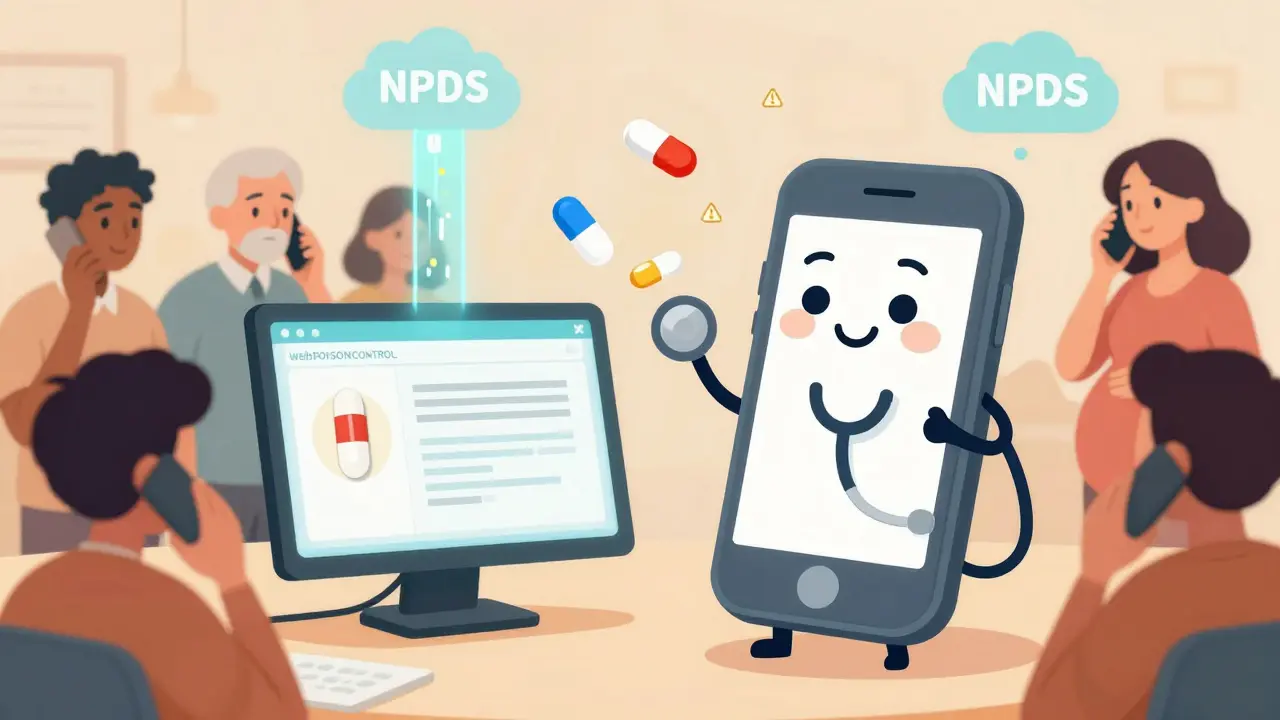
Why This Service Saves Lives - and Money
It’s not just about health. It’s about cost. A 2019 study found poison control centers saved the U.S. healthcare system $1.8 billion a year by keeping people out of emergency rooms. For every dollar spent on the service, society gains $7.67 in saved medical bills and lost work time. Hospitals rely on it too. Every Level I and II trauma center in the country has a formal agreement with their local poison center. If a patient comes in with a drug overdose, the ER doctor doesn’t guess - they call poison control first. That’s how accurate and trusted this system is. And it’s free. No insurance. No ID. No cost. Even if you’re not a U.S. citizen, you can call. The service supports over 150 languages through live translation. If you’re scared, confused, or unsure - call anyway. The specialists have seen it all. They’ve helped children swallow grandma’s heart pills. They’ve guided parents through accidental opioid exposures. They’ve talked people down from panic after mixing alcohol with anxiety meds.What They Can’t Help With
There are limits. The system is designed for accidental exposures. If someone intentionally overdosed - even if they’re crying and asking for help - the hotline will still give advice, but they’ll also connect you to crisis services. They can’t handle cases with more than two substances mixed together. That’s too complex for the automated system. In those cases, you’ll be routed to a live specialist who can think through the interactions. Also, the web tool doesn’t work for all new drugs. Some synthetic opioids or designer medications aren’t in the database yet. If you’re unsure, call the hotline. A human will help you.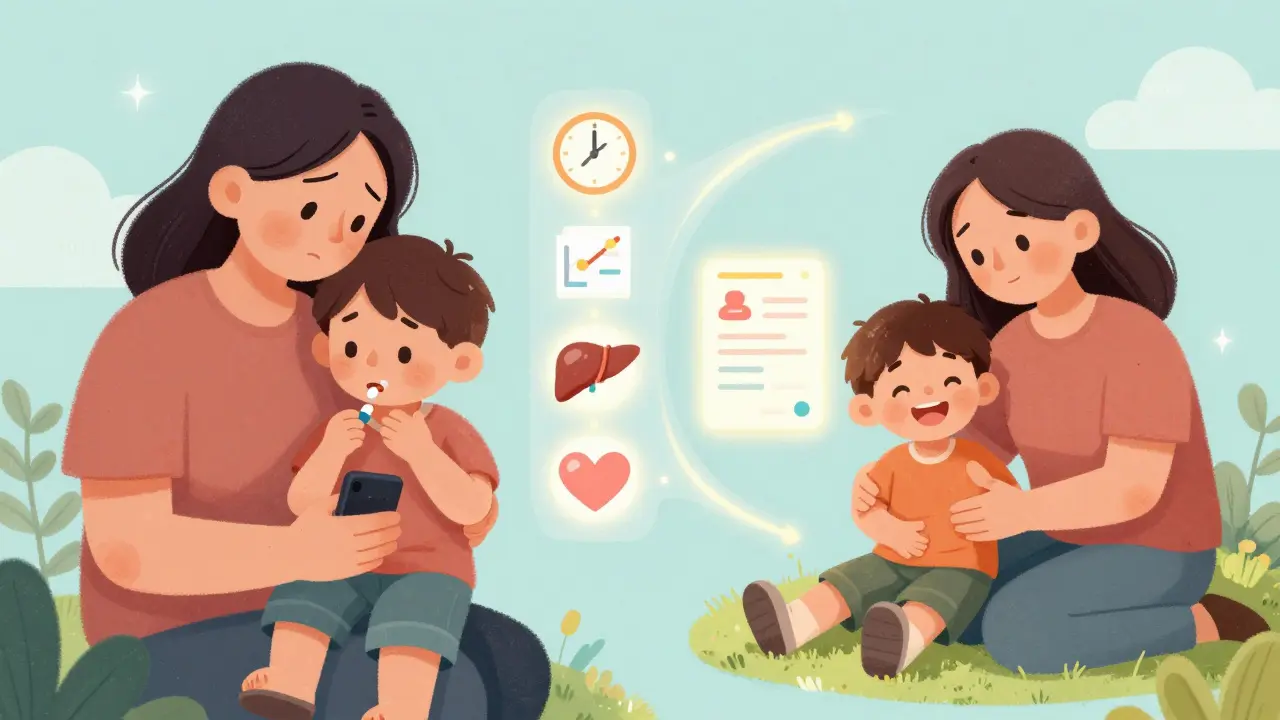
Real Stories Behind the Numbers
One Reddit user, a pharmacist, shared how a call to poison control saved a 3-year-old from liver failure. The child had swallowed 10 children’s Tylenol tablets. The parent didn’t know if it was dangerous. The specialist told them to give N-acetylcysteine (an antidote) immediately and monitor for vomiting. Within 8 hours, the child was fine. Without that call, the child might have been admitted to the ICU. Another case: a 68-year-old man took his wife’s blood pressure pill thinking it was his own. He didn’t feel sick at first. The poison control specialist told him to check his blood pressure every hour. Within 4 hours, his pressure dropped dangerously low. He went to the ER and got treatment. He later said, "I thought I was fine. I didn’t know I was in trouble. They saved me."What’s Next for Poison Control
The system is getting smarter. New funding from the CDC is helping update algorithms for the latest weight-loss drugs and synthetic painkillers. Some centers now offer video consultations for complex cases. And by 2027, federal funding is locked in to keep the service running - though experts warn inflation could still strain resources. Meanwhile, the number of medication-related calls keeps rising. Opioid exposures are up 22%, sedatives up 20%, and cardiovascular drugs up 16%. The more medications we take, the more chances there are for mistakes. That’s why this service isn’t just helpful - it’s essential.Bottom Line
If you think someone took too much of a medication - even if they seem fine - call 1-800-222-1222. Don’t wait. Don’t Google it. Don’t assume it’s "not that bad." The specialists are trained to handle exactly what you’re dealing with. They’ve seen it before. They know what to do. And they’ll guide you through it - without judgment, without cost, and without delay.Keep this number saved in your phone. Write it on the fridge. Tell your family. Because when seconds count, you won’t want to search for it.
Can I call poison control even if I’m not sure it’s an overdose?
Yes. In fact, poison control centers encourage calls whenever there’s any uncertainty. You don’t need to be certain it’s dangerous. If you’re worried - even a little - call. Specialists handle thousands of "maybe" cases every day. Better safe than sorry.
Do I need to give my name or insurance info?
No. You don’t need to give your name, insurance, or any personal details. The service is completely confidential. The only information they need is about the medication, the person exposed, and the situation. Your identity is never recorded or shared.
What if I call and they say to go to the ER?
If they recommend going to the ER, follow it. That means the situation is serious enough to need immediate medical care. But even then, calling first helps. The poison center can alert the ER ahead of time, tell them exactly what was taken, and even send your case summary. This can cut down wait times and improve treatment.
Is the webPOISONCONTROL tool as reliable as calling?
Yes. The web tool uses the same 1,540 evidence-based algorithms as the human specialists. In a 2021 study, it matched human recommendations 97.3% of the time. It’s ideal for quick, non-emergency questions. But if someone is unconscious, having seizures, or having trouble breathing - call 911 first, then call poison control.
Can poison control help with pet exposures?
No. The Poison Control Hotline (1-800-222-1222) is for human exposures only. For pets, contact the ASPCA Animal Poison Control Center at 1-888-426-4435. They’re a separate service with specialists trained in veterinary toxicology.
What if I can’t speak English?
The service offers live translation in over 150 languages. Just say the language you need, and they’ll connect you with an interpreter. No need to find someone to translate for you. The specialists are trained to handle this.
How fast can I get help?
Most calls are answered within 30 seconds. The web tool gives results in under 3 minutes. Even in high-volume times, wait times rarely exceed 2 minutes. This is one of the fastest, most responsive public health services in the country.
Can I call poison control for advice on drug interactions?
Absolutely. If you’re taking multiple medications and you’re unsure if they’re safe together, call. They can check for dangerous interactions between prescription drugs, OTC meds, supplements, and even herbal products. This is one of their most common uses.
Are poison control centers only for emergencies?
No. They handle everything from minor exposures to life-threatening cases. Many calls are about preventing emergencies - like when a parent finds a child with an open pill bottle. The goal is to stop harm before it starts.
What if I’m not in the U.S.?
The 1-800-222-1222 number works only in the U.S. and its territories. If you’re outside the country, search for your nation’s national poison center. Most countries have one. For example, Australia has the Poisons Information Centre at 13 11 26. Always know your local number.
Camille Hall
February 8, 2026 AT 10:43Just saved this number in my phone right after reading this. I work with elderly parents and honestly, I didn’t realize how much detail they need to give when calling. I always thought saying 'she took too many pills' was enough. Turns out, specifying '15 500mg Tylenol tablets at 2:30 p.m.' makes all the difference. Thanks for laying this out so clearly.
Also, I’m gonna print this list and tape it to the fridge next to the emergency numbers. Better safe than sorry.
Jonah Mann
February 10, 2026 AT 06:07omg i just realized i’ve been telling my kid ‘dont touch the medicine cabinet’ like its a horror movie but never actually told him the number… like… i dont even know if he knows 1-800-222-1222… oops. gonna write it on his ipad lock screen right now. also, the web tool thing is genius. just tried it with my husbands ‘mystery pill’ and it said ‘probably fine but monitor for dizziness’… turns out it was just a leftover zyrtec. phew. thanks for this.
THANGAVEL PARASAKTHI
February 10, 2026 AT 10:53This is such a vital service. I’m from India and we don’t have anything as organized here. People just rush to hospitals or Google it, and both are risky. The fact that they use real-time data to catch new toxins like synthetic opioids is impressive. We need this kind of system in developing countries too. Maybe NGOs can partner with U.S. centers to replicate the model? The cost savings alone make it worth scaling.
Also, love that they support 150+ languages. That’s inclusion.
Tricia O'Sullivan
February 10, 2026 AT 16:06Thank you for this comprehensive and meticulously presented overview. The clarity with which the operational structure, data infrastructure, and clinical protocols are delineated is both reassuring and professionally admirable. It is evident that this service operates with a high degree of scientific rigor and public-spirited intent. I shall ensure that this information is disseminated within my professional network, particularly among those who care for vulnerable populations. The ethical and logistical architecture underpinning this system is, frankly, exemplary.
Scott Conner
February 12, 2026 AT 04:17wait so if my cat eats a pill i cant call this number? i thought it was for all poisons… i just had my dog eat a chocolate chip cookie and i was about to dial…
also why does the web tool ask for weight in kg? who the hell knows their weight in kg? mine’s like 78.5 but i have no idea what that is in kg. i just say ‘about 170’ and hope for the best.
Brandon Osborne
February 13, 2026 AT 17:31THIS IS WHY WE NEED GOVERNMENT FUNDING. PEOPLE ARE DUMB. I’VE SEEN IT. MY NEIGHBOR’S KID ATE A WHOLE BOTTLE OF MELATONIN BECAUSE SHE THOUGHT IT WAS CANDY. SHE DIDN’T EVEN CALL. JUST SAT THERE LIKE A ZOMBIE. IF THIS SERVICE WASN’T FREE, PEOPLE WOULD JUST IGNORE IT AND LET KIDS DIE. WE’RE LIVING IN A WORLD WHERE PARENTS DON’T LOCK UP MEDS AND DOCTORS DON’T WARN ABOUT INTERACTIONS. THIS HOTLINE IS A LAST LINE OF DEFENSE. STOP UNDERFUNDING IT. CALL YOUR REPRESENTATIVES. THIS ISN’T A ‘NICE TO HAVE’ - IT’S A SURVIVAL TOOL.
Marie Fontaine
February 15, 2026 AT 11:50YESSSSSSS this is so needed!! I just had my 5yo swallow half a melatonin gummy and I was like ‘is this a big deal??’ and called and they were like ‘ehhh probably fine but keep an eye on her for 4 hours’ and I was like THANK YOUUUU 😭
Also the email summary? GENIUS. I saved it and showed it to my pediatrician later and she was like ‘you did everything right’ 😍
1-800-222-1222 = my new favorite number 🙌❤️
Lyle Whyatt
February 16, 2026 AT 11:49Let me tell you, I’ve been in emergency rooms before - not because I overdosed, but because my wife did, and we didn’t know what to do. We panicked, we Googled, we called 911, and the ER was packed, the nurses were overwhelmed, and the doctor had to guess what was in her system. Then we found out about poison control. That call? It was like talking to a superhero. They asked for the brand, the strength, the time, the weight - I didn’t even know I needed to know the weight. Turns out, a 130-pound woman metabolizing a 1000mg dose of ibuprofen is a very different scenario than a 200-pound man. They told us to watch for abdominal pain and give water. No ER. No IV. No overnight stay. Just a phone call. And now I tell everyone. I’ve called it twice since then - once for my daughter’s accidental fish oil overdose, once for my brother’s mixing of blood pressure meds with grapefruit juice. Both times, they saved us time, money, and trauma. This isn’t just a hotline. It’s a silent guardian. It’s the unsung hero of modern medicine. And if you’re reading this and you haven’t saved the number yet - do it. Now. Before you need it. Because when your child is lying on the floor, or your partner is dizzy and confused - you won’t have time to search. You’ll wish you’d done this yesterday.