
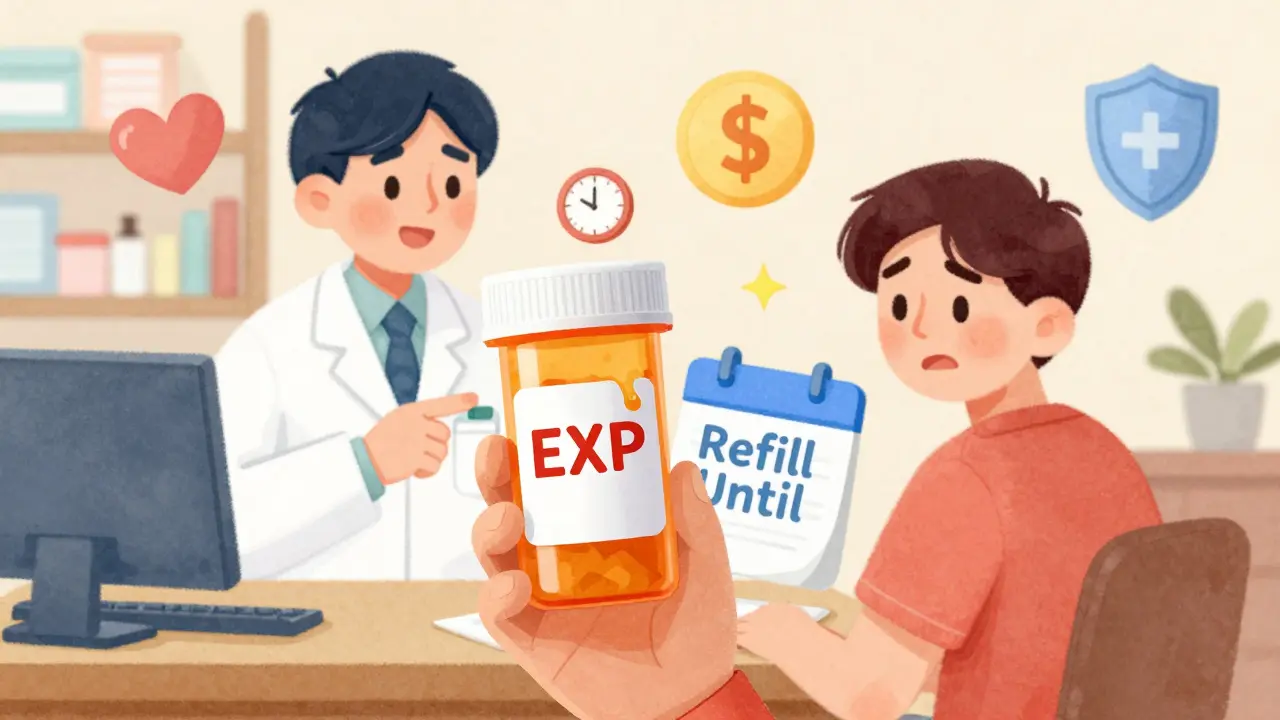
Ever looked at your prescription bottle and wondered why there are two dates - one that says expiration and another that says refill-by? You’re not alone. Most people think they mean the same thing. But they don’t. Mixing them up can cost you money, disrupt your treatment, or even put your health at risk.
What’s the Expiration Date Really For?
The expiration date on your prescription label isn’t just a suggestion. It’s a hard stop. This date tells you when the medication is no longer guaranteed to be safe or effective. It’s based on scientific testing done by the manufacturer under controlled conditions - temperature, light, humidity - to see how long the drug stays stable.
The U.S. Food and Drug Administration (FDA) requires this date to be clearly printed. Even if your pills look fine, smell fine, and haven’t changed color, you shouldn’t take them after this date. Why? Because potency drops over time. Some medications lose effectiveness faster than others. Antibiotics, insulin, and heart medications are especially sensitive. A 2022 FDA study found that while 88% of drugs still work past their expiration date when stored properly, pharmacists are legally required to discard anything past the labeled date. That’s not a loophole - it’s a safety rule.
On prescription labels, the expiration date is often set at one year from when the pharmacy filled it, unless the manufacturer’s date is earlier. For refrigerated meds like insulin or certain injectables, it’s usually just 30 days after opening. Always check both dates - the one from the manufacturer and the one the pharmacy put on.
What Does the Refill-By Date Mean?
The refill-by date has nothing to do with how long the medicine lasts. It’s an administrative deadline. This is the last day your pharmacy can legally give you more of that prescription without a new doctor’s note.
Think of it like a gift card with an expiration. You can use it until the date runs out. After that, you need a new one. Same with prescriptions. If your doctor wrote five refills, you can get them until the refill-by date. After that? Even if you have pills left, the pharmacy can’t give you more. You need a new prescription.
Most states follow a one-year refill window for regular medications. But there are exceptions. Controlled substances like opioids, ADHD meds, or certain sleep aids are restricted to six months under federal law. Some states like New York limit refill periods even further for certain drugs. California, on the other hand, allows up to 12 months. It varies. That’s why you need to read your label.
Why People Get Confused - And Why It Matters
A Consumer Reports survey found that more than half of people (54.3%) couldn’t tell the difference between these two dates. And that confusion leads to real problems.
Some folks throw away perfectly good medicine because they see a refill-by date and assume it’s expired. One Reddit user reported tossing $300 worth of unexpired insulin because they thought the refill-by date meant the medicine was bad. That’s not just wasteful - it’s dangerous. People with chronic conditions like diabetes, high blood pressure, or asthma can’t afford gaps in treatment.
On the flip side, others keep taking pills past the expiration date because they still have refills left. That’s risky. Even if your prescription hasn’t run out, the medicine might be losing strength. A 2023 study in Pharmacy Times showed that 68% of medication access issues stem from this exact confusion.
And it’s not just patients. Pharmacists say nearly 40% of all prescription-related questions they get are about these dates. People walk in asking, “Can I still get my refill?” or “Is this medicine still good?” It slows down service and creates anxiety.
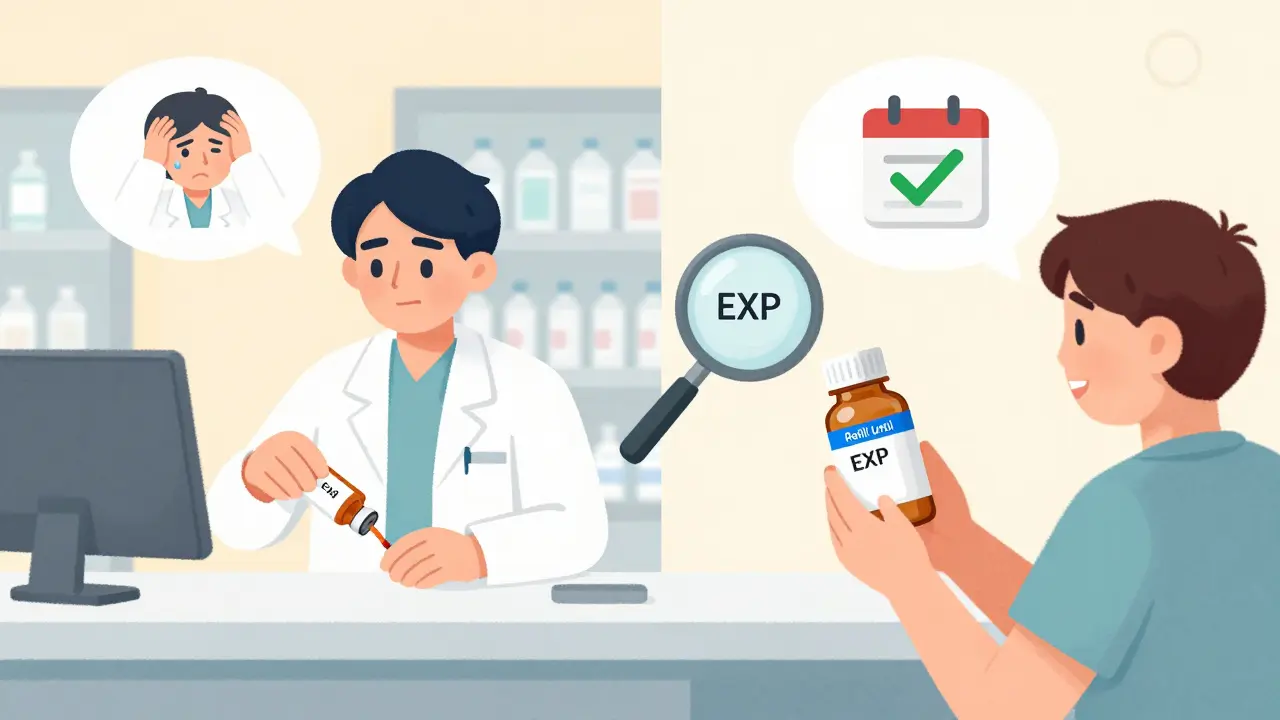
How to Read Your Prescription Label Correctly
Here’s how to spot the difference on your bottle:
- Expiration Date: Usually labeled as “EXP,” “Use By,” or “Expires.” It’s often in red or bold. This is your safety cutoff.
- Refill-By Date: Might say “Refill Until,” “Refill Expiration,” or “Last Fill.” It’s often in blue or black. This is your refill window.
- Number of Refills Left: Look for a number like “Refills: 2” - that’s how many times you can still get it before needing a new script.
Some pharmacies now use color-coded labels. Red = safety (expiration). Blue = administrative (refill). CVS and Walgreens rolled this out in 2023. If your pharmacy doesn’t do it yet, ask them to explain the dates when you pick up your med.
What Happens If You Miss the Refill-By Date?
If your refill-by date passes, you can’t just walk in and ask for more. You need to contact your doctor. The process usually takes 1-3 business days. Some doctors can renew it quickly over the phone. Others require an appointment, especially for controlled substances.
Medicare Part D data shows that 23.7% of beneficiaries experience treatment interruptions because they didn’t realize their refill window had closed. That’s a lot of people going without meds. Chronic conditions like diabetes, heart failure, or epilepsy can worsen quickly without consistent treatment.
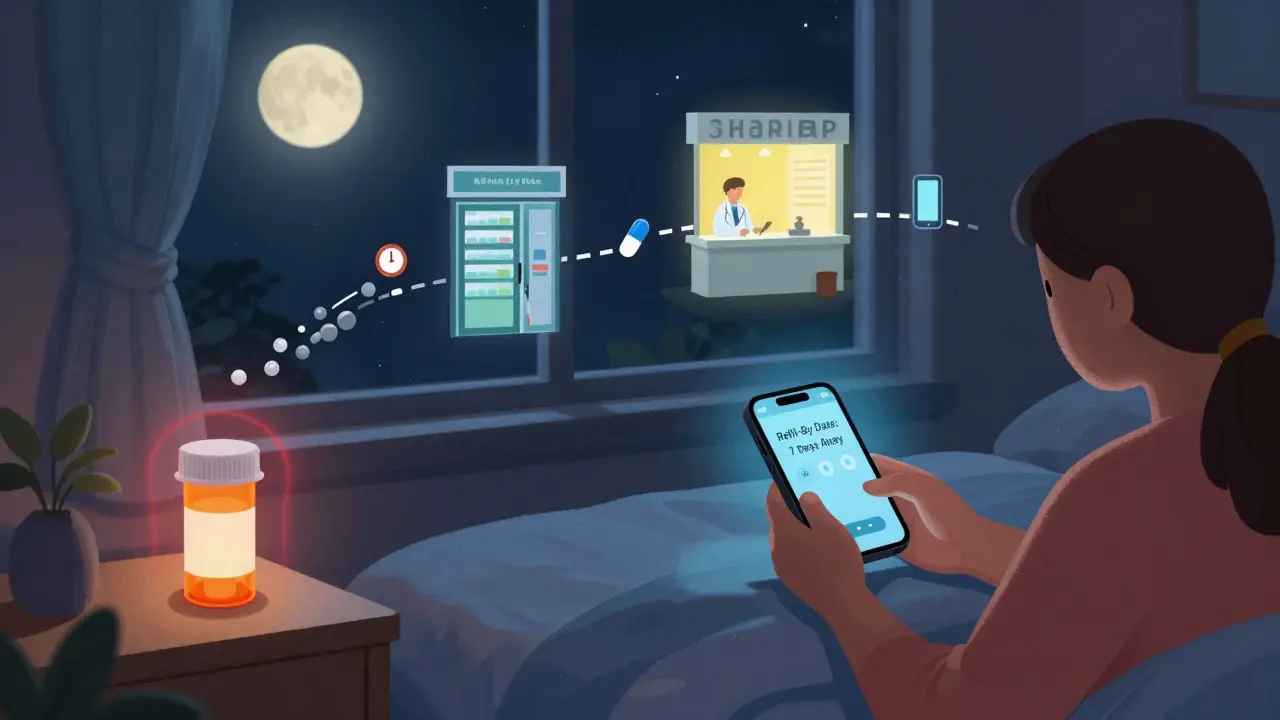
Best practice? Set a reminder on your phone for 7 days before your refill-by date. That gives you time to call your doctor without scrambling. Keep a simple log - even just a note on your phone - with both dates written down. The American Pharmacists Association says this cuts medication gaps by over 60%.
What About Expired Medicine? Can You Still Use It?
No. Not legally, not safely, not responsibly.
Even if your pills are still in the bottle and the refill-by date hasn’t passed, if the expiration date is gone, don’t take them. The FDA doesn’t recommend it. The risk isn’t just that it won’t work - it’s that it could break down into harmful compounds. Tetracycline antibiotics, for example, can become toxic after expiration. Liquid medications can grow bacteria. Eye drops? Don’t risk it.
Pharmacies are required to take back expired meds. Don’t throw them in the trash or flush them. Bring them to your local pharmacy for safe disposal. Most have drop boxes.
What’s Changing in 2024 and Beyond?
There’s a push to make this clearer. The FDA released draft guidance in late 2023 asking for standardized wording on labels - no more vague terms like “valid until.” They want “Expiration Date” and “Refill Authorization Expiration Date” written out clearly.
Pharmacies are testing smart labels. Scan a QR code on your bottle, and a short video explains the dates in plain language. CVS says this cut patient confusion by nearly 50% in stores where it’s been rolled out.
By 2025, experts predict most prescriptions will have digital labels you can access via your phone. Augmented reality apps might even show you a visual timeline: “Your medicine is good until this date. You can refill until this one.”
But until then - read your label. Ask your pharmacist. Don’t guess.
Bottom Line
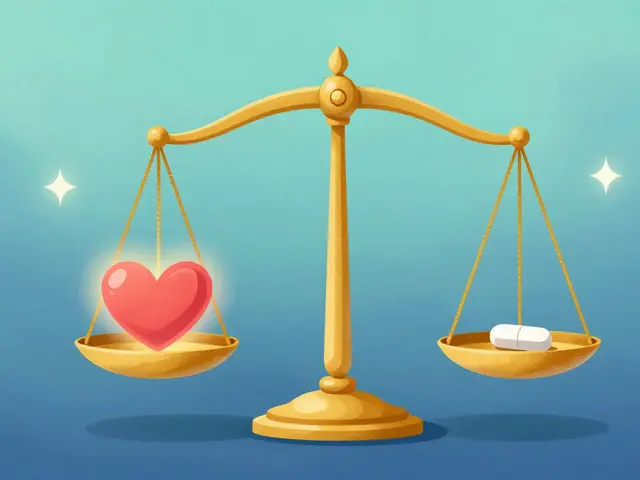
Expiration date = safety. Refill-by date = access.
One tells you if your medicine still works. The other tells you if you’re allowed to get more. They’re not interchangeable. Confusing them leads to missed doses, wasted money, and avoidable health risks.
If you’re on long-term meds - for blood pressure, thyroid, diabetes, or mental health - treat these dates like calendar events. Mark them. Set reminders. Talk to your pharmacist. It’s not complicated. But it matters.
Keep your meds safe. Keep your treatment on track. And never assume - always check.
What’s the difference between a refill-by date and an expiration date?
The expiration date tells you when the medication is no longer safe or effective to use. The refill-by date tells you the last day you can get more of that prescription without a new doctor’s order. One is about medicine safety; the other is about prescription rules.
Can I still use my medicine after the refill-by date if it hasn’t expired?
No. Even if the medicine hasn’t expired, the pharmacy can’t legally give you more after the refill-by date. You need a new prescription from your doctor. Taking leftover pills past that date isn’t dangerous - but getting refills without authorization is against pharmacy rules.
Why does my prescription have a one-year refill limit?
Most states set refill authorization periods at one year for non-controlled medications as a safety measure. It ensures your doctor reviews your condition regularly. For controlled substances like opioids or stimulants, federal law limits refills to six months. Insurance plans may also impose their own limits.
What should I do if my refill-by date is coming up but I’m not ready for a new prescription?
Call your doctor’s office at least a week before the refill-by date. Many can renew prescriptions over the phone. If you’re on Medicare or private insurance, check if your plan allows early refills. Don’t wait until the last day - renewals can take 1-3 business days.
Can I ask my pharmacist to explain the dates on my label?
Absolutely. Pharmacists are trained to explain prescription labels. If the wording is unclear, ask them to point out the expiration date and refill-by date. Most will gladly show you where to find them. Don’t feel embarrassed - this is exactly why they’re there.
Is it safe to keep expired medication at home?
No. Expired medications should be disposed of safely. Keep them out of reach of children and pets. Most pharmacies have take-back bins for expired or unwanted drugs. Never flush them or throw them in the trash unless instructed otherwise by your pharmacist.



Katrina Morris
January 7, 2026 AT 18:52I always thought the refill-by date meant the medicine was going bad. I tossed a whole month's supply of my blood pressure pills last year because I didn’t know the difference. Learned the hard way. Now I take a pic of the label and save it in my phone notes. Best habit I’ve picked up in years.
Kyle King
January 9, 2026 AT 12:20lol the FDA doesn’t care about your health. They just want you to buy new pills so the pharma giants can keep raking in cash. That expiration date? Made up. I’ve been taking 5-year-old antibiotics since 2019 and I’m still standing. They’re just scared people will stop buying their overpriced junk.
Emma Addison Thomas
January 10, 2026 AT 05:00This is such a useful breakdown. I’m from the UK and we don’t have refill-by dates here-just expiration. It’s interesting how different systems handle medication safety. I’ll definitely be more careful reading labels now. Thanks for clarifying.
Mina Murray
January 12, 2026 AT 02:31Everyone’s acting like this is new info. It’s not. Pharmacists have been explaining this for decades. The real problem? People don’t listen. You get a script, you don’t ask questions, you assume. Then you blame the system when you run out. It’s not the label’s fault. It’s yours for not being proactive.
Rachel Steward
January 13, 2026 AT 20:49Let’s be real. The entire pharmaceutical industry thrives on confusion. They design labels to be intentionally ambiguous because if you knew the difference between expiration and refill-by, you’d stop buying new bottles every 30 days. The 2023 Pharmacy Times study? They cherry-picked data. The real issue is that insurers won’t cover early refills, doctors are overworked, and patients are left in the lurch. This isn’t about education-it’s about profit margins disguised as safety.
And don’t even get me started on QR codes. Next they’ll be forcing us to scan our meds like we’re at a museum exhibit. We’re not tech demos. We’re people trying to stay alive.
Christine Joy Chicano
January 15, 2026 AT 07:21I love how the FDA is finally pushing for standardized wording. It’s about damn time. Labels used to read like legal jargon written by someone who hated humans. Now they’re finally saying ‘Expiration Date’ and ‘Refill Authorization Expiration Date’-clear, unambiguous, human. It’s small, but it’s progress. The kind of change that doesn’t make headlines but saves lives.
Also, the color-coding? Genius. Red for danger, blue for bureaucracy. It’s like traffic lights for your medicine cabinet. I wish my bank statement was this intuitive.
Anastasia Novak
January 16, 2026 AT 23:06Oh my god I just realized I’ve been hoarding expired insulin because I thought the refill-by date was the only thing that mattered. I’m not even kidding. I had a whole drawer full of bottles labeled ‘2021’ and I thought they were fine. I’m lucky I didn’t end up in the ER. This post just saved my life. Thank you. I’m going to the pharmacy right now to dispose of them.
Jonathan Larson
January 18, 2026 AT 08:16Thank you for this comprehensive and thoughtful exposition. The distinction between pharmaceutical safety and administrative regulation is not merely semantic-it is foundational to patient autonomy and public health. The systemic failure to communicate this clearly reflects a broader erosion of trust in medical institutions. Standardized labeling, as proposed by the FDA, represents not only a technical improvement but a moral imperative.
Sai Ganesh
January 19, 2026 AT 07:25India doesn’t have refill-by dates either. We just get a paper script with the doctor’s name and expiry. But I’ve seen people take pills 2 years past expiry here too. No one checks. It’s scary. I’m glad someone’s finally talking about this properly. Maybe it’ll help more people.
Elen Pihlap
January 20, 2026 AT 23:58Wait so if my refill-by date is next week but I still have pills left, can I just keep taking them even if the expiration date is 3 months away? I’m scared now. I don’t want to die.
Paul Mason
January 21, 2026 AT 16:15My mate at the chemist told me this exact thing last month. Said half his job is explaining the difference. I thought he was joking. Turns out he wasn’t. Good on you for writing this. I’m printing it out and taping it to my pillbox.