
Opioid Risk Calculator
Assess Your Risk
This calculator estimates your risk of opioid-induced respiratory depression based on key factors. High risk means immediate action is needed.
Every year, thousands of people in hospitals across the U.S. experience a silent, deadly drop in breathing - often without anyone noticing until it’s too late. This isn’t a rare accident. It’s opioid-induced respiratory depression, and it kills when missed. The worst part? Most cases are preventable. You don’t need to be a doctor to spot the warning signs. If you or someone you care for is taking opioids, benzodiazepines, or other sedatives, knowing these critical signs could save a life.
What Exactly Is Respiratory Depression?
Respiratory depression isn’t just slow breathing. It’s when your brain stops telling your lungs to work. Opioids like oxycodone, morphine, fentanyl, and even some prescription painkillers bind to receptors in the brainstem - the part that controls automatic breathing. When this happens, your body loses its natural urge to breathe deeply or often enough. The result? Not enough oxygen in your blood. Too much carbon dioxide building up. And no alarm bells ringing until it’s critical.Here’s the hard truth: you can be on oxygen and still be in respiratory failure. Supplemental oxygen keeps your oxygen levels looking fine on a monitor, but it doesn’t fix the real problem - your breathing is too shallow and too slow. Your body can’t push out carbon dioxide. That’s when brain damage or death starts to creep in.
The 5 Critical Signs of Opioid-Induced Respiratory Depression
These aren’t vague symptoms. These are measurable, observable red flags that hospitals use to trigger emergency responses.
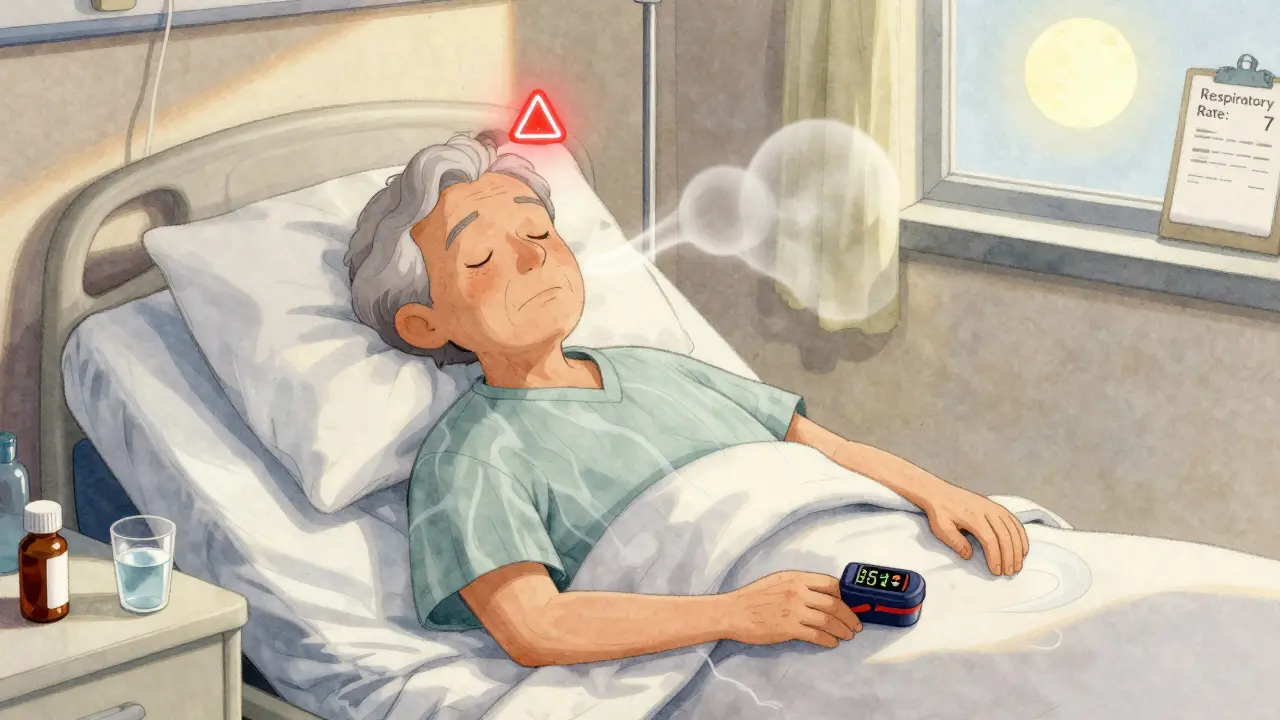
- Respiratory rate below 8 breaths per minute - Normal is 12-20. Below 10 is concerning. Below 8 is a medical emergency. This is the single most reliable indicator.
- Oxygen saturation below 85% - Even if you’re on oxygen, if your SpO2 drops under 85%, your brain is starving. This number doesn’t lie.
- Shallow, irregular, or gasping breaths - Breathing becomes weak, uneven, or stops for several seconds at a time. It’s not just slow - it’s broken.
- Extreme drowsiness or inability to wake up - You can’t rouse the person with voice or light shaking. They’re not just tired. They’re unresponsive. This is a major red flag.
- Slow heart rate and low blood pressure - As oxygen drops, your heart struggles. Heart rate may slow below 60 bpm. Skin may turn blue or gray, especially around lips and fingertips.
Don’t wait for all five. One or two, especially slow breathing and unresponsiveness, are enough to act.
Who’s at Highest Risk?
It’s not just drug users. It’s people you know - your elderly parent, your neighbor recovering from surgery, your friend on long-term pain meds.
- People over 60 - Risk triples. Aging slows metabolism and reduces lung elasticity.
- Opioid-naïve patients - Someone who’s never taken opioids before is 4.5 times more likely to crash than someone used to them.
- Those on multiple CNS depressants - Mixing opioids with benzodiazepines (like Xanax or Valium), alcohol, sleep aids, or muscle relaxants increases risk by nearly 15 times.
- People with sleep apnea, COPD, or obesity - Their lungs are already working harder. Opioids push them over the edge.
- Women - Studies show women are 1.7 times more likely to experience severe respiratory depression, possibly due to body composition and metabolism differences.
And here’s the scary part: many patients get checked only every 4 hours. That means they’re unmonitored 96% of the time. A person can go from fine to unresponsive in under 30 minutes.
Why Pulse Oximetry Alone Isn’t Enough
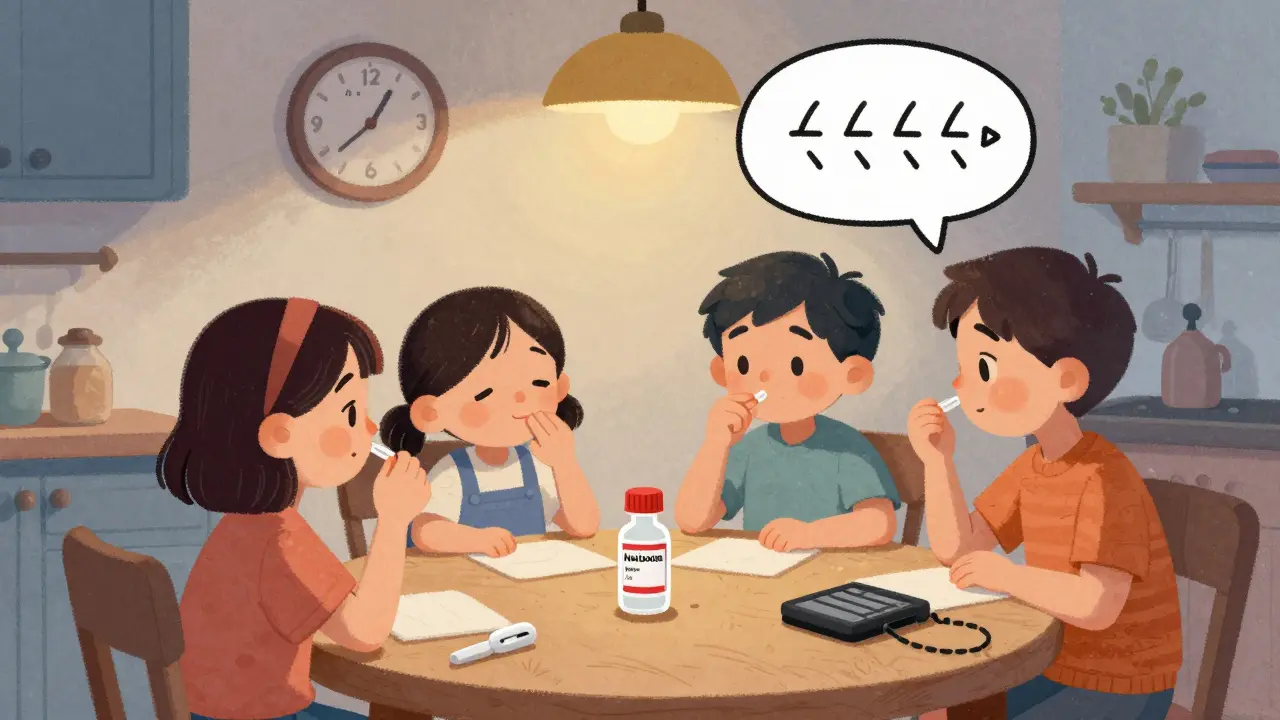
Hospitals rely on pulse oximeters - the little clip on your finger. But they’re flawed. If a patient is on oxygen, the oximeter can show 95% saturation while their CO2 levels climb dangerously high. They’re suffocating in plain sight.
Capnography - which measures carbon dioxide in exhaled air - catches these cases 94% of the time when oxygen is used. But only 22% of U.S. hospitals use it routinely for non-intubated patients. That’s a gap in safety that’s costing lives.
Bottom line: if someone’s on oxygen and you’re only watching their finger clip, you’re not seeing the full picture.
What Happens If It’s Not Treated?
Untreated respiratory depression doesn’t just cause discomfort. It causes irreversible damage.
Within minutes, low oxygen starves the brain. Within 10-15 minutes, brain cells start dying. After 20 minutes, permanent neurological damage is likely. After 30, death is probable.
And here’s the cruel twist: many of these deaths happen in hospitals - places meant to be safe. The Centers for Medicare & Medicaid Services now calls severe opioid-induced respiratory depression a “never event.” That means if it happens, the hospital doesn’t get paid for the complication. It’s not just a medical failure - it’s a system failure.
How to Respond: Naloxone and What Comes After
Naloxone (Narcan) is the antidote. It blocks opioids from brain receptors and can restore breathing in under 2 minutes. But it’s not a magic fix.
- It wears off faster than most opioids - so the person can re-sedate after 30-90 minutes.
- It can trigger sudden, violent withdrawal - especially in chronic pain patients. That means pain returns, panic sets in, and breathing can drop again.
- It doesn’t fix the root problem. It buys time.
After giving naloxone, you must stay with the person. Call emergency services. Monitor breathing. Be ready to give a second dose if needed. Don’t assume one shot is enough.
For those on long-term opioids, naloxone isn’t always the answer. Doctors are now testing new drugs that restore breathing without removing pain relief - but those are still in trials.
How Hospitals Are Trying to Fix This
Some places are making real progress.
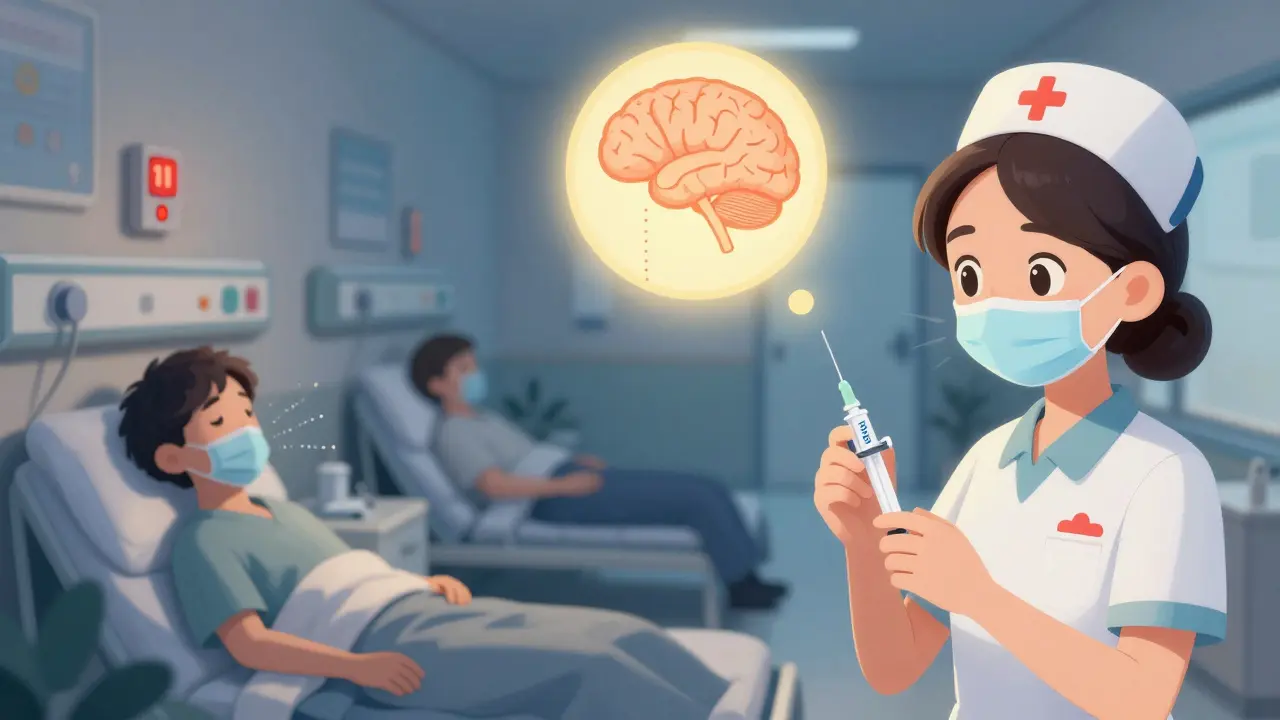
- Leading hospitals now use continuous monitoring for high-risk patients - combining pulse oximetry, capnography, and heart rate tracking.
- Pharmacists now review opioid doses before they’re given, especially for new patients.
- Staff training has improved. Hospitals that train everyone - nurses, aides, even housekeeping - on OIRD signs see a 47% drop in events.
- New FDA-approved tools like the Opioid Risk Calculator now predict individual risk with 84% accuracy using 12 factors: age, weight, kidney function, history of sleep apnea, and more.
But most hospitals - especially small ones - still don’t use these tools. Alarm fatigue is real. Nurses hear too many false alarms and start ignoring them. Only 31% of hospitals use validated risk tools. That’s not enough.
What You Can Do Right Now
You don’t need a medical degree to prevent this. Here’s what to do:
- Know the meds - If someone is on oxycodone, fentanyl, hydrocodone, or any opioid, know the signs.
- Never mix opioids with alcohol, sleeping pills, or anxiety meds - This combo is a death trap.
- Ask about monitoring - If a loved one is in the hospital after surgery, ask: “Are they on continuous monitoring?”
- Keep naloxone on hand - If someone you know uses opioids, even for pain, keep naloxone at home. It’s available over the counter in most states.
- Check breathing every hour - Especially in the first 2 hours after a dose. Count breaths. If it’s under 10, call for help.
- Don’t assume “they’re just sleepy” - If they can’t be woken, it’s not sleep. It’s respiratory depression.
Most deaths happen at home - not in hospitals. That’s where you have the power to act.
The Bottom Line
Respiratory depression from opioids isn’t a mystery. It’s predictable. It’s preventable. And it’s happening more often than you think. With over 20,000 people in the U.S. needing naloxone every year just after surgery, this isn’t an edge case - it’s a routine danger.
Knowing the signs isn’t just helpful. It’s essential. Slow breathing. Unresponsiveness. Blue lips. These aren’t vague symptoms. They’re urgent alarms. And if you’re the one who notices them - you might be the only one who can save a life.



Saylor Frye
January 5, 2026 AT 00:48Look, I get it - opioids are scary. But let’s not turn every grandma on pain meds into a walking overdose statistic. The real issue isn’t respiratory depression - it’s lazy prescribing. If your doctor thinks 40mg of oxycodone is fine for a 72-year-old with COPD, that’s not a monitoring failure. That’s malpractice. Capnography? Sure, great in theory. But most hospitals can’t even afford decent IV pumps. Stop pretending tech fixes human incompetence.
Also, ‘naloxone on hand’ is a Band-Aid. The real solution is stopping the opioid pipeline entirely. We’re not treating pain. We’re treating capitalism.
And yes, I’ve seen three patients code because someone thought ‘they’re just sleepy.’ It’s not a mystery. It’s a moral failure.
Katie Schoen
January 6, 2026 AT 11:19Okay but can we talk about how wild it is that we need a whole damn manual to not let people die from sleeping pills? Like, we have apps that tell us when to water our succulents, but we still let grandpa take fentanyl without someone checking if he’s breathing every 20 minutes?
I keep my Narcan in my purse next to my lip balm. Not because I’m a hero - because my uncle OD’d in a Walmart parking lot after his knee surgery and no one noticed until his face turned the color of a bruised plum.
Also, if you’re mixing opioids with Xanax, you’re not ‘chilling,’ you’re playing Russian roulette with your brainstem. Just sayin’.
PS: My nurse asked me if I wanted continuous monitoring after my C-section. I said yes. She looked at me like I’d asked for a unicorn. We got it. I’m alive. You should too.
Tiffany Adjei - Opong
January 7, 2026 AT 01:45Oh please. You’re all acting like this is some new revelation. Respiratory depression? That’s Med School 101. And you think capnography is the golden ticket? LOL. Only 22% of hospitals use it? Guess what - 98% of them can’t even get the damn thing calibrated right. I work in ICU. Half the time the alarms are wrong because someone taped the sensor to a hairy arm.
Also, ‘women are 1.7x more likely’? That’s not because of body composition. It’s because doctors prescribe opioids to women more often because they think we’re ‘emotional’ and ‘needy.’ Classic gender bias.
And don’t get me started on ‘naloxone on hand.’ You think the average person knows how to use it? Most people think it’s like an EpiPen. Nope. It’s not. You have to give it intranasally, and if you do it wrong, you just spray it into the air. I’ve seen it. Twice.
Bottom line: stop making this sound like a public service PSA. It’s systemic rot. And you’re all just rearranging deck chairs on the Titanic while the opioid industry laughs all the way to the bank.
Ryan Barr
January 7, 2026 AT 11:13Respiratory rate <8. SpO2 <85%. Unresponsive. Blue lips.
That’s it.
Stop overcomplicating it.
Act.
Or don’t. But don’t pretend ignorance is an option.
Amy Le
January 8, 2026 AT 09:57As an American, I’m sick of hearing about how bad our healthcare system is. We have the best tech in the world - it’s the people who won’t use it. Why don’t you blame the patients who don’t read the warning labels? Or the family members who think ‘a little Xanax to help sleep’ is harmless?
And let’s be real - if your loved one is on opioids, they probably have a history of substance issues. Maybe they’re not the innocent victim you think they are.
Also, Narcan? That’s just enabling. We should be punishing bad decisions, not handing out antidotes like candy. I’m not saying don’t save lives - I’m saying stop rewarding recklessness.
And why is everyone ignoring the fact that 70% of these cases happen after discharge? Hospitals aren’t the problem. The home environment is. Fix that, not the machines.
Stuart Shield
January 10, 2026 AT 03:04I’ve been a paramedic for 23 years. I’ve pulled people back from the edge more times than I can count - and every single time, it’s the same story: someone noticed something was off, but didn’t want to make a fuss.
‘They’re just sleeping.’
‘It’s just the meds.’
‘I didn’t want to bother the nurse.’
Here’s the truth: if you’re worried, you’re probably right. That little voice in your head? It’s not anxiety. It’s intuition. Trust it.
I once had a woman who counted her husband’s breaths every 15 minutes after his hip surgery. She didn’t know what capnography was. She just knew he wasn’t breathing like he should. She called it in. He’s alive today.
You don’t need a degree. You just need to care enough to act.
And if you’re reading this and thinking ‘that won’t happen to me’ - honey, it already has. Somewhere. Right now.
Lily Lilyy
January 10, 2026 AT 18:58Thank you for sharing this important information in such a clear way. I believe everyone should have access to life-saving knowledge, no matter their background or education. I have shared this article with my book club and our local senior center. We are now organizing a free Narcan training session next month. Let’s protect each other with kindness and courage. You are not alone. We are all in this together. 💪❤️
Jeane Hendrix
January 11, 2026 AT 00:24So i was just reading this and like... the whole capnography thing? i think its kinda wild that we're still relying on pulse oximetry as the gold standard when we know it's so flawed. like, we have the tech, but it's not being implemented because of cost or alarm fatigue or whatever. but also, the part about women being 1.7x more likely? that's not just metabolism - it's also that we're more likely to be prescribed these meds in the first place bc doctors think we're more sensitive to pain or something. which is bs. but yeah. i'm just saying. we need better protocols. and like, maybe training for non-medical folks? like, my aunt's caregiver didn't even know what 'respiratory depression' meant. and she was giving her meds daily. like... yikes.
also, i just got my Narcan from the pharmacy and it was like... $40? with insurance? that's wild. it should be free. like, it's a lifesaver. why is it so hard to get? i feel like this is one of those things that's so obvious but nobody's fixing it. maybe i'm just too idealistic.