

SSRI and St. John's Wort Interaction Checker
Check Your Medication Safety
This tool identifies dangerous interactions between SSRIs and St. John's Wort. Do NOT take St. John's Wort with SSRIs - it can cause life-threatening serotonin syndrome.
Important Safety Information
Do not combine SSRIs and St. John's Wort - it can cause serotonin syndrome, a potentially fatal condition. Even occasional use is dangerous.
St. John's Wort affects all SSRIs by increasing serotonin levels and reducing drug effectiveness. The interaction occurs within hours of starting.
Results
Select your medication to check for interactions.
What to Do Now
If you're taking both: Stop St. John's Wort immediately and contact your doctor. Do not stop SSRIs abruptly without medical supervision.
If you experience symptoms: Go to ER immediately. Symptoms include fever, muscle rigidity, confusion, tremors, or rapid heartbeat.
People take St. John’s Wort because they want something natural. It’s sold in health food stores, pharmacies, and online - often labeled as a safe alternative to prescription antidepressants. But here’s the truth: combining it with SSRIs isn’t just risky. It can kill you.
What St. John’s Wort Actually Does
St. John’s Wort (Hypericum perforatum) is a yellow-flowered plant used for centuries to lift mood. In Europe, it was prescribed for depression for decades. Today, in the U.S., it’s sold as a dietary supplement - meaning the FDA doesn’t test it for safety or effectiveness before it hits shelves.
Standardized products usually contain 0.3% hypericin and are taken at 300 mg three times a day. That’s 900 mg total. Studies show it can help with mild to moderate depression, sometimes as well as low-dose SSRIs. But here’s the catch: it doesn’t work the same way as prescription meds. It doesn’t just tweak serotonin - it floods the system.
St. John’s Wort blocks serotonin reuptake like SSRIs do. It also weakly inhibits monoamine oxidase, the enzyme that breaks down serotonin. So you’re getting a double hit: more serotonin made, less broken down. And that’s just the start.
How It Messes With SSRIs
SSRIs like sertraline, escitalopram, and fluoxetine work by keeping serotonin in your brain longer. That’s how they ease depression. But when you add St. John’s Wort, you’re not just adding more serotonin - you’re changing how your body handles the drug itself.
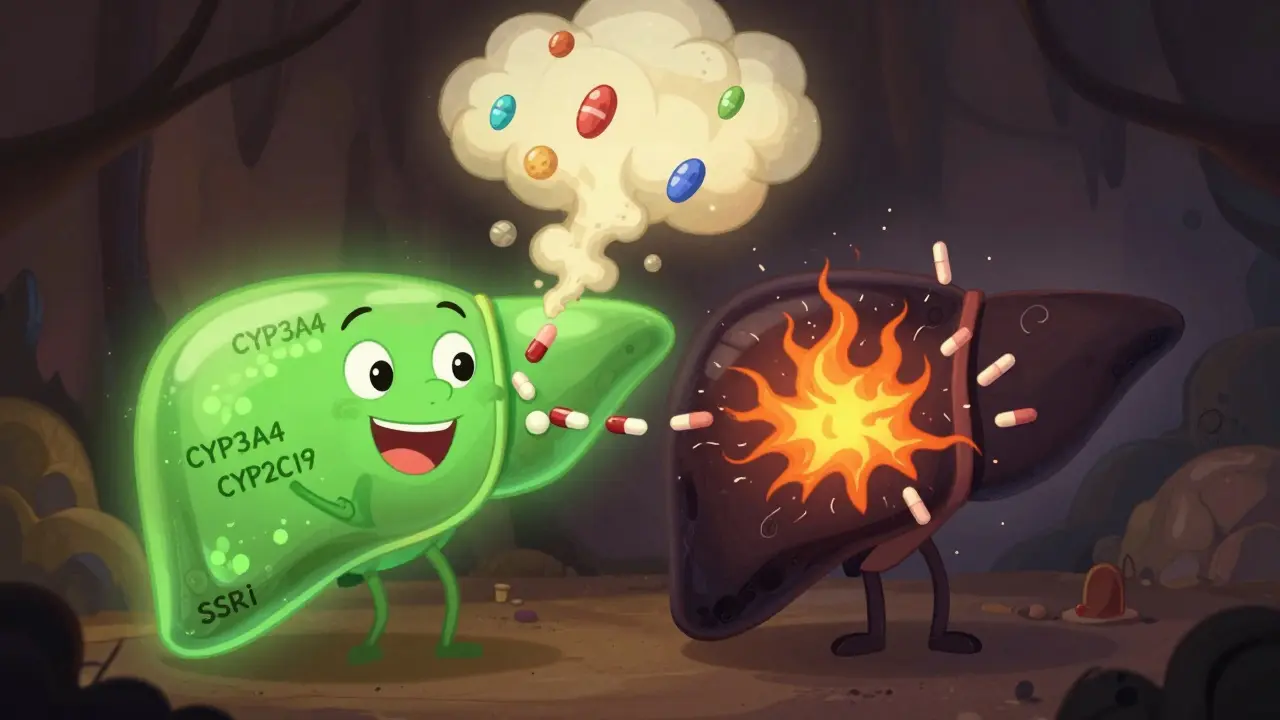
The real danger comes from hyperforin, one of the main compounds in St. John’s Wort. It turns on a switch in your liver called the pregnane X receptor. That switch tells your body to make more of certain enzymes - CYP3A4, CYP2C9, CYP2C19 - that break down drugs. Suddenly, your SSRI gets metabolized too fast. Your blood levels drop. You feel worse. So you might take more. Or your doctor increases the dose. And then - boom - you stop taking St. John’s Wort. The enzymes slow down. The SSRI builds up. Serotonin skyrockets.
Or worse: you take both at the same time. No washout. No warning. Just a daily supplement and your prescription side by side. That’s when serotonin syndrome hits.
Serotonin Syndrome: What It Feels Like
Serotonin syndrome isn’t a theory. It’s a medical emergency. And it’s happening more than you think.
Early signs: sweating, shaking, nausea, restlessness. You might feel anxious or confused. Your muscles twitch. You’re suddenly hot, even in a cool room. These symptoms can show up within hours or take up to two weeks.
Severe cases? Body temperature spikes above 106°F. Muscles lock up. You can’t move. Your kidneys start to fail. Blood clots form. Without treatment, you can die.
The Hunter Criteria - the gold standard for diagnosis - says you need at least three of these: mental changes, tremor, hyperreflexia, clonus, diaphoresis, shivering, or fever. If you’re on both St. John’s Wort and an SSRI and you start feeling off - don’t wait. Go to the ER.
Case studies show this isn’t rare. One patient in Germany took 900 mg of St. John’s Wort with 150 mg of sertraline. Within 48 hours, he had fever, muscle rigidity, and seizures. Another, in Canada, developed full-blown serotonin syndrome after mixing paroxetine with the herb. Both ended up in intensive care.
Which SSRIs Are Riskiest?
Some people think only certain SSRIs are dangerous. That’s misleading.
St. John’s Wort affects all SSRIs - but the way it interacts changes depending on the drug. SSRIs metabolized by CYP2C19 - like sertraline and escitalopram - get broken down faster. That means the enzyme induction from St. John’s Wort hits harder. But even SSRIs like paroxetine and fluoxetine, which use CYP2D6, still carry risk because of the direct serotonin boost.
European studies found 17 confirmed cases of serotonin syndrome from this combo. Ten of them involved sertraline or paroxetine. But that doesn’t mean fluoxetine is safe. It’s just harder to detect because it lingers in your system longer. You might stop St. John’s Wort and still get sick days later.
Bottom line: no SSRI is safe with St. John’s Wort. Not one.
It’s Not Just SSRIs
If you think this is only about depression meds, you’re wrong.
St. John’s Wort messes with a ton of other drugs. It can make birth control fail - there are real cases of unplanned pregnancies in women taking both. It lowers levels of warfarin, increasing clot risk. It reduces cyclosporine and tacrolimus - drugs transplant patients rely on to keep their organs from being rejected. One study showed tacrolimus levels dropped by 70%.
It even weakens antiseizure drugs like carbamazepine and phenytoin. People with epilepsy have had seizures after starting St. John’s Wort. And it cuts the effectiveness of HIV meds like indinavir by over half.
Why? Hyperforin doesn’t just affect one enzyme. It turns on a whole system - CYP3A4, P-glycoprotein - that clears drugs from your body. So if you’re on anything that’s processed by your liver, St. John’s Wort could be silently reducing its power.
Why People Don’t Tell Their Doctors
Here’s the biggest problem: most people don’t say they’re taking it.
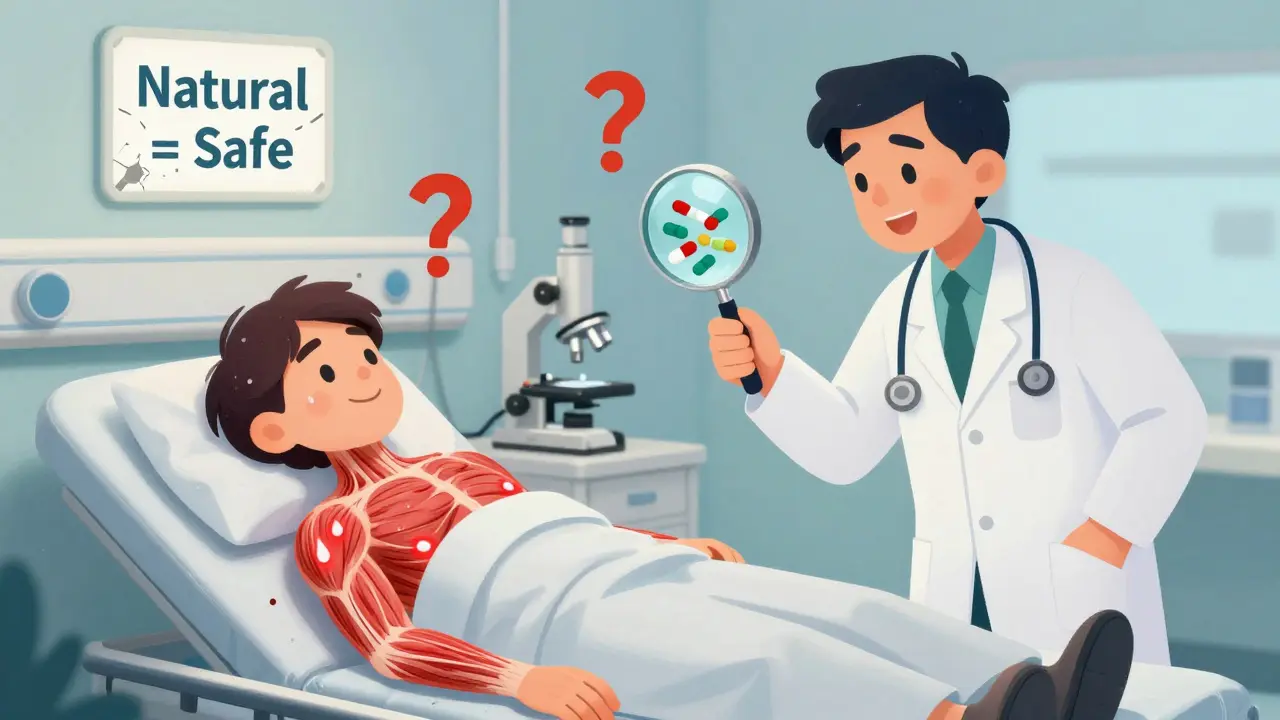
A 2021 JAMA study found only 32.7% of people who used herbal supplements told their doctors. Why? Because they think it’s “natural,” so it’s safe. Because they don’t see it as a “drug.” Because they’re afraid their doctor will judge them.
But doctors don’t know what they don’t know. If you’re on an SSRI and you start feeling strange, your doctor might think it’s a side effect of the medication - not a deadly interaction with a supplement you didn’t mention.
That’s why you need to speak up. Even if you think it’s harmless. Even if you’ve been taking it for years.
What to Do Instead
If you’re considering St. John’s Wort for depression, talk to your doctor first. Not Google. Not a supplement store clerk. A medical professional who knows your full history.
If you’re already taking it with an SSRI - stop. Don’t quit cold turkey. Talk to your prescriber. They’ll help you taper off safely. Wait at least two weeks before starting or restarting an SSRI. That’s the washout period experts recommend.
If you’re on an SSRI and want to try something natural, there are safer options. Exercise. Light therapy. Cognitive behavioral therapy. These have proven benefits with zero risk of serotonin syndrome.
And if you’re already feeling symptoms - sweating, shaking, racing heart, confusion - don’t wait. Go to the hospital. Tell them you’re taking St. John’s Wort and an SSRI. That information could save your life.
The Bigger Picture
The supplement industry is a $50 billion business. St. John’s Wort alone brings in over $150 million a year in the U.S. But it’s not regulated like a drug. No clinical trials. No mandatory warnings. No oversight.
The FDA has issued 12 safety alerts on it since 2018. Canada made it prescription-only in 2023 after 17 serotonin syndrome cases. The American Psychiatric Association and European Medicines Agency both say: don’t mix it with SSRIs. Period.
And yet, 12.3% of U.S. adults still use it. Many of them are on antidepressants. They think they’re being smart. Choosing nature over chemicals. But they’re playing Russian roulette with their brain chemistry.
The truth is simple: St. John’s Wort isn’t a gentle herb. It’s a potent drug with dangerous side effects. And when paired with SSRIs, the risk isn’t just high - it’s deadly.
Can I take St. John’s Wort with my SSRI if I only use it occasionally?
No. Even occasional use can trigger serotonin syndrome. The interaction isn’t about frequency - it’s about chemistry. St. John’s Wort changes how your body processes SSRIs and increases serotonin levels directly. One dose can be enough to start the cascade. There’s no safe threshold.
How long does St. John’s Wort stay in my system?
St. John’s Wort’s active compounds, especially hyperforin, can linger in your body for up to two weeks after you stop taking it. That’s why experts recommend waiting at least 14 days before starting or restarting an SSRI. The enzyme-inducing effects don’t disappear immediately - your liver keeps producing extra CYP450 enzymes during that time.
Is St. John’s Wort safer than antidepressants?
No. While it’s marketed as “natural,” it’s not safer. It’s unregulated, untested for long-term use, and carries serious interaction risks. Prescription SSRIs have known side effects, but they’re monitored, studied, and dosed precisely. St. John’s Wort’s potency varies by brand, batch, and storage - meaning you never know exactly what you’re getting. The lack of oversight makes it riskier, not safer.
Can I switch from an SSRI to St. John’s Wort?
Only under medical supervision. Stopping an SSRI abruptly can cause withdrawal symptoms like dizziness, nausea, and brain zaps. Switching to St. John’s Wort without a proper taper and monitoring increases the risk of relapse and serotonin imbalance. There’s no evidence that switching is safe or effective. Always work with your doctor to adjust your treatment plan.
What should I do if I think I have serotonin syndrome?
Go to the emergency room immediately. Tell them you’re taking St. John’s Wort and an SSRI. Symptoms like high fever, muscle rigidity, confusion, or rapid heartbeat are red flags. Treatment involves stopping both substances, giving fluids, and sometimes using serotonin blockers like cyproheptadine. Delaying care can lead to organ failure or death.



roger dalomba
December 25, 2025 AT 17:31Sophia Daniels
December 26, 2025 AT 05:52Fabio Raphael
December 26, 2025 AT 07:08Amy Lesleighter (Wales)
December 26, 2025 AT 10:17Becky Baker
December 28, 2025 AT 06:02Rajni Jain
December 30, 2025 AT 05:11Sandeep Jain
December 30, 2025 AT 13:58Natasha Sandra
January 1, 2026 AT 09:10Steven Destiny
January 2, 2026 AT 14:48sakshi nagpal
January 2, 2026 AT 22:49Erwin Asilom
January 3, 2026 AT 11:56Brittany Fuhs
January 4, 2026 AT 23:18Nikki Brown
January 6, 2026 AT 14:39Sumler Luu
January 7, 2026 AT 00:45Peter sullen
January 8, 2026 AT 12:02