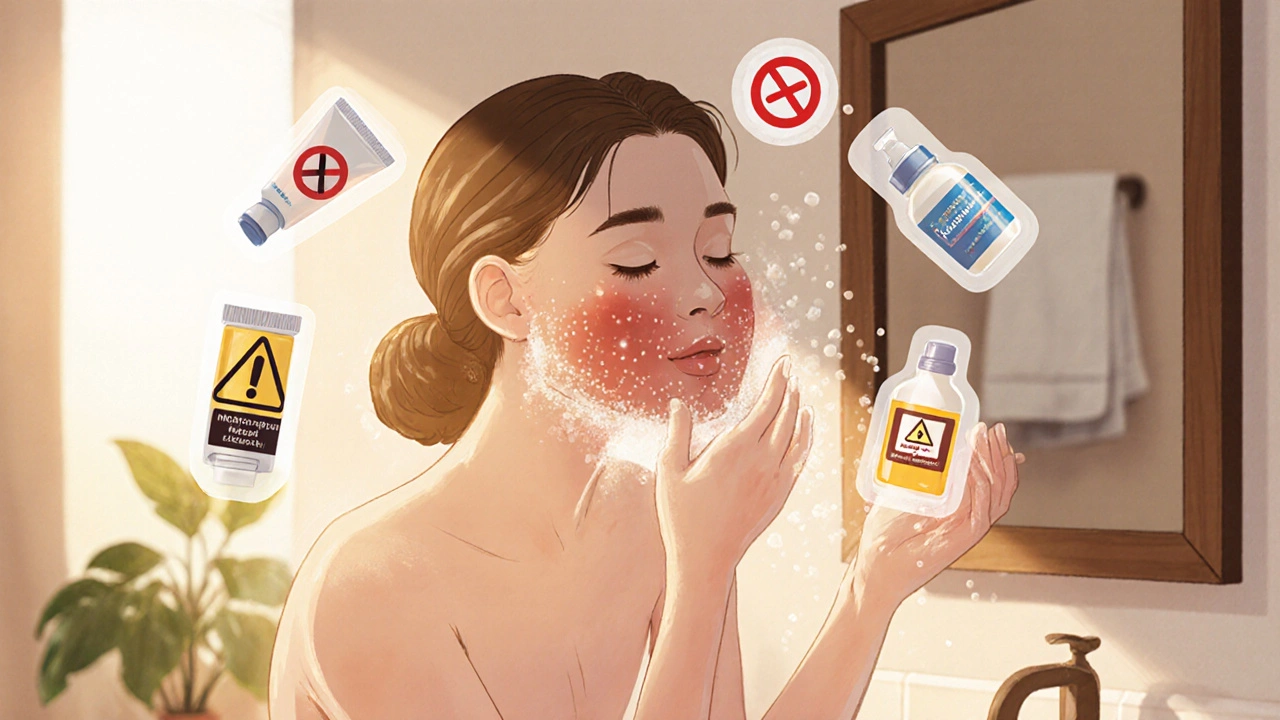
Facial Rash: Causes, Triggers, and What to Do About It
When your face breaks out in redness, itching, or bumps, it’s not just annoying—it can be a sign something deeper is going on. A facial rash, an inflammatory reaction on the skin of the face that can appear as redness, bumps, scaling, or swelling. Also known as facial dermatitis, it often shows up after using a new product, starting a medication, or being exposed to an allergen. Unlike a simple pimple, a facial rash doesn’t clear up in a day or two. It lingers, flares up randomly, and sometimes spreads. And if you’re taking any kind of prescription or over-the-counter drug, it might not be your skincare routine at all—it could be the medication itself.
Allergic reaction, the immune system’s overresponse to a harmless substance like nickel, fragrance, or even a drug ingredient is one of the most common triggers. Think of it like your skin shouting, ‘This isn’t supposed to be here!’ That’s why switching to a new face wash, sunscreen, or even a new pill can cause a sudden breakout. Then there’s contact dermatitis, a type of skin inflammation caused by direct contact with an irritant or allergen, which often shows up as a clear border where your skin touched the trigger—like the edge of your glasses or the rim of a mask. And don’t forget medication side effects, unintended skin reactions that can appear days or weeks after starting a new drug. Some antibiotics, blood pressure meds, and even NSAIDs can cause rashes that look like hives or measles. The timing matters: if the rash showed up two weeks after you started a new pill, that’s not a coincidence.
What you do next depends on what’s causing it. If it’s from a product, stop using it. If it’s from a drug, talk to your doctor—don’t just quit cold turkey. Some rashes are harmless; others signal something serious like a drug allergy or autoimmune flare. And while many people reach for steroid creams right away, those can make things worse if the root cause isn’t addressed. The good news? Most facial rashes improve once you identify and remove the trigger. The posts below break down real cases, common mistakes, and how to tell if your rash is just a nuisance or a warning sign. You’ll find practical advice on what to test, what to avoid, and how to get answers without endless doctor visits.
-
14 Nov
- Recent
- Popular