

Beta-Blocker Safety Checker for Asthma Patients
Based on current medical guidelines, this tool helps determine if your beta-blocker is safe for asthma. Enter your asthma control status and beta-blocker type to get a safety assessment.
Important: Always consult with your doctor before making any changes to your medication regimen.
Results will appear here
Enter your asthma control status and beta-blocker type to get a safety assessment.
Key Safety Guidelines
- Safe Cardioselective beta-blockers (atenolol, metoprolol, bisoprolol) can be safe for well-controlled asthma when monitored by a specialist
- Avoid Non-selective beta-blockers (propranolol, nadolol, timolol) are dangerous for all asthma patients
- Caution Never start beta-blockers for asthma patients with uncontrolled asthma
- Always Keep your rescue inhaler available even when taking cardioselective beta-blockers
For years, doctors told asthma patients to avoid beta-blockers at all costs. The warning was simple: these heart medications could shut down your airways. But today, that advice is changing - and not just a little. New research shows that for many people with asthma, beta-blockers aren’t the danger they once seemed. The key? Choosing the right kind.
Why Beta-Blockers Were Banned for Asthma Patients
Beta-blockers work by blocking adrenaline. That’s good for the heart - it lowers blood pressure, slows the pulse, and reduces strain after a heart attack. But in the lungs, adrenaline helps keep airways open. Early beta-blockers like propranolol didn’t care where they acted. They blocked both heart and lung receptors. That meant they could trigger bronchospasm - sudden tightening of the airways - making asthma worse, sometimes dangerously so.The British National Formulary still warns that beta-blockers "should usually be avoided" in asthma. And for good reason. Back in the 1970s and 80s, there were real cases of severe breathing attacks linked to these drugs. That history stuck. Even today, many GPs still avoid prescribing them.
The Big Shift: Not All Beta-Blockers Are the Same
Here’s what changed: scientists figured out that not all beta-blockers are created equal. There are two main types.- Non-selective beta-blockers - like propranolol, nadolol, and timolol - hit both heart and lung receptors. These are the dangerous ones for asthma.
- Cardioselective beta-blockers - like atenolol, metoprolol, and bisoprolol - mostly target the heart. They’re designed to leave lung receptors alone.
Cardioselective drugs are more than 20 times more likely to bind to heart receptors than lung ones. That’s not perfect - but it’s enough to make a real difference.
A 2023 meta-analysis of 29 clinical trials looked at what happened when people with asthma took single doses of these drugs. The results were clear: cardioselective beta-blockers caused a small, temporary drop in lung function - about 7.5% on average. But that drop? It reversed completely after using a rescue inhaler. No one had a serious asthma attack. No one needed emergency care.
Compare that to non-selective blockers. They caused a 10% drop in lung function - and the effect lasted longer. Worse, they made rescue inhalers less effective. That’s a big deal if you’re having an asthma flare-up.
Atenolol: The Quiet Winner for Asthma Patients
Among cardioselective options, one stands out: atenolol.In a direct head-to-head study with 14 asthma patients, researchers compared atenolol and metoprolol. Both lowered blood pressure equally. But atenolol caused significantly less wheezing, fewer asthma attacks, and better evening breathing. Patients had more asthma-free days. Their peak flow - a key measure of lung openness - stayed higher.
Why? Atenolol is more selective than metoprolol. It barely touches lung receptors. It also doesn’t cross the blood-brain barrier easily, which means fewer side effects like fatigue or depression - common complaints with other beta-blockers.
Studies from the European Journal of Clinical Pharmacology recommend atenolol as the preferred choice when beta-blockers are needed in asthma patients. And here’s the kicker: there are no published reports of fatal bronchospasm from atenolol in asthma patients - even after decades of use.

When Is It Safe? The Real Rules
This isn’t a green light for everyone. You can’t just ask your doctor for a beta-blocker because you’re worried about your blood pressure.The guidelines are strict - and smart:
- Only for well-controlled asthma - If you’re using your inhaler daily or having frequent flare-ups, skip it. Wait until your lungs are stable.
- Start low, go slow - A single low dose, then wait. Monitor your breathing for days before increasing.
- Specialist supervision - Your GP shouldn’t start this alone. A cardiologist or respiratory specialist should lead the decision.
- Always keep your rescue inhaler - Even if you’re on atenolol, you still need albuterol or salbutamol on hand. Beta-blockers don’t eliminate asthma risk - they just reduce it.
One study gave bisoprolol to 19 asthma patients for two weeks. They measured lung function before and after each dose. No increase in flare-ups. No drop in emergency inhaler effectiveness. The patients could still open their airways fully when they needed to.
What About Long-Term Use?
Here’s the surprising part: the longer you take a cardioselective beta-blocker, the safer it seems.Animal studies show something odd. At first, beta-blockers can make airways more sensitive. But over time, they reduce inflammation and even calm airway hyperresponsiveness. That’s why single-dose studies show small drops in lung function - but long-term users rarely have problems.
Think of it like this: your body adapts. The drug doesn’t just block receptors - it changes how your airways react over time. That’s why patients on chronic beta-blocker therapy often report better asthma control than expected.
And then there’s celiprolol - a rare beta-blocker that actually helps open airways. In one study, it didn’t just avoid triggering bronchospasm - it blocked the effect of propranolol. It’s not widely used, but it proves that beta-blockers aren’t all bad for lungs.
What If You’re Already on a Beta-Blocker?
If you’re taking a non-selective beta-blocker like propranolol and have asthma, don’t stop cold turkey. Sudden withdrawal can trigger heart problems.Instead, talk to your doctor about switching. Many patients have safely moved from propranolol to atenolol or bisoprolol. The switch usually takes 1-2 weeks, with close monitoring of both heart rate and breathing.
One patient in Brisbane, 62, had a heart attack in 2023. She’d had asthma since childhood. Her cardiologist switched her from propranolol to atenolol. Within a month, her blood pressure stabilized. Her asthma? No more nighttime wheezing. Her peak flow improved by 18%.
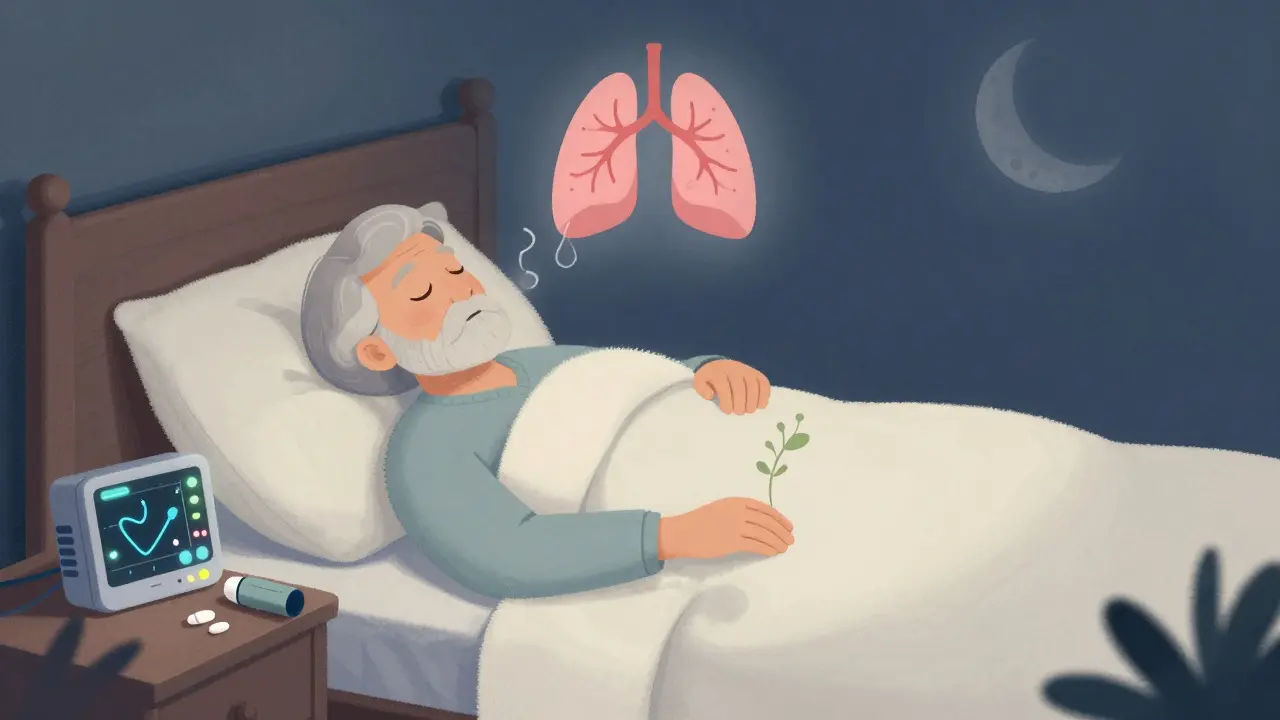
Can Beta-Blockers Interfere With Your Inhaler?
Yes - but only if you’re on the wrong kind.Rescue inhalers like albuterol work by stimulating beta-2 receptors in the lungs. Non-selective beta-blockers block those receptors. So the inhaler doesn’t work as well. That’s dangerous.
Cardioselective beta-blockers? They barely touch those receptors. Studies show that even with bisoprolol or atenolol, rescue inhalers still work - nearly as well as if you weren’t on any beta-blocker at all.
One trial found that after taking atenolol, patients still got a 16% boost in lung function from their inhaler. Compare that to a 1% drop with propranolol. The difference isn’t subtle - it’s life-saving.
Who Should Still Avoid Beta-Blockers?
Even with newer data, some people should still steer clear:- People with severe, uncontrolled asthma
- Those with frequent, life-threatening attacks
- Patients with COPD and significant reversible airflow obstruction
- Anyone with a history of beta-blocker-induced bronchospasm
If you’re unsure, don’t guess. Get a lung function test - FEV1 - before and after a trial dose. That’s the gold standard.
The Bottom Line: It’s Not About Avoiding Beta-Blockers - It’s About Choosing Wisely
The old rule - "beta-blockers are off-limits for asthma" - is outdated. It’s not that they’re safe for everyone. It’s that we now know which ones are safe for some.If you have asthma and a heart condition - high blood pressure, irregular heartbeat, past heart attack - you might need a beta-blocker to live longer. Avoiding it could be riskier than using the right one.
Atenolol is the safest bet. Bisoprolol and metoprolol are good alternatives. Propranolol? Avoid it. Always. And never start without specialist oversight.
Your lungs matter. But so does your heart. You don’t have to choose one over the other anymore. You just need the right information - and the right doctor.
Can I take beta-blockers if I have asthma?
Yes - but only specific types. Cardioselective beta-blockers like atenolol, bisoprolol, or metoprolol can be safe for people with well-controlled asthma. Non-selective ones like propranolol are dangerous and should be avoided. Always start under specialist supervision with close monitoring of breathing.
Is atenolol safe for asthma patients?
Yes, atenolol is considered the safest beta-blocker for asthma patients. Studies show it causes the least bronchospasm compared to other cardioselective options. It doesn’t interfere much with rescue inhalers, and there are no reported cases of fatal reactions in asthma patients. Many specialists recommend it as the first choice when beta-blockade is needed.
Can beta-blockers make my asthma worse?
Non-selective beta-blockers like propranolol can definitely make asthma worse by blocking lung receptors and reducing the effect of rescue inhalers. Cardioselective beta-blockers like atenolol rarely cause problems - especially in mild to moderate asthma. Even then, symptoms are usually mild and reversible with an inhaler.
Do I need to stop my inhaler if I start a beta-blocker?
Never stop your inhaler. You still need it - even on a cardioselective beta-blocker. Rescue inhalers like albuterol are your safety net. Studies confirm they still work effectively when you’re on atenolol or bisoprolol. Stopping your inhaler could be life-threatening if your asthma flares up.
How long does it take for beta-blockers to affect breathing?
With non-selective beta-blockers, effects can happen within hours. With cardioselective ones, any small drop in lung function usually occurs within the first few days of starting. After that, the body adapts. Long-term users often see no change in breathing - and sometimes even improved control due to reduced airway inflammation.
Can beta-blockers help my asthma long-term?
They’re not prescribed to treat asthma, but some research suggests long-term use of certain beta-blockers may reduce airway inflammation and lower hyperresponsiveness. This could mean fewer flare-ups over time - but that’s still being studied. The main benefit is heart protection, not asthma improvement.





Tommy Watson
December 15, 2025 AT 14:44bro i took propranolol for anxiety and my asthma went full anime villain mode. coughing like i swallowed a vacuum cleaner. my doctor was like 'lol oops' and switched me to atenolol. now i can actually run without sounding like a broken accordion. 🤡
Donna Hammond
December 16, 2025 AT 06:56This is such an important update to medical guidelines. The shift from blanket avoidance to selective use is a textbook example of evidence-based medicine evolving. Atenolol’s safety profile in asthma patients is backed by solid clinical data-especially the 2023 meta-analysis. Many clinicians still operate on outdated fear, but patients with controlled asthma and cardiovascular needs deserve better. Always start low, monitor closely, and never skip the rescue inhaler. This isn’t just theory-it’s life-saving nuance.
Richard Ayres
December 16, 2025 AT 10:01It’s fascinating how medical dogma can persist long after the science has moved on. The idea that all beta-blockers are dangerous for asthma patients was never fully accurate-it was a generalization born of real but limited data. The distinction between non-selective and cardioselective agents is critical, and it’s encouraging to see research finally translating into practical clinical guidance. Atenolol’s minimal lung interaction and lack of CNS penetration make it uniquely suited for this population. Still, caution remains warranted, and specialist oversight is non-negotiable.
Sheldon Bird
December 17, 2025 AT 03:44Y’all need to chill and listen to the science 🙌
My cousin switched from propranolol to atenolol after a heart scare and now she’s hiking weekends and not wheezing at night. It’s not magic-it’s medicine that’s gotten smarter. Don’t panic, don’t quit your inhaler, and talk to your doc. You got this 💪❤️
Karen Mccullouch
December 18, 2025 AT 12:00THIS IS WHY AMERICA IS FALLING APART. First they tell us to avoid carbs, now they’re telling asthmatics to take heart drugs? Who’s approving this? Big Pharma is pushing this so they can sell more pills. My cousin died from a beta-blocker reaction in 2019 and now they want us to just ‘try atenolol’? NO. 🚫🇺🇸
They don’t care about our lungs-they care about profit. Wake up!
Michael Gardner
December 20, 2025 AT 05:27Wait, so now we’re saying atenolol is safe because it’s ‘more selective’? But the same study showed a 7.5% drop in lung function-even with the ‘safe’ ones. That’s not safe, that’s just less dangerous. And you’re telling people to trust this because there are no reported deaths? That’s not proof of safety, that’s proof nobody died yet. What about the 10% who get worse and don’t report it? This feels like medical whiplash.
Willie Onst
December 21, 2025 AT 14:48Man, I used to think beta-blockers were just for heart guys with mustaches. But now I see it’s like choosing between a sledgehammer and a scalpel. Propranolol? Sledgehammer. Atenolol? Scalpel. And honestly? My grandpa’s been on atenolol for 8 years with asthma and he still plays chess every Tuesday. No wheezing. No drama. Just good medicine. Sometimes the old rules just need a little update, you know? 🌱
Ronan Lansbury
December 23, 2025 AT 14:46Of course they say it’s safe now. Did you know the FDA quietly revised the guidelines after lobbying from AstraZeneca? The 2023 meta-analysis? Funded by a pharmaceutical consortium. And celiprolol? A drug so obscure it’s only used in one clinic in Sweden. This isn’t science-it’s marketing dressed as progress. The real danger isn’t beta-blockers-it’s blind trust in institutional narratives. Always question the source.