
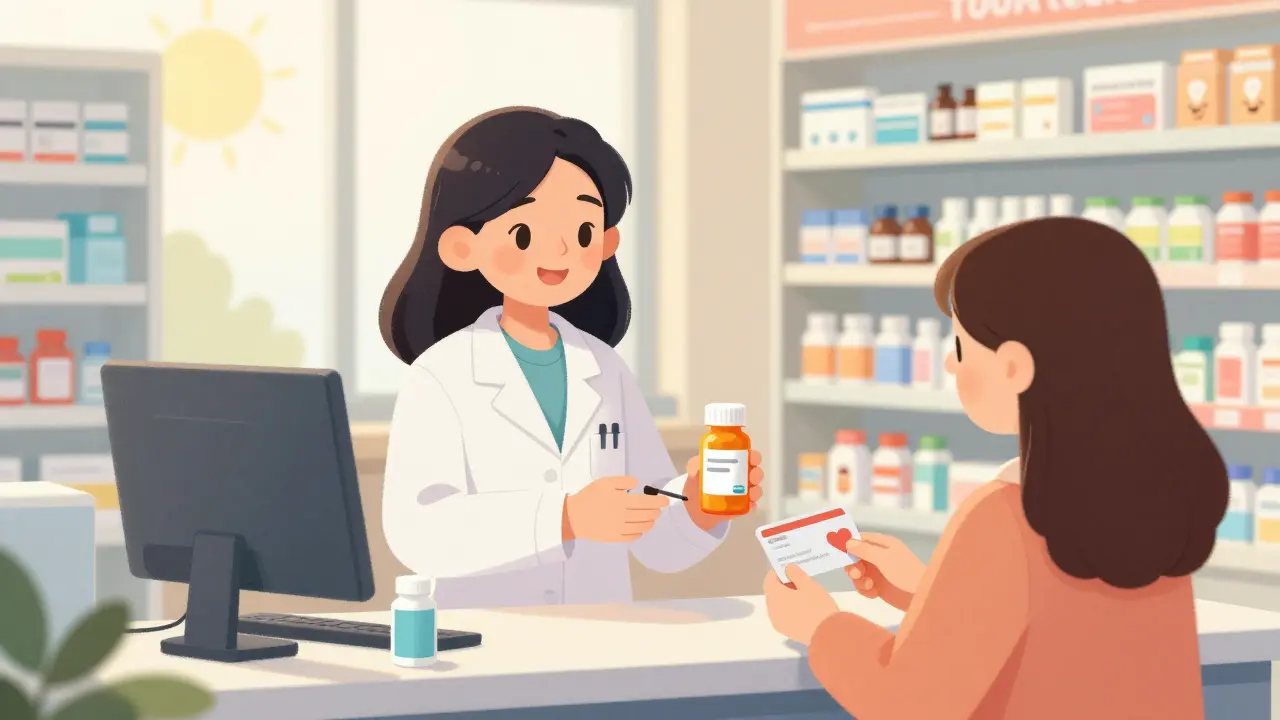
For millions of Americans, filling prescriptions can feel like a financial gamble. Even for generic drugs-usually the cheapest option-prices vary wildly between pharmacies. Using prescription discount cards effectively can save hundreds on essential medications each year. These programs have become essential tools for the uninsured, those with high-deductible health plans, and anyone struggling to afford drugs like insulin or blood pressure medication. But how do they actually work? Let’s break it down.
What Are Prescription Discount Cards?
Prescription discount cards are third-party services that negotiate lower prices with pharmacies across the U.S.. Unlike insurance, they don’t cover your medication-they simply provide a cash price discount. The modern landscape started when Walmart launched its $4 generic drug program in late 2006. Competitors like Target and Kroger quickly followed. Today, major players include GoodRx is a prescription discount card service that negotiates lower prices with pharmacies across the U.S., NeedyMeds is a nonprofit organization founded in 1984 that expanded discount services in the 2010s to help patients find affordable medications., and Blink Health is a prescription discount service founded in 2015 that offers discounted prices on both brand and generic medications.. These services work by securing bulk purchasing deals with manufacturers and pharmacies. When you use their card, the pharmacy gets paid a negotiated rate, often much lower than standard cash prices.
How They Save You Money
These programs shine for generic medications. A 2022 study in Circulation: Cardiovascular Quality and Outcomes found that for heart failure patients using generic-only regimens, discount cards cut costs by 65% on average. For example, common drugs like lisinopril (blood pressure) or metformin (diabetes) often drop to $5-$10 for a 30-day supply. That’s a massive savings compared to typical cash prices of $30-$50. However, the same study showed brand-name drugs see minimal discounts-sometimes only 10%. A SGLT2 inhibitor for diabetes might still cost $1,200-$1,500 monthly even with a discount card. This is why these cards work best for patients needing generics.
Walmart $4 Program is a pharmacy discount initiative started in 2006 offering 30-day supplies of certain generics for $4.. It remains one of the most reliable options for common generics. It’s available at all Walmart pharmacies and doesn’t require an app-just ask for the $4 list. Similarly, Kroger and Costco offer their own in-store discount programs for select generics.
Step-by-Step Guide to Using Discount Cards
- Check prices online: Use apps like GoodRx or NeedyMeds. Enter your drug name and pharmacy location. Prices vary by pharmacy even in the same zip code.
- Compare with your insurance: Sometimes your insurance copay is higher than the cash price with a discount card. Always check both.
- Present the card at the pharmacy: Bring the printed card or show the app version. Pharmacists can apply the discount instantly.
- Try multiple pharmacies: A drug might cost $12 at Walgreens but $8 at CVS. Don’t settle for the first price you see.
- Ask your pharmacist: Many pharmacies now automatically check discount card prices before processing insurance. They can help you find the best deal.
Pharmacy Benefit Managers are companies that manage prescription drug benefits for health insurers and employers, often negotiating prices with pharmacies and discount card providers.. Major PBMs like Express Scripts and OptumRx now integrate discount card prices automatically. This means if your insurance doesn’t cover a drug well, the PBM might apply the discount card price without you having to do anything. As PSG Consults noted in 2023, 45% of large employers now use this integrated approach.
When They Don’t Work as Well
These programs aren’t perfect. First, they rarely help with brand-name drugs. As the NIH study noted, patients who believe generics are as effective as brand names are three times more likely to use discount programs successfully. If you’re prescribed a brand-name drug, you might need separate manufacturer copay assistance programs instead. Second, prices can be inconsistent. A 2022 Reddit user reported the same drug costing $15 with Blink Health but $42 with GoodRx at the same pharmacy. Third, if you have insurance with low copays, the discount card might not save you anything. A 2023 Consumer Reports survey found 68% of users had to visit multiple pharmacies to find the best price, which can delay getting medication.
High-Deductible Health Plans are insurance plans where patients pay full out-of-pocket costs until meeting deductibles, making discount cards critical for early-year prescriptions.. With 43% of U.S. workers covered by HDHPs in 2022 (Kaiser Family Foundation), these programs are especially valuable for people early in their benefit year.
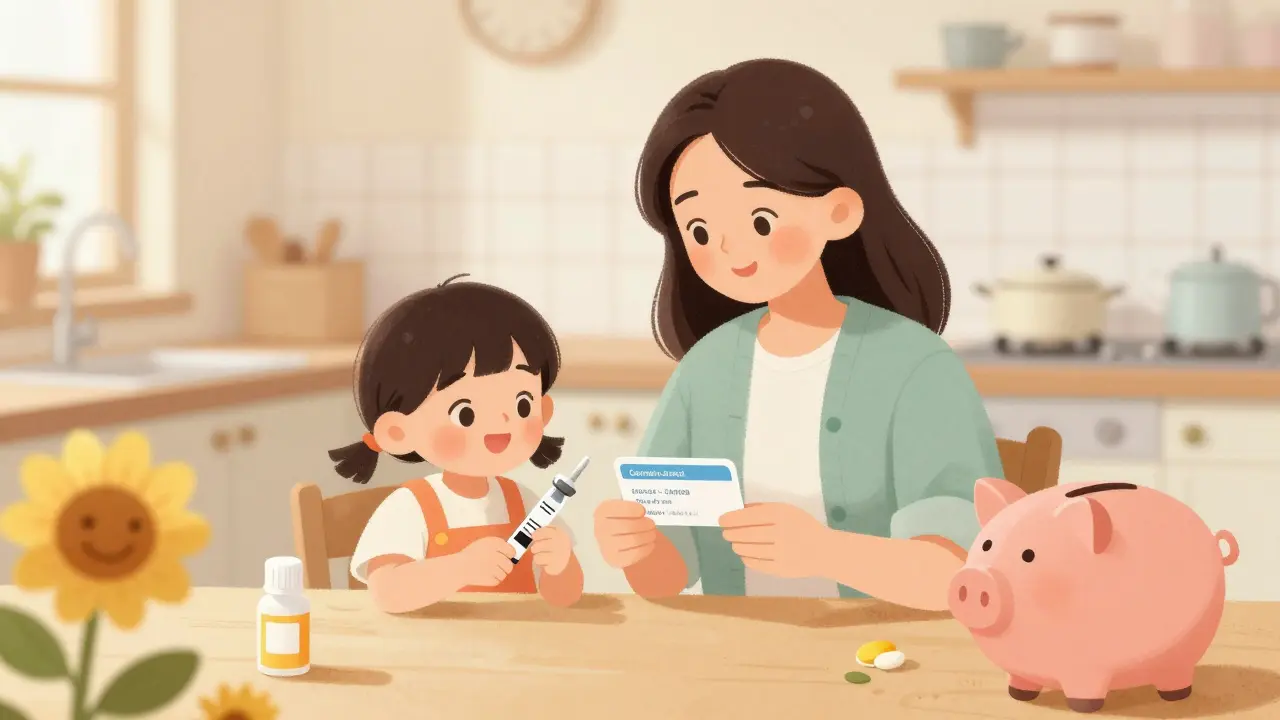
Pro Tips for Maximum Savings
- Always compare prices before filling: Even small changes in location or pharmacy chain can save $20 or more. A 2023 Ohio State University study found patients saving $50 or more on a single prescription were 3.5 times more likely to continue taking their medication consistently.
- Use multiple cards: GoodRx, NeedyMeds, and Blink Health often have different deals. Check all three. For example, one 2023 user saved $24 on metformin by using NeedyMeds at a small independent pharmacy versus GoodRx at Walgreens.
- Ask about pharmacy-specific programs: Some chains like Kroger or Costco have their own discount programs that work alongside third-party cards.
- Time your refills: Some programs offer better prices for 90-day supplies. Ask your pharmacist.
- Track your savings: Keep receipts to see which card gives the best deal for your specific medications.
Federal Trade Commission is the U.S. agency investigating how pharmacy benefit managers profit from discount card programs, with potential new regulations expected.. The FTC launched an investigation in October 2023 into how PBMs profit from discount card programs. This could lead to new regulations, but for now, these services remain widely available.
Frequently Asked Questions
Do prescription discount cards work with insurance?
No, these cards function as cash payment options. You can’t combine them with insurance. However, it’s worth checking both-the cash price with a discount card might be lower than your insurance copay, especially early in the year before you meet your deductible.
Are discount cards safe to use?
Yes, major programs like GoodRx and NeedyMeds are legitimate. They’re regulated by the Federal Trade Commission (FTC), which has issued warnings about potential antitrust issues but hasn’t banned these services. Always use reputable providers and avoid unknown websites asking for personal information beyond your prescription details.
Why do prices vary so much between pharmacies?
Pharmacies negotiate different rates with discount card providers. A single drug might cost $5 at one CVS location but $12 at another nearby. This is why checking multiple pharmacies in your area is crucial. The NIH study found price differences of over 200% between pharmacies for the same drug in the same city.
Can I use these for brand-name drugs?
Discount cards offer minimal savings on brand-name drugs-often just 5-10%. For brand-name medications, look for separate manufacturer copay assistance programs. For example, many drug companies offer cards or coupons that reduce out-of-pocket costs for their specific brand. These programs are usually separate from generic discount cards like GoodRx.
What’s the best way to find the lowest price?
Check at least three pharmacies: your local chain, a big-box store like Walmart, and an independent pharmacy. Use multiple discount card apps-GoodRx, NeedyMeds, and Blink Health often have different deals. For example, one 2023 user saved $24 on metformin by using NeedyMeds at a small independent pharmacy versus GoodRx at Walgreens.
Will these programs still be around in 2026?
Yes, but the landscape may change. The Drug Discount Card Market report projects growth to $3.8 billion by 2034, driven by high-deductible health plans. However, the FTC’s ongoing investigation into pharmacy benefit managers (PBMs) could reshape how these programs operate. For now, discount cards remain a reliable tool for generic drug savings.
Do these programs work for pet medications?
Yes, some discount cards like GoodRx cover veterinary medications. Always check if the pharmacy accepts the card for animal prescriptions. For example, common pet medications like flea treatments or antibiotics often have significant discounts through these programs.

Kieran Griffiths
February 5, 2026 AT 16:56Hey, using prescription discount cards can save you a ton on generics, but always check insurance first. Sometimes copays are lower than cash prices. For example, my metformin was $3 with insurance vs $5 with GoodRx. Always compare options-pharmacies have different deals. Ask your pharmacist; they know the best prices. Some chains like Kroger have their own discounts. High-deductible plans make these cards essential early in the year. Brand-name drugs see minimal savings-maybe 5-10%. Check FTC warnings about PBMs. Some programs offer better 90-day supply prices. Track your savings to know which card works best. Don't rely on one app; use GoodRx, NeedyMeds, Blink Health. Pet meds can be discounted too. Stay informed and shop around. It's a hassle but worth the savings.
Dr. Sara Harowitz
February 6, 2026 AT 18:06Discount cards? They're a joke! Big Pharma and PBMs are manipulating prices, and the government is asleep at the wheel! America needs real healthcare reform-not these gimmicks! Don't fall for it! It's all a scam! You think this is helping? It's just another way for corporations to profit off our suffering! We need systemic change, not Band-Aid solutions!
Pamela Power
February 6, 2026 AT 19:11This is why our healthcare system is broken. Discount cards are a band-aid on a gaping wound. The real issue is pharmaceutical monopolies and greedy PBMs. These so-called "solutions" do nothing to address the root causes. It's all about profit, not patient care. You're being played. Real change requires government intervention, not this superficial nonsense.
Lisa Scott
February 7, 2026 AT 22:21Discount cards are a scam big pharma and pbms are in cahoots to rip us off no trust period
Arjun Paul
February 8, 2026 AT 19:48These discount cards are merely a temporary fix. The real solution requires government intervention to regulate drug pricing. Relying on third-party cards is a flawed approach that does not address systemic issues.
Gregory Rodriguez
February 9, 2026 AT 17:40Oh sure, discount cards are the miracle solution to healthcare. What's next, free healthcare for all? Jokes aside, they do save some money, but don't expect them to fix everything. It's like using a Band-Aid on a broken leg-useful for small cuts but not a cure.
Carol Woulfe
February 9, 2026 AT 20:51These discount cards are part of a larger scheme by the government to control our healthcare. They're not helping; they're just another tool for surveillance. Don't fall for it. The real issue is the deep-rooted corruption in the pharmaceutical industry. Only the elite benefit from these programs. It's all about power and control.
Tehya Wilson
February 10, 2026 AT 10:30The systemic issues within pharmaceutical pricing are deeply concerning. However, discount cards do little to address root causes. This is a band-aid solution. We need comprehensive reform.
divya shetty
February 11, 2026 AT 09:04It is irresponsible to rely on discount cards. Proper healthcare requires proper insurance coverage. This is a dangerous precedent that undermines the entire system. Patients must prioritize their health over temporary savings. This approach is reckless and short-sighted.
Jennifer Aronson
February 11, 2026 AT 12:40Discount cards can be useful, but they're not perfect. It's important to understand their limitations and use them wisely. Always compare prices across pharmacies and with insurance. Some drugs see significant savings, others don't. It's a tool, not a solution. Stay informed and make decisions based on your specific situation.
Lana Younis
February 12, 2026 AT 18:54Yeah discount cards can be a lifesaver for some meds but always check multiple places. Sometimes the local pharmacy has better deals than apps. Also check if your insurance covers it first. Just saying. Sometimes the prices vary a lot between stores. Like my blood pressure med was $10 at CVS but $5 at Walgreens. Always ask your pharmacist too. They know the ins and outs. It's all about finding the best deal for you. Don't just trust one app. Use GoodRx, NeedyMeds, Blink Health. Also for pet meds, some cards work. Just be proactive and stay informed.
Kate Gile
February 14, 2026 AT 03:58Hey, using discount cards is a smart move! Just make sure to check multiple pharmacies and compare with your insurance. Every little bit helps. And don't forget to ask your pharmacist-they can often find better deals. It's all about being informed and proactive. Keep track of your savings and you'll see the difference!
anjar maike
February 14, 2026 AT 22:34Discount cards help? 🤔 Prices vary so much. Always check multiple places. Maybe the pharmacy staff can help.
Brendan Ferguson
February 15, 2026 AT 06:59While discount cards can save money on generics, it's important to check with your pharmacist. Sometimes insurance copays are lower than the cash price with a card. Always compare options and don't assume one card is better. Pharmacies have different deals, so checking multiple locations is key. High-deductible plans make these cards especially useful early in the year. For brand-name drugs, look for manufacturer assistance programs instead. It's all about finding the best deal for your specific situation.