

When you’re producing generic medications, supplements, or medical devices, where you make them isn’t just a logistics decision-it’s a business-critical call. Choosing between making things at home or shipping production overseas can mean the difference between steady profits and a supply chain meltdown. The old rule-overseas manufacturing is cheaper-still holds in some cases. But today, it’s far more complicated. Hidden costs, delays, quality risks, and new U.S. policies have flipped the script for many companies.
Cost Isn’t Just the Price Tag
It’s easy to look at a quote from a factory in Vietnam or China and think you’ve won. A unit that costs $1.20 overseas versus $4.50 in the U.S. seems like a no-brainer. But that’s only the sticker price. When you add in shipping, customs fees, import tariffs, third-party inspections, and inventory holding costs, the gap shrinks fast. According to Trison Wells (2025), domestic manufacturing runs $300 to $3,000 more per unit than overseas options. But when you factor in the 7.5% to 25% Section 301 tariffs on Chinese goods, the savings drop to just 12-15% for many product categories. Add in the cost of third-party inspections-$300 to $500 per shipment-and you’re already eating into that margin. Then there’s the cost of sitting on inventory. Overseas orders take 3 months to arrive. That’s 90+ days of capital tied up in goods you can’t sell. Domestic production? 45 to 60 days total. That’s a big difference in cash flow.Time Is Money-Especially in Healthcare
In generic pharmaceuticals, timing isn’t just about speed-it’s about market access. If you’re launching a new generic version of a popular drug, being first to market can mean capturing 70% of sales before competitors catch up. Domestic manufacturers can turn around a batch in 45-60 days. Overseas? You’re looking at 45-60 days to make it, then another 30-45 days to ship, clear customs, and get it on the shelf. That’s 75-105 days total. A 2024 case study from Product Quickstart showed a startup lost $187,000 in Q4 sales because their overseas order arrived 8 weeks late during peak holiday demand. That’s not a glitch-it’s a predictable risk. Domestic manufacturers, on the other hand, can handle rush orders. Eighty-three percent of promotional product companies rely on U.S. production for orders under 30 days. If you need to adjust a label, fix a packaging error, or respond to an FDA request, domestic teams can make changes in 3-5 days. Overseas? You’re waiting 14-21 days for a revised mold or updated artwork.Quality Control: Can You Really Trust a Photo?
One of the biggest surprises for new importers? You can’t just rely on a factory’s photos or a third-party inspector’s report. A Reddit user named FactoryOwner87 shared how their first Alibaba order had a 37% defect rate-even after paying for an inspection. They lost $48,000 in product and six weeks of sales. Domestic manufacturing gives you direct oversight. You can walk into the facility, watch the line, test samples on-site, and fix issues immediately. Overseas, you’re trusting a third party to catch problems you can’t see. That’s why 61% of companies importing from Asia hire inspectors. But even then, defects slip through. Trustpilot data shows domestic manufacturers average 4.3/5 stars, with quality and responsiveness cited in 87% of positive reviews. Overseas manufacturers? 3.8/5 stars, with communication issues listed in 68% of negative reviews. And don’t forget intellectual property. Generic products often rely on precise formulations or packaging designs. In some overseas regions, product copying is common. Ouui Love’s 2023 analysis found product replication risks increase by 37% in key Asian manufacturing hubs compared to U.S.-based production. That’s not paranoia-it’s a documented risk.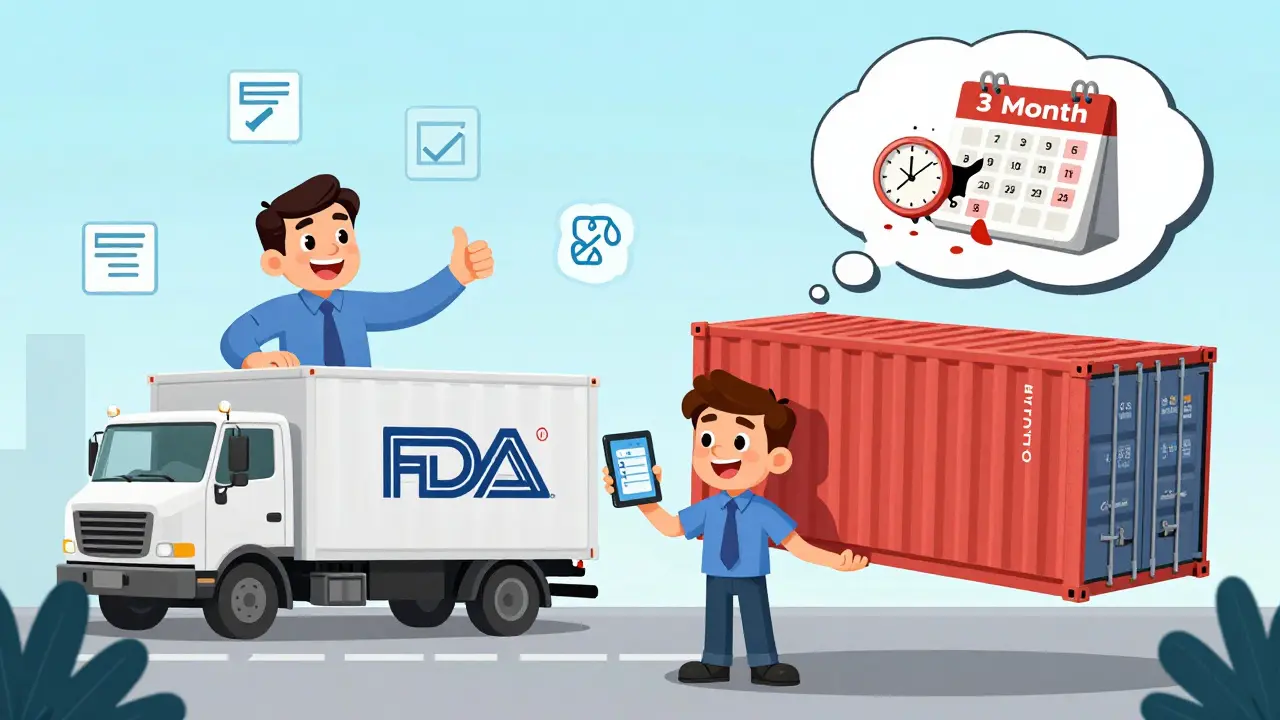
Minimum Orders and Flexibility
If you’re a small or mid-sized company, overseas manufacturers often require minimum orders of 1,000 to 5,000 units. That’s a huge barrier if you’re testing a new product or don’t have warehouse space. Domestic manufacturers, by contrast, routinely accept runs as small as 100-500 units. That flexibility lets you test the market, respond to demand spikes, and avoid overstocking. One startup CEO on Reddit shared how they used a Yiwu manufacturer for a 300-unit prototype run at $2.10 per unit-far below the $8.75 domestic quote. That worked because they weren’t scaling yet. But when they tried to ramp up to 10,000 units, the lead time ballooned, and they couldn’t adjust the formula quickly enough. They ended up switching to domestic for their core product line.The Hybrid Model Is Winning
Most smart companies don’t pick one side. They use a hybrid approach. That means making critical components-like active pharmaceutical ingredients, packaging seals, or sterile fills-domestically. And outsourcing non-critical items-like boxes, labels, or non-medical accessories-overseas. This strategy is now used by 44% of mid-sized manufacturers, according to the Strategic Advisor Board (2023). It reduces risk without sacrificing cost savings. For example, a company might produce the tablet core in Ohio, then ship it to a Mexican facility for blister packaging. Mexico offers 12-15% of U.S. labor costs with just 7-10 days of shipping time. That’s a sweet spot for many.Sustainability and Consumer Pressure
Consumers aren’t just asking where your product is made-they’re willing to pay more for it. NielsenIQ’s Q1 2024 survey found 68% of shoppers will pay 5-12% more for locally made goods. That’s not just a trend-it’s a market shift. Domestic production cuts shipping emissions by 62%, according to Classic Fashion’s 2024 lifecycle analysis. Even if a factory in Vietnam is ISO 14001 certified, the carbon footprint of shipping across the Pacific can’t be ignored. And with the Inflation Reduction Act pouring $250 million into domestic manufacturing support and the CHIPS Act funding $52.7 billion in U.S. production over the next five years, the government is backing local too.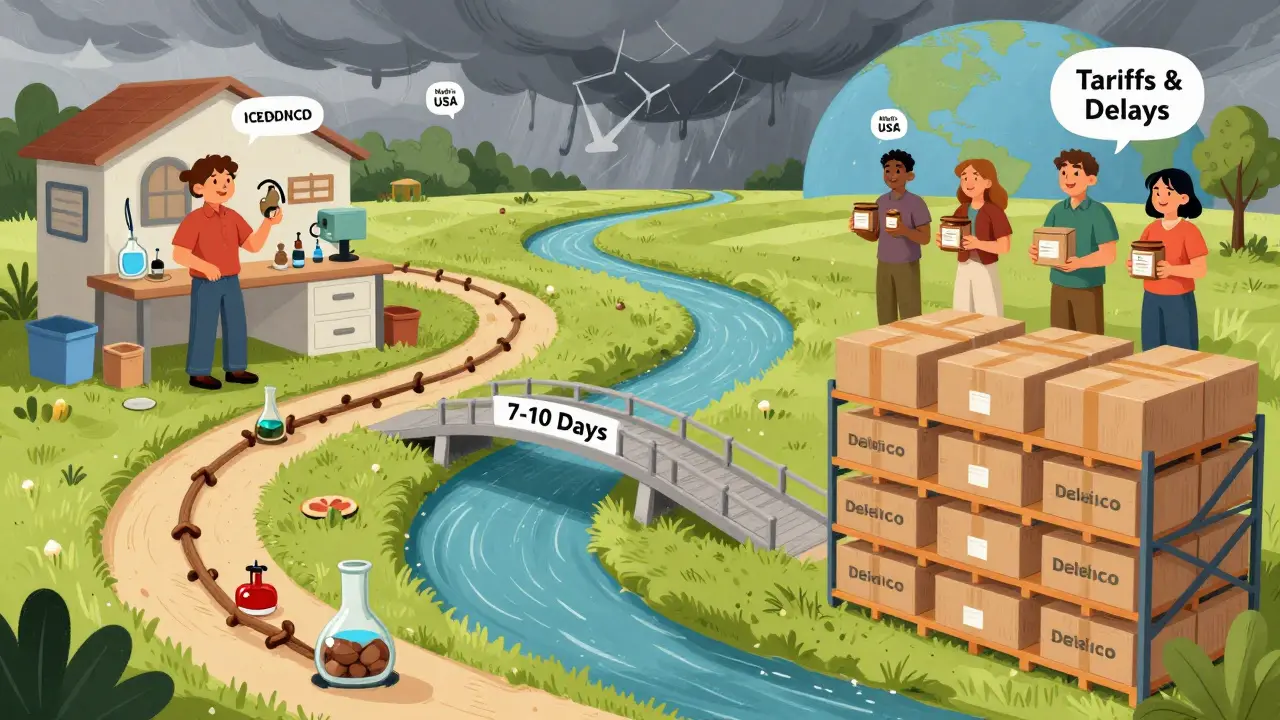
Hidden Costs You Can’t Ignore
There’s a reason 356,000 manufacturing jobs have returned to the U.S. since 2010. It’s not just patriotism. It’s economics. McKinsey found that supply chain disruptions cost businesses an average of $2.1 million per incident. That’s not just lost sales-it’s legal fees, recalls, reputational damage, and lost trust. Language barriers add another layer. John Doe of Pivot International says communication delays overseas take 72 hours to resolve. Domestically? Four hours. That’s three days of production halted because a label wording wasn’t clear. In healthcare, that kind of delay can mean missed deadlines, regulatory penalties, or worse. And don’t forget paperwork. Overseas shipments require commercial invoices, packing lists, certificates of origin, and sometimes FDA or FCC filings. That’s 15-20 extra hours of admin work per shipment. Domestic? Just a purchase order.Where Should You Make It?
Here’s a simple decision tree:- If you need under 1,000 units, need fast turnaround, or require strict quality control → Go domestic.
- If you’re producing over 10,000 units, have stable demand, and can handle 90+ day lead times → Overseas might still work.
- If you’re unsure → Start domestic for your core product, outsource packaging or accessories overseas.
- If you’re scaling and want to reduce risk → Nearshore to Mexico. Lower cost, faster delivery, similar time zones.
What’s Next?
The future isn’t about choosing between overseas and domestic. It’s about building a resilient, flexible supply chain. Companies that thrive will use a mix: domestic for speed and control, overseas for volume and cost savings. But they’ll monitor every link-shipping times, inspection reports, tariff changes, and consumer sentiment. The data is clear: the cheapest option isn’t always the best. The smartest option is the one that keeps your product on the shelf, your customers satisfied, and your business running-no matter what happens next.Is overseas manufacturing always cheaper than domestic for generics?
No. While overseas labor costs are lower, hidden expenses like shipping, tariffs, inspections, inventory holding, and delays often erase the savings. For many generic products, the real cost difference is now only 12-15% after accounting for all factors, according to MIT and Trison Wells (2025).
How long does it take to get products from overseas vs. domestic?
Domestic manufacturing takes 45-60 days total from order to delivery. Overseas production adds 30-45 days for shipping and customs, bringing the total to 75-105 days. That’s a 30-60 day delay that can hurt sales, especially for time-sensitive products like seasonal medications or promotions.
Can I trust quality inspections from overseas factories?
Third-party inspections help, but they’re not foolproof. One Reddit user reported a 37% defect rate despite paying for an inspection. Domestic production allows direct oversight-seeing the production line, testing samples on-site, and fixing issues immediately. Overseas, you’re relying on reports and photos, which can miss subtle flaws.
What’s the minimum order size for overseas vs. domestic manufacturers?
Overseas manufacturers typically require 1,000-5,000 units per order. Domestic manufacturers often accept runs as small as 100-500 units. This makes domestic production better for startups, testing new products, or managing unpredictable demand.
Is nearshoring to Mexico a good alternative to China?
Yes. Mexican manufacturing costs about 12-15% of U.S. labor rates but offers 7-10 day shipping times, compared to 28-42 days from Asia. It’s a popular hybrid option for companies that want lower costs without long delays or major cultural barriers.
Are U.S. consumers really willing to pay more for domestically made generics?
Yes. NielsenIQ’s 2024 survey found 68% of U.S. consumers are willing to pay 5-12% more for locally made products. This isn’t just a preference-it’s becoming a buying factor, especially for health-related items where trust and safety matter.
What are the biggest risks of overseas manufacturing for generics?
The top risks are: delayed shipments (especially during holidays or port strikes), quality control failures, intellectual property theft, communication delays (72+ hour response times), and complex paperwork. These risks can cost more than the savings from lower labor rates.
Should I switch entirely to domestic manufacturing?
Not necessarily. The best strategy is a hybrid: make high-risk, high-value, or time-sensitive components domestically (like active ingredients or sterile packaging), and outsource lower-risk, high-volume items (like boxes or labels) overseas. This balances cost, speed, and control.






William Liu
December 18, 2025 AT 07:36Domestic manufacturing isn't just about cost-it's about control. When your product is made down the road, you can walk in and see the quality yourself. No guesswork, no surprise defects.
Erica Vest
December 20, 2025 AT 06:20People forget that FDA inspections are way easier with domestic production. You don't need to fly halfway across the world to get a compliance audit done. Local facilities get visited quarterly-overseas? Maybe once a year if you're lucky.
Sajith Shams
December 20, 2025 AT 19:41Anyone who still thinks overseas is cheaper hasn't done the math. I've worked in three factories in India and China. The 'low cost' is a lie. You pay for it in delays, rework, and lost trust. The real savings are in the boardroom, not the factory floor.
Chris porto
December 22, 2025 AT 13:46I used to think outsourcing was smart until my last batch of supplements had mold in the capsules. Paid for an inspection. Got a clean report. Turned out the inspector was paid by the factory. Now I make everything stateside. Worth every extra dollar.
Danielle Stewart
December 24, 2025 AT 00:12There's something to be said for building relationships with your manufacturers. I've been working with the same Ohio plant for six years. They know my team, my standards, even my coffee order. That kind of trust doesn't show up on a spreadsheet.
Ryan van Leent
December 24, 2025 AT 05:09Why are we even having this conversation? The government is giving billions to bring manufacturing back so why are people still outsourcing? It's not just about money it's about national security and jobs
Adrienne Dagg
December 25, 2025 AT 05:3868% of people will pay more for local? 😍 I'm done with overseas. My customers notice. They comment. They leave reviews saying 'glad this is made in the USA'. That's free marketing right there 🇺🇸
jessica .
December 25, 2025 AT 15:56China is stealing our IP and poisoning our kids with fake meds. They don't care about safety. They care about profit. We're letting them run our healthcare system. Wake up people this is war
Chris Davidson
December 26, 2025 AT 12:25Hybrid model makes sense but only if you have the logistics team to manage it. Most small businesses don't. They think they can handle it but then the customs forms get lost and the whole shipment gets held for months. Stick to domestic if you're not a supply chain ninja
mary lizardo
December 27, 2025 AT 05:16It is disingenuous to claim that 'overseas manufacturing is cheaper' when the author systematically dismantles that notion with empirical data, peer-reviewed studies, and industry-specific case analyses. The only remaining argument in favor of offshore production is ideological inertia, not economic logic. One must also consider the externalized costs of environmental degradation and labor exploitation, which are rarely accounted for in ROI calculations. This article is not merely informative-it is a necessary corrective to decades of neoliberal delusion.
Frank Drewery
December 27, 2025 AT 17:13Just had to switch from a Chinese supplier after a 6-week delay during flu season. Lost $200K in sales. Switched to a Michigan plant. Paid 20% more per unit but turned around a rush order in 11 days. My customers didn't know the difference-except they got their meds on time. That's the real win.