
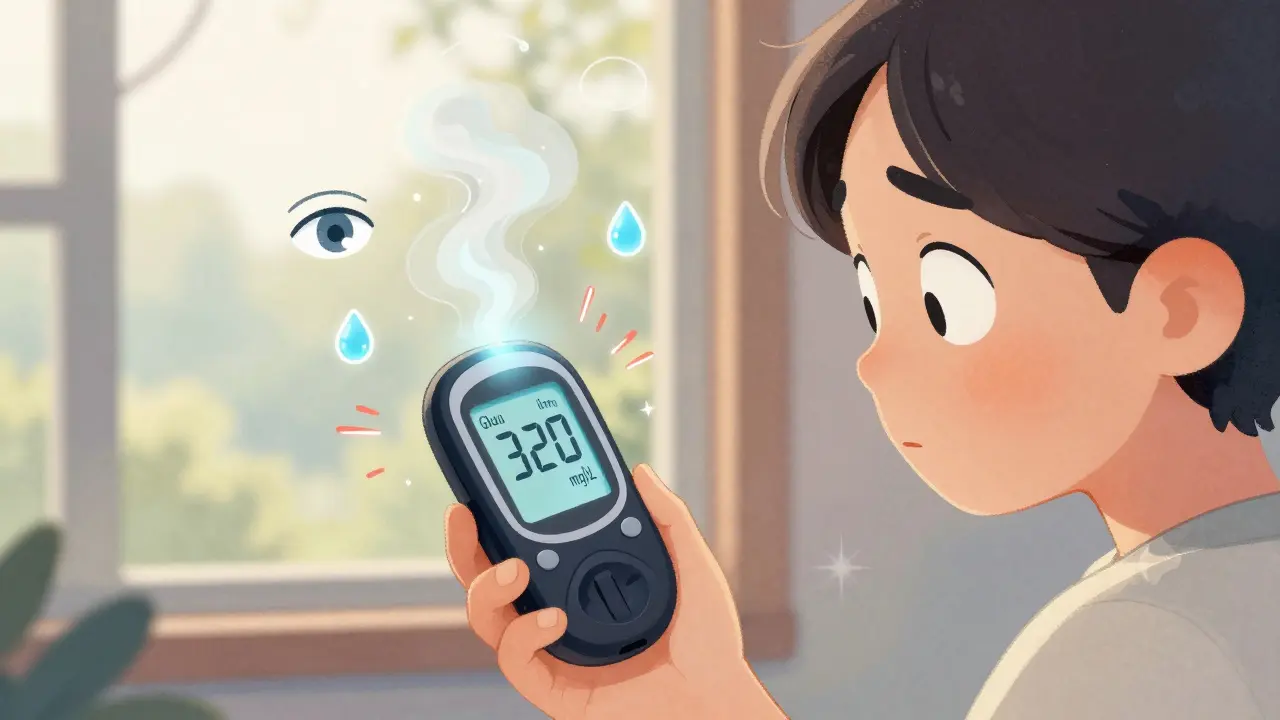
When your blood sugar climbs too high, your body doesn’t just feel tired-it starts to shut down. Hyperglycemia isn’t just a number on a glucometer. It’s a warning sign that your body can’t use glucose the way it should, and if left unchecked, it can lead to life-threatening emergencies like diabetic ketoacidosis (DKA) or hyperosmolar hyperglycemic state (HHS). You might ignore early symptoms, thinking you’re just stressed or coming down with a cold. But by the time you’re confused, breathing hard, or vomiting, it’s already an emergency.
What Counts as High Blood Sugar?
Most people with diabetes know their target range: 80-130 mg/dL before meals, under 180 mg/dL two hours after eating. But hyperglycemia kicks in when numbers cross 180 mg/dL. That’s the point where your kidneys start spilling glucose into your urine. Mild cases (180-250 mg/dL) are manageable. Moderate (251-300 mg/dL) means you need to act fast. Severe hyperglycemia-anything above 300 mg/dL-is a red flag. And above 600 mg/dL? That’s a medical crisis.
Why does it happen? In type 1 diabetes, your body just doesn’t make insulin. In type 2, your cells ignore insulin, and your liver keeps dumping out glucose. Stress, illness, missed insulin doses, or even too many carbs can push things over the edge. For some, it’s the dawn phenomenon-a natural surge of hormones between 4 and 8 a.m. that spikes blood sugar even if you didn’t eat anything.
Early Warning Signs You Can’t Ignore
At first, the symptoms are subtle. You’re drinking more water than usual-not because it’s hot, but because your body is trying to flush out the extra sugar. You’re peeing every hour, even at night. You’re thirsty all the time, no matter how much you drink. That’s polyuria and polydipsia, the two classic signs. You might also notice your vision getting blurry. It’s not an eye problem-it’s swelling in the lens of your eye from too much glucose. It clears up once your sugar comes down.
Fatigue hits hard. Not just "I didn’t sleep well" fatigue, but deep, bone-tired exhaustion that doesn’t go away with rest. You feel foggy. Concentrating on a conversation or reading a text feels impossible. Some people lose weight without trying-up to 5% of body weight in a few months-even if they’re eating normally. That’s because your body starts breaking down fat and muscle for energy, since it can’t use glucose.
These early signs are often missed. A 2023 survey of over 2,800 people with diabetes found that 67% didn’t recognize these symptoms until their blood sugar was already above 300 mg/dL. They blamed it on work stress, a bad night’s sleep, or just "getting older." But those delays are dangerous.
When It Turns Critical: Symptoms of a Medical Emergency
If your blood sugar climbs past 250 mg/dL and you’re not taking insulin or your insulin isn’t working, your body starts burning fat for fuel. That produces ketones-acidic chemicals that poison your blood. This is diabetic ketoacidosis (DKA). It’s most common in type 1 diabetes but can happen in type 2 under severe stress.
Signs of DKA:
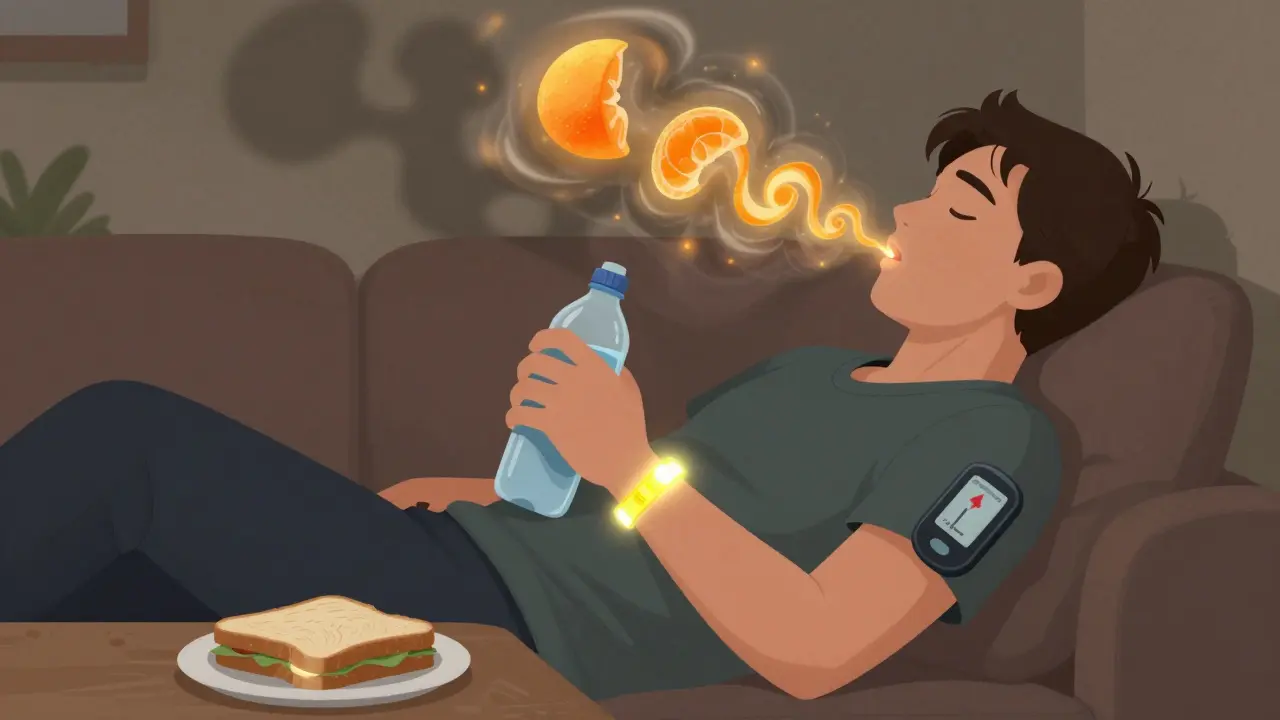
- Strong, fruity-smelling breath (like nail polish remover)
- Rapid, deep breathing (Kussmaul respirations)-your body’s desperate attempt to blow off acid
- Nausea, vomiting, or stomach pain
- Confusion or difficulty staying awake
Hyperosmolar Hyperglycemic State (HHS) is less common but deadlier. It mostly affects older adults with type 2 diabetes. It develops slowly over days or weeks. There’s little to no ketone production, but your blood becomes thick and syrupy from extreme dehydration.
Signs of HHS:
- Extreme thirst and dry mouth
- Very high blood sugar-often over 600 mg/dL
- Severe weakness or drowsiness
- Vision loss or hallucinations
- Seizures or coma
HHS has a mortality rate of 15-20%, compared to 1-5% for DKA. Why? Because people often don’t realize how bad it is until they’re unconscious. Elderly patients, especially those living alone, are at highest risk.
What to Do Right Now: Emergency Steps
If your blood sugar is above 240 mg/dL, don’t wait. Do this:
- Test for ketones. Use urine strips or a blood ketone meter. If ketones are moderate or high, you’re at risk for DKA.
- Take your correction dose of rapid-acting insulin. Most people need 0.1 units per kilogram of body weight. If you’re unsure, call your doctor or diabetes educator.
- Drink water-8 to 16 ounces every hour. Sugar-free fluids only. No soda, juice, or sports drinks. You’re trying to flush out sugar and ketones, not add more sugar.
- Check your blood sugar every 2 to 4 hours. If it’s not dropping after two doses of insulin, or if you’re vomiting or confused, go to the ER.
Never skip insulin because you’re not eating. Your liver still releases glucose. You still need insulin to move it out of your blood. If you’re using an insulin pump, check for blockages or dislodged catheters. A clogged pump can cause a dangerous spike in hours.
Common Triggers and How to Avoid Them
Hyperglycemia doesn’t happen out of nowhere. Here are the top causes:
- Illness (42% of cases): Infections like the flu, UTIs, or pneumonia raise stress hormones that block insulin.
- Carb miscounting (29%): Eating more carbs than you planned, especially refined carbs like bread, pasta, or sweets.
- Insulin pump failure (18%): A kinked tube, empty reservoir, or dislodged site can stop insulin delivery.
- Emotional stress (11%): Anxiety, grief, or even arguments can trigger a hormonal surge that raises blood sugar.
- Medications: Steroids (like prednisone), some antipsychotics, and even certain decongestants can spike glucose.
One overlooked cause? Gastroparesis-when diabetes damages nerves in the stomach, slowing digestion. Food sits there longer, then hits your bloodstream all at once, causing wild spikes. If you’re having unexplained high sugars after meals, ask your doctor about this.
Technology That Saves Lives
Continuous glucose monitors (CGMs) are game-changers. They don’t just show your current number-they predict where it’s going. The FDA-approved Dexcom G7’s "Glucose Guardian" feature warns you 30 minutes before a high spike. In 2023, users reduced severe hyperglycemia episodes by 31%.
CGMs also help catch the dawn phenomenon. If your sugar rises every morning between 4 and 6 a.m., you might need a small basal insulin adjustment. Your doctor can help fine-tune this.
For people who struggle with insulin timing or carb counting, newer smart insulin pens and apps can calculate doses automatically. They sync with your CGM and adjust based on trends, not just one reading.
What Not to Do
Many people make the same mistakes during a high blood sugar episode:
- Injecting too much insulin at once: This causes "insulin stacking"-overlapping doses that lead to dangerous lows later. Always wait at least 3-4 hours before giving another correction dose.
- Drinking sugary drinks to "flush it out": That’s like pouring gasoline on a fire.
- Waiting to call for help: If you’re vomiting, confused, or your blood sugar stays above 300 mg/dL after two insulin doses, go to the ER. Don’t wait for "it gets worse."
- Ignoring symptoms because you "feel fine": High blood sugar doesn’t always feel bad until it’s too late. That’s why checking numbers matters more than how you feel.
Long-Term Prevention
One study showed that people who completed a CDC-certified diabetes education program reduced emergency visits by 42%. Learning how to adjust insulin, count carbs, and recognize early signs makes a huge difference.
Work with your care team to set realistic goals. The American Association of Clinical Endocrinologists now recommends less strict targets for older adults-under 180 mg/dL fasting instead of 130-to avoid dangerous lows. But for younger people, tighter control still saves long-term complications like kidney damage, nerve pain, and vision loss.
And don’t forget access. Black patients are 2.3 times more likely to have hyperglycemia emergencies-not because of behavior, but because of barriers to insulin, CGMs, and consistent care. If cost is a problem, ask about patient assistance programs from drugmakers or nonprofit groups like the American Diabetes Association.
When to Call 911
Call emergency services immediately if you or someone else has:
- Blood sugar above 600 mg/dL
- Confusion, drowsiness, or trouble waking up
- Difficulty breathing or fruity-smelling breath
- Vomiting and can’t keep fluids down
- Seizures or loss of consciousness
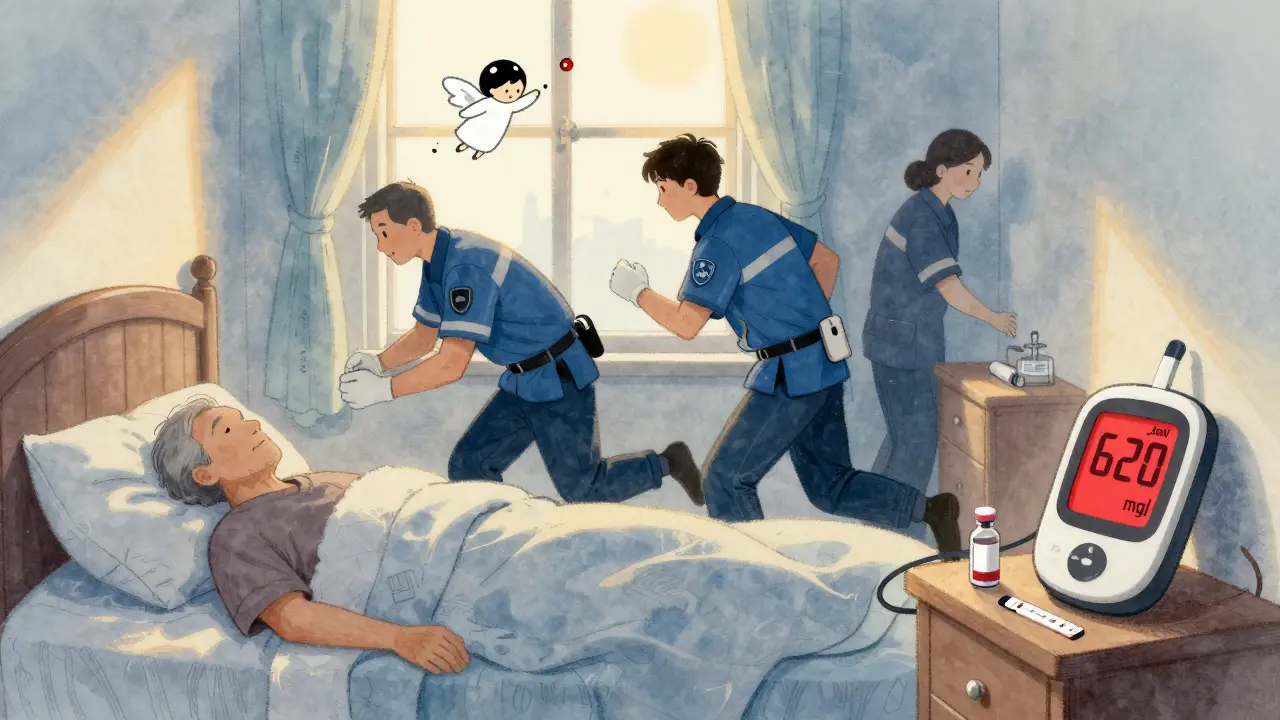
Don’t drive yourself. Hyperglycemia emergencies can turn deadly in minutes. Paramedics can start IV fluids and insulin on the way to the hospital.
Can you have high blood sugar without having diabetes?
Yes. Stress from surgery, infection, heart attack, or stroke can cause temporary hyperglycemia. Certain medications like steroids, some antipsychotics, and even some decongestants can raise blood sugar. Conditions like Cushing’s syndrome or pancreatitis can also cause it. If you’ve never been diagnosed with diabetes but have persistent high readings, you need testing to rule out prediabetes or type 2 diabetes.
How long does it take for high blood sugar to cause damage?
Acute damage-like DKA or HHS-can happen in hours to days. Long-term damage to nerves, kidneys, eyes, and blood vessels builds up over months and years of repeated high sugars. But even a single episode of very high blood sugar can cause temporary brain fog, fatigue, and dehydration. The goal isn’t just to avoid complications-it’s to feel better every day.
Is it safe to exercise when blood sugar is high?
It depends. If your blood sugar is above 250 mg/dL and you have ketones, don’t exercise. It can make things worse by pushing glucose even higher. If your sugar is high but you have no ketones and feel okay, light activity like walking can help lower it. Always check ketones first.
Why does my blood sugar spike after I take insulin?
This usually means the insulin didn’t get absorbed properly. Check your injection site for swelling, redness, or lipohypertrophy (lumpy fat tissue). If you’re using a pump, check for kinks or air bubbles. Sometimes, stress or illness causes insulin resistance, meaning you need more insulin than usual. Talk to your doctor about adjusting your doses.
Can I prevent hyperglycemia emergencies with diet alone?
Diet helps, but it’s not enough. In type 1 diabetes, you absolutely need insulin. In type 2, diet and weight loss can improve insulin sensitivity, but many people still need medication. The most effective approach combines healthy eating, regular activity, consistent medication use, and monitoring. No single piece works alone.
Final Thought: Know Your Numbers, Trust Your Body
Hyperglycemia is preventable. It’s treatable. But it demands attention. The same people who check their blood sugar every morning might ignore a reading of 320 mg/dL because "it’s just a number." But that number is your body screaming for help. Learn the signs. Have a plan. Keep insulin, ketone strips, and water on hand. And if something feels off-don’t wait. Act fast. Your future self will thank you.



Laia Freeman
January 30, 2026 AT 10:37Andy Steenberge
February 1, 2026 AT 02:13Frank Declemij
February 2, 2026 AT 22:40Keith Oliver
February 4, 2026 AT 22:12rajaneesh s rajan
February 6, 2026 AT 14:32DHARMAN CHELLANI
February 8, 2026 AT 03:26Pawan Kumar
February 10, 2026 AT 01:02kabir das
February 10, 2026 AT 15:07Kacey Yates
February 12, 2026 AT 08:18Alex Flores Gomez
February 14, 2026 AT 01:07LOUIS YOUANES
February 15, 2026 AT 01:21ryan Sifontes
February 15, 2026 AT 23:03paul walker
February 16, 2026 AT 22:42