

If you live with Chronic Kidney Disease, known as CKD, managing your blood chemistry is part of daily life. One of the most dangerous complications you can face is hyperkalemia. This happens when potassium builds up in your bloodstream because your kidneys cannot filter it out effectively. Statistics show that while only 2-10% of the general population deals with this, the number jumps to over 40% in advanced stages of kidney disease. If left unchecked, high potassium can cause heart rhythm problems that are life-threatening.
Hyperkalemia is technically defined as a serum potassium level above 5.0 mmol/L. However, symptoms often don't appear until levels hit dangerous territory. Many people feel nothing until muscle weakness sets in or palpitations begin. That silence is why regular monitoring matters so much. Recent clinical standards suggest keeping your potassium between 4.0 and 4.5 mmol/L to protect both your heart and your kidneys.
Understanding the Relationship Between CKD and Potassium
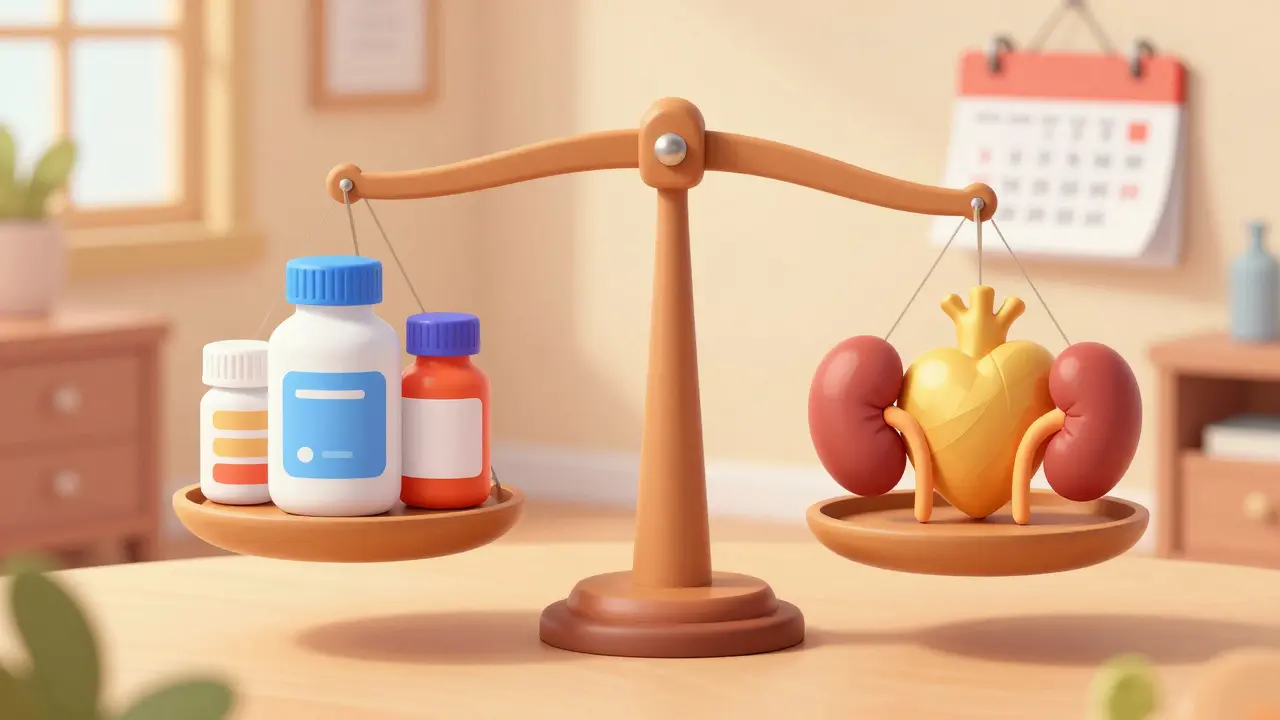
Your kidneys act as filters for waste products like potassium. As kidney function declines, usually measured by eGFR (estimated Glomerular Filtration Rate), these filters become clogged. You are also likely taking medications called renin-angiotensin-aldosterone system inhibitors, or RAASi, which help protect your remaining kidney function. Unfortunately, a side effect of these protective drugs is that they can raise potassium levels further. Doctors face a dilemma here: stopping the medication hurts your long-term kidney survival, but keeping it might trigger a potassium spike.
The challenge became clearer in the last decade as newer treatments were introduced. Now, we have tools to manage this balance better than ever before. The goal isn't just to survive the numbers; it is to maintain therapy without interruption. Studies indicate that when patients stop their heart and kidney medications due to fear of high potassium, their risk of cardiovascular events rises significantly.
Setting Dietary Limits Based on Your Stage
Dietary changes form the foundation of your management plan, but "low potassium" means something different depending on how far along your disease has progressed. For those in mild to moderate stages (stages 1-3a), the advice is often to eat prudently rather than restrictively. However, once you move into advanced stages (3b-5) and aren't yet on dialysis, strict limits apply.
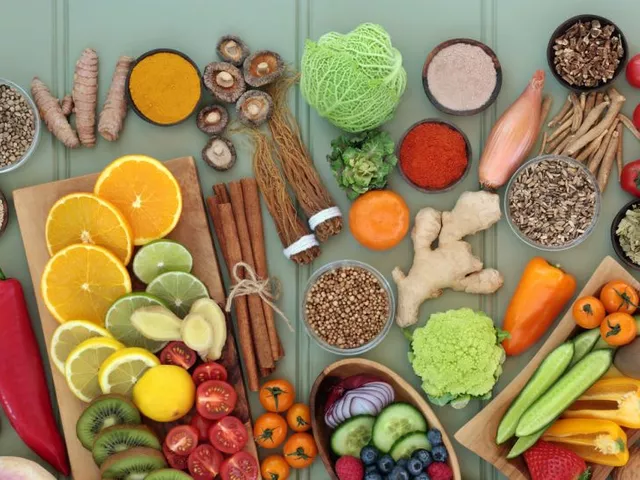
You generally aim for 2,000 to 3,000 mg of potassium per day. To visualize this, consider common fruits. A single banana contains about 422 mg of potassium per 100 grams. An orange provides around 181 mg. While these seem healthy, they add up fast for someone with limited kidney clearance. Potatoes are another major source, holding roughly 421 mg per 100g. Cooking methods matter significantly too. Leaching vegetables-soaking them in water and boiling twice-can remove a substantial amount of potassium before eating. This technique turns high-risk foods into safer options without losing nutrients entirely.
- Low Potassium Options: Apples, berries, cabbage, onions, cauliflower.
- Avoid or Limit: Avocados, dried fruits, tomatoes, spinach, bananas, oranges, potatoes, coffee substitutes.

Recognizing Signs of Emergency Treatment
Sometimes diet and oral binders aren't enough, or the rise happens quickly. Knowing when to seek immediate care saves lives. You should treat any reading above 5.5 mmol/L as serious. If the number hits 6.0 mmol/L, immediate hospital intervention is required, especially if your heart shows changes on an ECG monitor.
In an emergency setting, doctors prioritize stabilizing your heart muscle first. They administer calcium gluconate intravenously. This takes about two to five minutes to work. It does not lower the potassium in your body, but it protects your heart from stopping. Next, they shift potassium back into your cells using insulin and glucose. This combination works within 15 to 30 minutes. If you also have acidosis (too much acid in the blood), sodium bicarbonate may be added to help normalize pH levels rapidly.
| Treatment | Onset Time | Duration | Risks |
|---|---|---|---|
| Calcium Gluconate IV | 1-3 minutes | 30-60 minutes | Hypotension |
| Insulin-Glucose Protocol | 15-30 minutes | 4-6 hours | Hypoglycemia |
| Sodium Bicarbonate | 5-10 minutes | Variable | Fluid overload |
Choosing the Right Medication for Long-Term Control
For many patients, daily medication prevents the need for ER visits. Older binding agents like sodium polystyrene sulfonate (SPS) are cheap but come with significant safety warnings. They can rarely cause bowel damage and carry a high sodium load, which is bad for heart failure patients. Newer agents offer safer profiles.
Patiromer was approved recently and works by binding potassium in the gut. It has a slower onset, taking about 4 hours to reduce levels. Patients report a chalky texture which affects adherence. Another option is Sodium Zirconium Cyclosilicate. This agent acts faster, lowering levels within an hour. It is particularly useful for acute spikes, though it absorbs some sodium, potentially causing swelling in heart failure patients.
Data shows that using these modern binders allows you to stay on your essential heart and kidney medications. Without binders, only about 38% of patients could keep their maximum dose of RAASi. With binders, that number jumps to over 78%. The cost difference is notable though. Traditional SPS is around $47 monthly, while patiromer runs closer to $286 monthly in some markets. Your doctor must weigh your insurance coverage against the safety benefits.
Monitoring Protocols and Safety Checks
You cannot guess whether your treatment is working; numbers dictate adjustments. Upon starting or changing medication, your provider should check your levels within one to two weeks. Once stable, testing shifts to every three to six months. Don't wait for symptoms. Peaked T-waves on an ECG are early signs often missed by patients but picked up by your team during routine checks.
Medication timing is another hidden factor. Some potassium binders interact with other drugs if taken simultaneously. For instance, patiromer reduces thyroid medication absorption significantly if taken within three hours. Staggering doses is crucial for your overall regimen. Nephrology dietitians play a huge role here, spending 45 to 60 minutes initially reviewing your specific intake versus your lab results.
What are the immediate signs of high potassium?
Early signs include muscle weakness, numbness, or tingling in extremities. Palpitations or an irregular heartbeat are severe warning signs requiring immediate medical attention.
Can I stop my blood pressure meds if my potassium is high?
No. Stopping RAASi medications increases the risk of kidney progression and heart events by nearly 30%. Work with your doctor to adjust dosing instead.
How quickly do potassium binders work?
Sodium zirconium cyclosilicate works within one hour. Patiromer typically takes 4 to 8 hours to show reduction. Traditional binders may take longer and vary by individual metabolism.
Is drinking lots of water safe for CKD patients?
It depends on your stage. Advanced CKD often requires fluid restriction. Consult your nephrologist for specific fluid limits tailored to your urine output.
Does leaching vegetables actually remove potassium?
Yes. Cutting and soaking vegetables in hot water, then discarding the water, removes significant amounts of potassium before cooking.




Julian Soro
April 1, 2026 AT 11:19Leaching vegetables is a game changer for anyone managing their intake without feeling deprived. You can actually save potatoes and spinach if you boil them twice properly. It removes most of the dangerous minerals while keeping the fiber intact. My own family learned this trick years ago when my aunt was diagnosed. We never thought about how cooking methods affect the chemistry so much before. Now we soak everything in water for hours before the heat touches it. It really gives you more freedom in the kitchen during meal prep. Just remember to discard that first batch of water completely before eating anything else. The texture changes slightly but the flavor remains surprisingly good. Consistency is the key to making these dietary adjustments stick long term.
Rod Farren
April 1, 2026 AT 19:18The efficacy of leaching depends heavily on the surface area of the cellular structure exposed during the initial cut. Potassium ions diffuse freely through aqueous solutions so doubling the volume increases extraction efficiency significantly. Most clinical guidelines underestimate the percentage reduction achieved via this method in stage 3b patients. We observe approximately forty percent removal when following standard double-boil protocols strictly. It is important to note that lipids do not interfere with ion exchange in this manner. However, recontamination occurs if the same water is reused for subsequent batches inadvertently. Pharmacokinetics of endogenous waste products follow similar elimination patterns under stress conditions. Renal clearance rates dictate how fast you need to process these loads daily. Your eGFR value correlates directly with retention times observed in plasma samples too. Managing dietary intake alongside pharmacotherapy optimizes the overall therapeutic index significantly.
Molly O'Donnell
April 2, 2026 AT 04:45Most people ignore the warning signs until it is too late for intervention. Palpitations are not normal sensations that anyone should dismiss casually. You die quickly if you do not act on the numbers right now.
Eleanor Black
April 2, 2026 AT 14:57Your statement regarding cardiac arrest is undeniably accurate and quite frightening for families everywhere :-( Many individuals fail to recognize that muscle weakness precedes the actual electrical failure often seen in ECGs. Furthermore, numbness in the extremities is frequently mistaken for peripheral neuropathy instead of hyperkalemia. Medical professionals emphasize that prevention is far superior to emergency stabilization procedures every time. Regular monitoring ensures that deviations from normal ranges are caught well before crisis points emerge. Patients must understand that their own vigilance plays a critical role in survival outcomes daily. The heart muscle stabilizes temporarily with calcium gluconate administration during acute episodes. However, shifting potassium back into cells requires insulin which carries hypoglycemia risks naturally. Sodium bicarbonate offers another pathway if acidosis complicates the physiological presentation further. Fluid overload remains a significant concern for those with compromised renal function simultaneously. Adherence to medication schedules prevents the accumulation of excess ions in the bloodstream entirely. Binders like patiromer assist significantly in maintaining homeostasis between meals effectively. Dietary restrictions become essential when oral therapies alone cannot manage the baseline levels sufficiently. Education reduces anxiety significantly regarding the unpredictable nature of kidney disease progression today. Please share this information with loved ones who might struggle with the terminology otherwise :) Safety checks remain the ultimate priority for everyone living with chronic conditions currently.
Arun Kumar
April 3, 2026 AT 19:57In my region we cook with spices that add extra sodium without needing salt shakers sometimes. It helps to find replacements for high potassium foods that taste familiar culturally. Spices like cumin or turmeric do not raise blood pressure levels significantly compared to plain salt. Everyone deserves to enjoy meals that reflect their heritage while staying healthy inside. Small changes in ingredients make huge differences in long term wellness outcomes for us all. Listen to your doctor about what fits your specific needs best always. We support each other through these tough adjustments without judgment whatsoever. Kindness makes the difficult journey easier for those struggling with restrictions daily.
Owen Barnes
April 4, 2026 AT 21:58Cost is teh big issue with newer medcin options for sure though. Patiormer costs way more than old stuff but it works faster sometimes. Insurance copay can be a real hurdle for working class folks here in the states. Some plans cover zirconium better than others depending on the pharmacy network used. Its hard to balance budget with healt priorities every month honestly. Maybe there are coupons online that help reduce the financial burden slightly. You need to talk to case managers about patient access programs often. They help navigate the paperwork so you dont lose coverage unexpectedly. Financial stability impacts health outcomes more than people admit publicly.
Cara Duncan
April 5, 2026 AT 19:48Monitoring labs is super important to avoid scary spikes 🚨. Checking your kidneys regularly keeps you safe from emergencies ⚠️. Do not wait until you feel bad before getting tested again 🔬. Early detection saves lives and money in the long run ❤️. Ask your nurse for tips on tracking trends over time 📊. Knowledge is power when managing your condition daily 💪. Stay proactive with your healthcare team always ✅. You got this! 🌟
Callie Bartley
April 7, 2026 AT 01:14Why should taxpayers subsidize expensive drugs when lifestyle changes work cheaply. The system is broken and prioritizes profit over health sadly. People complain about cost but rarely change their own habits first. Stop whining about price and fix your diet instead. Blaming insurance companies ignores the root cause of poor choices.
Jenny Gardner
April 7, 2026 AT 03:41Drug interactions are a critical factor that many overlook! For instance! Thyroid meds absorb poorly with certain binders! Timing matters immensely for efficacy! Three hour gaps are mandatory per guidelines! Failure to separate doses causes treatment failure! Compliance dictates success rates! Precision in scheduling is required for optimal results! Never guess when dosing matters! Follow the protocol exactly as written! Deviations lead to subtherapeutic levels! Safety is paramount in regimen design! Always check with pharmacists first! Verification prevents adverse events later! Do not neglect timing! Be meticulous! :)
Russel Sarong
April 8, 2026 AT 11:13I agree completely about the importance of strict scheduling!!!!