

When your thyroid goes into overdrive, it doesn’t just make you feel jittery-it can send your heart racing, your hands shaking, and your body overheating. Hyperthyroidism, or an overactive thyroid, happens when your thyroid gland pumps out too much T3 and T4 hormone. This isn’t just about feeling anxious or sweaty. Left unchecked, it can strain your heart, weaken your bones, and even trigger a life-threatening crisis called thyroid storm. The good news? You don’t have to wait weeks for treatment to kick in. Beta-blockers offer fast, effective relief while your doctor works on fixing the root cause.
What Happens When Your Thyroid Is Overactive?
Your thyroid is a small butterfly-shaped gland at the base of your neck. It controls your metabolism-how fast your body uses energy. In hyperthyroidism, it’s like your body’s gas pedal is stuck to the floor. Common symptoms include rapid heartbeat, weight loss despite eating more, trembling hands, trouble sleeping, heat intolerance, and irritability. Women are five to ten times more likely to develop it than men, and Graves’ disease is the most common cause, making up 60 to 80% of cases.Other causes include toxic nodules-lumps in the thyroid that produce hormone on their own-and toxic multinodular goiter, where multiple nodules go haywire. These aren’t just random glitches. They’re driven by immune system errors or abnormal thyroid tissue that ignores the body’s normal control signals.
Thyroid hormone affects nearly every organ. Your heart beats faster. Your muscles burn energy quicker. Your nervous system stays on high alert. That’s why people with untreated hyperthyroidism often end up in the ER with chest pain or palpitations. The body isn’t just overworked-it’s running on fumes.
Why Beta-Blockers Are the First Line of Symptom Control
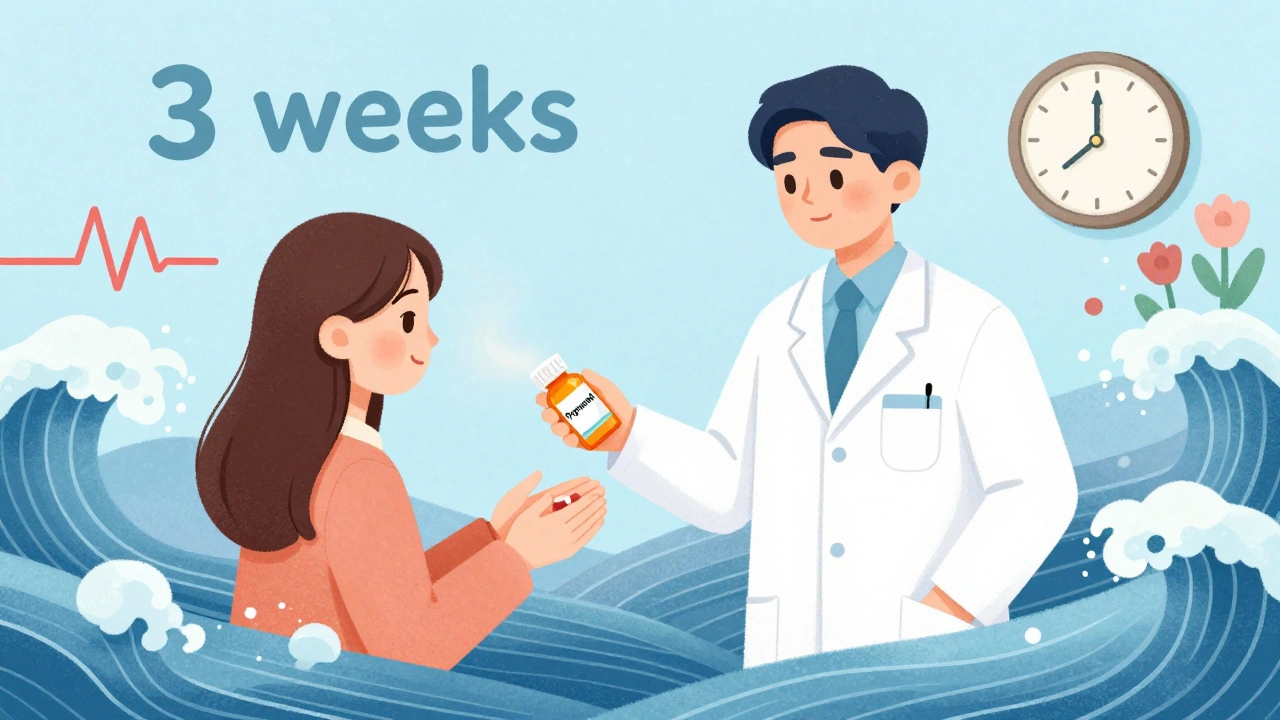
Antithyroid drugs like methimazole and propylthiouracil (PTU) are the go-to treatments to actually reduce hormone production. But here’s the catch: they take 3 to 6 weeks to start working. Meanwhile, your symptoms are still raging. That’s where beta-blockers come in.Beta-blockers don’t touch your thyroid hormone levels. Instead, they block the effects of those hormones on your body-especially your heart, lungs, and nervous system. Think of them like a circuit breaker for your overstimulated system. They slow your heart rate, calm tremors, reduce anxiety, and help you sleep. For many people, this makes the difference between feeling miserable and feeling manageable.
The American Thyroid Association recommends non-selective beta-blockers like propranolol as the top choice. Why? Because propranolol doesn’t just block heart receptors-it also helps reduce the conversion of T4 (the inactive form) into T3 (the active, more powerful form) in your tissues. This gives it a dual benefit: symptom control plus a small, indirect effect on hormone balance.
Which Beta-Blockers Work Best and How Are They Dosed?
Not all beta-blockers are created equal for hyperthyroidism. Here’s what works and how it’s used:- Propranolol: The most commonly used. Starting dose is 10 to 20 mg every 6 hours. Many patients need 40 to 80 mg four times a day. In severe cases, doses up to 480 mg daily are used under close supervision.
- Nadolol: A longer-acting option. Usually taken once daily at 40 to 160 mg. Good for patients who struggle with remembering multiple daily doses.
- Esmolol: Given intravenously in hospitals during thyroid storm. Dosed at 50 to 100 micrograms per kilogram per minute. It’s fast-acting and wears off quickly, making it ideal for emergencies.
- Atenolol: A newer option recommended in 2022 guidelines for patients with asthma or COPD. Dosed at 25 to 50 mg daily. It’s more selective for the heart, so it’s less likely to trigger breathing problems.
Doctors typically start low and go slow. A patient with mild symptoms might begin with 10 mg of propranolol three times a day. If heart rate stays above 90 or tremors persist, the dose is increased every few days. The goal isn’t to bring the heart rate to 60-it’s to get it down to the upper limit of normal, around 70 to 80 beats per minute. Overdoing it can cause dizziness or fatigue.
When Beta-Blockers Aren’t Safe
Beta-blockers are powerful, but they’re not for everyone. If you have asthma, COPD, or other lung conditions, blocking beta-2 receptors in your lungs can cause dangerous bronchospasm. In these cases, calcium channel blockers like verapamil or diltiazem are safer alternatives. They don’t help with tremors or anxiety, but they do slow your heart rate without affecting your airways.Other red flags include:
- Second- or third-degree heart block
- Severe heart failure
- Very low blood pressure
- Severe bradycardia (heart rate under 50)
Older adults need extra care. Their hearts are more sensitive. A dose that’s fine for a 35-year-old might send an 80-year-old into dizziness or falls. Doctors often start with half the usual dose and monitor closely.
How Beta-Blockers Fit Into the Bigger Treatment Plan
Beta-blockers are never the final solution. They’re the bridge. Your doctor will pair them with one of three definitive treatments:- Antithyroid drugs (methimazole or PTU): These stop your thyroid from making too much hormone. Usually taken for 12 to 18 months. About half of people with Graves’ disease go into remission.
- Radioactive iodine (RAI): A one-time pill that destroys overactive thyroid tissue. It’s the most common long-term fix in the U.S. After RAI, you’ll likely become hypothyroid and need lifelong thyroid hormone replacement.
- Surgery: Removal of part or all of the thyroid. Reserved for large goiters, cancer suspicion, or when other treatments fail.
Here’s the timing: If you’re getting RAI, you’ll stop antithyroid drugs 2 to 3 days before the treatment to avoid a hormone spike. But you’ll keep taking beta-blockers until your thyroid levels normalize-often 3 to 6 months later.
Studies show that starting beta-blockers within 24 hours of diagnosis cuts emergency visits by 37%. That’s not just comfort-it’s prevention.
How Long Do You Stay on Beta-Blockers?
Most people only need them for a few weeks to a couple of months. Once your thyroid hormone levels return to normal with antithyroid drugs or after RAI, your doctor will slowly taper off the beta-blocker. You shouldn’t stop suddenly-doing so can cause rebound tachycardia or worsened symptoms.For patients who’ve had RAI, beta-blockers may be needed longer because hormone levels can stay elevated for months as the thyroid tissue dies off. Your doctor will check your thyroid function every 6 weeks until things stabilize.
Never use beta-blockers alone for more than a few months. They mask the problem, they don’t fix it. Skipping definitive treatment can lead to long-term complications like atrial fibrillation, osteoporosis, or heart failure.
What to Monitor While on Beta-Blockers
You’ll need regular blood tests to track your thyroid levels: TSH, free T4, and free T3. These are usually checked at 6 weeks, then 3 months, and then every 3 to 6 months after that.On the beta-blocker side, watch for:
- Heart rate below 50 or dizziness
- Extreme fatigue
- Cold hands or feet
- Worsening depression or mood changes
If you’re on propranolol, you might notice nightmares or vivid dreams. That’s common and usually harmless. If it bothers you, talk to your doctor about switching to nadolol or atenolol.
Thyroid Storm: The Emergency Scenario
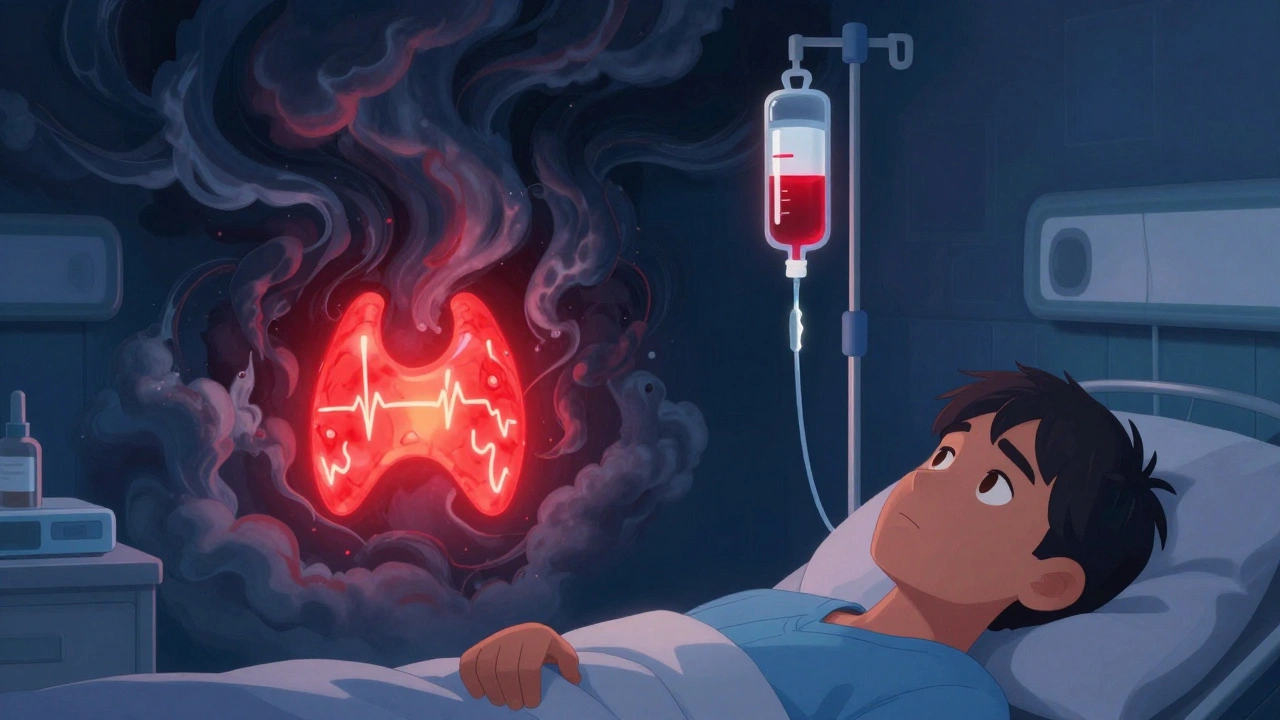
Thyroid storm is rare-less than 1% of hyperthyroid cases-but deadly. It’s a full-body crisis: fever over 102°F, heart rate over 140, confusion, vomiting, and even coma. It can be triggered by infection, surgery, or sudden stopping of antithyroid meds.In the ER, treatment is aggressive:
- IV esmolol to rapidly control heart rate
- High-dose antithyroid drugs
- IV steroids to reduce inflammation
- IV fluids and cooling measures
Propranolol isn’t used here because it’s too slow. Esmolol’s short half-life lets doctors fine-tune the dose in real time. If esmolol isn’t available, IV propranolol is an option.
Survival rates have improved dramatically with early recognition and fast beta-blocker use. The key? Don’t wait for all symptoms to appear. If you have hyperthyroidism and suddenly feel worse, go to the ER.
Bottom Line: Beta-Blockers Are Your Symptom Lifeline
Hyperthyroidism doesn’t have to wreck your life. Beta-blockers give you back control-fast. They’re not a cure, but they’re the most reliable way to feel human again while your body heals. Whether you’re on methimazole, RAI, or preparing for surgery, beta-blockers are the standard of care for a reason: they work, they’re safe when used right, and they prevent complications.If you’re newly diagnosed, don’t panic. Start the beta-blocker. Take your antithyroid meds. Follow up. You’ll feel better in days, not weeks. And once your thyroid levels normalize, you and your doctor can decide on the best long-term plan.
Remember: Your thyroid isn’t broken-it’s just out of sync. Beta-blockers help you breathe, sleep, and move through the day while your body finds balance again.
Can beta-blockers cure hyperthyroidism?
No. Beta-blockers only manage symptoms like rapid heartbeat, tremors, and anxiety. They don’t reduce thyroid hormone production. To cure hyperthyroidism, you need treatments like antithyroid drugs, radioactive iodine, or surgery.
How quickly do beta-blockers work for hyperthyroidism?
You’ll usually feel relief within hours. Heart rate drops noticeably within 1 to 2 hours after taking propranolol. Tremors and anxiety improve over the next day or two. This is much faster than antithyroid drugs, which take 3 to 6 weeks to lower hormone levels.
Is propranolol better than atenolol for hyperthyroidism?
Propranolol is generally preferred because it blocks both beta-1 and beta-2 receptors and helps reduce T4-to-T3 conversion. Atenolol is safer for people with asthma or COPD because it’s more heart-selective, but it doesn’t have the extra hormone-modifying effect. The choice depends on your health history and symptoms.
Can I stop beta-blockers once I feel better?
No-not without talking to your doctor. Stopping suddenly can cause rebound symptoms like rapid heart rate or high blood pressure. Beta-blockers should be tapered slowly over days or weeks, especially if you’ve been on them for more than a few weeks.
Do beta-blockers cause weight gain?
Some people gain a little weight after starting beta-blockers, but it’s usually due to slowed metabolism as symptoms improve. Before treatment, hyperthyroidism causes rapid weight loss. Once your metabolism normalizes, weight may creep back up-this is a sign your body is healing, not a side effect of the drug.
Are there natural alternatives to beta-blockers for hyperthyroidism?
No proven natural alternatives exist for managing acute symptoms like rapid heart rate or tremors. Supplements like bugleweed or lemon balm may have mild effects on thyroid function, but they don’t replace beta-blockers in emergencies or severe cases. Always use them only as complementary support under medical supervision.
Can beta-blockers be used long-term for hyperthyroidism?
Long-term use without treating the underlying cause is not recommended. Beta-blockers mask symptoms but don’t stop thyroid damage or hormone overproduction. If you’re still on beta-blockers after 6 months without definitive treatment, you need a reevaluation. Most patients stop them within 4 to 8 weeks after thyroid levels normalize.





Ollie Newland
December 5, 2025 AT 21:59Propranolol saved my life last year when I was in thyroid storm. I was at 148 bpm, sweating through my shirt, and convinced I was having a heart attack. ER docs gave me IV esmolol first, then switched me to 40mg propranolol every 6 hours. Within hours, my hands stopped shaking like I was holding a jackhammer. The fact that it also reduces T4-to-T3 conversion? Chef’s kiss. Not just a bandaid-it’s a tactical reset.
Don’t let anyone tell you it’s just for anxiety. This is physiology, not psychology.
Rebecca Braatz
December 7, 2025 AT 05:21IF YOU HAVE HYPERTHYROIDISM AND YOU’RE NOT ON A BETA-BLOCKER YET, YOU’RE STILL IN THE TRENCHES. NO, YOUR DOCTOR ISN’T ‘JUST BEING CAUTIOUS’-THEY’RE LETTING YOU SUFFER WHILE THEY WAIT FOR ANTITHYROID DRUGS TO WORK. PROPRANOLOL KICKS IN IN HOURS. YOU DON’T NEED TO WAIT 3 WEEKS TO FEEL HUMAN AGAIN.
Stop waiting. Start blocking. Your heart will thank you.
Yasmine Hajar
December 8, 2025 AT 12:34As a Filipina who grew up with my lola saying ‘ang init ng katawan mo, may nasa laman mo’-I didn’t know it was Graves’ until I was 28 and collapsed at work. Beta-blockers were the first thing that made me feel like me again. My mom still thinks I’m ‘just stressed’ but now I hand her this article and say ‘read this, then we talk.’
Also, propranolol gave me nightmares. Like, full-on horror movie dreams. I switched to nadolol and now I sleep like a baby. If you’re getting weird dreams, don’t suffer-ask for a switch. It’s not weakness, it’s optimization.
val kendra
December 9, 2025 AT 06:40Been on propranolol for 4 months post-RAI. My heart rate was 120 at rest before. Now it’s 72. I can walk up stairs without feeling like I’m running a marathon. Weight crept back up but that’s fine-my bones aren’t dissolving anymore.
Don’t panic if you gain a few pounds. Hyperthyroidism makes you lose muscle and water like a sieve. Normal metabolism = normal weight. It’s not fat, it’s recovery.
Also, esmolol is a beast in the ER. If you ever end up there with a heart rate over 140, ask for it. It’s the only thing that stops the train before it derails.
Isabelle Bujold
December 9, 2025 AT 10:05It’s worth noting that beta-blockers, particularly non-selective ones like propranolol, can mask the signs of hypoglycemia in diabetics-tachycardia and tremor are key warning signals that get blunted. If you’re on insulin or sulfonylureas, you need to monitor your blood glucose more frequently and rely on other symptoms like sweating, confusion, or dizziness rather than heart rate. I’ve seen patients miss hypoglycemic episodes because they assumed their racing heart was just ‘thyroid stuff.’
Also, for those on long-term beta-blockers post-RAI, don’t assume your thyroid levels are stable just because you’re not shaky. Free T3 can linger for months after ablation. I recommend checking TSH, FT4, and FT3 every 6 weeks until all three are in range for at least two consecutive tests. Many doctors stop testing too early.
And yes, nadolol’s once-daily dosing is a game-changer for compliance. I switched from propranolol to nadolol after forgetting doses during a work trip. No more 3 AM alarms to take a pill. Life changed.
Ben Choy
December 11, 2025 AT 07:05Just wanted to say thanks to everyone who’s shared here. I was terrified when I got diagnosed. Thought I was dying. Started propranolol at 10mg TID and within 2 days I slept through the night for the first time in months. Still on it 3 months post-RAI. My doc says tapering slowly is key-went from 40mg to 20mg over 10 days. No rebound.
Also, weirdly, my anxiety didn’t go away until I started therapy. Beta-blockers helped my body, but my brain needed more. Just saying-don’t feel weird if you need both.
Jenny Rogers
December 11, 2025 AT 07:17It is profoundly irresponsible to suggest that beta-blockers are a 'lifeline' without first emphasizing the profound iatrogenic risks associated with their indiscriminate use. The pharmacological suppression of sympathetic overdrive without addressing the root autoimmune pathology constitutes a paradigm of symptomatic palliation that is antithetical to the principles of evidence-based medicine. One does not cure hypertension by administering morphine to blunt the perception of pain.
Furthermore, the normalization of cardiac metrics under beta-blockade may inadvertently delay diagnosis of underlying structural cardiac pathology, such as arrhythmogenic right ventricular cardiomyopathy, which may present with identical clinical features. The medical literature is replete with case reports of misdiagnosed hyperthyroidism masking primary cardiomyopathy-a tragic oversight enabled by the very therapies being lauded here.
One must ask: are we healing the patient, or merely quieting the alarm system?
Scott van Haastrecht
December 12, 2025 AT 03:11Everyone here is acting like beta-blockers are some miracle cure. Newsflash: you’re still a walking thyroid bomb until you get RAI or surgery. Propranolol doesn’t fix your immune system. It just makes you feel less like you’re about to explode. Meanwhile, your bones are still crumbling, your eyes are still bulging, and your heart is still getting shredded from the inside.
And don’t even get me started on people who think they can ‘taper off’ when they ‘feel better.’ You think your thyroid is going to magically stop overproducing because you stopped shaking? LOL. You’re just delaying the inevitable. I’ve seen 3 people end up in the ICU because they stopped meds too soon. Beta-blockers are a crutch, not a cure. Stop romanticizing them.
Chase Brittingham
December 12, 2025 AT 23:58Scott’s got a point-but he’s missing the bigger picture. Beta-blockers aren’t the endgame, but they’re the only thing keeping people alive while they wait for RAI or meds to kick in. I had a friend who waited 6 weeks to get RAI because of insurance delays. Without propranolol, she’d have had atrial fibrillation by week 3.
It’s not about romanticizing. It’s about survival. You don’t tell someone with a broken leg to ‘just wait for the bone to heal’ without a cast. Beta-blockers are the cast.
And Jenny? You’re technically correct, but you’re also the reason people stop trusting doctors. We get it. You know the literature. But real people need real relief now. Not a 10-page lecture on iatrogenic risk.