
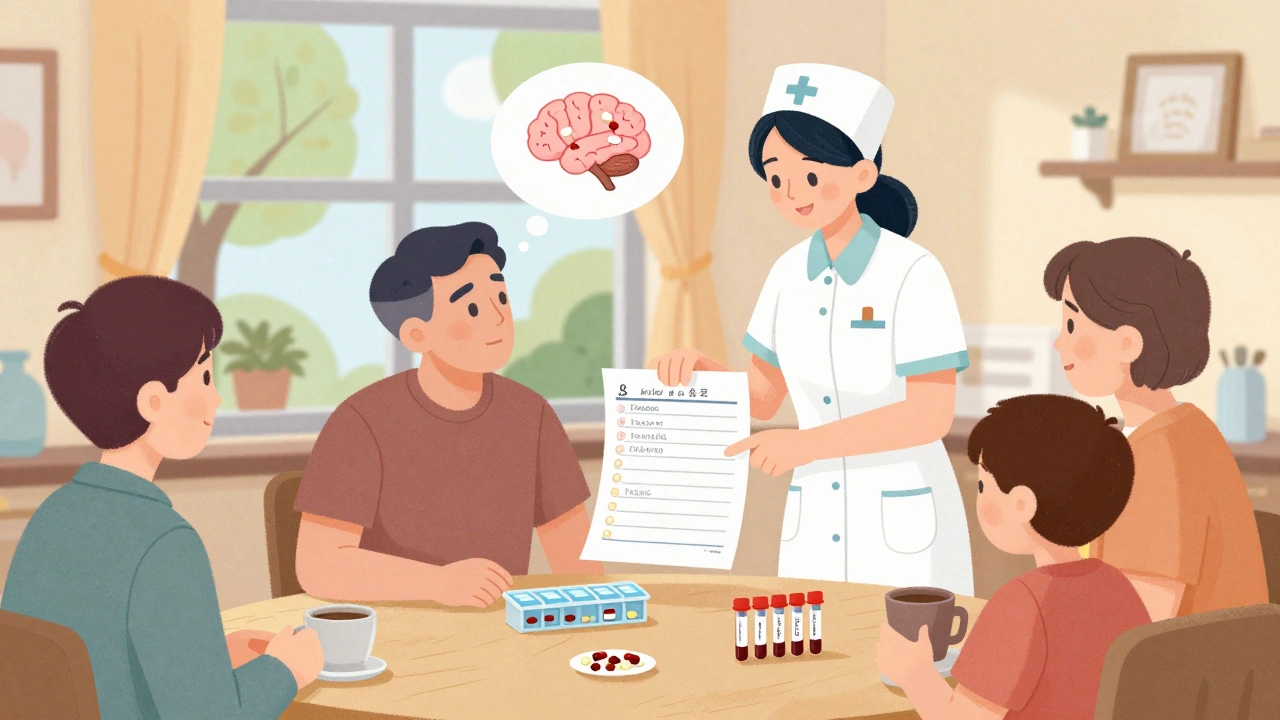
When someone is managing a mental health condition like depression, bipolar disorder, or schizophrenia, their medications aren’t just pills-they’re lifelines. But they’re also potential hazards if not handled with precision. Medication safety in mental health isn’t about avoiding side effects alone. It’s about making sure the right person gets the right drug, at the right dose, at the right time-and that no one slips through the cracks between hospitals, clinics, prisons, and home.
Think about this: a person on lithium for bipolar disorder needs regular blood tests to avoid toxicity. Yet in England, only 40% of patients on lithium get those checks done in primary care. That’s not a glitch-it’s a system failure. And it’s not rare. Across Australia, the U.S., and the U.K., gaps in coordination lead to preventable harm: overdoses, withdrawal seizures, dangerous drug interactions, and even deaths.
Why Mental Health Medications Are Different
Psychotropic drugs aren’t like antibiotics or blood pressure pills. They affect the brain. Small changes in dose can trigger mania, psychosis, or suicidal thoughts. Some, like clozapine, require weekly blood tests just to stay alive. Others, like mirtazapine, are often misused off-label for sleep-even though they carry high risks of diversion and abuse.
Patients with mental illness often face cognitive challenges-memory lapses, poor insight, or disorganized thinking-that make adherence hard. Some may hide pills, sell them, or stop taking them because they feel better. Others can’t tell their doctor about all the medications they’re taking, especially if they’re using street drugs or over-the-counter sleep aids.
On top of that, care is fragmented. A person might see a psychiatrist once a month, a GP for physical issues, and a pharmacist for refills. No one’s connecting the dots. That’s where errors creep in.
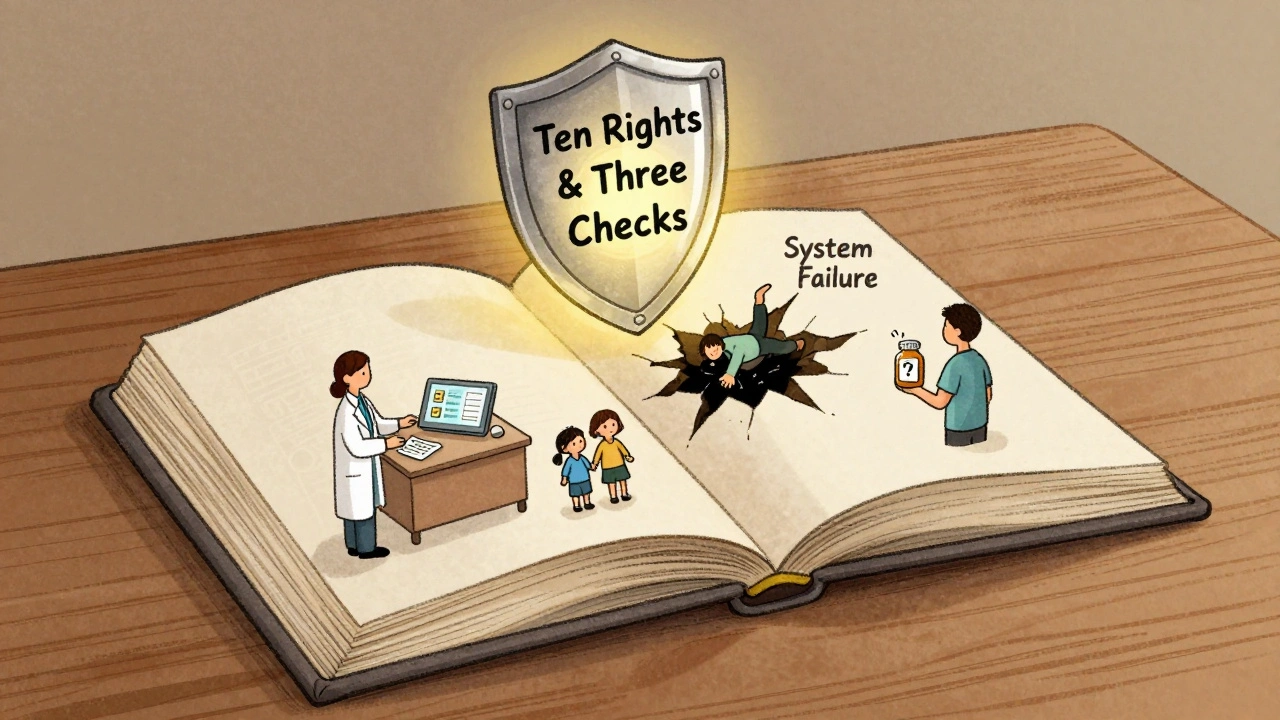
The Ten Rights and Three Checks: A Simple Framework That Works
In Saskatchewan, psychiatric nurses follow a clear protocol called the ten rights and three checks. It’s not fancy, but it saves lives.
- Ten Rights: Right patient, right medication, right dose, right route, right time, right documentation, right reason, right response, right to refuse, right education.
- Three Checks: Check when you pull the medication, check when you prepare it, check when you give it.
This isn’t just busywork. It’s a safety net. For example, if a patient is discharged from a hospital and goes home, the nurse checks: Is this the same medication they were on before admission? Did the GP change the dose? Is the patient aware of why they’re taking it? Has anyone told them what to do if they feel dizzy or nauseous?
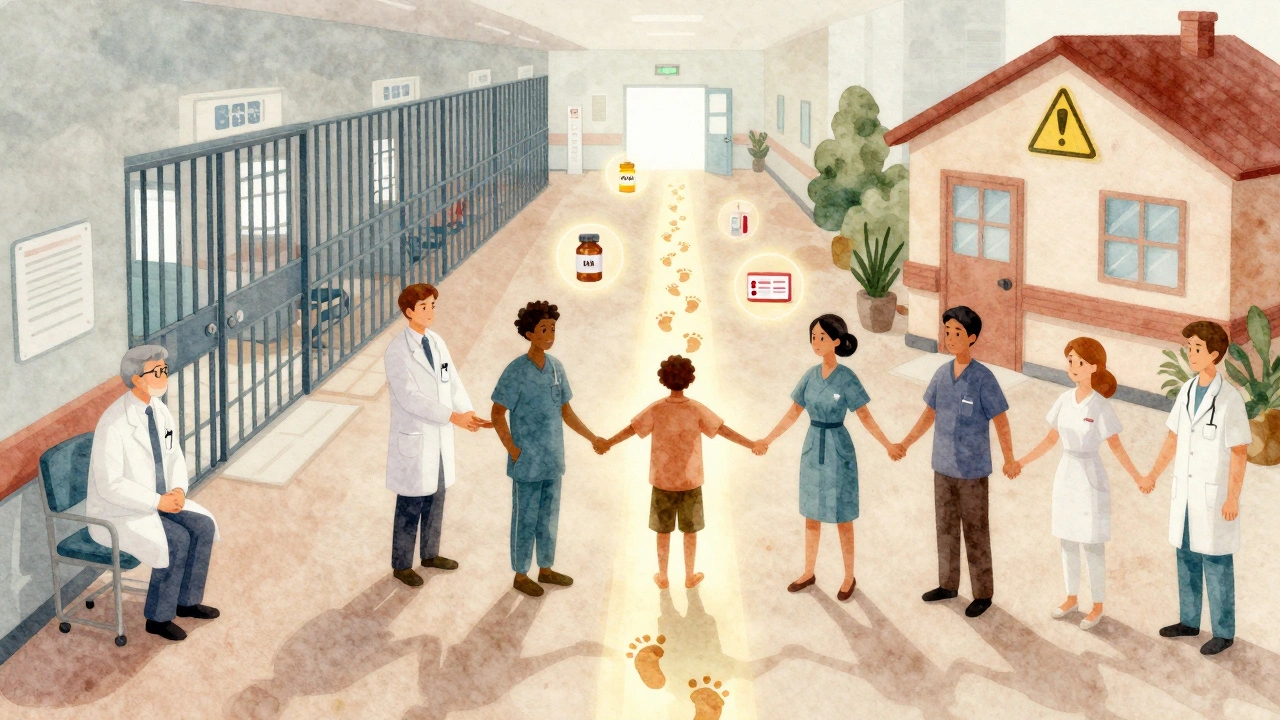
These checks become even more critical during transitions-like when someone moves from prison to the community, or from an inpatient unit to outpatient care. That’s when 70% of medication errors happen, according to New Zealand’s Health Quality & Safety Commission.
Medicines Reconciliation: The Single Most Important Step
Medicines reconciliation isn’t a form to fill out. It’s a conversation.
When a patient enters any healthcare setting-emergency room, clinic, jail, or hospital-their entire medication list must be reviewed and verified. Not just what’s on paper. What they’re actually taking. What they stopped because they felt better. What their cousin gave them for anxiety.
Studies show this process cuts medication discrepancies by up to 50%. In one Australian hospital, after implementing formal reconciliation, the number of patients admitted with uncontrolled bipolar episodes due to missed lithium doses dropped by 65% in six months.
It’s not enough to ask, “What meds are you on?” You need to: look at pill bottles, call the community pharmacy, check the electronic record, and ask the family. If the patient can’t remember, assume the list is wrong until proven otherwise.
Electronic Prescribing: A Game-Changer (If Used Right)
Paper prescriptions are dangerous in mental health. Illegible handwriting. Wrong doses. Missing instructions. A 2021 review in New Zealand found electronic prescribing reduces errors by 55%-especially for high-alert drugs like clozapine or valproate.
But systems alone won’t fix the problem. If the psychiatrist’s record doesn’t talk to the GP’s system, or if the pharmacy can’t see the full list, you’re just digitizing the chaos.
The best systems: auto-flag dangerous combinations (like lithium + NSAIDs), alert for missed monitoring (e.g., “Lithium level due”), and send automatic reminders to patients for blood tests. In Queensland, some clinics now use integrated platforms that sync with Medicare and community pharmacies. The result? A 40% drop in missed lithium checks in just one year.
Polypharmacy: When More Meds Don’t Mean Better Care
It’s common for someone with mental illness to be on five, six, or even ten medications. Antidepressants. Mood stabilizers. Antipsychotics. Sleep aids. Painkillers. Blood pressure meds. Vitamins. Herbal supplements.
Each one adds risk. Lithium + ibuprofen = kidney damage. Quetiapine + fluoxetine = serotonin syndrome. Anticholinergics + dementia = confusion and falls.
NHS England warns: “Don’t just keep adding meds. Ask: Is this still needed? Is it safe? Is there a better option?”
Every six months, a patient’s full list should be reviewed by a pharmacist or clinician trained in psychopharmacology. Cut the extras. Simplify the regimen. If a drug was started for a symptom that’s now gone-stop it. If a medication was added because the patient was “non-compliant,” ask why. Maybe the dose is too high. Maybe the side effects are unbearable.
Who’s Responsible? The Team Approach
No single person can manage this alone. It takes a team.
- Psychiatrists: Lead prescribing, set treatment goals, approve monitoring plans.
- General Practitioners: Manage physical health meds, catch missed checks, spot early signs of toxicity.
- Clinical Pharmacists: Review all meds, flag interactions, educate patients, coordinate with pharmacies.
- Nurses and Support Workers: Observe medication intake, report behavioral changes, ensure adherence in residential settings.
- Patients and Families: Keep a written list of all meds, report side effects, ask questions.
When a patient transitions between settings, a single point person-often a case manager or pharmacist-should take ownership. They’re the glue. They make sure the discharge summary includes: what meds to continue, what to stop, what tests are due, who to call if things go wrong.
High-Risk Medications: What to Watch For
Some drugs need extra caution. Here’s what you need to know:
- Lithium: Therapeutic range is narrow. Check serum levels every 3 months. Watch for tremors, nausea, confusion. Never combine with NSAIDs or diuretics.
- Clozapine: Requires weekly blood tests for the first 6 months. Risk of agranulocytosis. Must be prescribed and monitored by a specialist.
- Valproate: Avoid in women of childbearing age due to birth defects. Liver function tests needed every 6 months.
- Mirtazapine, Amitriptyline: Often used off-label for sleep. High risk of weight gain, sedation, and diversion. Only prescribe if insomnia is part of the diagnosed condition.
These aren’t “last resort” drugs-they’re essential for many. But they demand structure. No exceptions.
What Happens When It All Breaks Down
Imagine a man with schizophrenia. He’s been stable on olanzapine for two years. He gets arrested for public disturbance. In jail, his meds are stopped because “he’s not on the form.” He goes without for 10 days. He has a psychotic episode. Released without a follow-up plan. He stops taking his meds. He stops sleeping. He stops eating. He ends up in the ER.
This isn’t fiction. It’s documented in NHS England’s own reports. And it happens more often than you think.
The cost? Not just to the individual. To families. To emergency services. To the system. A single preventable hospitalization from a medication error can cost over $15,000. Multiply that by thousands of cases each year.
The fix isn’t more funding. It’s better coordination. Clear roles. Shared records. And a culture that treats medication safety as non-negotiable.
What You Can Do-As a Patient, Family Member, or Clinician
Here’s what works in real life:
- Patients: Keep a physical list of every medication-name, dose, why you take it. Bring it to every appointment. Ask: “Is this still necessary?”
- Families: Help track doses. Watch for changes in behavior. Call the clinic if something seems off.
- Doctors: Don’t prescribe in a vacuum. Check the last mental health summary. Ask about alcohol, cannabis, or street drugs.
- Pharmacists: Don’t just refill. Review. Flag interactions. Call the prescriber if you see red flags.
- Systems: Build in mandatory reconciliation. Use tech that talks. Train staff on psychopharmacology. Pay clinical pharmacists to be part of the team.
Medication safety in mental health isn’t about perfection. It’s about consistency. It’s about not letting someone fall because no one was holding the rope.
Future Steps: Where the System Is Headed
Australia’s Medication Safety Standard (updated 2022) now requires all community care providers to have a documented plan for monitoring high-risk meds. New Zealand is rolling out statewide e-prescribing with built-in alerts. The WHO is pushing for global standards.
But progress is slow. The biggest barrier isn’t technology-it’s culture. Too many teams still see medication safety as a pharmacy problem, not a team responsibility.
The future belongs to integrated care: one record, one team, one plan. Where every clinician, from the GP to the prison nurse, knows their role-and is held accountable for it.




Noah Raines
December 9, 2025 AT 12:18It’s not just medical-it’s moral.
Lola Bchoudi
December 11, 2025 AT 11:41Morgan Tait
December 11, 2025 AT 15:00They don’t want you healed. They want you refilling.
Haley P Law
December 12, 2025 AT 23:17ian septian
December 13, 2025 AT 05:08Chris Marel
December 13, 2025 AT 18:46Nikhil Pattni
December 14, 2025 AT 02:18Also, why are we still using paper scripts in 2025? Even my grandma’s phone does e-prescribing. And don’t get me started on how pharmacies in India refill meds without verifying with the prescriber. I’ve seen people get double doses of quetiapine because the script was blurry. One guy ended up in ICU. It’s not negligence-it’s criminal.
Arun Kumar Raut
December 15, 2025 AT 11:14precious amzy
December 15, 2025 AT 20:47