

Myasthenia gravis isn’t just muscle weakness. It’s weakness that gets worse when you use your muscles-and gets better when you rest. Imagine lifting your eyelids, speaking clearly, or swallowing food, then suddenly, after a few minutes, you can’t. You rest for 10 minutes, and suddenly, it’s back. That’s the hallmark of myasthenia gravis: fatigable weakness. It’s not laziness. It’s not aging. It’s your immune system attacking the connection between your nerves and muscles.
What Causes Myasthenia Gravis?
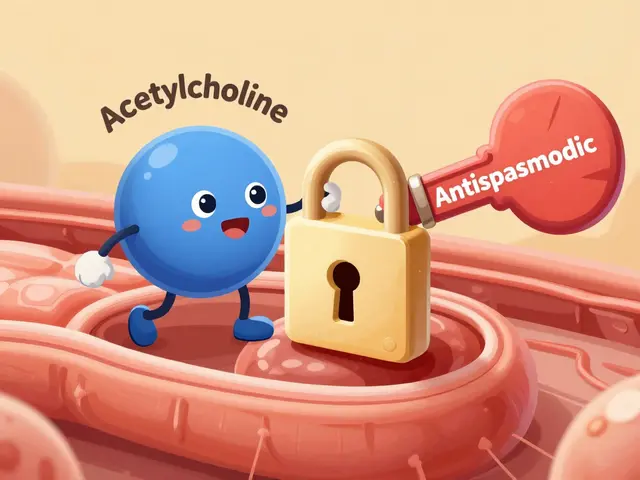
At the neuromuscular junction, your nerves send signals to your muscles using a chemical called acetylcholine. In myasthenia gravis, your body makes antibodies that block or destroy the receptors for that chemical. Without those receptors, the signal doesn’t get through. Your muscles don’t respond. That’s why you feel weak. About 80-90% of people with generalized myasthenia gravis have antibodies against the acetylcholine receptor (AChR). Around 5-8% have antibodies against something called MuSK. The rest are seronegative-no known antibodies found, but symptoms still match. The disease was first described in 1672, but we didn’t understand it was autoimmune until 1973, when researchers proved that injecting AChR antibodies into animals caused the same symptoms.Who Gets It and How Does It Start?
Myasthenia gravis can show up at any age, but it has two main patterns. People under 50-often women-tend to develop it early, with swollen thymus glands (thymic hyperplasia). People over 50, especially men, are more likely to have a thymoma-a tumor on the thymus. About 10-15% of older patients have this tumor. Most people start with eye symptoms: drooping eyelids (ptosis) or double vision (diplopia). About 85% of cases begin this way. But here’s the catch: 50-80% of those with only eye symptoms will develop generalized weakness within two years. That means weakness spreads to the face, throat, arms, legs. You might slur your speech, choke on food, or struggle to climb stairs. The weakness doesn’t come on suddenly. It creeps in. You blame stress. You think you’re tired. Then you realize: it’s not going away.How Is It Measured?
Doctors use something called the Quantitative Myasthenia Gravis Score (QMGS). It’s a checklist: how many times can you hold your arms out? Can you lift your head off the pillow? Can you say ‘66’ without your voice cracking? A score above 11 means moderate to severe disease-and that’s when you need more than just symptom relief. You need immunotherapy.First-Line Treatment: Symptomatic Relief
The first drug most patients get is pyridostigmine. It’s not a cure. It doesn’t touch the immune system. It just slows down how fast your body breaks down acetylcholine. More acetylcholine means more signal gets through. Doses range from 60 to 240 mg a day, split into 3-4 doses. It helps. But it doesn’t stop the disease. It just makes the symptoms less annoying. Think of it like putting a bandage on a broken bone. It helps you move, but the bone is still broken.Immunotherapy: Taming the Immune System
To actually treat the root problem, you need to calm down the immune system. That’s where immunotherapy comes in. Corticosteroids like prednisone are the most common first-line immunosuppressant. Starting at 0.5-1.0 mg per kg of body weight, they work fast-70-80% of patients see major improvement or even complete symptom relief. But the side effects? Weight gain, mood swings, high blood sugar, bone thinning. About 70% of people on long-term prednisone (more than 10 mg daily) gain weight. It’s a trade-off. That’s why doctors add steroid-sparing agents like azathioprine or mycophenolate mofetil. Azathioprine takes 12-18 months to work fully, but once it does, it helps 60-70% of patients reduce or stop steroids. Mycophenolate works in about 50-60% of cases. Both can cause liver damage or lower white blood cell counts, so regular blood tests are a must.
Fast-Acting Treatments for Crises
Sometimes, myasthenia gravis gets worse fast-called a myasthenic crisis. Breathing becomes hard. Swallowing becomes impossible. You need help immediately. Two treatments work fast: intravenous immunoglobulin (IVIG) and plasma exchange (PLEX). Both clear out the bad antibodies. IVIG gives you healthy antibodies from donors. It takes 5-7 days to work, lasts 3-6 weeks. It’s safer, no needles in big veins. PLEX pulls your blood out, filters out the bad antibodies, and puts clean blood back. It works faster-2-3 days-and is often preferred if you’re having trouble breathing. But it needs a central line, carries infection risk, and isn’t available everywhere.Targeted Therapies: The New Frontier
The biggest breakthroughs in the last five years aren’t old drugs. They’re new ones that target exactly how the immune system goes wrong. Efgartigimod is one of them. It blocks the receptor that recycles antibodies in your body. That means your bad antibodies get destroyed faster. In trials, 68% of patients reached minimal symptom status within weeks. It’s given as a weekly IV, and it’s approved in the U.S. and Australia since 2021. No need for blood filtering. No hospital stay. Just a short infusion. Another drug, ravulizumab, approved in late 2023, blocks a part of the immune system called complement. It’s the first complement inhibitor for myasthenia gravis. It’s given every 8 weeks as an IV. Both drugs are game-changers for people who don’t respond to steroids or azathioprine.What About Thymectomy?
If you’re between 18 and 65 and have AChR-positive generalized myasthenia gravis, removing your thymus gland (thymectomy) is strongly recommended. The MGTX trial showed that patients who had surgery reached symptom-free status faster than those who only took medicine. After five years, 35-45% of those who had thymectomy were in complete remission-no drugs needed. But it doesn’t help everyone. If you’re MuSK-positive or seronegative, thymectomy usually doesn’t help. And if you’re over 65, the risks often outweigh the benefits.Differences by Antibody Type
Not all myasthenia gravis is the same. Your treatment depends on what antibodies you have. - AChR-positive: Best response to steroids, azathioprine, thymectomy. Efgartigimod works well. - MuSK-positive: Doesn’t respond well to steroids or thymectomy. Rituximab (a B-cell drug) works better here-71-89% improve. IVIG is less effective. - Seronegative: Harder to treat. Often respond to rituximab or efgartigimod, but data is limited. This is why testing for antibodies isn’t optional. It’s essential.
What About Immune Checkpoint Inhibitors?
Cancer drugs called immune checkpoint inhibitors (ICIs) can accidentally trigger myasthenia gravis-or make it worse. In one study, 60% of patients who developed this drug-induced MG also had heart inflammation (myocarditis). 83% needed ICU care. If you have MG and get cancer, your oncologist must know. These drugs can be deadly for you.Long-Term Outlook
Most people with myasthenia gravis need lifelong treatment. 85-90% require ongoing immunosuppression. But that doesn’t mean you can’t live well. Many reach minimal manifestation status-barely any symptoms, no hospital visits, no crises. The goal isn’t to be symptom-free forever. It’s to be symptom-light. To take one pill a day instead of five. To walk without resting every 10 minutes. To eat without choking. To speak without sounding like you’re tired. And here’s the hope: newer drugs are making chronic immunosuppression less necessary. The top research priority now is achieving disease modification-stopping the disease before it needs drugs at all. Over 15 clinical trials are testing new B-cell blockers, cytokine inhibitors, and subcutaneous versions of efgartigimod you could give yourself at home.What to Watch For
If you’re on immunosuppressants, infections are a real risk. You’re 2-3 times more likely to get pneumonia, UTIs, or shingles. Get your flu shot. Get your pneumonia shot. Avoid sick people. Wash your hands. Also, don’t stop your meds on your own. If you taper too fast, 40-50% of people relapse. Only reduce drugs after you’ve had minimal symptoms for at least two years-and only under your neurologist’s watch.Final Thoughts
Myasthenia gravis used to be a death sentence. Now, it’s a manageable condition. The tools we have today-steroids, IVIG, rituximab, efgartigimod-are better than anything from 20 years ago. The future? Even better. Drugs that target specific immune cells. Oral versions. One-shot treatments. The focus is shifting from just controlling symptoms to actually resetting the immune system. You don’t have to live in fear of your next meal, your next breath, your next step. With the right treatment, you can live-fully, actively, without being defined by weakness.Is myasthenia gravis curable?
There’s no cure yet, but many people achieve long-term remission-especially those with early-onset AChR-positive disease who have a thymectomy. About 35-45% of these patients no longer need medication after five years. For others, the goal is minimal manifestation status: almost no symptoms, minimal treatment.
Can stress make myasthenia gravis worse?
Yes. Stress, infections, heat, and overexertion can trigger flare-ups. That’s why pacing yourself matters. Rest when you feel weak. Avoid hot showers or saunas. Get enough sleep. Managing triggers is as important as taking your meds.
Does myasthenia gravis affect the heart?
Usually not. The heart muscle doesn’t rely on the same neuromuscular junctions as skeletal muscles. But there’s one big exception: if you take immune checkpoint inhibitors for cancer, you can develop myocarditis along with MG. That’s rare but serious. Always tell your oncologist if you have MG.
How do I know if I need immunotherapy?
If pyridostigmine alone isn’t enough-if you’re having trouble swallowing, speaking, or breathing-you need immunotherapy. A QMGS score above 11 is a clear sign. Your neurologist will also look at how often you’re having flare-ups, how much you’re limiting your life, and whether you’re developing complications like aspiration pneumonia.
Are the new immunotherapies like efgartigimod available in Australia?
Yes. Efgartigimod was approved by the TGA (Therapeutic Goods Administration) in 2022 and is available through the Pharmaceutical Benefits Scheme (PBS) for patients with generalized myasthenia gravis who haven’t responded to other treatments. Ravulizumab is also approved and accessible in major hospitals.
Can I still drive with myasthenia gravis?
Many people can, as long as their symptoms are controlled. But if you have double vision, eyelid drooping, or fatigue that affects reaction time, you should get assessed by a neurologist or occupational therapist. Some states require disclosure to licensing authorities. Never drive during a flare-up.
What should I do if I have a myasthenic crisis?
Call emergency services immediately. A myasthenic crisis means your breathing muscles are failing. You need hospitalization, IVIG or PLEX, and possibly mechanical ventilation. Don’t wait. Early treatment saves lives.




Stephen Craig
January 3, 2026 AT 12:07It’s not weakness. It’s a broken signal. Like a radio losing reception every time you turn up the volume. You’re not lazy. Your body’s just screaming for a better connection.
And now we have tools to fix the antenna. That’s huge.
Connor Hale
January 4, 2026 AT 14:08I’ve watched a friend go from reading novels to needing help lifting a coffee cup. Then, after efgartigimod, she started gardening again. Not cured. But alive. That’s the difference.
Roshan Aryal
January 5, 2026 AT 18:56Western medicine keeps inventing expensive Band-Aids for problems they refuse to diagnose properly. Why not just fix the immune system instead of patching it with IVIG every month? Pharma loves this cycle. You’re not sick-you’re a profit center.
Jack Wernet
January 7, 2026 AT 02:57The precision of modern immunotherapy in myasthenia gravis represents one of the most compelling examples of translational medicine in neurology. The transition from symptomatic palliation to targeted antibody modulation-particularly with efgartigimod and ravulizumab-demonstrates a paradigm shift from broad immunosuppression to pathway-specific intervention.
These advances, grounded in rigorous clinical trials like MGTX, offer not merely symptom control but genuine disease modification potential. For patients, this is not incremental progress-it is liberation.
Charlotte N
January 8, 2026 AT 02:12so i had a friend with mg and she was on steroids and it was like she was a different person-super moody and gained like 40 pounds and then they put her on mycophenolate and she cried because she felt like herself again but then she got a UTI and it was a mess and i just… i don’t know how people do this every day
it’s not fair
Catherine HARDY
January 9, 2026 AT 14:21They say it’s autoimmune but what if it’s not? What if it’s the vaccines? Or the water? Or the 5G towers? They never test the real cause-they just give you more drugs to keep you dependent. Look at the thymus removal-why do they cut it out? Because they don’t want you to find out what’s really inside it.
They’re hiding something. Always are.
bob bob
January 11, 2026 AT 14:00Man, this post hit different. I didn’t know so much was going on with MG. I thought it was just droopy eyes and tiredness. But the part about efgartigimod? That’s wild. Like, you get a quick IV and your body starts forgetting how to attack itself? That’s sci-fi stuff. And it’s real. Feels like we’re living in the future.
Also, please get your pneumonia shot. Just do it.
Uzoamaka Nwankpa
January 12, 2026 AT 23:59I feel you. I’ve been through this. Every time I try to walk to the mailbox, my legs just… give up. Like my body forgot how to listen. And the doctors? They act like it’s normal. Like it’s just aging. But it’s not. It’s betrayal. My own body turned on me. And now I’m stuck on drugs that make me feel like a ghost.
At least I’m still here. But I don’t know if I’m living.
Vikram Sujay
January 14, 2026 AT 04:21It is of paramount importance to recognize that the heterogeneity of myasthenia gravis, particularly with respect to serological subtypes, mandates a stratified therapeutic approach. The efficacy of thymectomy in AChR-positive generalized MG is well-documented in the MGTX trial, yet its irrelevance in MuSK-positive or seronegative phenotypes underscores the necessity of precise immunophenotyping.
Moreover, the advent of FcRn inhibitors such as efgartigimod represents not merely a therapeutic innovation, but a conceptual evolution-from suppression to selective clearance. This is the future of autoimmune neurology.
Clint Moser
January 15, 2026 AT 14:23so i read this and i was like wow but then i checked the fda database and the phase 3 trials for efgartigimod had like 37% of patients had elevated liver enzymes and 12% had neutropenia and no one talks about that
and what about the long term? 5 years? 10? we don’t know if it just makes your immune system collapse later
they’re pushing this like it’s magic but it’s just a fancy immunosuppressant with a new name
Rory Corrigan
January 15, 2026 AT 23:44we’re all just energy beings trapped in meat suits anyway
so when your nerves stop talking to your muscles… maybe it’s not a disease
maybe it’s your soul saying ‘hey, chill out’
🌿
Oluwapelumi Yakubu
January 17, 2026 AT 06:13Bro, this is the kind of post that makes you realize how much we take our bodies for granted. One minute you’re lifting groceries, next minute you can’t hold a spoon. And the fact that we now have drugs that make your body forget to attack itself? That’s not medicine-that’s wizardry.
And yeah, steroids suck. But hey, at least we got options now. My cousin in Lagos is still waiting for pyridostigmine to arrive from Europe. We’re lucky.
Terri Gladden
January 17, 2026 AT 15:05okay so i got diagnosed last year and my neurologist said ‘you’re lucky you’re not in a crisis’ and i was like okay but then i went to the grocery store and i had to sit on the floor because my arms gave out and i just started crying and the lady next to me asked if i needed help and i said no but i was screaming inside
and now i’m on meds and i’m fine but i still don’t trust my body
and i hate that i have to explain this to people every time i cancel plans
why is it so hard to just be tired without being judged
Jennifer Glass
January 18, 2026 AT 18:27I think the most powerful part of this isn’t the drugs-it’s the language. ‘Fatigable weakness.’ Not ‘lazy.’ Not ‘weak.’ It’s a term that names the invisible. That’s what patients need: words that don’t blame. That’s how you start healing.
And the part about pacing? That’s the real treatment. Not the pills. The permission to rest without guilt.
Joseph Snow
January 18, 2026 AT 21:45Let’s be honest: the entire framework of myasthenia gravis management is a product of pharmaceutical lobbying. Thymectomy? Only recommended for 18–65? Why not 16–70? Why not 10–80? The guidelines shift to suit patent expirations. IVIG costs $10,000 per infusion. Efgartigimod? $500,000 annually. And you’re supposed to be grateful? This isn’t medicine. It’s rent extraction disguised as hope.