
Statin Muscle Pain Risk Calculator
Risk Assessment
Millions of people take statins every year to lower their cholesterol and protect their heart. But for a lot of them, the cost isn’t just financial-it’s physical. Muscle aches, soreness, or weakness are the most common reason people stop taking these life-saving drugs. And here’s the twist: statin muscle pain might not be as common-or as dangerous-as you think.
How Common Is Statin Muscle Pain?
Clinical trials say about 5% of people on statins report muscle pain, similar to those taking a sugar pill. But in real life? Up to 30% of patients say their muscles hurt. Why the big gap?
It’s not just bad luck. A 2017 Lancet study showed that when patients were told statins could cause muscle pain, they were 40% more likely to report it-even if they were taking a placebo. That’s the nocebo effect: expecting side effects makes you more likely to feel them. Many people who think their pain is from statins are actually reacting to fear, not the drug.
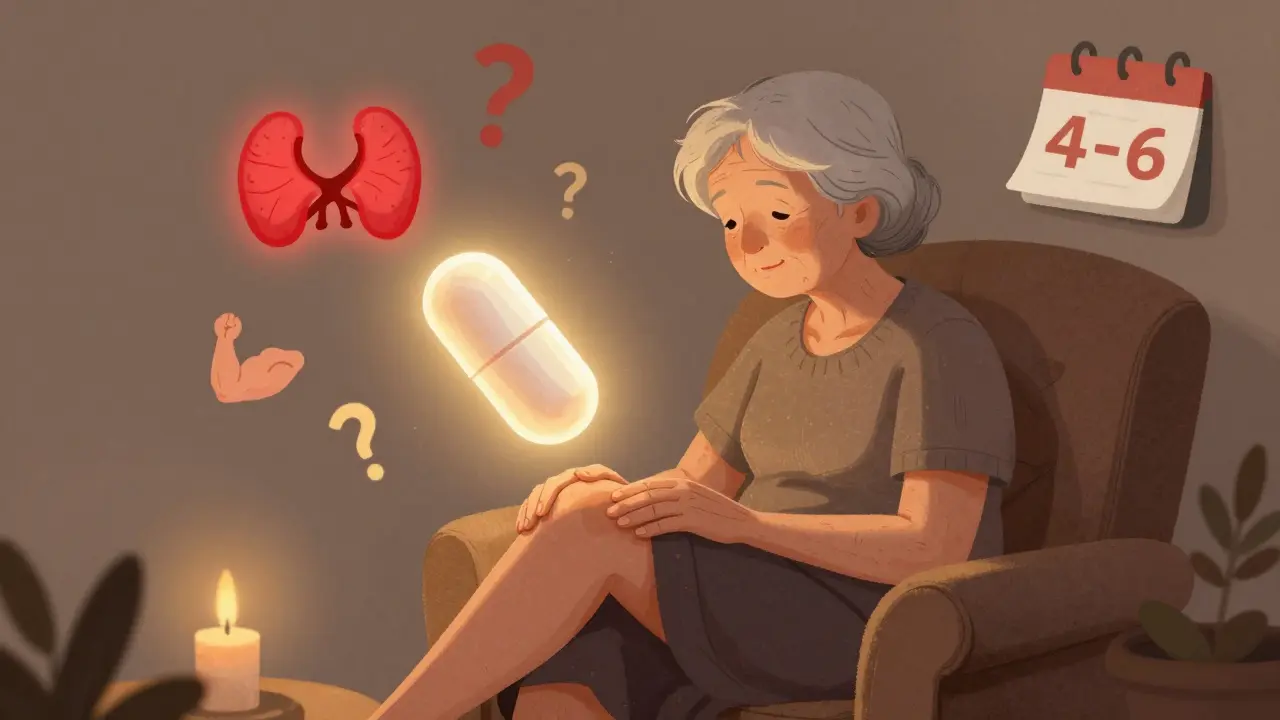
Still, real muscle issues happen. About 15-20% of users report discomfort. Symptoms usually show up within the first few months, often in the thighs, shoulders, or calves. It’s not just soreness after a workout-it’s constant, dull, or aching pain that doesn’t go away, even when you rest.
When Muscle Pain Is Serious
Not all muscle pain is the same. Statin-related muscle symptoms fall on a spectrum:
- Myalgia: Muscle aches without elevated enzymes. Most common. Not dangerous.
- Myopathy: Muscle disease with weakness or damage, confirmed by blood tests.
- Myositis: Inflammation of muscle tissue. Rare.
- Rhabdomyolysis: Severe muscle breakdown. Extremely rare-only 0.1 to 0.5 cases per 10,000 people per year.
Rhabdomyolysis can lead to kidney failure. But you’d know it: your urine turns dark, you feel extremely weak, and your muscles are painfully swollen. If this happens, stop the statin and get help immediately.
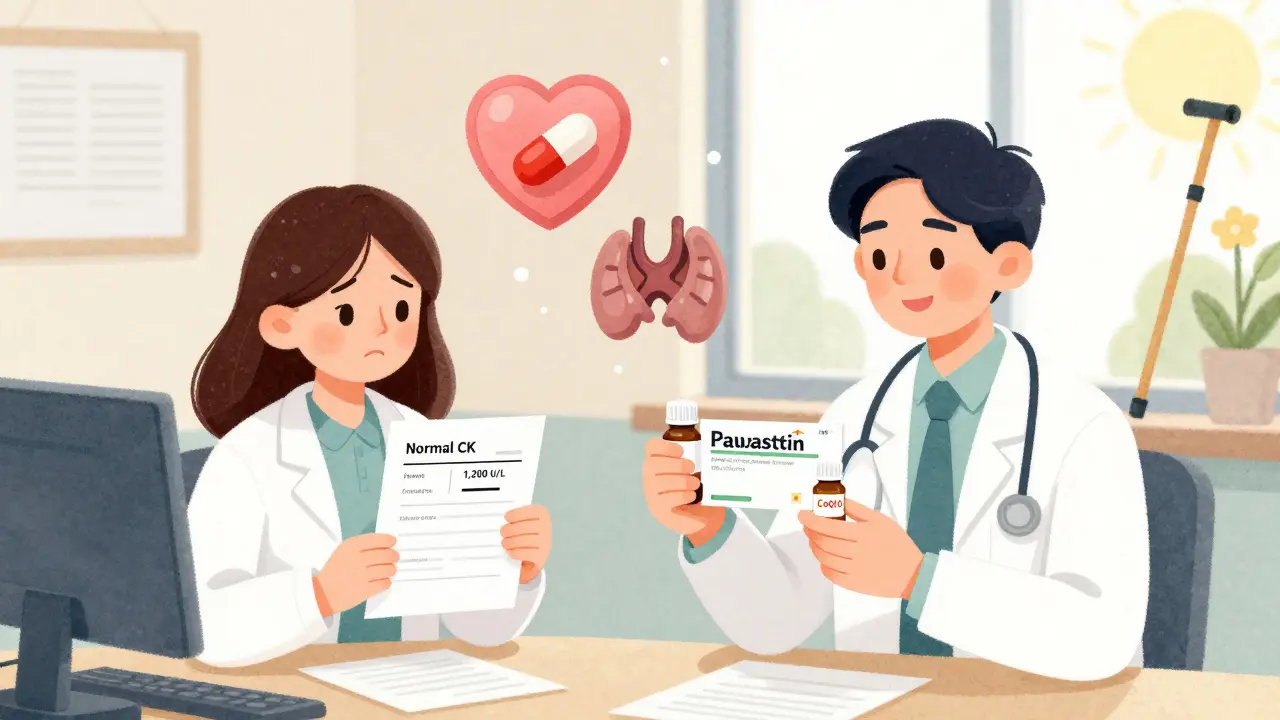
Doctors check creatine kinase (CK) levels in your blood to measure muscle damage. If CK is more than 10 times the normal limit (usually above 1,900 U/L), that’s a red flag. But if your CK is normal and you still hurt? It might not be the statin.
Who’s More Likely to Get Muscle Pain?
Some people are at higher risk:
- Women, especially older women or those under 100 lbs
- People over 80
- Those with thyroid problems, kidney disease, or liver issues
- People taking other meds like fibrates, cyclosporine, or certain antibiotics
- Those on high-dose statins (atorvastatin 40-80 mg, rosuvastatin 20-40 mg)
Thyroid problems alone can raise your risk by 35%. That’s why checking your thyroid levels is often the first step when muscle pain shows up.
Is It Really the Statin?
Here’s the hard truth: Only about 20-25% of people who blame statins for their pain actually get it back when they restart the drug under controlled conditions. That’s from a 2018 Circulation study. Many people stop statins because they feel bad-but the pain might be from aging, arthritis, lack of movement, or even stress.
That’s why doctors don’t just say, “Stop the statin.” They recommend a rechallenge: stop the drug for 4-6 weeks, then restart it under supervision. If the pain comes back, it’s likely the statin. If it doesn’t? The cause was probably something else.
What to Do If You Have Muscle Pain
If you’re on a statin and your muscles ache, don’t quit cold turkey. Stopping without medical advice can raise your risk of heart attack or stroke by 25-50% within two years.
Here’s what to do instead:
- Call your doctor. Don’t self-diagnose.
- Get a blood test for CK levels. Normal levels make statin-caused pain unlikely.
- Check your thyroid function. Hypothyroidism is a common hidden cause.
- Review all your other meds. Some drugs interact badly with statins.
- Try a statin “holiday”: stop for 4-6 weeks and track your symptoms.
If symptoms fade during the break and return when you restart, your doctor might switch you to a different statin. Pravastatin and fluvastatin are less likely to cause muscle issues. Rosuvastatin and atorvastatin are stronger but carry higher risk.
Can You Still Take Statins?
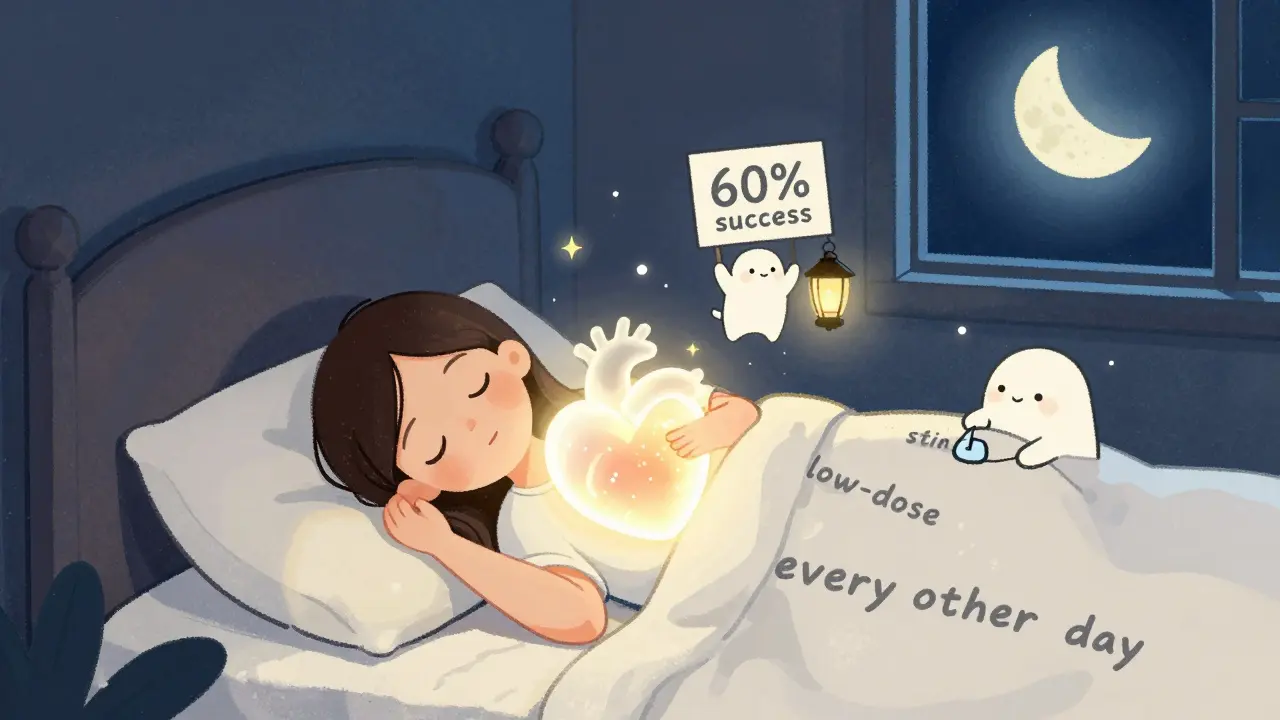
Yes-most people can. About 60% of patients who switch to a different statin find relief. Others do well on a lower dose. A 2022 study showed that even half the usual dose of atorvastatin still cuts heart risk by 25%.
Some people do better on intermittent dosing. Instead of daily pills, take the statin every other day or three times a week. The 2023 STRENGTH trial found this cuts muscle pain by 40% without losing heart protection.
What About Supplements Like CoQ10?
You’ve probably heard that Coenzyme Q10 helps with statin muscle pain. It sounds logical-statins lower CoQ10, which your muscles need. But the science is mixed.
A 2015 review of 12 studies found no real benefit over placebo. But a 2018 study in Atherosclerosis showed 45% of patients had at least 30% less pain after taking CoQ10. It’s not a cure, but it might help some people. It’s safe, inexpensive, and worth trying if your doctor approves.
Alternatives to Statins
If you truly can’t tolerate any statin, there are other options:
- Ezetimibe: A pill that blocks cholesterol absorption. Works well alone or with low-dose statins. Costs about $30/month.
- PCSK9 inhibitors (alirocumab, evolocumab): Injected monthly. Very effective-can drop LDL by 60%. But they cost around $5,000 a year, even with insurance.
- Lifestyle changes: Diet, walking 30 minutes a day, and losing 5-10% of body weight can lower LDL by 20-30%. Not a replacement for high-risk patients, but a powerful support tool.
For most people, even a low-dose statin plus ezetimibe is cheaper, safer, and more effective than skipping meds entirely.
The Bottom Line
Statins save lives. For every 100 people who take them, 1-2 heart attacks or strokes are prevented every year. The risk of serious muscle damage is tiny. But the fear of muscle pain is real-and it’s keeping too many people off the drug they need.
If you’re having muscle aches:
- Don’t assume it’s the statin.
- Don’t quit without talking to your doctor.
- Do get tested for thyroid, CK, and other meds.
- Do ask about switching statins or lowering the dose.
- Do consider intermittent dosing or ezetimibe.
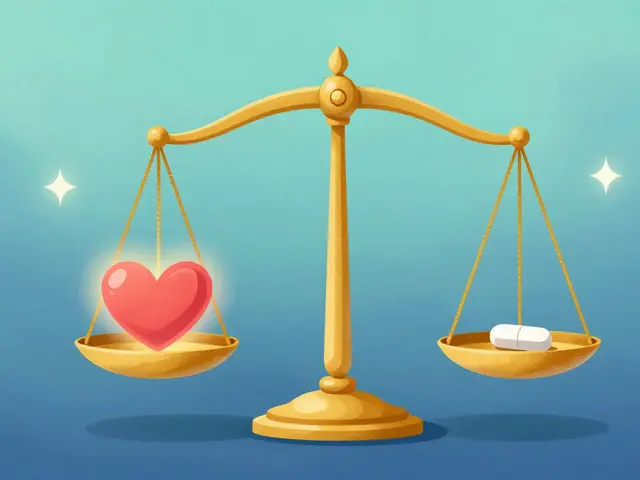
You don’t have to choose between heart health and muscle comfort. With the right approach, most people can stay on statins-safely and comfortably.
Can statins cause permanent muscle damage?
No, statins do not cause permanent muscle damage in the vast majority of cases. Muscle symptoms typically resolve within days to weeks after stopping the medication. Even in rare cases of rhabdomyolysis, full recovery is common with prompt treatment. Long-term muscle weakness from statins alone is not supported by medical evidence.
Do all statins cause muscle pain equally?
No. Some statins are much less likely to cause muscle issues. Pravastatin and fluvastatin have the lowest risk, while high-dose atorvastatin and rosuvastatin carry higher risk. Switching to a different statin helps about 60% of people who experience muscle pain.
Should I take CoQ10 with my statin?
It’s not necessary for everyone, but it may help some people reduce muscle discomfort. Studies show mixed results, but CoQ10 is safe and inexpensive. Talk to your doctor before starting-it won’t replace medical evaluation, but it could be a helpful addition.
How long does it take for muscle pain to go away after stopping statins?
Most people notice improvement within 2-4 weeks. In some cases, it takes up to 6 weeks for full relief. If pain persists beyond that, it’s likely caused by something else-like arthritis, nerve issues, or vitamin D deficiency-and should be evaluated further.
Can I just reduce my statin dose instead of stopping?
Yes, and this is often the best first step. Lowering the dose can reduce muscle pain while still providing heart protection. Studies show even half the standard dose of atorvastatin reduces heart risk by 25%. Always do this under medical supervision to ensure your cholesterol stays in a safe range.
Is it safe to take statins every other day?
Yes, for many people. Intermittent dosing (like every other day or three times a week) has been shown to reduce muscle side effects by up to 40% while still lowering cholesterol and protecting the heart. This approach works best with longer-acting statins like atorvastatin or rosuvastatin.
Why do women report more muscle pain than men on statins?
Women are more likely to report muscle pain due to a combination of factors: they’re often older when starting statins, have smaller body size, higher rates of thyroid issues, and may be more likely to notice and report symptoms. It’s not that statins affect women differently-it’s that multiple overlapping risk factors make them more vulnerable.
What happens if I stop my statin because of muscle pain?
Stopping statins without a plan increases your risk of heart attack or stroke by 25-50% within two years. Many people who quit due to muscle pain later find their symptoms weren’t caused by the drug. Always work with your doctor to test, adjust, or switch before stopping completely.

Ted Conerly
January 11, 2026 AT 01:03Statins aren't the villain here - fear is. I've seen patients stop these meds because they read a blog post and suddenly their knees 'hurt more.' But their CK levels? Normal. Thyroid? Fine. Turns out they just stopped walking after retirement. The drug isn't the problem - the narrative is.
Lisa Cozad
January 11, 2026 AT 14:33I had the exact same thing. Thought it was the atorvastatin until my doctor made me stop for six weeks. Pain disappeared. Restarted it? Nothing. Turns out I was just dehydrated and sitting all day working from home. Statins got a bad rap because we're quick to blame pills instead of lifestyle.
Ian Cheung
January 13, 2026 AT 08:57CoQ10 is a waste of money unless you're into placebo with extra steps but hey if it makes you feel better go for it I'm not your mom just saying the science says nah
Mario Bros
January 15, 2026 AT 03:33My grandma switched to every-other-day rosuvastatin and now she hikes every morning. No aches. No drama. Just living. If you're scared of statins, talk to your doc about dosing tricks - they're lifesavers.
anthony martinez
January 16, 2026 AT 20:31So let me get this straight - we’re supposed to believe that 30% of people are just imagining muscle pain because they were told it might happen? That’s not nocebo, that’s gaslighting with a prescription pad.
Faith Edwards
January 17, 2026 AT 14:13One cannot help but observe the alarming epistemological collapse occurring in modern medical discourse - where anecdotal experience is elevated above empirical evidence, and the placebo/nocebo dichotomy is weaponized to dismiss legitimate patient suffering. The notion that individuals are merely 'fearing' pain is not only reductive, it is ethically indefensible. One does not 'imagine' the inability to rise from a chair.
Dwayne Dickson
January 19, 2026 AT 10:49Let’s be precise: the nocebo effect is not a dismissal of suffering - it’s a recognition of the mind-body feedback loop. The same mechanism that makes antidepressants work in some patients also makes side effects manifest in others. This isn’t about blaming the patient - it’s about optimizing treatment by understanding context. A 2019 JAMA study showed that when physicians framed statins as 'generally well tolerated,' patient-reported myalgia dropped by 50% without changing the drug. Language matters. Framing matters. Empathy matters.
Saumya Roy Chaudhuri
January 20, 2026 AT 05:26Obviously the real issue is that people don't understand pharmacokinetics. If you're on a high-dose statin and you're over 70 and you have subclinical hypothyroidism and you're also taking amiodarone and you didn't get your CK checked - then yes, you're asking for trouble. But if you're a 45-year-old man who just started walking his dog and now says 'my thighs hurt' - that's not statin myalgia, that's just being out of shape. The medical system is drowning in people who think symptoms = diagnosis.
Jay Amparo
January 21, 2026 AT 08:55I’ve been on statins for 12 years. First year - aches. Stopped. Felt better. Then had a mild heart scare. Went back. Switched to pravastatin. Took CoQ10. Cut dose to every other day. Now I’m stronger than I was at 30. It’s not about choosing between heart and muscles - it’s about finding the version of the drug that fits your body. Don’t give up. Just don’t quit without a plan.