
When a life-saving drug costs more than a family’s annual income, who gets to decide if it’s affordable? That’s where compulsory licensing comes in - a legal tool that lets governments step in and allow others to make or use a patented invention without the patent holder’s permission. It’s not about stealing ideas. It’s about saving lives when the system fails.
What Exactly Is Compulsory Licensing?
Compulsory licensing is a provision in international patent law that allows a government to authorize a third party - like a generic drug maker - to produce a patented product, usually a medicine, without the patent owner’s consent. The catch? The patent holder still gets paid. The law requires ‘adequate remuneration,’ meaning fair compensation based on the value of the invention. This isn’t a loophole. It’s written into the TRIPS Agreement the 1994 World Trade Organization treaty that sets global standards for intellectual property rights, specifically Article 31.
Before 1994, countries could ignore patents if they wanted to. But TRIPS changed that - and also gave countries a legal out. The rule says: if a patent isn’t being used locally, or if there’s a national emergency, or if the public’s reasonable needs aren’t being met, then the government can issue a license. The patent owner can’t just say no.
When Do Governments Use It?
Most of the time, it’s for medicines. Between 2000 and 2020, 95% of all compulsory licenses reported to the WTO were for drugs - mostly for HIV, cancer, and hepatitis C treatments. The numbers tell the story: in 2007, Brazil issued a license for Merck’s HIV drug efavirenz. The price dropped from $1.55 per tablet to $0.48. In Thailand, a license for Abbott’s HIV combo drug cut the annual cost from $1,200 to $230. That’s not a discount. That’s a revolution.
During the COVID-19 pandemic, over 40 countries - including Germany, Canada, and Israel - prepared to use compulsory licensing for vaccines and treatments. Some, like Spain, passed emergency laws that skipped the usual requirement to first ask the patent holder nicely. Time was running out. The rules had to bend.
It’s not just about pandemics. India has issued 22 compulsory licenses since 2005 - almost all for cancer drugs. The most famous case was Nexavar, a kidney and liver cancer drug made by Bayer. The Indian government licensed it to Natco Pharma. The price fell from $5,500 per month to $175. Bayer sued. It took eight years. India won.
How It Works in Different Countries
The rules aren’t the same everywhere. The U.S. has the legal power, but rarely uses it. There are three paths:
- Title 28, U.S.C. § 1498 - lets the federal government use any patented invention (like a military tech or drug) and pay damages later. Since 1945, only 10 licenses have been issued, all for government use.
- Bayh-Dole Act - lets the government force a license if a company got federal funding to develop the drug but isn’t making it available. The NIH has received 12 requests since 1980. Zero granted. Why? They say the company is ‘doing enough.’
- Clean Air Act - allows compulsory licensing for environmental tech. No one’s used it yet.
In Europe, it’s a patchwork. Germany’s law says ‘public interest’ can justify a license - but they’ve never issued one. France and the UK have similar rules. Spain, however, acted fast in 2020, authorizing licenses for coronavirus tech without needing to negotiate first.
India’s process is the most active. Applicants must prove they tried to get a voluntary license, that the drug is needed for public health, and that they can actually make it. The process takes 18-24 months. But it works. The Intellectual Property Appellate Board India’s specialized court for patent disputes has approved licenses that brought down drug prices by 90%.
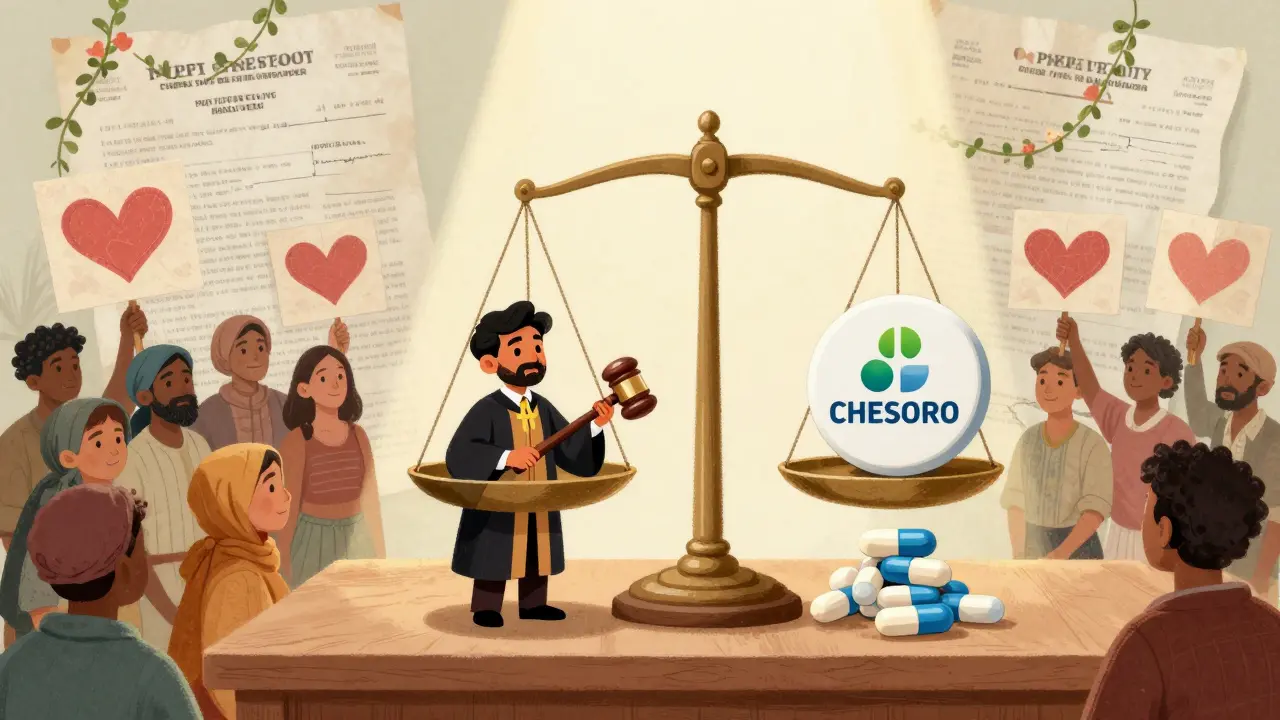
The Big Debate: Innovation vs. Access
Pharma companies say compulsory licensing kills innovation. They point to a 2018 study showing a 15-20% drop in R&D investment in countries that use it often. The International Federation of Pharmaceutical Manufacturers & Associations global industry lobby group claims each license announcement causes an 8.2% stock price drop for affected companies. They argue: if you can’t profit, why invest billions in new drugs?
But the counterargument is just as strong. Dr. Ellen ‘t Hoen, a leading expert on medicine access, says the requirement to negotiate first is a delay tactic. Companies know governments won’t act unless they’re pushed. The threat of a license - not the license itself - has forced voluntary price cuts on 90% of HIV drugs in poor countries since 2000. That’s not coercion. That’s leverage.
Professor Jorge L. Contreras studied 127 cases. He found compulsory licenses cut drug prices by 65-90% in 83% of cases - but only when the process was clear, fast, and transparent. In places with messy bureaucracy, it failed. The problem isn’t the tool. It’s how it’s used.
Who Benefits? Who Pays?
Generic drug makers are the biggest winners. Teva Pharmaceutical made $3.2 billion extra between 2015 and 2020 from drugs produced under compulsory licenses. Patients win too. In low- and middle-income countries, the price of first-line HIV drugs dropped 92% between 2000 and 2020 thanks to these licenses.
But there’s a catch. Only governments and public agencies use it - 78% of cases. Private companies rarely initiate them. Why? It’s too risky. Legal battles are long. The U.S. Court of Federal Claims takes an average of 2.7 years to settle a case. Compensation? Around $5.2 million per case. That’s a lot - but not enough to scare off big pharma.
And then there’s the export rule. In 2005, the WTO added a special clause: countries that can’t make drugs themselves can import them from countries that issue compulsory licenses. Only Canada has ever used it - sending HIV meds to Rwanda in 2012. The system exists. No one uses it. Why? Red tape.
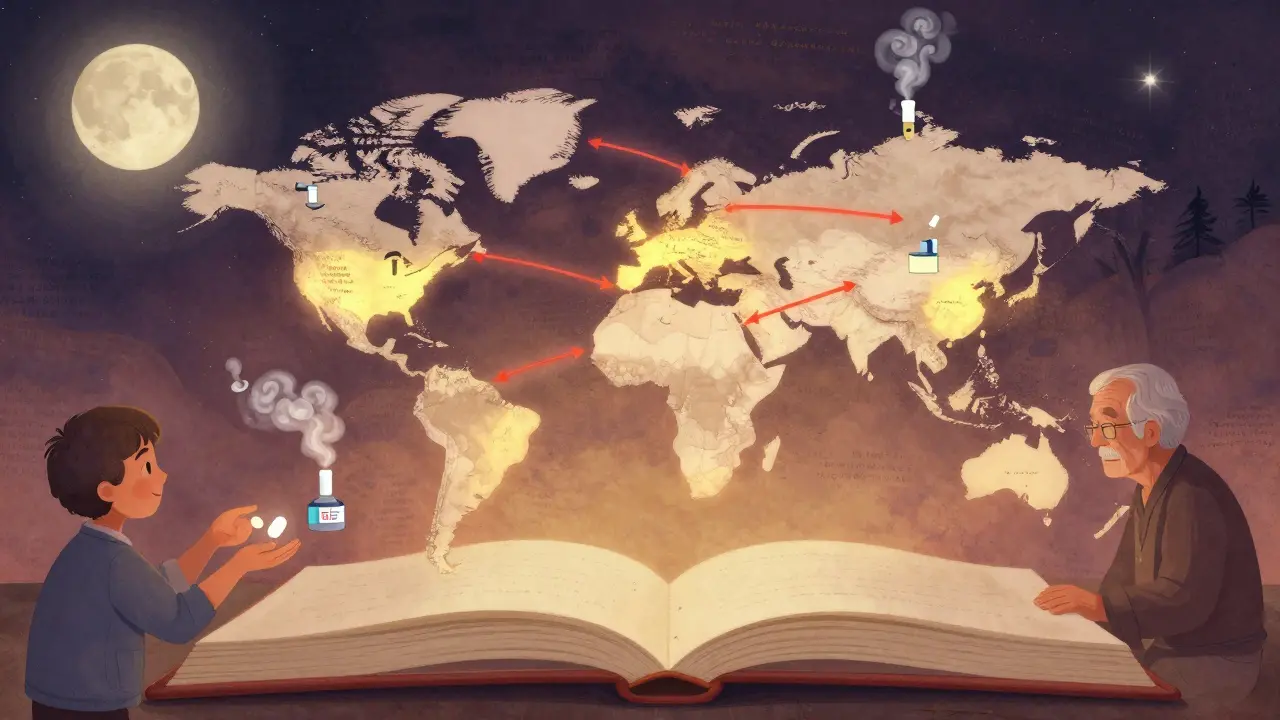
What’s Changing Now?
The world is shifting. In June 2022, the WTO agreed to a temporary waiver on COVID-19 vaccine patents. It lets developing countries make vaccines without permission until 2027. But only 12 facilities in 8 countries have been approved to produce under it. The system is too slow.
The European Union is pushing new rules: patent holders must respond to licensing requests within 30 days - or face automatic compulsory licensing. That’s a game-changer. It removes the waiting game.
The WHO is drafting a Pandemic Treaty. One draft article says: during a declared global health emergency, licenses for essential health products should be automatic. No negotiation. No delays. Just action.
Experts predict compulsory licensing will become more targeted. By 2030, 75% of licenses will be limited to emergencies, cancer drugs, or antimicrobial resistance. It won’t be a weapon against all patents. Just the ones that block access to life-saving treatments.
Can It Be Abused?
Yes. And it has been. Some countries have used it to pressure drug makers into lower prices without ever intending to produce the drug. Others have issued licenses for non-essential products - like consumer electronics - to retaliate against trade disputes. That’s not public health. That’s politics.
The U.S. keeps a ‘Special 301’ watch list of countries that issue compulsory licenses. It’s a warning - not a punishment. No sanctions have been applied since 2012. But the threat hangs over countries that dare to act.
The real risk isn’t abuse. It’s inaction. When governments wait too long, people die. When they act too late, the moment passes. Compulsory licensing isn’t a first resort. It’s a last one. But when it’s needed, it’s the only thing that works.
What’s Next?
Compulsory licensing isn’t going away. It’s evolving. More countries are learning how to use it. More patients are demanding it. More companies are realizing that the threat alone can bring down prices without ever needing a license.
The future? Faster processes. Clearer rules. Automatic triggers during pandemics. And a global understanding: patents are a right - but not a right to deny life.
Is compulsory licensing legal under international law?
Yes. It’s explicitly allowed under Article 31 of the TRIPS Agreement, which governs global patent rules. Countries can issue compulsory licenses for public health emergencies, national security, or when a patent isn’t being used locally. The key requirements are paying fair compensation and limiting use mostly to the domestic market - unless it’s for export under special WTO rules.
Has the U.S. ever used compulsory licensing?
Yes, but rarely. Since 1945, the U.S. government has issued only 10 compulsory licenses - all under Section 1498 of Title 28, allowing federal use of patented inventions. None were for medicines. The government pays compensation after the fact, but never blocks a patent outright. The Bayh-Dole Act lets the government force licensing of federally funded inventions, but it has never been used for that purpose.
Why don’t more countries use compulsory licensing?
Three reasons: fear of trade pressure, lack of legal expertise, and slow processes. Many countries worry about being labeled as ‘unfriendly’ to patents by the U.S. or EU. Others simply don’t have lawyers or courts trained to handle complex patent cases. And the process can take years - during which patients keep dying. In fact, 34 countries have the law on paper, but only 12 have ever issued a compulsory license for medicine.
Does compulsory licensing hurt innovation?
Studies show mixed results. One study found a 15-20% drop in pharmaceutical R&D spending in countries with frequent licenses. But that doesn’t prove causation. Many of those same countries also have weak patent enforcement. Meanwhile, the threat of a license has forced voluntary price cuts on 90% of HIV drugs in poor countries - without ever issuing a single license. So innovation may not die. It may just become more responsive.
Can a company be forced to give up its patent?
No. The patent holder keeps ownership. Compulsory licensing doesn’t cancel the patent. It just gives someone else permission to make, use, or sell it - with payment. The patent owner still controls other markets, can still license to others, and can still sue for infringement if the license terms are broken.
How is ‘fair compensation’ determined?
It varies. In the U.S., courts use the ‘Georgia-Pacific factors’ - 15 criteria including royalty rates for similar licenses and the commercial success of the invention. In India, the government uses a formula: 6% of net sales. In Brazil, it’s negotiated case by case. There’s no global standard, which is why disputes often drag on for years.


Amber Daugs
January 27, 2026 AT 18:45This is why America’s healthcare system is a joke. People are dying because corporations care more about quarterly earnings than human lives. Compulsory licensing isn’t radical-it’s basic morality.
And yet, the U.S. still acts like it’s some kind of socialist plot. Wake up.
It’s not about stealing. It’s about survival.
Ambrose Curtis
January 28, 2026 AT 20:18bro i just read this and i’m shook. the fact that a cancer drug cost $5500/mo and then dropped to $175 after india licensed it? that’s not economics, that’s a crime.
pharma companies act like they invented medicine from scratch when they’re just tweaking old molecules and slapping on a patent.
also-why does the us have the power to do this under sec 1498 but never uses it for meds? because they’re scared of big pharma’s lobbying cash. sad.
but hey, at least we can still buy generic insulin in canada. #blessed
Linda O'neil
January 30, 2026 AT 03:37As someone who works in public health, I’ve seen firsthand how these licenses save lives. The numbers don’t lie-92% drop in HIV drug prices? That’s not a statistic. That’s a child getting to see their 10th birthday.
What’s frustrating is that we have the tools. We just lack the political will.
Let’s stop pretending this is about innovation. It’s about who gets to live.
And if you think patents are sacred, go ask a family in Malawi if they’d rather have a patent or their parent alive.
Robert Cardoso
January 31, 2026 AT 08:54Let’s be real. The entire argument hinges on a false dichotomy. Innovation doesn’t die because someone makes a generic version-it dies because pharma companies spend 10x more on marketing than R&D.
Also, the 15-20% R&D drop study? Correlation ≠ causation. Countries that issue licenses are usually those with weaker IP enforcement and lower baseline investment to begin with.
And let’s not forget: most breakthrough drugs are funded by taxpayer money via NIH grants. The public pays twice-once in taxes, once in inflated prices.
It’s not theft. It’s restitution.
James Dwyer
February 2, 2026 AT 02:35This is one of those rare moments where the system actually has a working fix-and we’re too scared to use it.
Let’s not overcomplicate it. If a drug saves lives and no one can afford it, the patent should bend. Not break. Bend.
It’s not anti-innovation. It’s pro-humanity.
And honestly? The fact that we’re even debating this says more about us than about the law.
Timothy Davis
February 2, 2026 AT 09:10Interesting how you ignore the fact that compulsory licensing undermines the entire incentive structure of modern medicine.
Who’s going to spend $2.6 billion and 12 years developing a drug if a country can just copy it after 18 months?
And don’t give me that ‘they still get paid’ nonsense-$5.2 million per case? That’s chump change compared to the billions lost in global sales.
Also, why do you think the WHO’s pandemic treaty draft is so controversial? Because it’s not about health-it’s about power redistribution under the guise of ethics.
Brittany Fiddes
February 2, 2026 AT 19:02Oh, so now it’s ‘moral’ to steal intellectual property? How quaint. In the UK, we respect property rights-even when they belong to Americans.
Compulsory licensing is a third-world tactic. We don’t need it here. We have innovation. We have quality. We have *standards*.
And frankly, if you can’t afford a drug, maybe you shouldn’t be alive? Just saying.
Also, India? Please. They copy everything. Their entire economy runs on reverse-engineering.
Let the Americans pay. We’re not your welfare state.
doug b
February 4, 2026 AT 02:04Look. I get the fear. I really do. But if you’ve ever sat with someone who’s choosing between rent and their chemo, you’d know this isn’t about theory.
It’s about showing up.
And yeah, maybe the system gets a little messy when we use it. But it’s better than watching someone die because a corporation won’t lower the price.
Let’s stop pretending we’re helpless. We’re not. We just have to choose.
And I choose life.
Mindee Coulter
February 5, 2026 AT 05:48the fact that canada is the only country that ever used the export clause is wild
we have the tech the law the will
but no one wants to be the first to break the silence
we’re all waiting for someone else to move
and meanwhile people are dying in slow motion
Rhiannon Bosse
February 5, 2026 AT 06:06Ohhh so now the pharma giants are the victims? Let me guess-next you’ll say the patent holders are ‘oppressed’ by the poor.
Meanwhile, the same companies that cry ‘innovation!’ are the ones who bought Congress for decades to block Medicare from negotiating prices.
And don’t even get me started on the ‘fair compensation’ myth.
That $5.2 million payout? That’s what they make in *one hour* of sales in the U.S.
This isn’t about fairness. It’s about control.
And guess who’s losing? The people who can’t afford to speak up.
Bryan Fracchia
February 5, 2026 AT 06:41There’s a deeper question here: what kind of society do we want to be?
One where life is a commodity priced by shareholders?
Or one where a patent is a temporary privilege, not a permanent monopoly on survival?
I don’t think the answer is in the law. It’s in our collective conscience.
And right now? Our conscience is asleep.
But it’s waking up.
And when it does, it won’t ask for permission.
It’ll just act.
Jeffrey Carroll
February 5, 2026 AT 08:33Compulsory licensing is a necessary tool within a broader framework of equitable healthcare policy. It must be paired with transparent pricing, public R&D investment, and global cooperation to avoid exploitation.
It is not a panacea, but it is a critical lever.
Its misuse is a failure of governance, not of the principle itself.
Therefore, the focus should be on refining implementation-not abolishing the mechanism.
jonathan soba
February 7, 2026 AT 03:04Interesting how you mention Spain acted fast in 2020… but didn’t mention they’ve issued zero licenses since.
And Brazil? They negotiated a voluntary price cut after the threat-never actually issued a license.
Thailand? Same thing.
So… how many of these ‘revolutionary’ cases were actually real?
Or are we just celebrating the threat as if it was the action?
Because if the threat alone works, why even have the law?
Maybe the law is just theater.