
When you think of Parkinson’s disease, you might picture a hand trembling at rest - the classic "pill-rolling" tremor. But that’s just the tip of the iceberg. Parkinson’s is a complex, progressive brain disorder that slowly steals movement, coordination, and independence. It’s not just about shaking. It’s about struggling to get out of bed, buttoning a shirt, speaking loudly enough to be heard, or walking without fear of falling. By 2023, about 1 million Americans were living with Parkinson’s, and nearly 60,000 more were diagnosed that year. Most are over 60, but 1 in 25 cases show up before age 50. What matters most isn’t the age - it’s how the disease changes daily life.
The Four Core Motor Symptoms
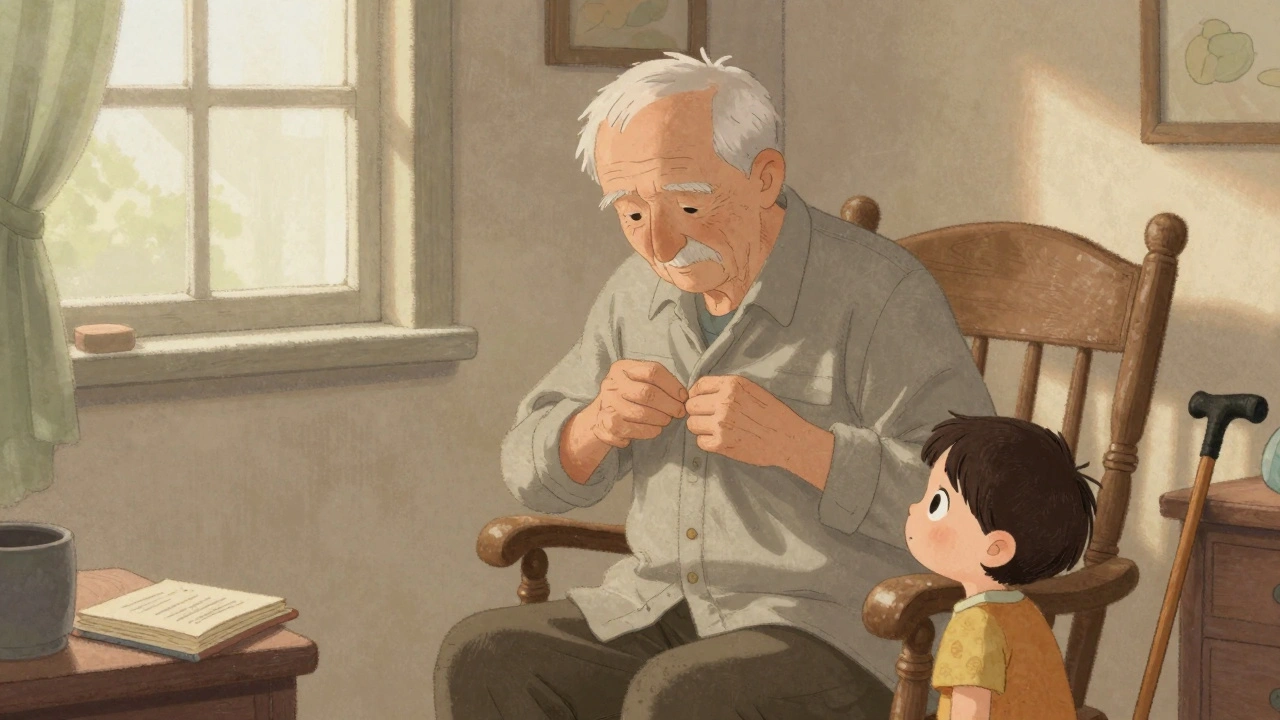
Doctors don’t diagnose Parkinson’s with a blood test or scan. They watch how you move. The diagnosis hinges on four key motor symptoms - and you need at least two to qualify. The most important one? Bradykinesia. That’s the medical term for slowness of movement. It’s not just moving slowly - it’s losing the ability to start, sustain, or finish actions. Your face may freeze into a blank mask. You blink less. Your fingers fumble with buttons or zippers. Studies show dressing takes more than twice as long. Buttoning a shirt? It can take over three times longer than it did before.
Next is rigidity. Your muscles feel stiff, like a bent spring that won’t release. Some people describe it as "cogwheel" - a jerky resistance when someone moves your arm. Others feel a constant, smooth stiffness, called "lead-pipe" rigidity. About 85% of patients have the cogwheel kind. This stiffness isn’t just annoying - it makes turning in bed, standing up, or walking feel like pushing through thick mud.
Tremor is what most people recognize. It’s usually a rhythmic shaking in one hand, often starting when you’re relaxed - like when your hand is resting in your lap. It fades when you reach for a cup or write a note. About 70% of people with Parkinson’s have this tremor at diagnosis, but 20-30% never develop it. That’s why tremor alone doesn’t mean you have Parkinson’s. Without bradykinesia, it’s not enough.
Finally, there’s postural instability. This is the symptom that brings the greatest risk: falling. It doesn’t show up early. It usually appears after five to ten years. Your balance system starts to fail. You lean forward. You take smaller steps. You don’t swing your arms when you walk. One study found 68% of people with Parkinson’s fall at least once a year. One in three fall repeatedly. Falls lead to fractures, hospital stays, and loss of independence.
Other Motor Signs You Might Not Notice
There’s more than just the big four. Many symptoms sneak in quietly. Micrographia - handwriting that gets smaller and smaller - affects nearly half of patients. You might not realize it until you look back at old notes. Hypophonia - a soft, monotone voice - happens in 89% of cases. Your family keeps saying, "Speak up," but you feel like you’re shouting. In reality, your voice volume has dropped 5 to 10 decibels - enough to make conversations in a noisy room impossible.
Then there’s dysarthria, or slurred speech. Words blend together. You sound drunk, even when you’re not. Drooling isn’t about saliva production - it’s about swallowing less often. Up to 80% of people with Parkinson’s experience this because their brain forgets to trigger the swallow reflex. And dysphagia - trouble swallowing - affects 35% early on and up to 80% in later stages. That’s not just inconvenient. It’s dangerous. Aspiration pneumonia, caused by food or liquid entering the lungs, is the leading cause of death in Parkinson’s.
Stooped posture is another silent thief. Sixty-five to eighty percent of people develop a forward bend in their spine. It’s not just bad posture - it compresses your lungs, makes breathing harder, and throws off your center of gravity. And dystonia? That’s when muscles contract painfully, twisting your foot inward or your neck to one side. It’s common in younger patients and often shows up early.
Medications: The Lifeline and the Trade-Off
There’s no cure. But there are medicines that help - for a while. The gold standard is levodopa. It’s been around since 1967 and still works best. It crosses into the brain and turns into dopamine, the chemical your brain is losing. About 70-80% of people feel better within weeks. But levodopa doesn’t stop the disease. It just masks the symptoms. And after five years, up to half of patients start having problems: their medicine wears off faster, they get sudden "off" periods where movement freezes, and they develop dyskinesias - involuntary, dance-like movements.
That’s why doctors often start younger patients on dopamine agonists like pramipexole or ropinirole. These mimic dopamine without turning into it. They’re less powerful than levodopa, but they delay the motor complications. About half of early-stage patients get good control with them. But they come with their own side effects: nausea, dizziness, sleep attacks, and sometimes compulsive behaviors like gambling or overeating.
For those who don’t respond well or develop severe side effects, deep brain stimulation (DBS) becomes an option. About 30% of people need it after ten years. It’s surgery - electrodes implanted in the brain connected to a pacemaker-like device in the chest. It doesn’t cure Parkinson’s, but it smooths out the peaks and valleys of medication effects. Many people regain hours of good movement each day.
Other drugs like MAO-B inhibitors (selegiline, rasagiline) and COMT inhibitors (entacapone) are used as add-ons. They don’t do much alone, but they help levodopa last longer. None of these drugs slow the disease. That’s the big gap in treatment. Despite decades of research, no medication has proven to stop or reverse Parkinson’s progression.
Daily Living: The Real Battle
Medications help you move. But daily life? That’s where the fight really happens. Simple things become exhausting. Getting out of bed takes planning - rolling to your side, pushing up with your arms, waiting for your legs to respond. Turning over in bed? About 65% of people struggle with this within five years. One study found that people with Parkinson’s take 2.3 times longer to get dressed than healthy peers their age.
Walking isn’t just slow - it’s unstable. Step length drops by 25-35%. Walking speed falls by 30-40%. Your arms don’t swing. That loss of bilateral coordination makes you wobble. Physical therapy can help. Twelve weeks of targeted exercise improves walking speed by 15-20% and cuts fall risk by 30%. That’s not small. It’s life-changing.
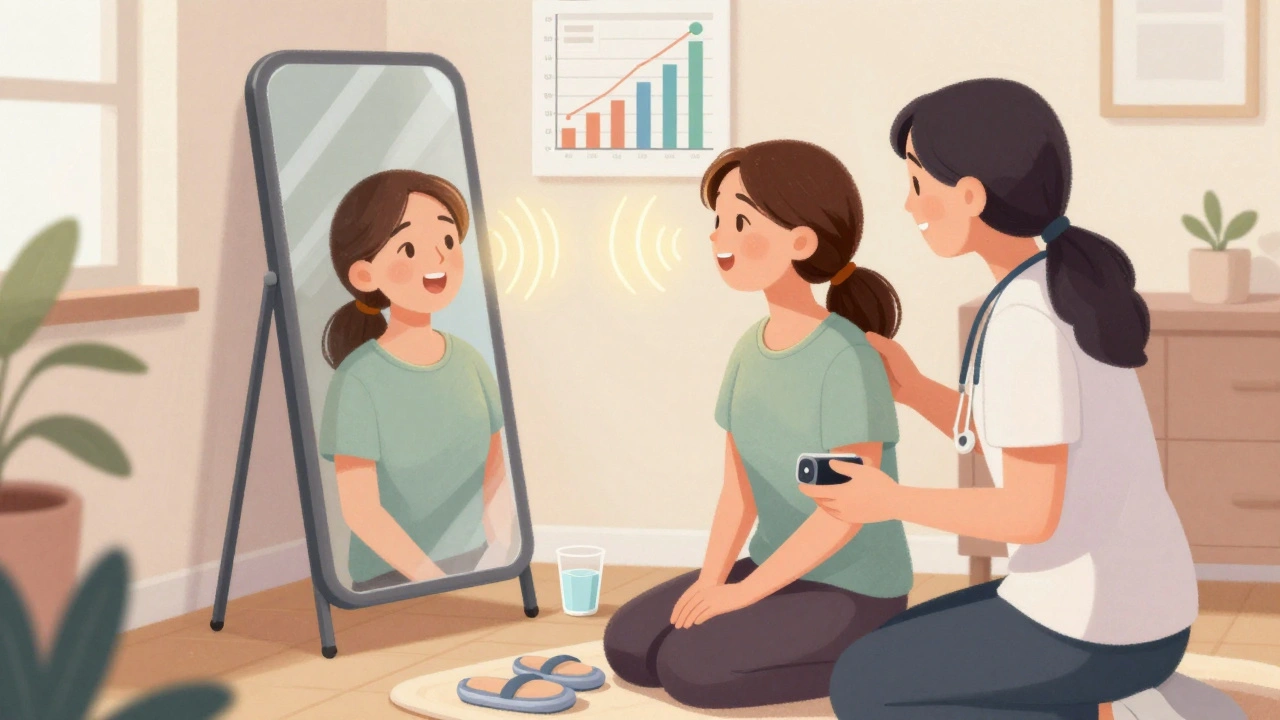
Speech therapy helps too. Voice training programs like LSVT LOUD have been shown to increase vocal volume and clarity. Many people report being heard again - for the first time in years. Occupational therapy teaches you how to adapt your home: grab bars in the bathroom, non-slip mats, clothing with Velcro instead of buttons.
And then there’s the hidden stuff. Akathisia - that restless urge to move - affects 15-25% of people. You can’t sit still. You pace. You fidget. It’s exhausting. Sexual dysfunction hits 50-80% of men. It’s rarely talked about, but it’s real. Depression and anxiety are common, too. They’re not just reactions to the disease - they’re part of the brain changes.
What to Expect as the Disease Progresses
Parkinson’s moves slowly. The Hoehn and Yahr scale breaks it into five stages. Stage 1: symptoms on one side only. Stage 2: both sides affected, but balance still okay. Stage 3: balance starts failing. That’s when falls become a real concern. Stage 4: you need help walking. You can still stand on your own, but you can’t live alone. Stage 5: you’re wheelchair-bound or bedridden. Most people reach Stage 3 in 5-7 years. Stage 5? That can take 10-20 years.
But progression isn’t the same for everyone. Some decline fast. Others stay stable for years. What matters is early action. Starting physical therapy, speech therapy, and working with a neurologist who specializes in movement disorders can keep you independent longer. It’s not about stopping the disease. It’s about managing it so it doesn’t steal your life before it has to.
Living Well With Parkinson’s
There’s no magic bullet. But there are things that work. Exercise isn’t optional - it’s medicine. Walking, swimming, tai chi, boxing - all help. The more you move, the better you function. Nutrition matters too. Protein can interfere with levodopa absorption. Some people time their meals to avoid conflicts. Staying hydrated helps with swallowing and constipation, which affects up to 80% of patients.
Support groups help. Talking to others who get it - who know what it’s like to freeze in the doorway or lose your voice mid-sentence - makes a difference. And planning ahead matters. Legal documents, power of attorney, advance directives - these aren’t morbid. They’re empowering. They give you control when your body starts to fail.
Parkinson’s doesn’t define you. But it changes everything. The goal isn’t to beat it. It’s to live with it - as fully as possible, for as long as possible. And that starts with knowing what’s coming - and being ready for it.
Is tremor always the first sign of Parkinson’s disease?
No. While tremor is the most common symptom at diagnosis - seen in about 70% of cases - 20-30% of people never develop it. The one symptom that’s always present is bradykinesia, or slowness of movement. Without it, Parkinson’s isn’t diagnosed. Some people first notice stiffness, trouble with fine motor tasks like buttoning shirts, or a reduced arm swing while walking.
Can medication stop Parkinson’s from getting worse?
No current medication has been proven to slow or stop the progression of Parkinson’s disease. Drugs like levodopa and dopamine agonists improve symptoms by replacing or mimicking dopamine, but they don’t protect brain cells. Research is ongoing, especially around therapies targeting alpha-synuclein, the protein that builds up in the brains of people with Parkinson’s. But as of 2025, treatment remains focused on managing symptoms, not curing the disease.
Why does levodopa stop working after a few years?
Levodopa doesn’t stop working - your brain changes. Over time, the brain’s ability to store and release dopamine fades. As dopamine-producing cells die off, levodopa’s effects become shorter and less predictable. This leads to "on-off" fluctuations, where you suddenly switch between being able to move and being frozen. It also causes dyskinesias - uncontrolled movements - because the brain can’t regulate the drug’s levels properly. Adjusting dosage, timing, or adding other medications can help, but eventually, deep brain stimulation may be needed.
What’s the best way to prevent falls with Parkinson’s?
Falls are the biggest danger. The most effective way to prevent them is through regular, targeted exercise. Physical therapy programs that focus on balance, strength, and gait training have been shown to reduce fall risk by 30%. At home, remove tripping hazards, install grab bars, use non-slip mats, and consider a walker or cane if recommended. Also, practice turning with a wide arc instead of pivoting on your toes. And don’t ignore your vision - get regular eye checkups, as depth perception often declines with Parkinson’s.
Does Parkinson’s affect speech and swallowing?
Yes, very commonly. About 89% of people develop a softer voice (hypophonia), and 74% have slurred speech (dysarthria). Swallowing problems (dysphagia) affect 35% early on and up to 80% in advanced stages. This isn’t just about communication - it raises the risk of choking and aspiration pneumonia, which causes 70% of Parkinson’s-related deaths. Speech therapy, especially programs like LSVT LOUD, can restore volume and clarity. For swallowing, a speech-language pathologist can recommend diet changes, posture adjustments, and swallowing exercises to reduce risk.



Sadie Nastor
December 8, 2025 AT 10:18Just read this and cried 😭 My grandma had Parkinson’s and I never realized how much she was fighting just to button her shirt or speak up. I thought she was just being slow… turns out she was battling a monster every single day. Thank you for putting this out there.
Oliver Damon
December 10, 2025 AT 07:35The neurochemical cascade in Parkinson’s involves degeneration of the substantia nigra pars compacta, leading to dopaminergic depletion in the striatum, which disrupts the direct and indirect basal ganglia pathways. This results in the cardinal motor phenotypes: bradykinesia, rigidity, tremor, and postural instability. The non-motor manifestations-dysphagia, hypophonia, autonomic dysfunction-are often underappreciated but contribute significantly to morbidity. Pharmacologic intervention remains palliative; no disease-modifying therapy has yet demonstrated robust clinical efficacy in human trials.
Helen Maples
December 10, 2025 AT 07:39If you’re not doing LSVT LOUD and daily balance training, you’re not serious about managing this. This isn’t a suggestion-it’s a medical necessity. Stop waiting for a miracle drug. Your brain needs stimulation, not just dopamine. Get a therapist. Do the work. Or accept that you’re giving up control.
David Brooks
December 11, 2025 AT 12:23I swear, every time I see someone with Parkinson’s walking with that stiff, shuffling gait, I just want to hug them so hard. Like, imagine waking up and your own body feels like it’s made of wet concrete. And you still get up. You still try. You still smile. That’s not just courage-that’s superhero energy. You’re all warriors. 🙌
Nicholas Heer
December 12, 2025 AT 19:26They don’t want you to know this but the CDC is hiding the real cause. It’s not aging. It’s not genetics. It’s the fluoride in the water + 5G towers + Big Pharma’s secret plan to sell more levodopa. They don’t want you to heal naturally. They want you dependent. Look up the 1997 WHO memo on dopamine depletion and corporate funding. They’re poisoning us slowly. Wake up.
Sangram Lavte
December 14, 2025 AT 01:59My uncle in India has Parkinson’s and uses Ayurvedic herbs along with his meds. He walks daily, does pranayama, and eats turmeric with black pepper. His tremor is mild now. Not saying it cures, but maybe combining traditions helps. Everyone’s body reacts differently.
Stacy here
December 15, 2025 AT 00:11Let’s be real-this whole ‘Parkinson’s is just aging’ narrative is a lie told by pharmaceutical companies to keep us docile. They don’t want you to know about the mold toxins in your food, the glyphosate in your coffee, the aluminum in your deodorant. This isn’t a neurological disorder-it’s a systemic poisoning. And they’re selling you pills to make you feel better while the real enemy grows. I’ve seen people reverse it with raw food and infrared saunas. But the system won’t let you hear that.
Kyle Oksten
December 15, 2025 AT 03:11Oliver’s breakdown of the basal ganglia pathways is accurate, but it misses the human layer. The real tragedy isn’t the dopamine loss-it’s the loneliness. The way your voice fades and no one leans in to listen. The way your hands shake so hard you stop holding your grandkid’s hand. Medication doesn’t fix that. Connection does. That’s the therapy they don’t prescribe.
Sam Mathew Cheriyan
December 16, 2025 AT 04:25Wait… so you’re telling me the guy who wrote this is just some random dude with a blog? No peer review? No NIH funding? I’m calling BS. Where’s the citation for that 89% hypophonia stat? And why no mention of the 2023 Lancet study that contradicts the levodopa timeline? This feels like clickbait dressed up as science.