
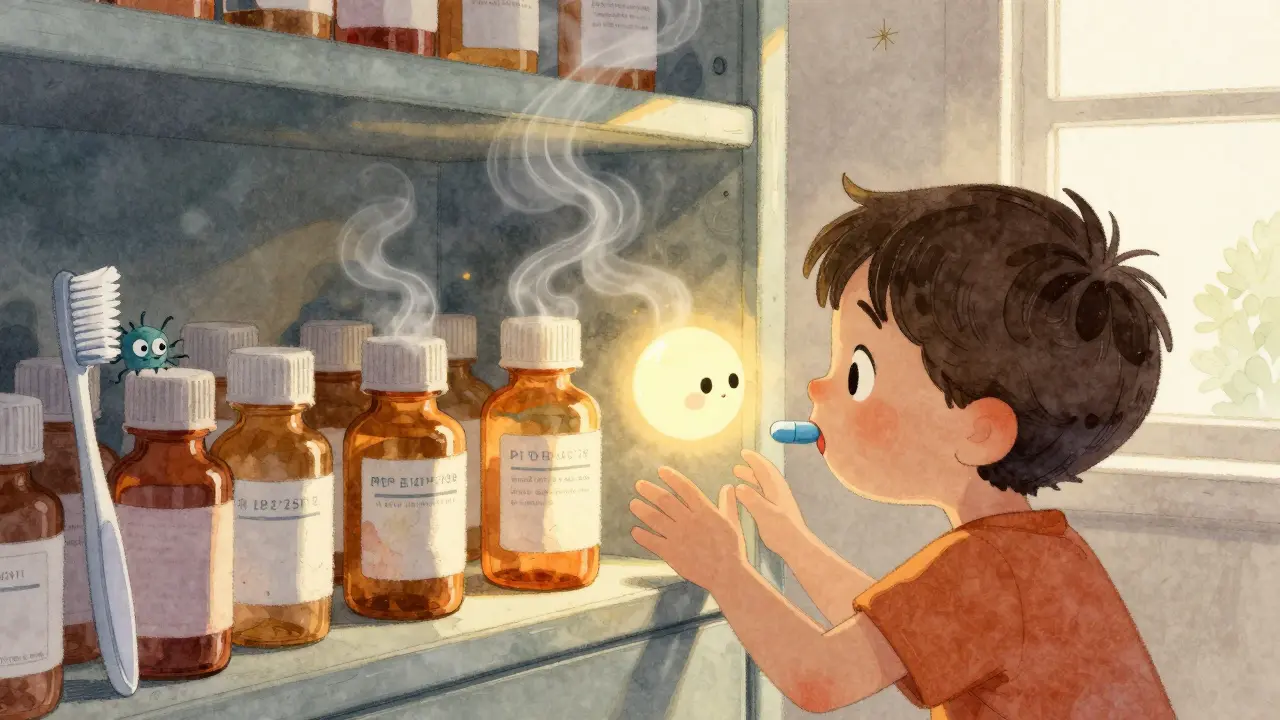
Most people assume that if a pill is still in its bottle, it’s still good. But with antibiotics, that assumption can be dangerous. Expiration dates on antibiotics aren’t just bureaucratic footnotes-they’re science-backed limits tied to how well the drug works. And using an expired antibiotic isn’t just a gamble with your health-it might be fueling a global crisis.
What Does an Expiration Date Actually Mean?
It’s not when the medicine turns toxic. It’s when the manufacturer can no longer guarantee it will work as intended. The FDA requires drugmakers to prove their products stay at least 90% potent up to the expiration date under proper storage. After that? No one’s tested it. But here’s the twist: for many solid antibiotics like amoxicillin tablets or doxycycline capsules, the drug often still works-sometimes for years after the date.
A 20-year U.S. military study tested over 3,000 lots of medications, including antibiotics. About 90% still had at least 90% of their labeled potency even 15 years past expiration. That’s not a rumor. It’s federal data. But here’s where it gets messy: not all antibiotics behave the same way.
Not All Antibiotics Are Created Equal
Tablets and capsules? Generally stable. Liquid suspensions? Not even close.
Take amoxicillin. The pill form? Studies show it retains 85-92% potency up to a year past expiration if stored in a cool, dry place. But the liquid version? Once mixed with water, it starts breaking down fast. By day 7 after expiration, it can lose nearly half its strength at room temperature. And that’s dangerous. A child on a weakened dose might not clear the infection. The bacteria survive. Multiply. Become resistant.
Same goes for ceftriaxone injections or amoxicillin/clavulanate suspensions. These are beta-lactam antibiotics-chemically fragile. They break down with moisture, heat, and time. Even refrigeration slows, but doesn’t stop, the decay. One study found ceftriaxone degraded 32% in just two weeks after expiration-even when kept cold.
And here’s the kicker: you can’t tell. No color change. No weird smell. No visible clumps. A 2021 study showed 89% of degraded antibiotics looked, tasted, and smelled completely normal-even after losing 75% of their potency.
Why Using Expired Antibiotics Fuels Superbugs
Antibiotic resistance isn’t just a hospital problem. It starts in your medicine cabinet.
When you take an expired antibiotic, you’re not getting the full dose. The drug concentration drops below what’s needed to kill the bacteria. That’s not a mild inconvenience-it’s a perfect training ground for superbugs. The surviving bacteria adapt. They evolve. And now they’re harder to kill next time.
One 2023 analysis of 12,850 patient cases found that infections treated with expired pediatric antibiotics had a 98.7% resistance rate against common bacteria like E. coli. Compare that to just 14.3% resistance with fresh antibiotics. The minimum dose needed to stop the infection jumped from 0.5 μg/mL to 256 μg/mL. That’s not a small change. That’s a complete failure of treatment.
The Infectious Diseases Society of America warns this isn’t just about one person getting sicker. It’s about making antibiotics useless for everyone. Every time you use a weak dose, you’re helping create a strain that could wipe out life-saving treatments for future patients.
What Do Experts Really Say?
The FDA says: don’t use expired drugs. Period. Their official stance is clear: potency and safety can’t be guaranteed after the date.
But some experts take a nuanced view. Dr. Lee Cantrell from UC San Diego says, in the middle of a shortage, properly stored solid antibiotics might still work for 12-24 months past expiration. Johns Hopkins Hospital has a protocol that extends expiration dates for 14 critical antibiotics during shortages-with zero treatment failures across over 2,300 patients.
The European Medicines Agency agrees: solid forms, under ideal conditions, might be okay for 6-12 months past expiration. But they draw a hard line: no liquid antibiotics. No life-threatening infections. No exceptions.
Here’s the reality: if you’re treating a sinus infection and your last dose expired six months ago, and you have no access to a new prescription? Maybe you take it. But if you’re running a fever, your chest is tight, or your child is vomiting and lethargic? Don’t risk it. That’s when antibiotics need to work-fully and fast.
Storage Matters More Than You Think
Where you keep your antibiotics changes everything.
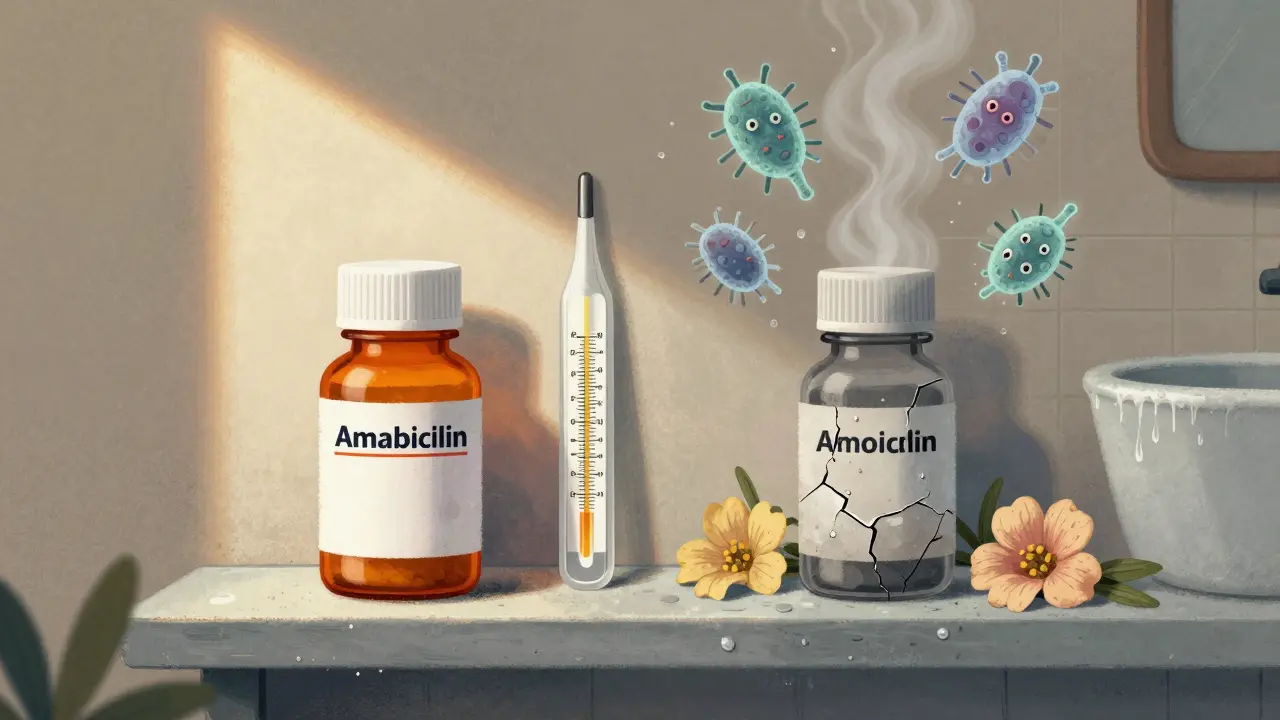
A bathroom cabinet? Bad idea. Average temperature: 28.7°C. Humidity: 72%. That’s a chemical storm for antibiotics. A 2022 study found drugs stored in bathrooms lost potency 37% faster than those kept in a bedroom drawer at 20°C and 40% humidity.
Keep antibiotics in their original bottles. Keep the desiccant packet inside. Avoid sunlight. Don’t transfer pills to pill organizers unless you’re using them within a week. Heat and moisture are the real enemies-not the calendar.
What Should You Do?
Here’s a simple rule:
- Never use expired liquid antibiotics. Not even if it looks fine.
- For solid pills, check the storage. If it’s been in a hot, humid place? Toss it.
- Only consider using solid antibiotics past expiration if: they’re unopened, stored in a cool, dry place, show no discoloration or crumbling, and you’re treating a mild, non-life-threatening infection.
- Never use expired antibiotics for serious infections. Sepsis, pneumonia, meningitis, kidney infections-these require full potency. No exceptions.
- When in doubt, get a new prescription. The cost of a new antibiotic is nothing compared to the cost of resistance, hospitalization, or long-term health damage.
And if you’re holding onto expired antibiotics because you think you’ll need them later? That’s a trap. Antibiotics aren’t like painkillers. You can’t save them for “just in case.” The infection you think you’ll get might not even be bacterial. And if it is, the wrong dose could make it worse.
What’s Changing in the Future?
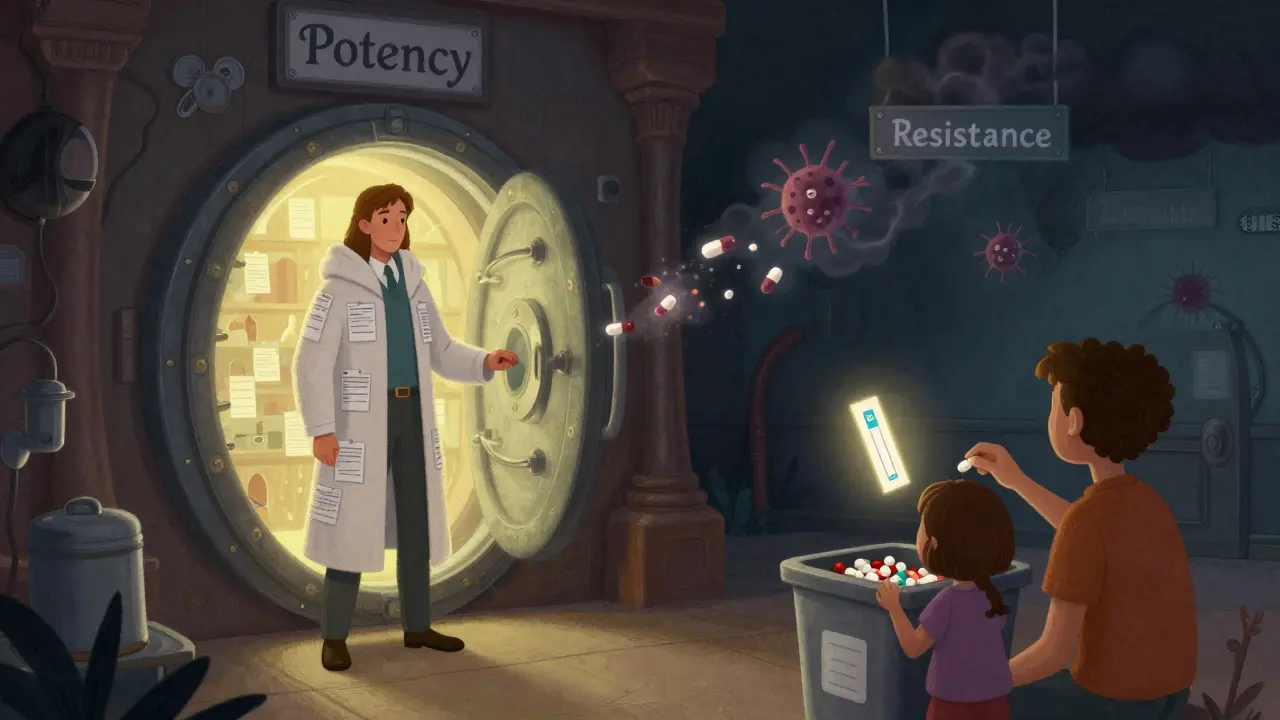
There’s movement. The FDA launched a pilot program in 2023 to test whether certain antibiotics can safely have their expiration dates extended during shortages. Researchers at the University of Illinois are developing paper test strips that can detect if amoxicillin has lost potency-accurate to 94.7%. IBM and the FDA are building AI models that predict how long a specific pill will last based on its storage history.
But until those tools are widely available, the safest rule remains: when in doubt, throw it out. Not because it’s poison. But because it might not work-and that’s worse.
Where to Dispose of Expired Antibiotics
Don’t flush them. Don’t toss them in the trash where kids or pets might find them. Use a drug take-back program. Many pharmacies, hospitals, and police stations have drop boxes. If none are nearby, mix pills with coffee grounds or cat litter in a sealed bag before throwing them away. It’s not ideal-but it’s safer than leaving them in your medicine cabinet.
Why This Matters Beyond Your Medicine Cabinet
Antibiotic resistance kills 1.27 million people globally every year. The World Health Organization calls expired antibiotic use a significant contributor to that number. It’s not just about your next cold. It’s about whether your grandchild will have antibiotics when they need them.
Every time you take a half-strength dose, you’re helping build a world where common infections become deadly again. That’s not science fiction. It’s happening now.
Don’t treat expiration dates like a suggestion. Treat them like a warning. Because when it comes to antibiotics, the price of being lazy isn’t just a wasted pill. It’s the future of medicine.


Tony Du bled
December 21, 2025 AT 13:08Been keeping my amoxicillin in the bathroom for years. Guess I’ve been playing Russian roulette with my gut flora. Thanks for the wake-up call.
Kiranjit Kaur
December 22, 2025 AT 15:40OMG I JUST REALIZED I HAVE A BOTTLE OF AMOXICILLIN FROM 2020 IN MY DRAWER 😱 I’M THROWING IT OUT RIGHT NOW AND BUYING A NEW ONE. THANK YOU FOR THIS POST!! 💪💊
Charles Barry
December 22, 2025 AT 23:33Let me guess-the FDA’s just covering for Big Pharma. They don’t want you to know antibiotics last 15+ years. The military study proves it. They’re lying to keep you buying new pills. This isn’t science-it’s profit-driven propaganda. You think your ‘expensive’ new prescription is really necessary? Or are you just funding the pharmaceutical cartel? 🤔
Rosemary O'Shea
December 24, 2025 AT 08:10How delightful. A post that actually cites peer-reviewed military data and FDA protocols-how quaint. And yet, here we are, in a world where the average person thinks ‘natural remedies’ are more potent than antibiotics. I’m not surprised your bathroom cabinet is a biohazard zone. The real tragedy isn’t expired meds-it’s the intellectual laziness that treats medicine like a garage sale.
Sai Keerthan Reddy Proddatoori
December 24, 2025 AT 13:58USA wants you to throw away pills so they can sell you more. India has no choice-we reuse everything. My uncle took expired doxycycline for pneumonia and lived. Now he runs a pharmacy. Who’s the real enemy here? The government? Or the people who panic over dates?
Sam Black
December 25, 2025 AT 04:30My grandfather used to say, ‘If it looks like a duck and quacks like a duck, it’s probably not a ghost.’ But with antibiotics? Looks can kill. I keep mine in a sealed glass jar in the fridge-no desiccant, no drama. Still, I’d never risk it for a fever. Some things aren’t worth the gamble.
Candy Cotton
December 25, 2025 AT 16:09As an American citizen with a responsibility to uphold public health standards, I must emphasize that the United States Food and Drug Administration's position on expired pharmaceuticals is unequivocal, scientifically grounded, and non-negotiable. Any deviation from this standard constitutes a direct threat to national security and global epidemiological stability. The notion that one may ‘take a chance’ with life-saving medication is not only irresponsible-it is an affront to the very foundation of modern medical ethics.
Jeremy Hendriks
December 25, 2025 AT 23:30What’s the difference between a pill that’s expired and a belief that’s outdated? Both are relics pretending to be truths. We treat medicine like magic-until it fails. Then we blame the date, not the system that told us to hoard it. Maybe the expiration date isn’t about the drug. Maybe it’s about our addiction to control. We want to believe we can outsmart biology. We can’t.
Tarun Sharma
December 27, 2025 AT 10:39Thank you for sharing this detailed and well-researched information. In India, we often reuse medications due to cost and accessibility. This article provides a balanced perspective that helps us make informed decisions without compromising safety. Respectful caution is the key.
jenny guachamboza
December 28, 2025 AT 21:28ok but what if the expiration date is fake?? like what if the FDA just prints it so pharma can make more money?? i heard the military found pills that were 30 years old and still worked?? and also my cat licked my amoxicillin once and lived?? so maybe its all a scam?? 🤔💉🤯
Vikrant Sura
December 30, 2025 AT 18:56Why are we even talking about this? People are dumb. They’ll take expired pills and then sue the hospital when they get sicker. Just don’t use them. Done.
Gabriella da Silva Mendes
December 30, 2025 AT 22:37Okay but let’s be real-this whole thing is just a distraction. The real problem is that we’re overprescribing antibiotics like candy. We don’t need to worry about expired ones when we’re giving them to people for viral infections. The system is broken. The date on the bottle? That’s just a Band-Aid on a bullet wound. And don’t even get me started on how pharmacies make bank off this fear. 🤷♀️💊💸
Jim Brown
January 1, 2026 AT 21:12There is a profound philosophical tension here between the impermanence of chemical compounds and the human desire for certainty. We assign arbitrary temporal boundaries to substances that, in their essence, are indifferent to calendars. The expiration date is a social construct-a covenant between manufacturer, regulator, and consumer-designed to mitigate risk, not to define truth. Yet, in the face of systemic scarcity and the erosion of healthcare access, this construct becomes not merely practical, but moral. To disregard it is not rebellion; it is surrender to chaos.
Jamison Kissh
January 3, 2026 AT 07:26So if a pill retains 90% potency 15 years later, why do we treat expiration dates like divine commandments? Is it the fear of liability? Or the fear of admitting we don’t fully understand how chemistry works in real time? Maybe we’ve turned medicine into a ritual instead of a science. And rituals, no matter how well-intentioned, can blind us to what’s actually happening. The real question isn’t ‘Is it still good?’-it’s ‘Why are we so afraid to find out?’