
What Is Polycystic Kidney Disease?
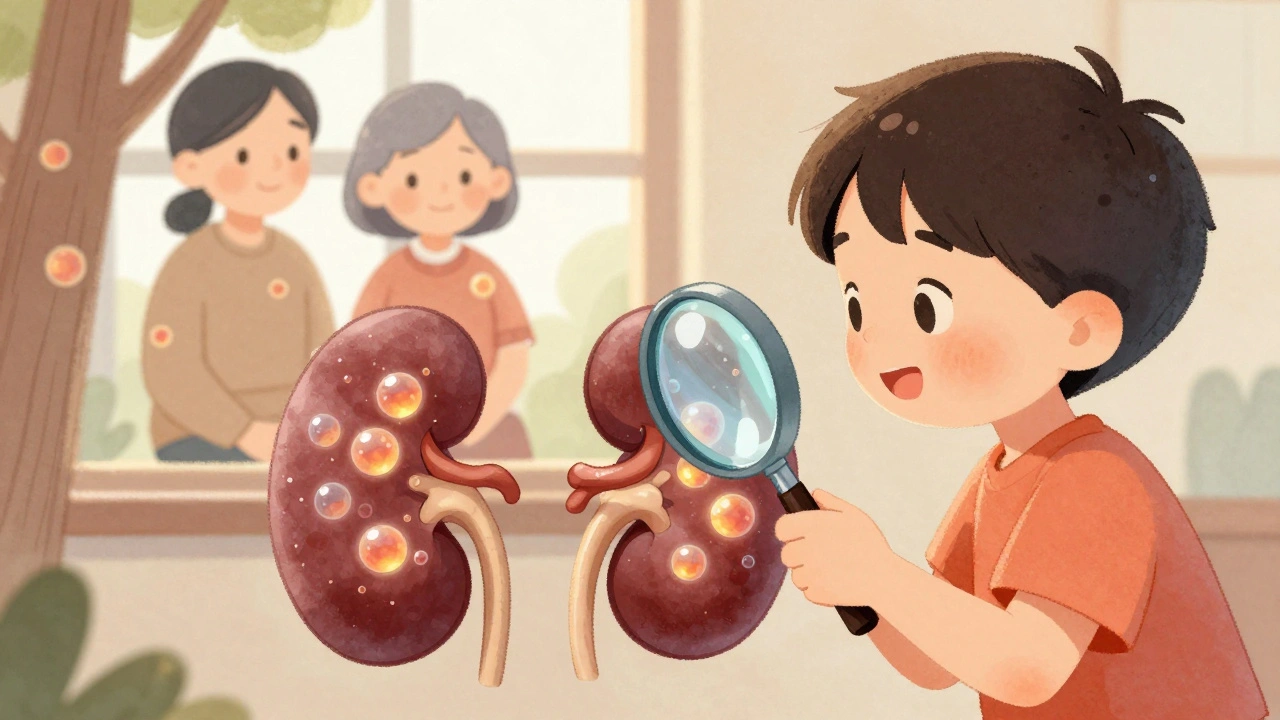
Polycystic kidney disease, or PKD, is a genetic condition where hundreds to thousands of fluid-filled cysts grow inside the kidneys. These aren’t harmless bumps-they slowly take over healthy tissue, making the kidneys enlarge and lose function over time. By age 70, about 75% of people with the most common form, ADPKD, will need dialysis or a kidney transplant. It’s not rare. In the U.S., around 600,000 people live with PKD, and globally, it affects roughly 1 in every 400 to 1,000 people. It’s the fourth leading cause of kidney failure in the country.
The Two Main Types: ADPKD and ARPKD
Not all PKD is the same. There are two main types, and they’re completely different in how they show up and who gets them.
Autosomal Dominant Polycystic Kidney Disease (ADPKD) is by far the most common-making up over 98% of cases. You only need to inherit one bad copy of either the PKD1 or PKD2 gene to get it. PKD1 mutations are more aggressive. People with PKD1 often reach kidney failure by their 50s or 60s. PKD2 is slower-many don’t need a transplant until their 70s. About 90% of ADPKD cases come from a parent who has it. But 10%? Those are new mutations. No family history. Just a random glitch in the DNA.
Autosomal Recessive Polycystic Kidney Disease (ARPKD) is rare-about 1 in 20,000 births. Both parents must carry a mutated PKHD1 gene, and the child must inherit two bad copies. If that happens, there’s a 25% chance the child will have ARPKD. This type often shows up right after birth. Babies can have enlarged kidneys, breathing problems, and high blood pressure. Many don’t survive past infancy. But those who do often face liver complications later in life.
How It Progresses: From Cysts to Kidney Failure
The cysts start small-maybe even undetectable in childhood. But they grow. Slowly. Steadily. Over decades. By the time someone is in their 30s or 40s, the kidneys might be double or triple their normal size. In extreme cases, they can weigh up to 30 pounds each. That’s like carrying two small dumbbells inside your abdomen.
As cysts expand, they crush the healthy kidney tissue. Blood pressure rises. Pain becomes constant. Kidney function drops. Doctors track this with something called eGFR-a number that estimates how well your kidneys are filtering waste. A normal eGFR is above 90. Once it dips below 60, you’re in stage 3 chronic kidney disease. Below 15? You’re at end-stage renal disease. Half of ADPKD patients hit that point by age 60.
What’s scary is how unpredictable it is. Two people with the same PKD1 mutation can have wildly different outcomes. One might need a transplant at 45. Another might make it to 75 without major issues. Why? Scientists still don’t fully know. It’s likely other genes, lifestyle, and even random chance play a role.
Diagnosis: When and How Do You Know?
Most people are diagnosed after family members are found to have PKD. But some don’t know until they’re in their 30s and start feeling back pain, frequent UTIs, or high blood pressure.
For ADPKD, doctors usually use an ultrasound. If you’re 30-39 with a family history and have at least 10 cysts in each kidney? That’s a diagnosis. For younger people or those without a clear family history, an MRI or CT scan gives a clearer picture. Genetic testing is also an option-especially if you’re planning a family. A full PKD1/PKD2 panel costs around $1,200 and can confirm whether you carry the mutation.
For ARPKD, diagnosis often happens before birth or right after. Prenatal ultrasounds can show enlarged kidneys. Newborns with breathing trouble and high blood pressure? That’s a red flag. Genetic testing confirms it.
Managing the Disease: What Actually Works
There’s no cure. But there are ways to slow it down-and live longer with better quality of life.
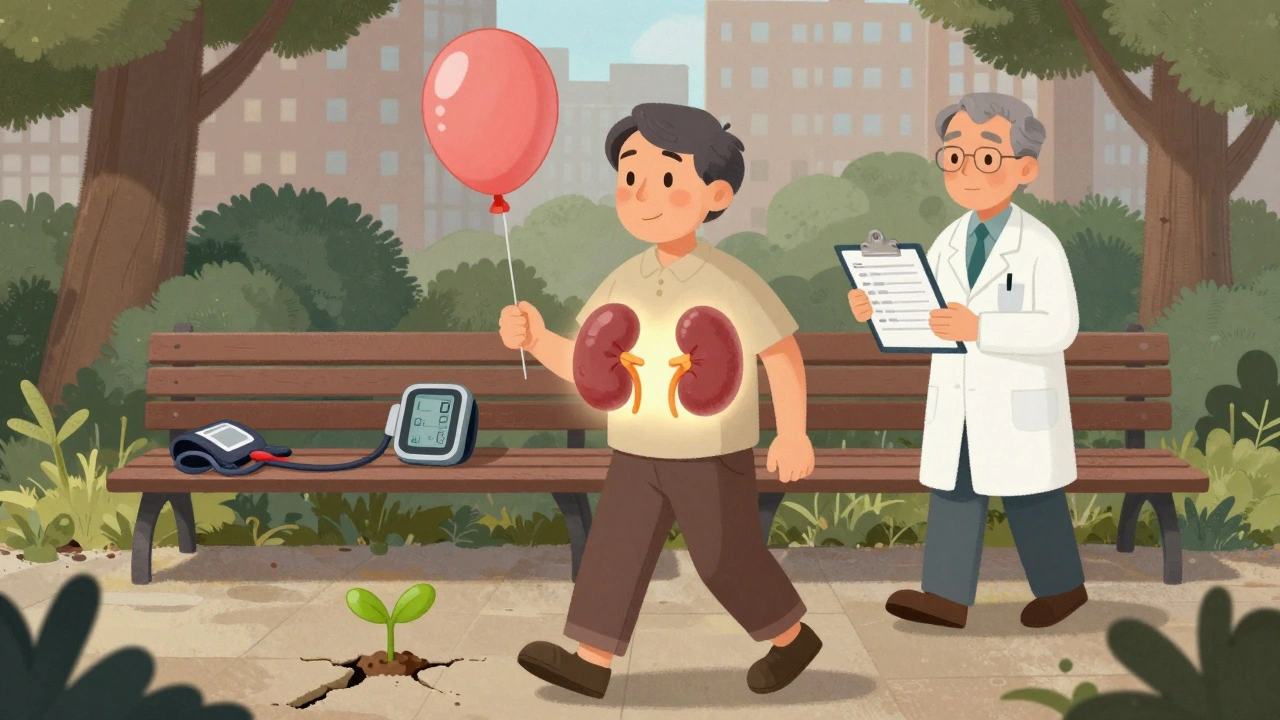
Control your blood pressure. This isn’t optional. It’s the single most important thing you can do. The target? Below 130/80 mmHg. Some doctors push for even lower-110/75-if you’re young and progressing fast. ACE inhibitors or ARBs are the go-to drugs. They don’t just lower blood pressure-they also protect kidney tissue.
Take tolvaptan (Jynarque). Approved by the FDA in 2018, this is the first drug proven to slow cyst growth in ADPKD. It works by blocking a hormone that tells kidney cells to make fluid. In clinical trials, it reduced kidney growth by about 1.3 mL/min per year. But it’s expensive-over $115,000 a year-and has side effects like extreme thirst and frequent urination. It’s only for people with rapidly progressing disease.
Monitor kidney function. Get your eGFR checked at least once a year. If it drops below 60, switch to quarterly tests. Track your urine for protein. Keep an eye on your weight and fluid intake.
Manage pain and complications. Cysts can burst, bleed, or get infected. Chronic pain affects 78% of patients, according to PKD Foundation surveys. Over-the-counter painkillers like acetaminophen are safe. Avoid NSAIDs like ibuprofen-they hurt kidneys. If pain is severe, doctors may drain cysts or use nerve blocks.
What Doesn’t Work (And Why)
Many people think diet alone can fix PKD. It can’t. Cutting salt helps with blood pressure, but you won’t shrink cysts by going keto or vegan. Avoiding caffeine? Not proven to help. Drinking tons of water? No solid evidence it slows cyst growth, though staying hydrated is still smart.
Don’t rely on supplements. There’s no magic pill. Some claim to support kidney health, but none have been tested in large PKD trials. And never stop prescribed meds without talking to your nephrologist.
Life With PKD: The Real Stories
People with PKD often feel invisible. One Reddit user wrote: “It took seven years and three doctors before someone took my family history seriously.” That’s not unusual. Many are misdiagnosed with kidney stones or back strain.
But there are wins too. One patient started blood pressure meds at 28, stayed active, and kept their eGFR at 65% at age 45. Another got a kidney transplant at 38 and now runs marathons. The emotional toll is real-63% of patients report anxiety about future kidney failure. Support groups, like those run by the PKD Foundation, help. Talking to others who get it makes a difference.
What’s Next? The Future of PKD Treatment
Research is accelerating. Tolvaptan was a breakthrough, but it’s not perfect. New drugs are in phase 3 trials. Lixivaptan, a cousin of tolvaptan, may have fewer side effects. Bardoxolone methyl showed promise in early studies, improving kidney function by nearly 5 mL/min over 48 weeks.
Gene therapy is still years away, but scientists are mapping exactly how PKD1 and PKD2 mutations break kidney cell signaling. The goal? A drug that fixes the root problem-not just slows it.
And the cost? PKD is expensive. Annual care averages $45,300 in the U.S., jumping to $95,700 the year before dialysis. But as new drugs arrive, the market is expected to hit $2.8 billion by 2028. That means more investment, more options, and hopefully, better access.
When to Consider Transplant or Dialysis
When your eGFR drops below 15-20, it’s time to talk about replacement therapy. Dialysis keeps you alive but doesn’t fix the underlying disease. A transplant is the best long-term solution. Survival rates after transplant are high-over 90% at five years.
Wait times vary. In the U.S., it’s 3-5 years on average, depending on blood type and location. Living donors are ideal. If you have a family member with PKD, they can’t donate. But if you’re the one with PKD, your relatives might still be donors-unless they carry the gene too. Genetic testing is key before any donation.
Family Planning and Genetic Counseling
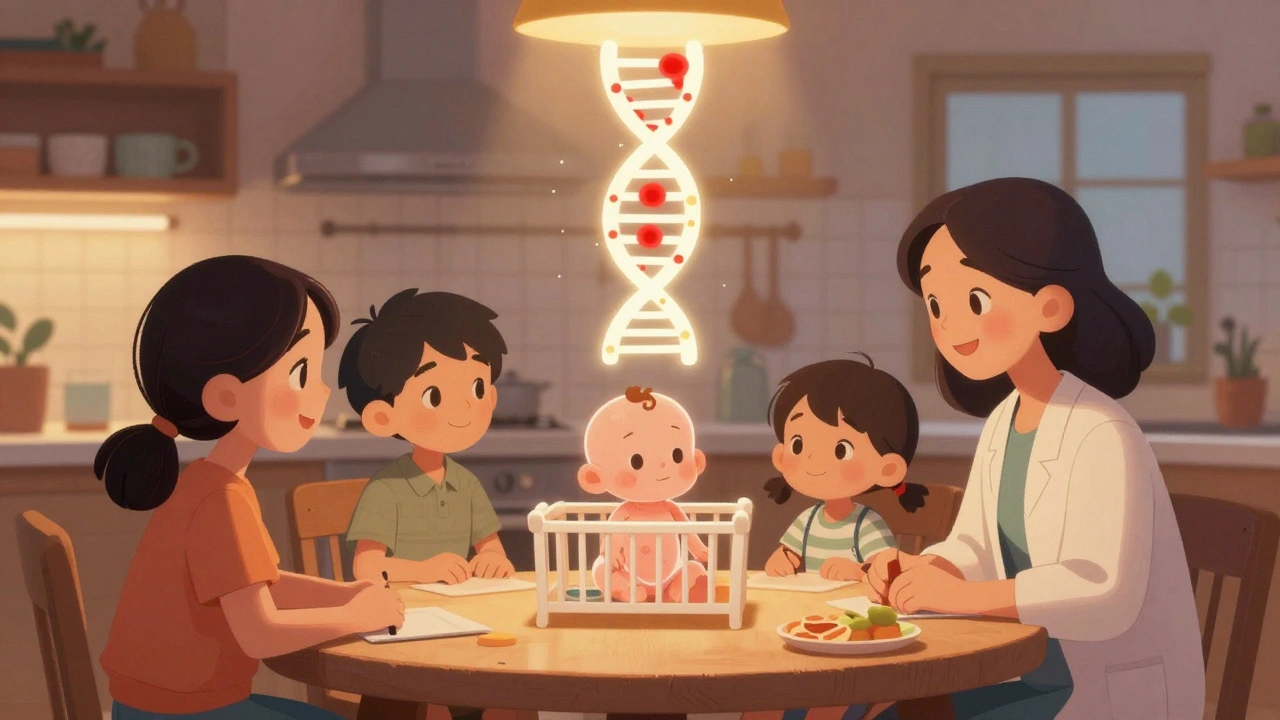
If you have ADPKD, each child has a 50% chance of inheriting it. That’s heavy. Preimplantation genetic diagnosis (PGD) lets couples screen embryos during IVF. Prenatal testing can detect ARPKD early. Genetic counselors help families understand risks, options, and emotional impact. It’s not about fear-it’s about control.
Can polycystic kidney disease be cured?
No, there is currently no cure for polycystic kidney disease. Treatments focus on slowing progression, managing symptoms like high blood pressure and pain, and delaying kidney failure. The FDA-approved drug tolvaptan can slow cyst growth in some cases, but it doesn’t reverse damage. Research into gene therapies and targeted drugs is ongoing, but no cure exists yet.
Is PKD hereditary?
Yes, PKD is almost always inherited. Autosomal dominant PKD (ADPKD) is passed down from one parent who has the mutated PKD1 or PKD2 gene-each child has a 50% chance of inheriting it. Autosomal recessive PKD (ARPKD) requires both parents to carry the PKHD1 mutation. In rare cases (about 10% of ADPKD), the mutation occurs spontaneously with no family history.
What are the early signs of PKD?
Early signs can be subtle. High blood pressure is the most common first clue. Other early symptoms include back or side pain, frequent urinary tract infections, blood in the urine, and headaches. Many people don’t notice anything until their 30s or 40s. In ARPKD, symptoms often appear at birth-enlarged kidneys, breathing difficulties, and high blood pressure.
Can you live a normal life with PKD?
Yes, many people with PKD live full, active lives-especially with early diagnosis and good management. Controlling blood pressure, avoiding smoking, staying active, and getting regular checkups can delay kidney failure by decades. Some people never need dialysis. Others live well on transplant or dialysis for years. Quality of life depends on how early you intervene and how well you manage complications.
Does diet affect PKD progression?
Diet alone won’t stop cysts from growing, but it plays a big role in managing symptoms. A low-sodium diet helps control blood pressure. Limiting processed foods and added sugars reduces inflammation and weight gain. Staying hydrated is smart, but drinking huge amounts of water won’t shrink cysts. Avoid NSAIDs like ibuprofen-they damage kidneys. There’s no special PKD diet, but a kidney-friendly, balanced approach supports overall health.
What’s the difference between ADPKD and ARPKD?
ADPKD is the common form, affecting adults. It’s caused by one mutated gene (PKD1 or PKD2) and usually shows symptoms between ages 30-40. ARPKD is rare, affects infants and children, and requires two mutated copies of the PKHD1 gene. Babies with ARPKD often have breathing problems and liver issues. ADPKD progresses slowly over decades; ARPKD can be life-threatening in infancy but may stabilize in childhood.
Is genetic testing worth it for PKD?
It depends. If you have a family history and are considering having children, testing can clarify your risk. It’s also helpful if symptoms are unclear or appear unusually early. A genetic panel costs around $1,200 and can identify PKD1 or PKD2 mutations. But testing positive doesn’t change treatment-it just gives you more information. Talk to a genetic counselor first.
Can PKD affect organs other than the kidneys?
Yes. Cysts can form in the liver, pancreas, and even the brain. Liver cysts are common in ADPKD and usually harmless, but they can grow large and cause discomfort. About 10% of people develop brain aneurysms-this is why doctors screen those with a family history of ruptured aneurysms. Heart valve issues and colon diverticula are also more common in PKD patients.
What to Do Next
If you’ve been diagnosed with PKD, start with three things: see a nephrologist, get your blood pressure under control, and connect with a support group. Don’t wait for symptoms to get worse. Early action matters.
If you have a family history but haven’t been tested, talk to your doctor about screening. An ultrasound is quick, painless, and non-invasive. Knowing your status gives you power-over your health, your family planning, and your future.
PKD is not a death sentence. It’s a long road, but you’re not walking it alone. With the right care, many people live well into their 70s, 80s, and beyond.



Carolyn Woodard
December 1, 2025 AT 20:57It makes me wonder if we're approaching this too reductionistically. Maybe it's not just the gene, but the gene-in-context. The environment, stress, inflammation-these aren't just noise, they're part of the signal.
Allan maniero
December 3, 2025 AT 00:57And honestly? The fact that tolvaptan exists at all feels like a small miracle. Not perfect, not cheap, but proof that someone out there was willing to look past the ‘it’s just genetics’ excuse and actually try to fix the mechanism.
Anthony Breakspear
December 3, 2025 AT 12:15Zoe Bray
December 3, 2025 AT 23:46Furthermore, the utilization of tolvaptan, while associated with significant hepatic adverse events and cost barriers, is indicated in patients demonstrating rapid disease progression as defined by total kidney volume increase exceeding 5% per year. Genetic counseling must be offered proactively to at-risk relatives, particularly in the context of reproductive planning.
Girish Padia
December 5, 2025 AT 23:07Saket Modi
December 7, 2025 AT 22:28Chris Wallace
December 8, 2025 AT 09:27william tao
December 8, 2025 AT 13:14Sandi Allen
December 9, 2025 AT 12:11John Webber
December 10, 2025 AT 11:24