

Probiotic Timing Calculator
How to Use This Tool
Enter your antibiotic schedule below, and we'll calculate the optimal times to take probiotics to maximize benefits and minimize side effects.
When you’re on antibiotics, your gut knows it. You might feel bloated, get diarrhea, or just feel off - not because the infection is getting worse, but because the medicine is wiping out good bacteria along with the bad. That’s where probiotics come in. But here’s the catch: timing matters more than you think. Take them at the wrong time, and they might not help. Take them too soon after your antibiotic, and they could get killed before they even start working. Take them too late, and you miss the window to protect your gut.
Why Antibiotics Mess With Your Gut
Antibiotics don’t pick and choose. They hit everything: the harmful bacteria causing your infection, sure - but also the trillions of helpful microbes living in your intestines. These good bacteria help digest food, make vitamins, train your immune system, and even influence your mood. When antibiotics wipe them out, your gut microbiome goes from a bustling city to a ghost town. Some people bounce back in a few weeks. Others take months - or even years - to recover fully. Studies show that after a single course of antibiotics, microbial diversity can stay low for up to two years.What Do Probiotics Actually Do?
Probiotics are live microorganisms - usually bacteria or yeast - that, when taken in the right amount, can help restore balance. Not all probiotics are the same. Some are strains of Lactobacillus, others are Bifidobacterium, and then there’s Saccharomyces boulardii, a yeast that’s not even a bacterium. Each has different effects. The strongest evidence points to just two strains for reducing antibiotic-associated diarrhea (AAD): Lactobacillus rhamnosus GG and Saccharomyces boulardii. A 2022 Cochrane review found L. rhamnosus GG reduced diarrhea risk by 26% more than multi-strain blends. S. boulardii, often sold as Florastor, is especially good at resisting antibiotics - meaning it doesn’t get wiped out by them. That’s why it’s often recommended. These strains don’t permanently repopulate your gut. Instead, they act like temporary workers - helping out while your own bacteria recover. They produce substances that block harmful bugs, strengthen your gut lining, and reduce inflammation. That’s why people report fewer loose stools and less cramping when they take them.The Timing Debate: Take Them Together or Wait?
This is where things get messy. Some doctors say take probiotics with your antibiotic. Others say wait. Why the contradiction? A 2022 systematic review by the Microbiology Society found that taking probiotics during antibiotic treatment protects the gut microbiome. But then, in 2023, UCLA Health published findings from a study showing that probiotics actually delayed the return of native bacteria. That same year, a 2024 double-blind trial led by D. John et al. showed something else: probiotics didn’t speed up microbiome recovery - but they did reduce antibiotic resistance genes (ARGs). That’s huge. ARGs are what make superbugs. Lowering them means fewer future infections that are hard to treat. So here’s the real picture: probiotics don’t fix your gut fast. But they might make things less dangerous while it heals.What Does the Science Say About Timing?
Harvard Medical School, the Cleveland Clinic, and the American Gastroenterological Association all agree on one thing: space them out. Take your probiotic at least 2 to 3 hours after your antibiotic dose. Why? Because antibiotics can kill probiotics if they’re in the same place at the same time. You don’t want your good bacteria to die before they even get started. Most people take antibiotics twice or three times a day. So if you take your antibiotic at 8 a.m. and 8 p.m., take your probiotic at 11 a.m. and 11 p.m. Some people prefer taking it at bedtime - right before sleep - to give it the longest window without interference. A Drugs.com poll of 1,875 users found 42% took probiotics 2 hours after antibiotics, 38% took them 2 hours before, and 20% chose bedtime. All three work - as long as you’re not taking them within 2 hours of the antibiotic.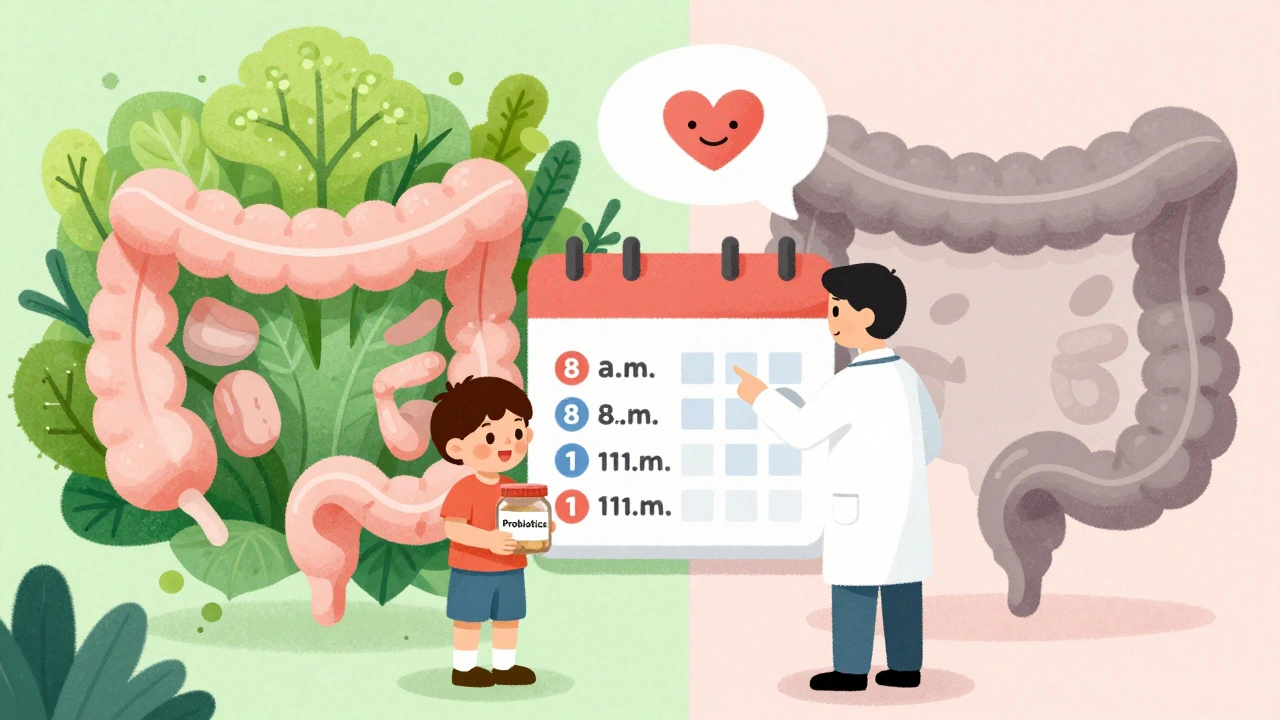
Which Strains Work Best?
Not all probiotics are created equal. Out of hundreds of commercial products, only a handful have solid proof for use with antibiotics.- Lactobacillus rhamnosus GG - Proven to cut diarrhea risk by up to 60% in multiple trials. Found in Culturelle and other refrigerated brands.
- Saccharomyces boulardii - A yeast, so antibiotics don’t touch it. Reduces diarrhea by 50-60%. Available as Florastor. Doesn’t need refrigeration.
- Lactobacillus plantarum 299v - Less common, but research from ISAPP 2023 showed it preserved gut diversity 37% better than other strains when taken 2 hours after antibiotics.
Dosage and Duration
Most studies use 5 to 40 billion CFU per day. For general use, 10-20 billion is fine. If you’re elderly, immunocompromised, or on a long or strong antibiotic (like clindamycin or vancomycin), go with 20-40 billion - but talk to your doctor first. Don’t stop when the antibiotics end. Keep taking probiotics for 1 to 2 weeks after your last dose. Some experts recommend up to 4 weeks, especially if you had severe diarrhea or took broad-spectrum antibiotics. The 2024 John study gave probiotics for 28 days after antibiotics - and saw continued drops in resistance genes.Storage Matters
Many probiotics are alive. If they die before you take them, they’re useless. Refrigerated strains like L. rhamnosus GG need to be kept cold. After 30 days at room temperature, their viability drops from 90% to 65%. Shelf-stable versions (like S. boulardii) are more forgiving, but even those lose potency over time. Check expiration dates. Buy from reputable brands. Look for third-party testing seals (like USP or NSF). If the label says “requires refrigeration,” keep it in the fridge - even if it’s in your medicine cabinet.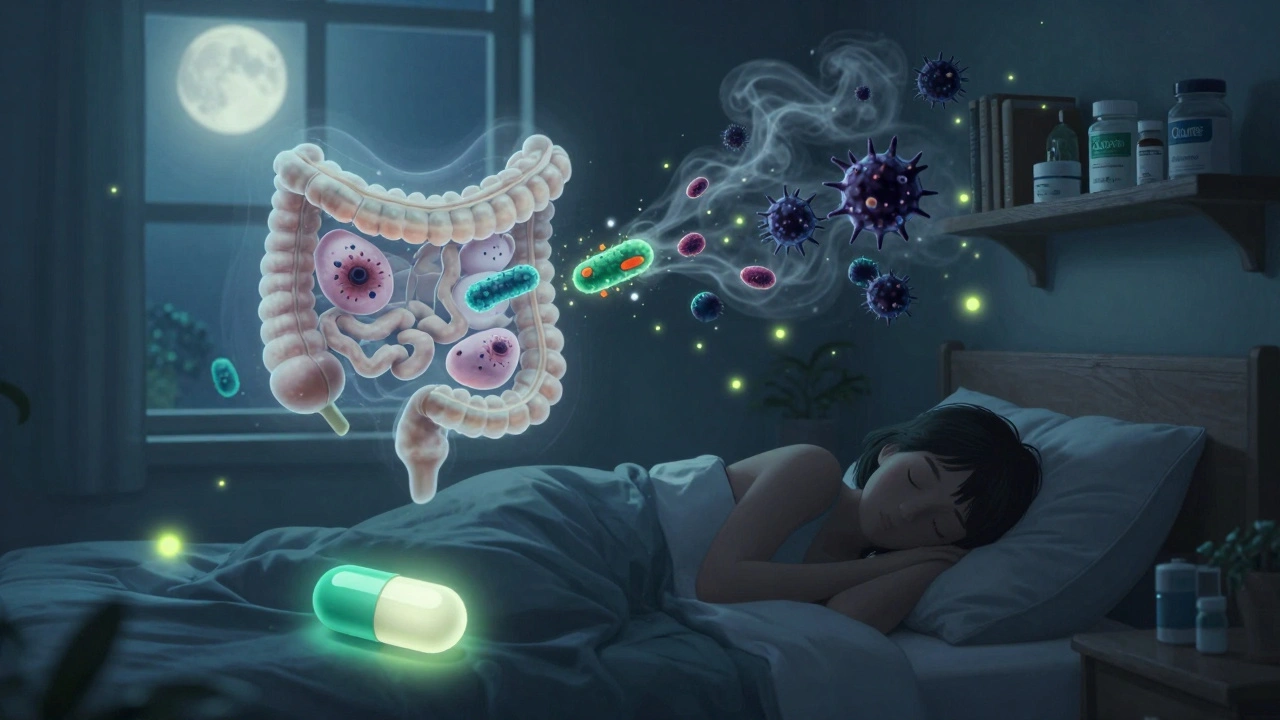
What About Side Effects From Probiotics?
Most people tolerate them fine. But about 15-20% report bloating, gas, or temporary diarrhea - especially at first. That’s not the antibiotic doing it. That’s the probiotics adjusting your gut. It usually passes in a few days. Rarely, people with weakened immune systems - those on chemotherapy, organ transplant recipients, or people with central lines - can get serious infections from probiotics. That’s why doctors advise caution in these groups. Always talk to your provider before starting if you’re immunocompromised.Real People, Real Results
On Reddit’s r/Probiotics, users shared stories like: “Took Saccharomyces boulardii during my 14-day amoxicillin course - zero diarrhea. My friend didn’t take any and was stuck to the toilet.” Another said: “I took a multi-strain probiotic every day with my antibiotic. Got worse bloating. Switched to just L. rhamnosus GG - symptoms vanished.” Healthline’s survey of 2,300 people found 54% who took probiotics reported fewer GI side effects than 31% who didn’t. But 17% said the probiotic itself made them gassy. That’s the trade-off: small discomfort now to avoid worse problems later.Should You Take Probiotics With Antibiotics?
The answer isn’t yes or no. It’s: which strain, when, and for how long? If you’ve had antibiotic-associated diarrhea before, or you’re on a long course, or you’re older - yes, take a proven strain, spaced 2-3 hours after your antibiotic, and keep going for at least a week after. If you’ve never had side effects, or you’re young and healthy, you might be fine without. But if you want to reduce the risk of future antibiotic resistance - and there’s growing evidence you should - then taking a good probiotic is one of the few simple things you can do.What’s Next?
Science is still catching up. The International Scientific Association for Probiotics and Prebiotics just launched a $4.2 million project to standardize how we study these products. In 2025, a new Nature study found probiotics improved mood after two weeks - likely because gut health affects brain function. For now, here’s what you can do: pick L. rhamnosus GG or S. boulardii. Take it 2-3 hours after your antibiotic. Keep going for 1-2 weeks after the course ends. Store it right. And if you feel worse, stop and ask your doctor. It’s not magic. But it’s one of the few things we know that actually helps your gut survive antibiotics - without making things worse.Can I take probiotics at the same time as antibiotics?
No - taking them together can kill the probiotics before they have a chance to work. Antibiotics don’t distinguish between harmful and helpful bacteria. Wait at least 2 to 3 hours after your antibiotic dose to take your probiotic. This gives the antibiotic time to clear your system before the probiotic enters.
Which probiotic strains are best for reducing antibiotic diarrhea?
The two strains with the strongest evidence are Lactobacillus rhamnosus GG and Saccharomyces boulardii. L. rhamnosus GG reduces diarrhea risk by up to 60% in clinical trials. S. boulardii is a yeast, so antibiotics don’t affect it - making it ideal for use during treatment. Other strains often lack solid proof.
How long should I take probiotics after finishing antibiotics?
Continue for at least 1 to 2 weeks after your last antibiotic dose. Some experts recommend up to 4 weeks, especially if you were on a strong or long course (like vancomycin or clindamycin). The goal is to support your gut while your native bacteria slowly return. Stopping too soon may undo the benefits.
Do probiotics really help prevent antibiotic resistance?
Yes - a 2024 study published in Frontiers in Microbiomes showed that people taking probiotics during antibiotics had a significant drop in antibiotic resistance genes (ARGs). These genes are what make bacteria harder to treat. The placebo group’s ARG levels returned to baseline, but the probiotic group kept declining. This suggests probiotics may help reduce the spread of superbugs.
Are refrigerated probiotics better than shelf-stable ones?
For strains like Lactobacillus rhamnosus GG, yes - refrigeration keeps them alive longer. After 30 days at room temperature, viability drops from 90% to 65%. Shelf-stable options like Saccharomyces boulardii don’t need refrigeration and are more reliable in warm climates. Always check the label and storage instructions.
Can probiotics cause side effects?
Yes - about 15-20% of people report bloating, gas, or mild diarrhea when they start. This usually passes in a few days as your gut adjusts. Rarely, people with weakened immune systems can develop serious infections. If you’re on chemotherapy, have a central line, or are immunocompromised, talk to your doctor before starting.
Is it safe for children to take probiotics with antibiotics?
Yes - for children who have had antibiotic-associated diarrhea or are on long courses, L. rhamnosus GG and S. boulardii are considered safe and effective. Doses are lower (usually 5-10 billion CFU). Always choose a product formulated for kids and check with your pediatrician.
Do I need to take probiotics if I’ve never had side effects from antibiotics?
Not necessarily - if you’ve never had diarrhea or bloating after antibiotics, you might not need them. But if you want to reduce the risk of future antibiotic resistance or protect your gut long-term, taking a proven strain is still a smart move. It’s prevention, not just symptom relief.



Nava Jothy
December 5, 2025 AT 23:29Katie O'Connell
December 6, 2025 AT 16:41Andrew Frazier
December 8, 2025 AT 12:51Geraldine Trainer-Cooper
December 9, 2025 AT 10:22Chris Park
December 10, 2025 AT 22:30Nigel ntini
December 12, 2025 AT 20:17Priya Ranjan
December 13, 2025 AT 09:07Ashish Vazirani
December 14, 2025 AT 14:05