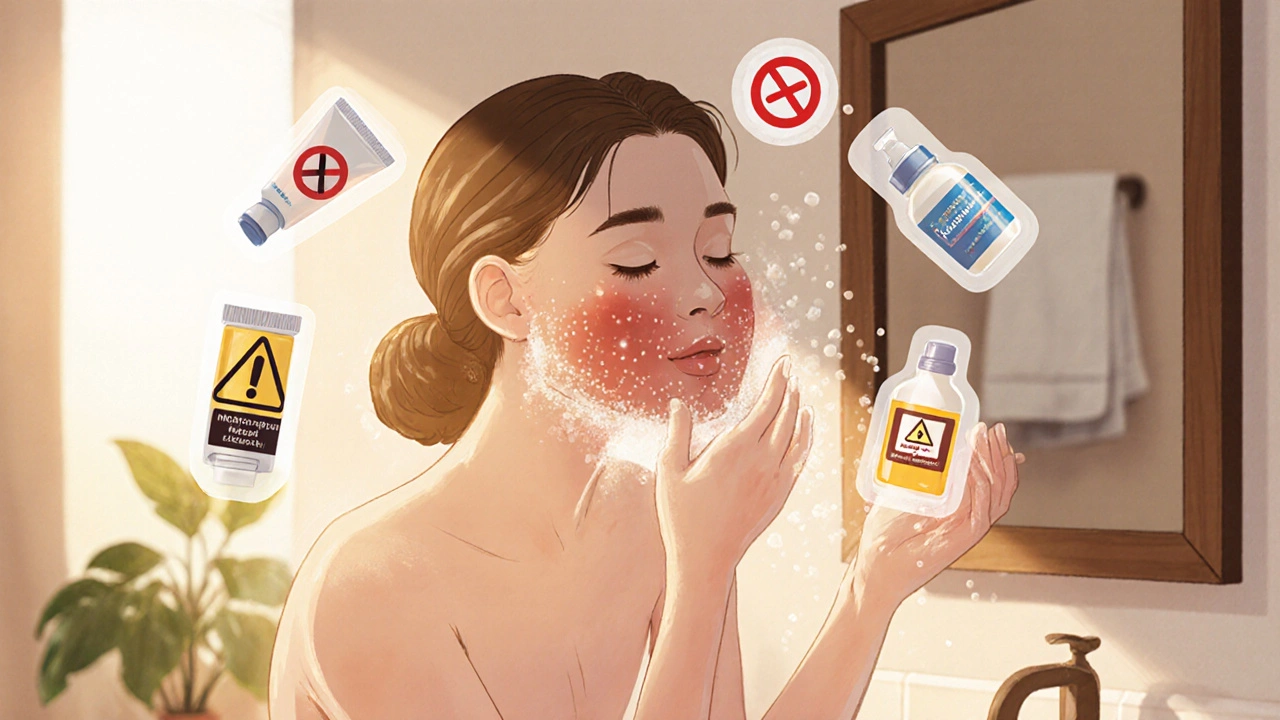
Gentle Skin Care: Safe Products, Common Mistakes, and What Actually Works
When you hear gentle skin care, a skincare approach focused on minimizing irritation while maintaining skin health. Also known as sensitive skin care, it’s not just for people with redness or reactions—it’s the foundation for healthy skin at any age. Most people think gentle means weak, but that’s not true. Gentle skin care is about working with your skin’s natural defenses, not stripping them away.
Your skin has a protective layer called the skin barrier, the outermost layer that locks in moisture and blocks irritants. When you use harsh cleansers, alcohol-based toners, or over-exfoliate, you break that barrier down. Once it’s damaged, your skin gets dry, itchy, and more reactive. That’s when you start reaching for creams, serums, and treatments that promise quick fixes—but they often make things worse. True gentle skin care doesn’t try to fix damage with more chemicals. It prevents it by choosing products that support, not stress, your skin.
Many people confuse gentle with natural or organic. But even natural ingredients like essential oils, citrus extracts, or tea tree oil can be irritating. What matters isn’t the label—it’s the formulation. Look for products with simple ingredient lists: ceramides, hyaluronic acid, glycerin, and niacinamide are all proven to help repair and maintain the skin barrier without triggering reactions. Avoid sulfates, fragrances (even "natural" ones), and high concentrations of acids unless your dermatologist says otherwise.
Even the best gentle products won’t help if your routine is too busy. Washing your face twice a day, using one moisturizer, and applying sunscreen is enough for most people. Adding ten steps doesn’t make your skin better—it just increases the chance of irritation. And don’t assume that if something stings, it’s "working." Pain isn’t progress. Redness, tightness, or burning are your skin’s way of saying, "Stop."
What gentle skin care actually looks like in real life
It looks like someone skipping their nightly scrub because their skin felt raw. It looks like choosing a fragrance-free cleanser over a trendy one with five botanical extracts. It looks like patch testing a new product on your inner arm for three days before putting it on your face. It looks like giving your skin time to heal instead of chasing the next breakout solution.
The posts below cover real situations where gentle skin care intersects with medication, supplements, and underlying health conditions. You’ll find advice on how certain drugs affect your skin, why some supplements can cause breakouts, and how to choose products that won’t clash with your prescriptions. Whether you’re dealing with rosacea, eczema, or just tired of your skin feeling like sandpaper, these guides give you clear, no-nonsense steps to rebuild your routine—without guesswork.
-
14 Nov
- Recent
- Popular