Kidney Cysts: What They Are, When to Worry, and What You Can Do
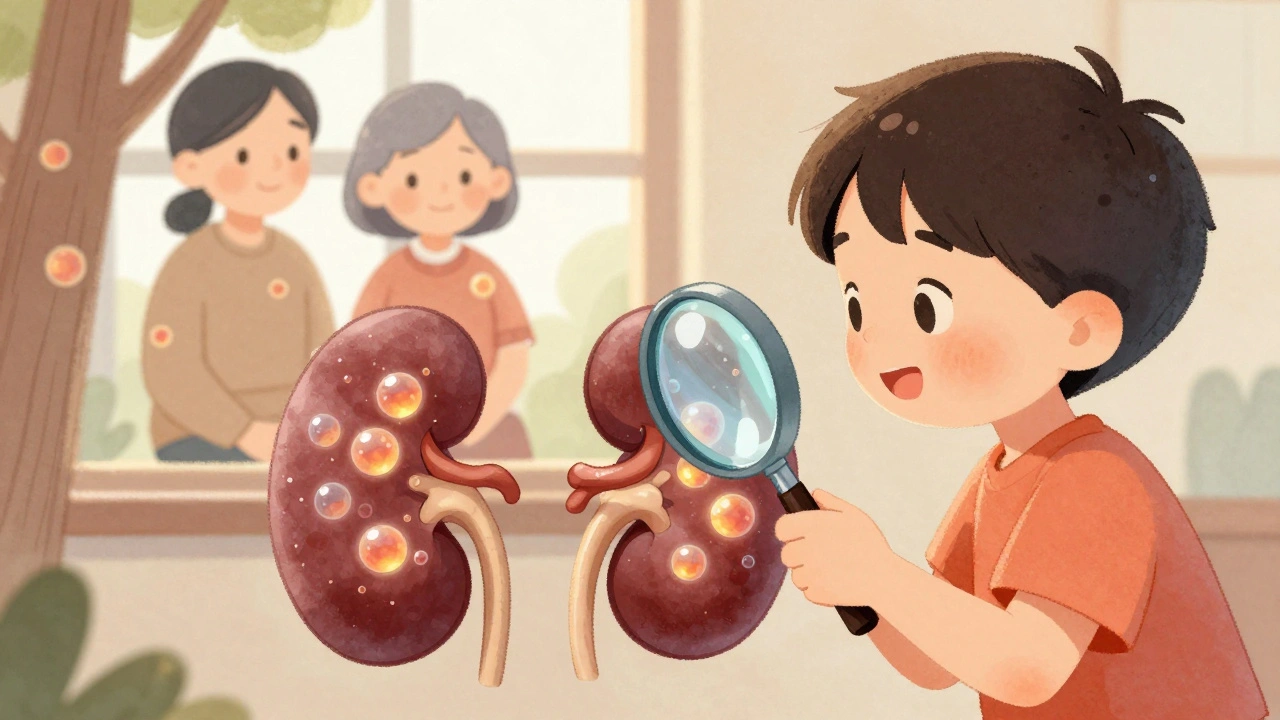
When you hear kidney cysts, fluid-filled sacs that form on or in the kidneys. Also known as renal cysts, they’re surprisingly common—especially as you get older. Most are harmless, called simple kidney cysts, non-cancerous fluid-filled sacs that don’t affect kidney function. But sometimes, they’re linked to something more serious, like polycystic kidney disease, a genetic disorder where hundreds of cysts grow and slowly destroy kidney tissue. Knowing the difference can save you from unnecessary stress—or worse, missed care.
Kidney cysts don’t usually cause symptoms unless they grow big, burst, or get infected. You might feel pain in your side or back, notice blood in your urine, or get frequent UTIs. But most people find out they have them by accident—during an ultrasound or CT scan for something else. That’s why it’s not about whether you have cysts, but what kind they are and how they’re behaving. Simple cysts rarely need treatment. Polycystic kidney disease, on the other hand, demands ongoing monitoring because it can lead to high blood pressure, kidney failure, or liver cysts. And while no pill can shrink cysts, managing blood pressure, staying hydrated, and avoiding NSAIDs can help protect your kidneys over time.
What you won’t find in a quick Google search is how often kidney cysts show up alongside other chronic conditions—like liver disease or high blood pressure. That’s why some of the most useful posts here dig into how kidney health connects to everything from medication safety to long-term disease management. You’ll see how certain drugs can strain your kidneys, how remote monitoring tools help track changes over time, and why skipping a dose of a blood pressure med might be riskier than you think. This isn’t just about cysts. It’s about understanding your whole kidney picture—and what steps actually matter.
Below, you’ll find real, practical guides from people who’ve been there—whether it’s learning how to read medication labels when your kidneys are weak, understanding when a cyst needs a follow-up scan, or figuring out how to lower your risk of complications. No fluff. Just clear info that helps you ask the right questions and take control before things get serious.
-
1 Dec