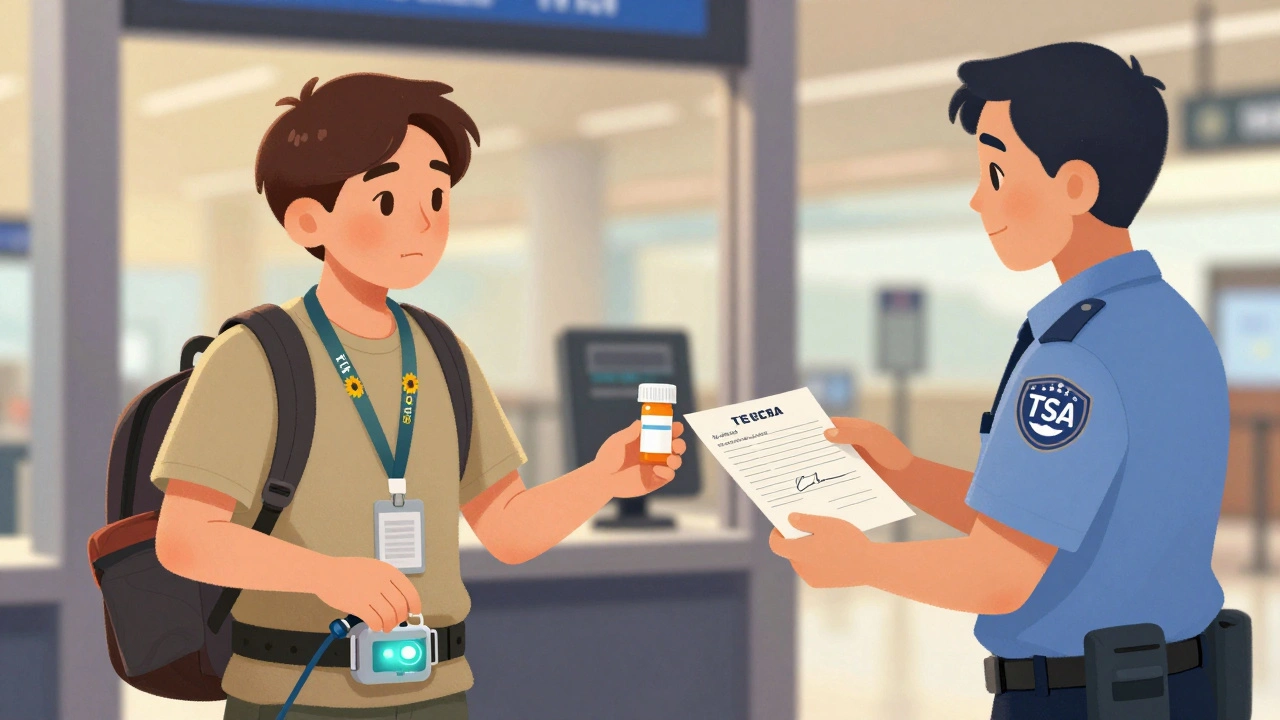
TSA Medication Rules: What You Can and Can't Bring on a Plane
When you’re flying with TSA medication rules, the official guidelines set by the Transportation Security Administration for carrying drugs through U.S. airport security. Also known as air travel drug regulations, these rules apply whether you’re taking a short trip or moving across the country. They’re not optional—skip them and you could lose your meds, face delays, or even be turned away at the gate. The good news? Most prescription and over-the-counter medicines are allowed. But how you pack them matters just as much as what’s inside the bottle.
There’s no limit on the amount of medication, any drug taken to treat, prevent, or manage a health condition, including pills, liquids, creams, and injectables you can bring in your carry-on or checked bag. That means your full 90-day supply of blood pressure pills, your insulin pens, your anxiety meds—everything goes. But if it’s a liquid, gel, or aerosol (like nasal spray or liquid cough medicine), it must follow the TSA 3-1-1 liquid rule, the standard limit allowing 3.4 ounces (100 ml) per container, all fitting in one clear quart-sized bag. Medications are an exception: you can bring more than 3.4 ounces, but you must declare them to the officer at the checkpoint. No need to put them in the zip-top bag—just pull them out separately. Same goes for syringes, EpiPens, or glucose gels. You don’t need a doctor’s note, but having one handy won’t hurt if you’re questioned.
What about pills in unlabeled containers? Yes, you can bring them. The TSA doesn’t require prescriptions to be in original bottles. But if you’re flying internationally, some countries have strict rules about unmarked meds. That’s why keeping your pills in their original packaging with the pharmacy label is still the smart move. It avoids confusion, speeds up screening, and protects you if you need medical help abroad. And if you’re carrying controlled substances like opioids or stimulants, make sure they’re clearly labeled. You’re not breaking the law, but TSA agents might flag them if they look suspicious.
Don’t forget about creams and patches. Topical ointments, hydrocortisone cream, or fentanyl patches are all allowed. Just like liquids, if they’re over 3.4 ounces, declare them. Patches? No special handling needed. Stick them on your skin and walk through. Same with inhalers—they’re exempt from the liquid rule and don’t need to be removed from your bag. Just don’t try to bring a full oxygen tank or a nebulizer machine without checking airline policies first. Those are treated like medical equipment, not medication.
Traveling with kids? Pediatric syrups, liquid antibiotics, or baby formula? All fine. You can bring more than 3.4 ounces of formula, breast milk, or juice for infants. Again, declare it. Security might swab it for testing, but they won’t toss it. Same goes for dietary supplements like vitamins or melatonin. No restrictions. Just don’t confuse them with illegal substances—TSA agents aren’t pharmacists, but they know the difference between a multivitamin and a controlled drug.
Here’s the bottom line: TSA medication rules are designed to keep you safe, not to hassle you. If you’re prepared, you’ll breeze through security. Pack your meds in your carry-on. Keep them accessible. Declare anything unusual. And if you’re ever unsure, ask a TSA officer before you reach the checkpoint—they’re trained to help. Below, you’ll find real-world guides on how to handle everything from insulin pens to opioid prescriptions when flying, plus what to do if your meds get confiscated. No fluff. Just what works.
-
1 Dec
- Recent
- Popular