
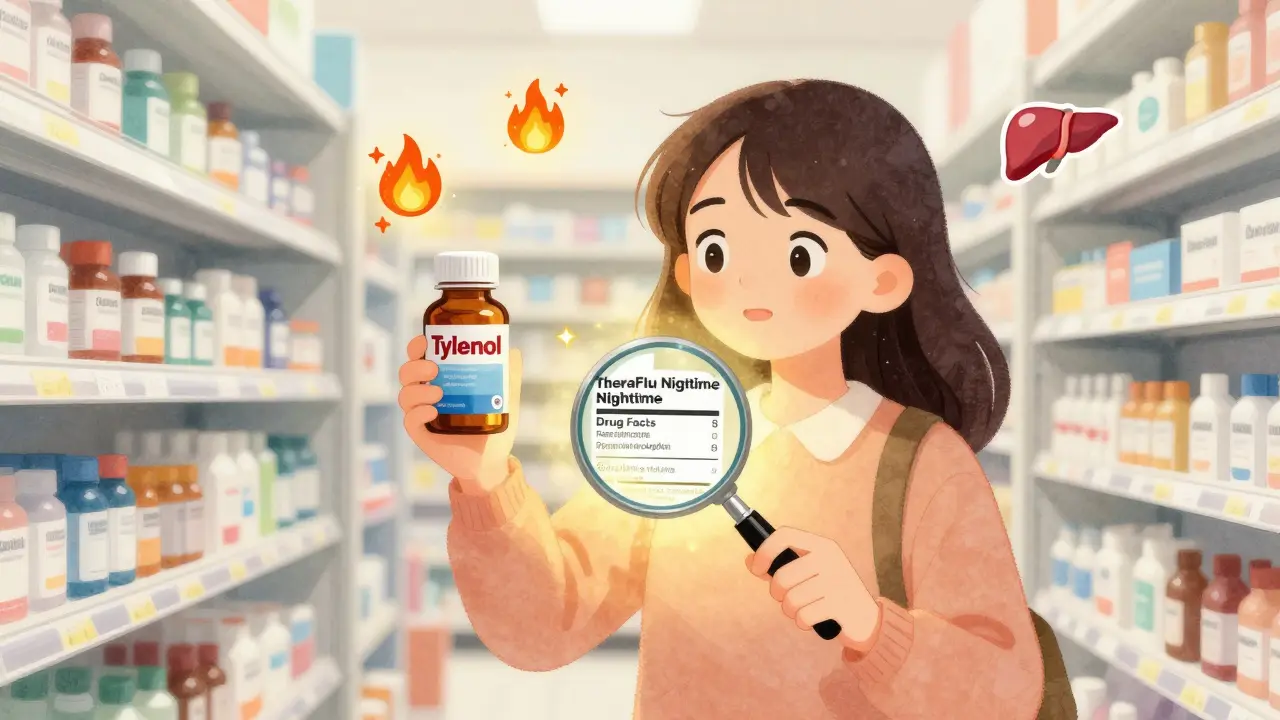
Every time you pick up a bottle of pain reliever, cold medicine, or allergy pill from the shelf, you’re holding a product designed to help you feel better. But do you know what’s actually making it work? The answer lies in the active ingredients - the specific chemicals that produce the effect you’re looking for. Most shoppers don’t check these labels closely, and that’s where things go wrong.
What Exactly Is an Active Ingredient?
An active ingredient is the part of the medicine that does the job. It’s not the flavor, color, or filler. It’s the chemical compound that reduces fever, blocks allergies, or eases pain. The U.S. Food and Drug Administration (FDA) requires every over-the-counter (OTC) drug to list its active ingredients clearly on the Drug Facts label. This label isn’t optional - it’s the law. And it’s the only place you’ll find the real truth about what’s inside the bottle.For example, if you see "acetaminophen 325 mg" on the label, that means each tablet or teaspoon contains exactly 325 milligrams of acetaminophen - the pain reliever and fever reducer found in Tylenol, Excedrin, and dozens of other brands. It doesn’t matter what the box says: "Cold & Flu Relief" or "Nighttime Sleep Aid." If acetaminophen is listed, that’s what’s working inside your body.
The Drug Facts Label: Your Secret Weapon
The Drug Facts label has seven sections. Only one matters most when you’re trying to avoid mistakes: Active Ingredient(s). That’s the first thing you should read - every single time.Here’s how it works:
- It lists each active ingredient by its generic name (not brand names like "Tylenol" or "Advil").
- It gives the exact amount per dose - like "ibuprofen 200 mg" or "diphenhydramine HCl 25 mg".
- If there are multiple ingredients, they’re listed in order of how much is in the product - the most abundant first.
Take a multi-symptom cold medicine. You might see: "acetaminophen 325 mg, dextromethorphan hydrobromide 15 mg, phenylephrine hydrochloride 5 mg." That means one pill contains three different active ingredients: one for pain/fever, one for cough, and one for nasal congestion. If you’re already taking Tylenol for a headache, you’re doubling up on acetaminophen - and that’s dangerous.
Why You’re More Likely to Overdose Than You Think
The biggest risk with OTC drugs isn’t that they’re weak - it’s that they’re hidden. About 70% of OTC medication errors happen because people don’t realize they’re taking the same active ingredient twice.Here’s a real scenario: You take Tylenol for a headache. Later, you grab a bottle of TheraFlu Nighttime because you feel a cold coming on. You don’t read the label. But TheraFlu Nighttime also contains 650 mg of acetaminophen per dose. You just took 975 mg in one evening. That’s over half the daily limit for adults. One more dose the next day, and you could be heading to the ER with liver damage.
A 2022 Reddit thread with over 2,800 upvotes featured stories of people who ended up in the hospital after combining cold meds with painkillers. One user wrote: "I took two Tylenol and then a NyQuil. I didn’t know both had acetaminophen. My liver enzymes were through the roof."
And it’s not just acetaminophen. Ibuprofen, diphenhydramine, and pseudoephedrine are just as common in multiple products. The American Pharmacists Association found that 42% of consumers think different brand names mean different ingredients. They don’t. Tylenol, Up&Up, and Equate all contain acetaminophen. Advil, Motrin, and store brands all contain ibuprofen.
What You Need to Know About the Top 5 Active Ingredients
You don’t need to memorize 800 ingredients. Just know these five - they make up over half of all OTC sales.- Acetaminophen - Pain and fever relief. Found in Tylenol, NyQuil, Sudafed PE, and many cold/flu combos. Maximum daily dose: 4,000 mg for adults. One tablet can be 325 mg, 500 mg, or 650 mg. Never mix with alcohol.
- Ibuprofen - Pain, fever, inflammation. Found in Advil, Motrin, and store brands. Maximum daily dose: 1,200 mg for OTC. Prescription versions go up to 800 mg per pill.
- Diphenhydramine - Allergy relief and sleep aid. Found in Benadryl, Tylenol PM, and Unisom. Dose: 25 mg for adults, 12.5 mg for kids. Causes drowsiness - don’t drive after taking it.
- Pseudoephedrine - Nasal decongestant. Found in Sudafed. Requires ID to buy. Can raise blood pressure. Avoid if you have heart issues.
- Dextromethorphan - Cough suppressant. Found in Robitussin, Delsym, and many cough syrups. Misuse can cause hallucinations. Stick to the dose.
These five are responsible for most OTC-related ER visits. If you’re taking more than one product, check for these names. Write them down. Cross-check them. It takes 30 seconds - and could save your life.
How to Read Labels Like a Pro
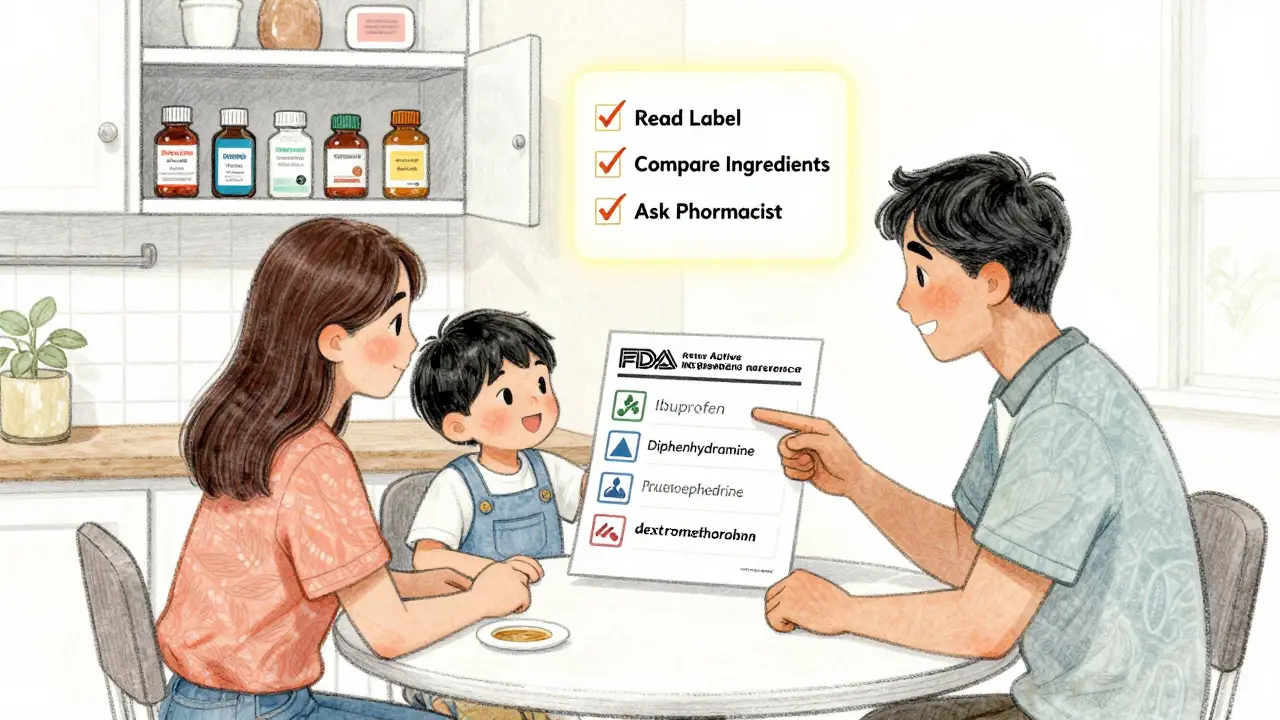
Here’s a simple four-step method the FDA recommends:- Find the Active Ingredient section. It’s always at the top of the Drug Facts label.
- Match the ingredient to your need. Need pain relief? Look for acetaminophen or ibuprofen. Allergies? Look for cetirizine or loratadine.
- Check the dose. Is it 200 mg? 325 mg? 50 mg? Don’t guess.
- Compare with other meds. Are you already taking something with the same ingredient? If yes, skip this one.
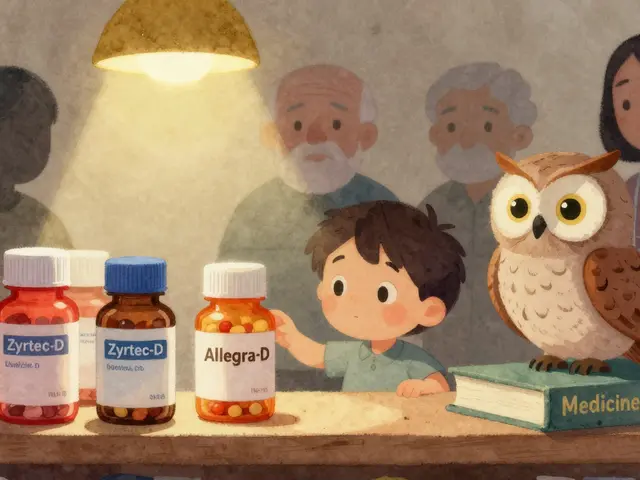
Parents should use this method every time they give a child medicine. Children’s Motrin and Children’s Zyrtec look similar - both are liquids, both come in colorful bottles. But one has ibuprofen, the other has cetirizine. Giving the wrong one won’t help - and could cause harm.
What’s Changing in 2025
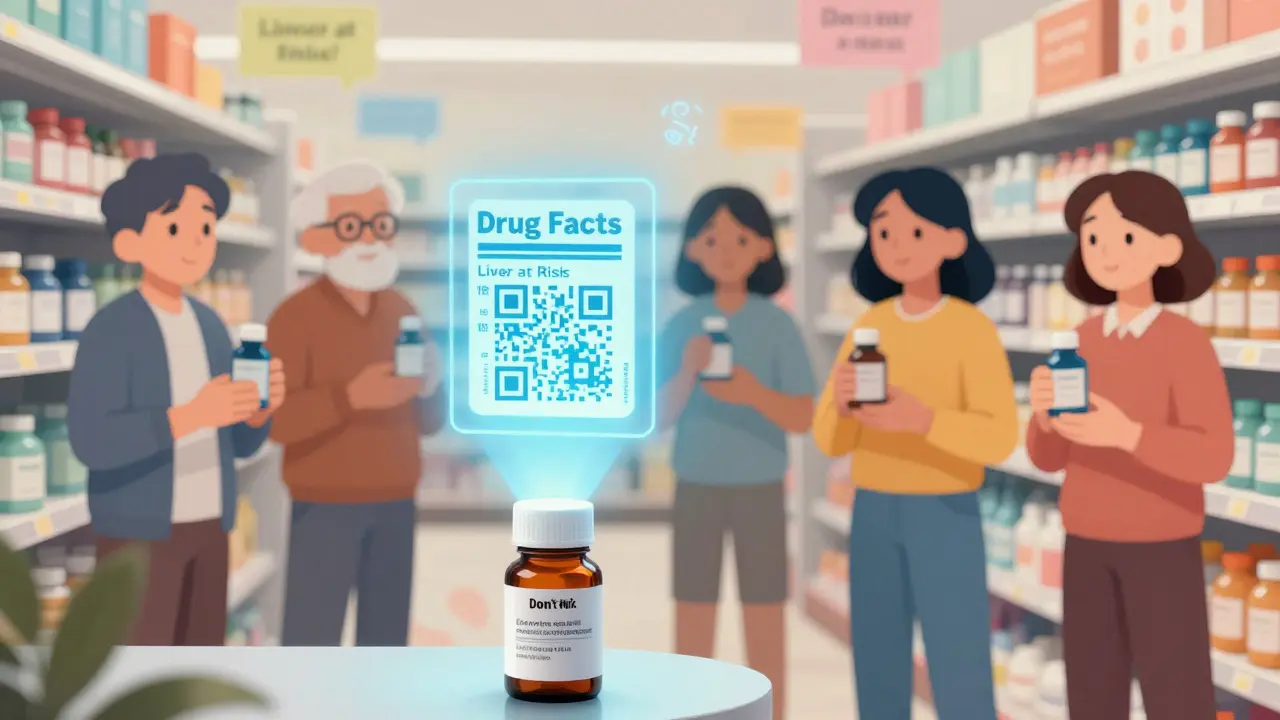
The FDA is pushing for better labeling. By 2026, all OTC drugs will need a QR code on the package that links to a digital Drug Facts label. This isn’t just a gimmick - it’s designed to help people with low health literacy or vision issues. Scan the code, and you’ll see the full ingredient list, warnings, and even allergen info.Also, the CARES Act of 2020 forced the FDA to turn its old OTC monograph system into enforceable rules. That means more oversight. If a product doesn’t follow the approved ingredient limits, it can be pulled from shelves.
Meanwhile, the Consumer Healthcare Products Association launched a nationwide campaign called "Know Your Active Ingredients" in early 2023. Retailers in participating chains saw a 19% drop in acetaminophen-related ER visits. That’s real impact.
What to Do Next
Before you buy your next OTC medicine:- Write down all the medications you’re currently taking - including vitamins and supplements.
- Keep a printed copy of the FDA’s Active Ingredient Reference Chart (available on their website).
- When in doubt, ask a pharmacist. They’re trained to spot overlaps and warn you before you take a risk.
- Never assume "natural" or "herbal" means safe. Many herbal products contain hidden active ingredients that interact with prescription drugs.
OTC drugs are powerful. They’re not harmless candy. They’re medicine - and like all medicine, they need respect. The label isn’t there to confuse you. It’s there to protect you.
Can I trust store brands to have the same active ingredients as name brands?
Yes. Store brands like Equate, Up&Up, or GoodSense must contain the same active ingredients in the same amounts as name brands like Tylenol or Advil. The FDA requires this. The only differences are in inactive ingredients (like colors or flavors) and price. Always check the Drug Facts label - not the brand name.
Why do some OTC drugs have lower doses than prescription versions?
OTC drugs are meant for short-term, mild symptoms. Higher doses increase the risk of side effects and overdose. For example, OTC ibuprofen is capped at 200 mg per pill because that’s considered safe for most people without medical supervision. Prescription versions can go up to 800 mg because doctors monitor patients and adjust doses based on their health history.
Are there active ingredients I should avoid if I have high blood pressure?
Yes. Pseudoephedrine and phenylephrine are common decongestants in cold medicines that can raise blood pressure. Avoid them if you have hypertension. Look for products labeled "for high blood pressure" or check the active ingredients list for these two names. Instead, try saline sprays or humidifiers.
Can I give my child an adult OTC medicine if I cut the dose in half?
No. Children’s medicines are specially formulated for weight-based dosing and safety. Adult pills may contain inactive ingredients that aren’t safe for kids. Always use a product labeled for children and follow the dosing instructions on the label. If you’re unsure, talk to your pediatrician.
What should I do if I accidentally take too much of an OTC drug?
Call Poison Control at 1-800-222-1222 immediately. Don’t wait for symptoms. For acetaminophen overdose, liver damage can start within hours - and may not show symptoms until it’s too late. Have the medicine bottle handy when you call so you can give them the exact active ingredient and amount taken.
Nishant Desae
December 17, 2025 AT 02:01i just realized i’ve been taking nyquil and tylenol together for months because i thought they were different… like one was for sleep and the other was just for pain. dumb. my liver is probably screaming. i’m gonna start writing down every pill i take now. thanks for this post, seriously. also, why do they put so many ingredients in one pill? it’s like a chemistry experiment with a side of confusion.
Jody Patrick
December 18, 2025 AT 02:11Stop coddling Americans. Read the label. It’s not rocket science. If you can’t do that, maybe don’t take medicine.
Philippa Skiadopoulou
December 18, 2025 AT 10:08The Drug Facts label is a triumph of regulatory clarity. Its standardized format ensures consumer safety across brands and demographics. Misuse stems not from complexity but from disregard. A simple habit-reading before ingestion-prevents most adverse events. Pharmacists report a marked decline in errors when patients are educated on label literacy.
Jonathan Morris
December 18, 2025 AT 22:48Did you know the FDA’s OTC monograph system was rewritten under the CARES Act because Big Pharma lobbied to keep dangerous combinations legal? The QR codes? They’re not for you. They’re for regulators to track what you’re taking. Every pill you buy is logged. This isn’t safety-it’s surveillance dressed as help. Wake up.
Anna Giakoumakatou
December 19, 2025 AT 20:11Oh wow. So we’re supposed to treat OTC drugs like they’re not just… candy? I’m shocked. Shocked, I tell you. Who knew that swallowing a pill with a label on it required… reading? My entire worldview has been shattered. Next you’ll tell me I should check the expiration date. Or that water isn’t a drug. The horror.
Martin Spedding
December 21, 2025 AT 00:12they put phenylephrine in everything now because pseudoephedrine got restricted. but guess what? phenylephrine doesnt work. its just sugar water with a fancy name. you’re paying for nothing. and they still charge name brand prices. this is a scam. 🤬
Donna Packard
December 21, 2025 AT 23:19I used to ignore labels too. Then I had a friend who ended up in the hospital. Now I always check. It takes 10 seconds. You’re worth it. 💛
Patrick A. Ck. Trip
December 23, 2025 AT 10:56It is my sincere belief that the dissemination of accurate pharmaceutical knowledge represents a fundamental civic responsibility. While the average individual may not possess formal medical training, the capacity to interpret standardized labeling is both a skill and a moral imperative. I commend the FDA for its diligence and urge all citizens to engage with this information with the gravity it deserves.
Sam Clark
December 25, 2025 AT 02:08This is exactly the kind of clear, evidence-based guidance people need. I’ve worked in community health for 15 years, and the number of preventable ER visits from OTC misuse is staggering. I give this post to every new patient. Thank you for making this accessible.
Chris Van Horn
December 26, 2025 AT 19:06Let’s be real-this whole system is designed to keep you dependent. The FDA doesn’t care if you live or die. They care about liability. The QR codes? That’s Phase One of the National Medication Tracking System. Soon, your doctor will get alerts if you take ibuprofen after a certain time. They’re already mapping your pill habits. You’re not a patient-you’re a data point. And you’re paying for it.
Virginia Seitz
December 26, 2025 AT 22:48OMG YES 😭 I just checked my cold meds and had 2 acetaminophen in one night… saved by this post. 🙏💊 #ReadTheLabel