
What Chronic Bronchitis Really Feels Like
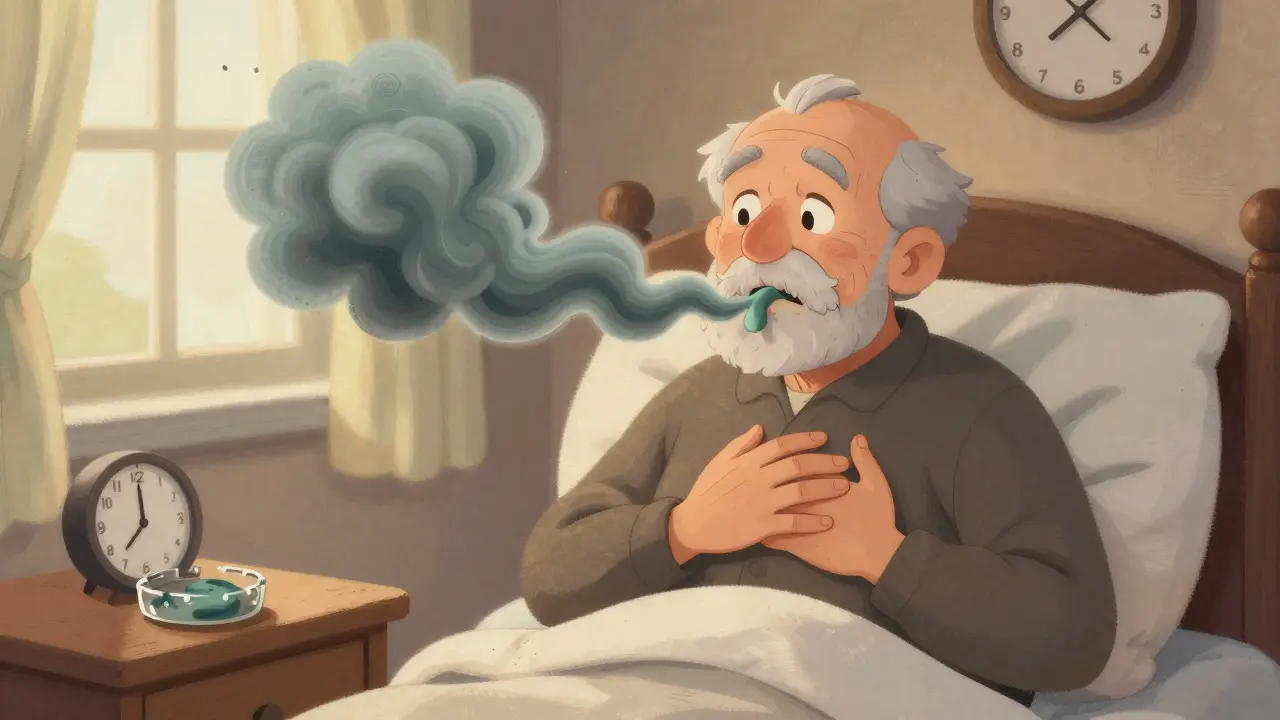
You wake up every morning with a cough that won’t quit. It’s not just a tickle-it’s deep, wet, and exhausting. By midday, you’ve cleared your throat so many times your jaw aches. You’re coughing up thick mucus, sometimes green or gray, and it never seems to stop. Walking to the mailbox leaves you breathless. Your chest feels tight, like someone’s squeezing it with a belt. This isn’t a cold. This isn’t allergies. This is chronic bronchitis.
Medically, it’s defined as a productive cough-meaning you’re coughing up mucus-that lasts at least three months a year, for two years in a row. It’s not just annoying. It’s a sign your airways are damaged. The lining of your bronchial tubes is swollen, sticky, and overproducing mucus. That mucus clogs your airways, making it harder to breathe. And the worst part? It doesn’t go away on its own.
About 10 million Americans have chronic bronchitis, mostly because they smoked-or still do. But even if you’ve never touched a cigarette, long-term exposure to fumes, dust, or secondhand smoke can trigger it. The damage builds slowly. Most people don’t notice until they’re in their 40s or 50s. By then, the lungs have already changed.
Why Smoking Is the Main Culprit-And Why Quitting Is the Only Real Cure
Let’s be clear: smoking isn’t just a risk factor for chronic bronchitis. It’s the reason most people have it. More than 90% of patients have a history of smoking. Even if you quit 20 years ago, your lungs still carry the scars. But here’s the truth that no one tells you: quitting smoking doesn’t just help-it’s the single most powerful thing you can do.
Studies show that people who stop smoking slow the decline of their lung function by 60% compared to those who keep smoking. That’s not a small difference. That’s the difference between needing oxygen at night and being able to walk around the block. It’s the difference between hospital visits every few months and staying out of the ER entirely.
And it’s not just about stopping cigarettes. Every puff you take-even a single one-triggers inflammation. Your body tries to clean up the mess, but the damage keeps piling up. Quitting doesn’t reverse the damage overnight. But it stops the bleeding. Your lungs start healing. The cilia (tiny hair-like structures that clear mucus) begin to regrow. Within weeks, your cough may get worse before it gets better-that’s your lungs trying to clear out years of buildup. But after six months, most people notice they’re breathing easier. After a year, their risk of infection drops sharply.
Yet only 22% of people with chronic bronchitis quit without help. The rest try alone and fail. That’s because nicotine addiction is powerful. But help exists-and it works.
How to Quit Smoking for Good (With Real Support)
If you’ve tried quitting before and it didn’t stick, you’re not broken. You just didn’t have the right tools. Quitting smoking with chronic bronchitis isn’t about willpower. It’s about strategy.
Here’s what actually works, based on real data:
- Use medication. Varenicline (Chantix) and bupropion (Zyban) double your chances of success. They reduce cravings and block nicotine’s effects on the brain.
- Combine it with nicotine replacement. Patches, gum, or lozenges help manage withdrawal. Don’t be afraid to use more than one-combining a patch with gum is more effective than either alone.
- Get counseling. Talking to someone who understands addiction makes a huge difference. Phone lines, apps, and group sessions are free through Medicare and many insurers. One study found that people who got counseling were 68% more likely to quit than those who didn’t.
- Join a program that pairs quitting with pulmonary rehab. When you combine smoking cessation with breathing exercises and physical training, quit rates jump to 52% after 12 months. That’s more than double the success of quitting alone.
Don’t wait for the perfect moment. The best time to quit is now. Even if you’ve smoked for 40 years, quitting at 65 still adds years to your life. The lungs don’t need to be perfect to improve. They just need to stop being punished.
The Other Symptoms You Can’t Ignore
Chronic bronchitis isn’t just a cough. It’s a whole-body problem.
Most people feel fatigued all the time-73% of patients report it. Why? Because your body is working overtime just to get air. Every breath takes effort. Your heart and muscles are strained. You’re not lazy. You’re breathing against resistance.
Shortness of breath hits hardest during activity. Climbing stairs, carrying groceries, even walking to the bathroom can leave you gasping. That’s not normal aging. That’s your lungs failing to keep up.
Chest tightness? That’s inflammation tightening your airways. Wheezing? That’s air trying to squeeze through narrowed tubes. These aren’t side effects-they’re signs your disease is progressing.
And then there’s infection. People with chronic bronchitis are over three times more likely to get pneumonia or bronchitis from viruses or bacteria. That’s because mucus traps germs, and your lungs can’t clear them out. Each infection makes things worse. That’s why vaccines matter so much.
Medications, Therapies, and What Actually Works
There’s no magic pill for chronic bronchitis. But there are tools that help you live better.
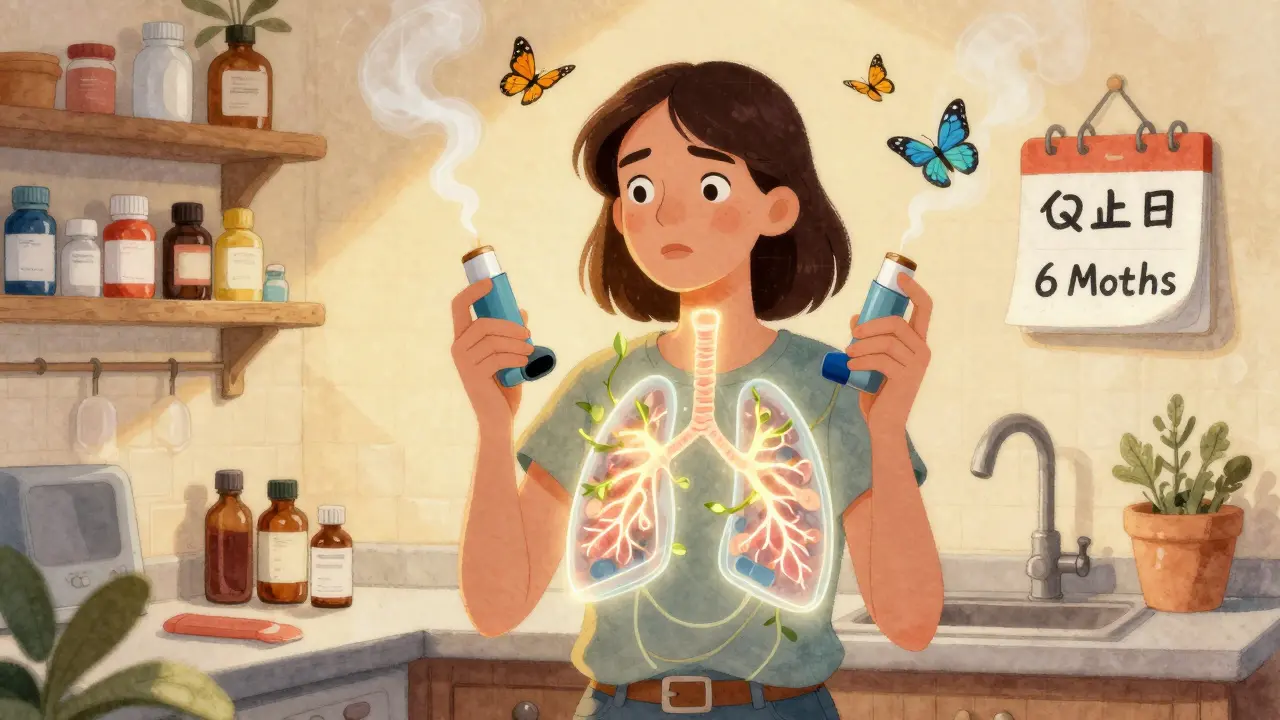
Bronchodilators (inhalers like albuterol or tiotropium) open your airways. They work fast-within 15 minutes-and can give you hours of relief. You don’t need to take them all the time, but if you’re struggling to breathe, they’re essential.
Inhaled steroids reduce inflammation. But they come with risks: higher chances of bone loss, high blood pressure, and diabetes if used long-term. Doctors usually only prescribe them if you’re having frequent flare-ups.
Mucolytics like N-acetylcysteine thin mucus so you can cough it up easier. The Global Initiative for Chronic Obstructive Lung Disease (GOLD) recommends them for regular use. They don’t cure anything, but they help you feel less congested and reduce flare-ups by about one episode every three years.
Antibiotics are only for infections-not for daily coughing. If your mucus turns yellow or green and you feel feverish, see your doctor. Amoxicillin-clavulanate works well for bacterial flare-ups.
Oxygen therapy is life-changing for those with low oxygen levels. If your blood oxygen drops below 88%, using oxygen 15+ hours a day can increase your five-year survival by 21%. It’s not a sign of weakness-it’s a tool to keep you alive and active.
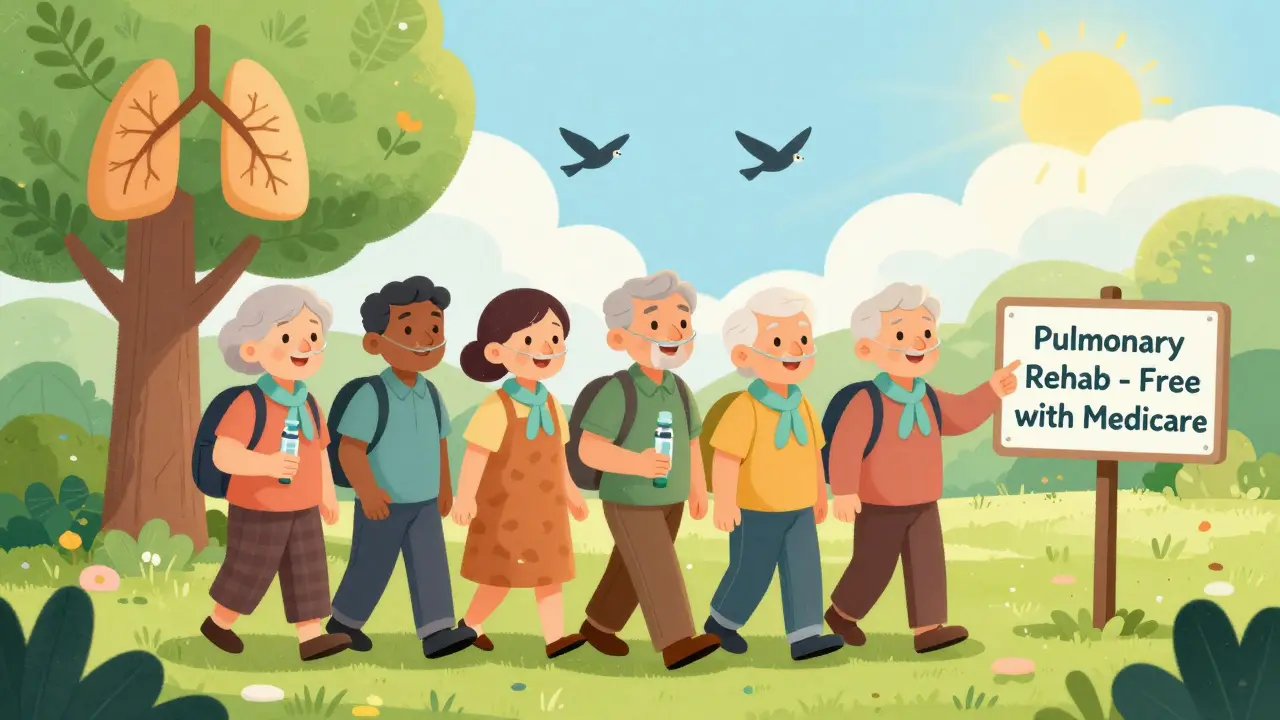
Pulmonary rehabilitation is the most underused treatment. It’s not just exercise. It’s education, breathing training, nutrition advice, and emotional support-all in one program. People who complete it walk 78 meters farther in six minutes and cut hospital visits by 37%. And it’s covered by Medicare.
What Doesn’t Work (And Why)
Not every treatment is worth your time or money.
Some doctors still push cough suppressants. But suppressing a productive cough is like plugging a drain that’s clogged. You’re trapping mucus inside. That leads to more infections.
Herbal remedies, steam inhalers, and essential oils might feel nice, but they don’t change lung function. Don’t waste money on them.
And don’t assume your inhaler is working just because you’re using it. Studies show 38% of patients don’t use their inhalers correctly. You need to be shown how-by a respiratory therapist, not a pharmacist. It takes about five sessions to get it right.
Living With It: Real Stories, Real Changes
One 58-year-old man from Ohio quit smoking after 40 years. He started pulmonary rehab. Six months later, he walked to the end of his street without stopping. He hadn’t done that in three years.
A 65-year-old woman in Florida used her steroid inhaler for two years. She developed two broken vertebrae from osteoporosis. Her doctor switched her to a different regimen. She’s now in rehab and feels stronger than she has in a decade.
On online forums, people talk about the frustration of juggling multiple inhalers, forgetting doses, and feeling defeated. But the ones who succeed? They have a plan. They have support. They don’t try to do it alone.
What’s New in Treatment (And What’s Coming)
There’s real progress. In 2023, the FDA approved a new drug called ensifentrine. It’s a first-of-its-kind inhaler that opens airways and reduces inflammation. In trials, it improved walking distance by 42 meters and cut flare-ups by 15%.
Researchers are also studying genes that affect mucus production. Soon, we may be able to match patients with the right mucolytic based on their biology.
Digital tools are growing too. Inhalers with sensors now track when you use them and send reminders to your phone. Tele-rehab programs let you do breathing exercises from home. These aren’t sci-fi-they’re here, and they’re improving adherence.
But none of this replaces quitting smoking. The most cost-effective intervention? Smoking cessation. Every dollar spent on helping people quit saves $5.60 in healthcare costs within two years.
What You Can Do Today
- If you smoke: Call your doctor about a quit program. Don’t wait. Use varenicline, nicotine replacement, and counseling together.
- If you don’t smoke: Avoid secondhand smoke. Stay away from smoky rooms, fireplaces, and wood-burning stoves.
- Get your flu shot every year. Get the pneumococcal vaccine every five to seven years.
- Ask your doctor about pulmonary rehab. It’s not just for the very sick-it’s for anyone with chronic bronchitis.
- Learn how to use your inhaler. Ask for a demo from a respiratory therapist.
- Keep moving. Even short walks help. Don’t wait until you feel better to start.
Chronic bronchitis doesn’t have to be a death sentence. It’s a warning. And if you listen to it-if you quit smoking, use the right tools, and get support-you can still live well. Your lungs won’t be perfect. But they can be good enough for you to breathe easy again.




Lisa McCluskey
January 30, 2026 AT 22:59Don’t wait for perfect. Just start.
Darren Gormley
January 31, 2026 AT 19:08Amy Insalaco
February 1, 2026 AT 14:13Kelly Weinhold
February 1, 2026 AT 23:57kate jones
February 3, 2026 AT 12:35Kimberly Reker
February 3, 2026 AT 13:02owori patrick
February 3, 2026 AT 16:49Rob Webber
February 4, 2026 AT 20:35calanha nevin
February 5, 2026 AT 09:37Katie and Nathan Milburn
February 6, 2026 AT 12:06Jodi Olson
February 7, 2026 AT 07:52Marc Bains
February 8, 2026 AT 00:42