

Decongestant-Antihistamine Risk Checker
This tool helps you determine if you're at increased risk when taking combination decongestant-antihistamine medications. Based on the CDC, FDA, and American Academy of Family Physicians guidelines, select the factors that apply to you.
Key Safety Information
This information is based on guidelines from the CDC, FDA, and American Academy of Family Physicians. Combination decongestant-antihistamine medications can increase risk for:
- High blood pressure and heart rate spikes
- Confusion and falls in older adults
- Urinary retention
- Interactions with other medications
- Excessive drowsiness or restlessness
Always consult with a healthcare provider before taking any new medication.
Combination cold and allergy meds like Zyrtec-D, Claritin-D, and Allegra-D are everywhere - on pharmacy shelves, in grocery store aisles, even in convenience stores. They promise quick relief: stuffy nose? Gone. Sneezing? Stopped. It sounds perfect. But here’s the truth most people don’t see until it’s too late: these combo pills carry real, sometimes dangerous, risks that aren’t written on the label in big enough letters.
What’s Actually in These Pills?
These medications mix two types of drugs: a decongestant and an antihistamine. The decongestant - usually pseudoephedrine or sometimes phenylephrine - shrinks swollen blood vessels in your nose to help you breathe. The antihistamine - like cetirizine, loratadine, or diphenhydramine - blocks histamine, the chemical that makes your eyes water, nose run, and throat itch. But here’s the catch: they don’t work the same way in your body. Decongestants are stimulants. They raise your heart rate and blood pressure. Antihistamines? Many of them make you sleepy. First-gen ones like diphenhydramine (Benadryl) knock out about half of users. Even second-gen ones like cetirizine (Zyrtec) cause drowsiness in 1 in 7 people, according to clinical studies. When you combine them, you’re not just treating symptoms - you’re mixing two drugs with opposite effects on your nervous system. One wakes you up. The other knocks you out. And your body doesn’t always handle that balance well.Who’s at the Highest Risk?
It’s not just about taking too much. It’s about who you are. If you have high blood pressure, heart disease, diabetes, or thyroid problems, decongestants can be dangerous. They can spike your blood pressure by 5-10 mmHg systolic - enough to trigger a headache, dizziness, or worse. Harvard Health and the Cleveland Clinic both warn that these drugs can cause rapid or irregular heartbeat, especially in people with existing heart conditions. Older adults are another high-risk group. As we age, our bodies process drugs slower. A dose that’s fine for a 30-year-old might build up in a 70-year-old’s system, leading to confusion, falls, or urinary retention. The American Academy of Family Physicians says older adults should be especially careful - and many doctors now avoid prescribing these combos to patients over 65. And kids? Don’t give them these pills. The American College of Allergy, Asthma, and Immunology says there’s no proven benefit for children under 12 - only risks. Yet, parents still reach for these bottles thinking, “It’s just an OTC medicine.”The Overdose Trap
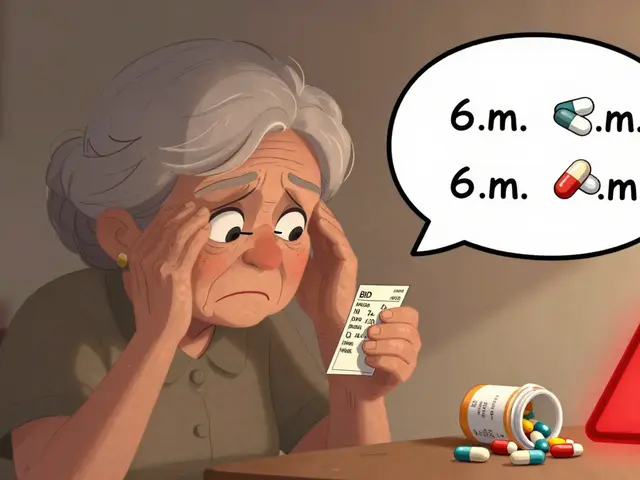
One of the biggest dangers isn’t taking one pill too many. It’s taking two different pills that both contain the same ingredients. You take Zyrtec for allergies. Later, you grab a nighttime cold medicine because you’re congested. That nighttime medicine? It has diphenhydramine - another antihistamine. Now you’ve doubled up. You didn’t mean to. But your body doesn’t know that. Poison Control says this is one of the most common reasons people end up in the ER. Symptoms of overdose? Fast heartbeat, dry mouth, agitation, blurred vision, trouble peeing, and in extreme cases, seizures or cardiac arrest. GoodRx reports that people often mix Zyrtec and Benadryl, Claritin and Allegra, or even take a decongestant on top of a combo pill. They think, “I need more relief.” But what they’re really doing is stacking risks. And timing doesn’t help. Zyrtec lasts 24 hours. Benadryl wears off in 4-6. So if you take Zyrtec in the morning and Benadryl at night, you’re still overlapping. Your body never gets a clean break.
What About Side Effects?
Even when taken “correctly,” these combos cause side effects in up to 31% of users, according to a Cochrane review of multiple studies. That’s more than 1 in 3 people. Common ones include:- Drowsiness or dizziness
- Constipation
- Blurred vision
- Nausea or vomiting
- Difficulty sleeping (from the decongestant)
- Increased anxiety or nervousness
Are They Even Effective?
Let’s be honest: do they work? The evidence is mixed. A 2022 Cochrane review found that while these combinations might offer a tiny bit of symptom relief for adults, the benefit is so small it’s often not clinically meaningful. For the common cold? Almost no proof they help. For allergies? Maybe - but single-ingredient antihistamines work just as well without the decongestant risks. And here’s the kicker: these combo pills were designed for convenience, not safety. They’re a product of marketing, not medicine. Pharmaceutical companies figured out that putting two drugs in one pill sells better. But they didn’t fix the safety problems.
What Should You Do Instead?
You don’t need a combo pill to feel better. If you have nasal congestion, try a saline nasal spray or a decongestant nasal spray (but only for 3 days max - longer can make congestion worse). If you’re sneezing and itchy, use a non-sedating antihistamine like loratadine or fexofenadine alone. If you’re really congested and need something stronger, talk to a pharmacist. They can help you pick a single-ingredient decongestant like pseudoephedrine (which is kept behind the counter in many places for a reason). Ask: “Is this safe for my blood pressure?” And never take more than one antihistamine at a time. Ever. Not Zyrtec and Benadryl. Not Claritin and Allegra. Not even if one’s “daytime” and the other’s “nighttime.” Your body doesn’t care what the label says. It just sees two drugs with the same job.When to Walk Away
If you’re taking one of these combo pills and you feel:- Your heart racing or pounding
- Unusual dizziness or confusion
- Severe dry mouth or trouble urinating
- Swelling in your face or throat





Brian Furnell
December 20, 2025 AT 23:31Let’s be real-these combo pills are a pharmacological Rube Goldberg machine: one gear spins the decongestant (α1-adrenergic agonist), another flips the antihistamine (H1-receptor antagonist), and the whole contraption’s held together by marketing duct tape. The Cochrane review’s right-clinical benefit is negligible, but the pharmacokinetic overlap? That’s where the real danger lives. You’re not just stacking drugs-you’re stacking sympathetic overdrive with CNS depression, and your liver’s doing the math on a 3 a.m. caffeine binge. And don’t get me started on CYP450 interactions with SSRIs or beta-blockers. If you’re on lisinopril or metoprolol, you’re playing Russian roulette with your endothelium.
Siobhan K.
December 22, 2025 AT 18:49People still don’t get it: just because it’s on a shelf doesn’t mean it’s safe. I’ve seen 72-year-olds take Zyrtec-D and end up in the ER with urinary retention and confusion-then blame the hospital for ‘overreacting.’ These aren’t candy. They’re psychoactive compounds with half-lives longer than your attention span. If you need relief, use saline, a humidifier, and a nap. Not a chemical cocktail disguised as convenience.
Adrian Thompson
December 23, 2025 AT 06:52Big Pharma doesn’t want you to know this-but the FDA’s been asleep at the wheel since 2008. These combo pills are a Trojan horse. They’re pushing this stuff because they know you’re too lazy to read labels. Meanwhile, China’s flooding the market with fake pseudoephedrine, and the DEA’s too busy chasing weed dealers to care. You think your ‘OTC’ medicine is safe? Wake up. Your medicine cabinet’s a biohazard zone.
Stacey Smith
December 23, 2025 AT 22:17I took Claritin-D for three days and my heart felt like it was trying to escape my chest. I stopped. No more combo pills. Ever. Simple.
Ben Warren
December 24, 2025 AT 09:09It is an incontrovertible fact that the proliferation of over-the-counter combination medications represents a profound failure of both regulatory oversight and public health literacy. The normalization of polypharmacy in non-clinical settings, particularly when such formulations contain pharmacologically antagonistic agents-stimulants paired with sedatives-is not merely irresponsible; it is an affront to the foundational tenets of evidence-based therapeutics. The absence of mandatory pharmacogenetic screening prior to dispensing these agents constitutes a de facto public health crisis, one which is exacerbated by the commodification of medical self-diagnosis through retail pharmacy merchandising.
Sandy Crux
December 25, 2025 AT 16:28Actually, the real issue here is that you’re all still treating symptoms instead of addressing root causes-like inflammation, gut dysbiosis, or environmental mold exposure. If you’d just stop reaching for chemical band-aids and start doing the work-like switching to a low-histamine diet or using a HEPA filter-you wouldn’t need these pills at all. But of course, that requires effort. And we all know how much Americans love effort.
Hannah Taylor
December 26, 2025 AT 13:50bro i took zyrtec and benadryl once bc i thought "its just sleep stuff" and i had a heart palpitation that felt like my chest was being punched by a robot. i called poison control and they were like "lol u dumbass". never again. also my mouth felt like sandpaper for 2 days. 10/10 would not recommend.
Dan Adkins
December 28, 2025 AT 08:25While I acknowledge the validity of the concerns raised, I must emphasize that the pharmacological risk profile of combination decongestant-antihistamine formulations is not uniformly distributed across populations. In sub-Saharan African populations, where the prevalence of hypertension and cardiovascular disease is rising but access to primary care remains limited, the availability of such OTC formulations may represent a pragmatic, if imperfect, solution to symptom management in resource-constrained settings. The issue is not the drug per se, but the absence of structured pharmaceutical education and community health infrastructure. Until such systems are implemented, blanket condemnation of these agents may inadvertently deprive vulnerable populations of accessible relief.