When you're breastfeeding and need to take a short-term medication-whether it's antibiotics, pain relievers, or something for a cold-it’s natural to worry: Is my milk still safe? The truth is, for almost all medications, you don’t need to stop breastfeeding. But you do need to store and label your milk correctly to keep your baby safe and avoid wasting precious milk.
Most Medications Don’t Require You to Stop Nursing
Less than 2% of medications actually require you to stop breastfeeding, even temporarily. That means if your doctor says it’s okay to take the medicine, you’re likely fine to keep nursing. The idea that you must "pump and dump" after every pill is outdated and often unnecessary. Many medications pass into breast milk in tiny amounts-too small to affect your baby. What matters more is timing and how your body processes the drug.
For example, if you take ibuprofen after a feed, by the time your baby next feeds, most of the drug has already been broken down. The same goes for many antibiotics like amoxicillin or azithromycin. These are considered safe (L1 category on the Hale scale) and don’t require any special milk handling.
Labeling Your Milk Correctly Is Non-Negotiable
When you’re not taking meds, labeling your milk with the date and time is good practice. When you are? It’s essential. You need to know exactly which milk was expressed before, during, or after your dose.
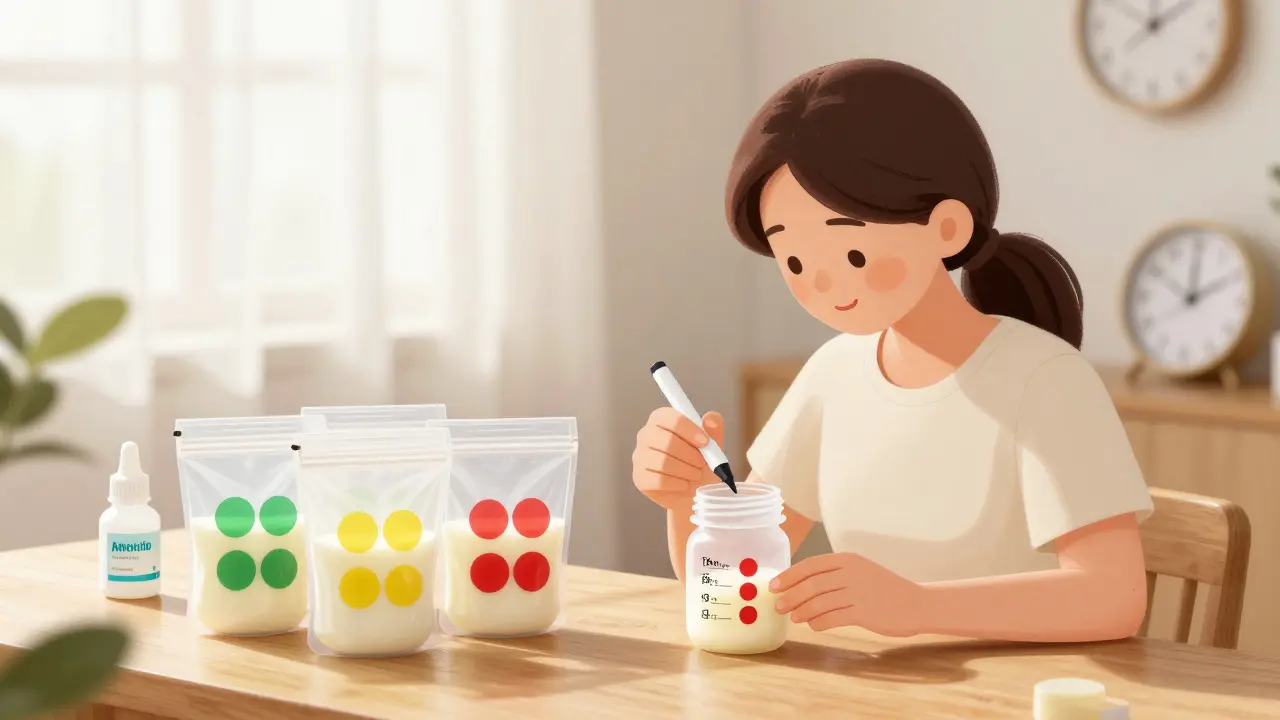
Use waterproof labels and permanent ink. Write:
- Date and time of expression
- Your baby’s name
- Medication name (e.g., "Ciprofloxacin 500mg")
- Time you took the medication
Some moms use color-coded stickers: green for "before med," yellow for "during peak," and red for "discard." This visual system helps avoid mistakes when you’re tired or rushing.
Don’t rely on memory. One mother in Brisbane told me she accidentally gave her baby milk expressed two hours after her antibiotic dose because she mixed batches. Her baby had mild stomach upset. A simple label would’ve prevented it.
Store Different Batches Separately
Don’t mix milk expressed before your medication with milk expressed after. Keep them in separate containers. Why? Because the concentration of the drug in your milk peaks at different times depending on the medication.
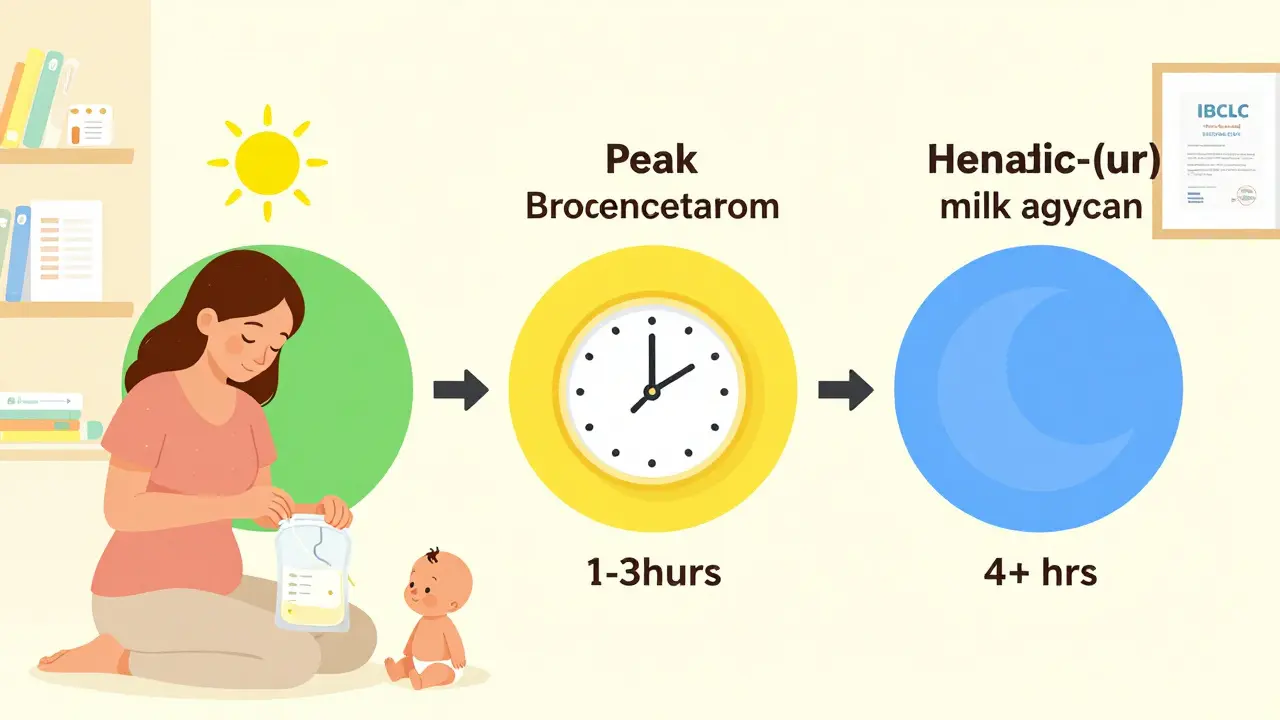
For most drugs, peak levels in breast milk happen 1-3 hours after taking the pill. So:
- Milk expressed before your dose = safe to use immediately
- Milk expressed 1-3 hours after your dose = may need to be stored separately and used later
- Milk expressed 4+ hours after = usually safe again, depending on the drug’s half-life
Store each batch in its own labeled container. Use small portions-2 to 4 ounces-so you don’t waste milk if you need to discard one batch.
Storage Times Change Based on Medication
Standard breast milk storage rules still apply, but with a twist:
- Room temperature (up to 25°C): 4 hours max for milk expressed during or right after medication. Pre-med milk can last up to 6-8 hours if the room is cool.
- Refrigerator (4°C): Up to 4 days for all milk, but if you’re unsure about contamination, use it within 48 hours.
- Freezer (below -18°C): 6-12 months. This is your safest bet for storing milk affected by medication. Freeze it as soon as possible after expressing.
Thawed milk? Use it within 24 hours if kept refrigerated. Never refreeze milk that’s been thawed.
When You Actually Need to Pump and Dump
There are exceptions. Some medications-like certain chemotherapy drugs, radioactive isotopes, or high-dose opioids-require temporary cessation. But these are rare.
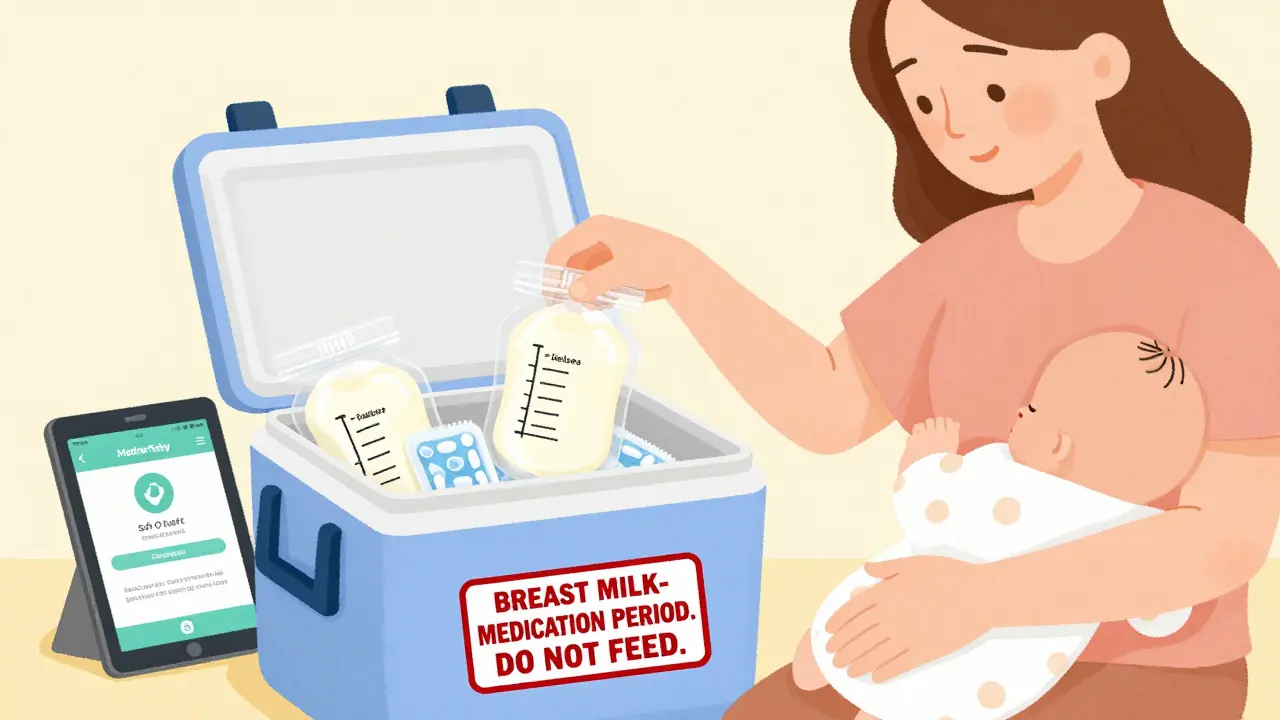
If your doctor says to pump and dump for 24-72 hours, label those batches clearly as "DISCARD: MEDICATION PERIOD." Store them separately and throw them away. Don’t mix them with milk you plan to feed.
Even then, you can still maintain your supply. Pump on your baby’s usual schedule to keep your milk flowing. Just don’t feed that milk. Use it for compost, or donate it to a milk bank if they accept medicated milk (some do).
Traveling with Medicated Milk? Pack Smart
If you’re going out and need to take medication while away from home, bring a small insulated cooler with frozen ice packs. Store your labeled milk in it. CDC guidelines say this keeps milk safe for up to 24 hours.
Use a small cooler just for your medicated milk. Don’t put it next to your snacks. Label the cooler too: "BREAST MILK-MEDICATION PERIOD. DO NOT FEED."
What Not to Do
Here are the most common mistakes mothers make:
- Storing all milk together and guessing which is safe
- Throwing away milk just because they took a pill
- Not labeling the medication name or time taken
- Using regular plastic bags that leak or aren’t designed for breast milk
- Waiting too long to freeze milk after expressing
A 2023 survey found that 63% of mothers were unsure how long to store milk after taking meds. Nearly half threw away milk they could’ve safely used. That’s hundreds of thousands of liters wasted every year-just because no one told them how to label it right.
Use Tools to Make It Easier
There are now apps like MotherToBaby (updated February 2024) that let you enter your medication and it tells you:
- Is it safe to breastfeed?
- When’s the safest time to feed?
- How long to wait before feeding?
- Generate a printable label with all the details
Some companies now sell breast milk storage bags with pre-printed fields for medication name, dose, and time. They’re worth the extra cost if you’re on frequent meds.
When in Doubt, Talk to an IBCLC
International Board Certified Lactation Consultants (IBCLCs) are trained specifically in this. They can look up your exact medication and tell you:
- How much passes into milk
- How long to wait before feeding
- Whether you need to store milk separately
- How to safely use your stored milk
Don’t rely on Google or random Facebook groups. A 2022 study found that mothers who consulted an IBCLC wasted 37% less milk than those who didn’t.
Your Milk Is Still Your Best Medicine
Even when you’re sick or on meds, your breast milk is still packed with antibodies, nutrients, and comfort for your baby. You don’t need to give it up. You just need to be smart about how you store and label it.
Label clearly. Store separately. Freeze what you won’t use soon. And never assume a medication means you must stop breastfeeding. Most of the time, you don’t.
Do I need to pump and dump after every medication?
No. Only a very small number of medications require you to pump and dump. Most-like common antibiotics, pain relievers, and cold meds-are safe to breastfeed while taking. Always check with your doctor or an IBCLC, but don’t assume you need to stop nursing.
How long should I wait after taking medication to breastfeed?
It depends on the drug. For most medications, peak levels in breast milk happen 1-3 hours after taking the pill. Waiting 3-4 hours before feeding reduces your baby’s exposure significantly. For long-acting drugs, you may need to wait longer. Use an app like MotherToBaby or ask your lactation consultant for the exact timing.
Can I mix milk from before and after taking medication?
No. Always keep milk expressed before your medication separate from milk expressed during or after. Mixing them could expose your baby to higher drug levels than intended. Use different containers and label each clearly.
How long can I store milk that was expressed while on medication?
Follow the same storage times as regular breast milk: 4 hours at room temperature, 4 days in the fridge, 6-12 months in the freezer. But if you’re unsure about contamination, use refrigerated milk within 48 hours and freeze milk as soon as possible.
What if I accidentally give my baby milk from after I took my meds?
If it was a one-time mistake with a common medication like ibuprofen or amoxicillin, your baby is very unlikely to be harmed. Monitor for unusual fussiness, diarrhea, or rash. If you’re worried, call your pediatrician. For stronger medications, always check with your doctor. But don’t panic-most cases cause no issues.
Are there special storage bags for medicated milk?
Yes. Some brands now sell breast milk storage bags with pre-printed fields for medication name, dose, and time taken. These help prevent labeling errors. You can find them online or at specialty baby stores. Regular freezer bags work too, but make sure they’re designed for breast milk and are leak-proof.
Can I donate milk I expressed while on medication?
Most milk banks do not accept milk expressed while taking medication, even if it’s considered safe. Always check with your local milk bank first. If you’re on a short-term med and have excess milk, freezing it for your own future use is the best option.
What if my baby gets a rash or upset stomach after I take meds?
It’s rare, but possible. Common signs include fussiness, diarrhea, or a mild rash. If you notice these, stop feeding the milk expressed around the time you took the medication and switch to pre-med milk. Contact your pediatrician and your IBCLC. They can help determine if the medication is the cause and how to adjust.