
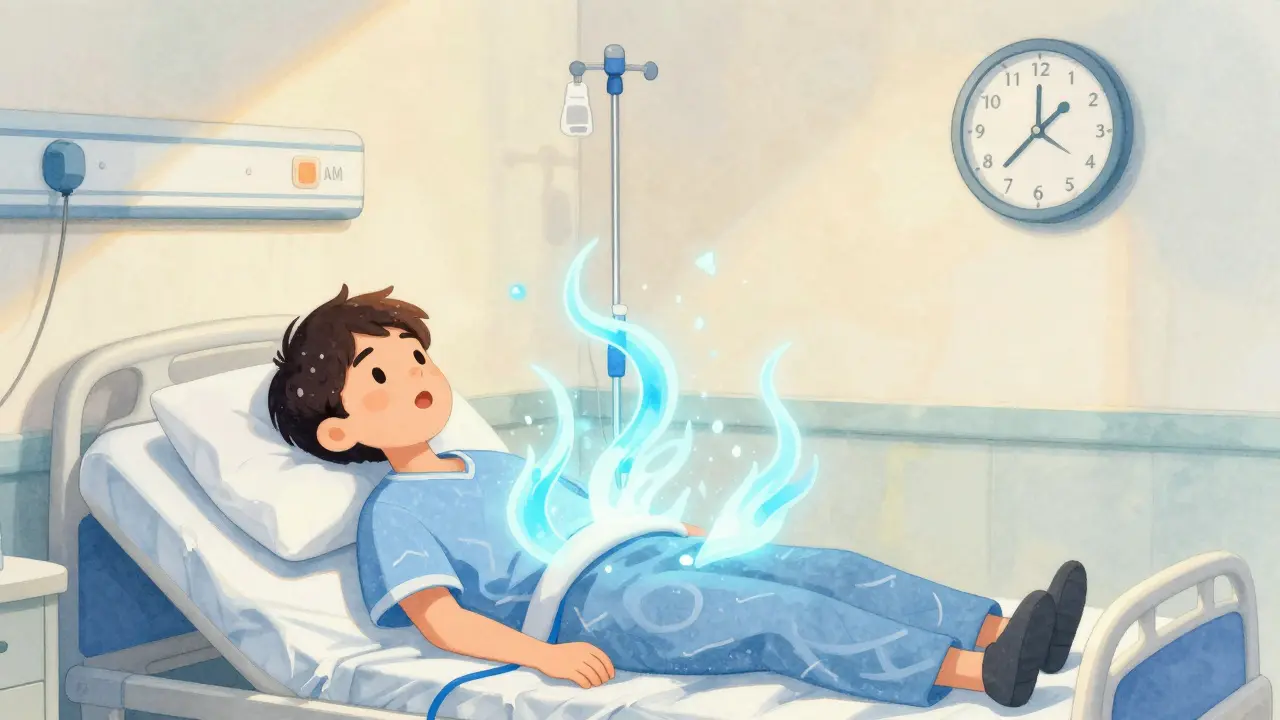
When standard antidepressants fail, the search for relief can feel endless. For about 30% of people with major depression, pills like SSRIs or SNRIs just don’t work-no matter how long they try or how many they switch. That’s where ketamine and esketamine come in. These aren’t your typical depression meds. They work fast-sometimes within hours-and they’re changing how we treat the most stubborn cases.
How Ketamine and Esketamine Are Different
Ketamine and esketamine come from the same chemical family, but they’re not the same drug. Ketamine is a racemic mixture-it contains both the (R)- and (S)-enantiomers. Esketamine is just the (S)-enantiomer, pulled out and purified. That small difference changes how the body responds.
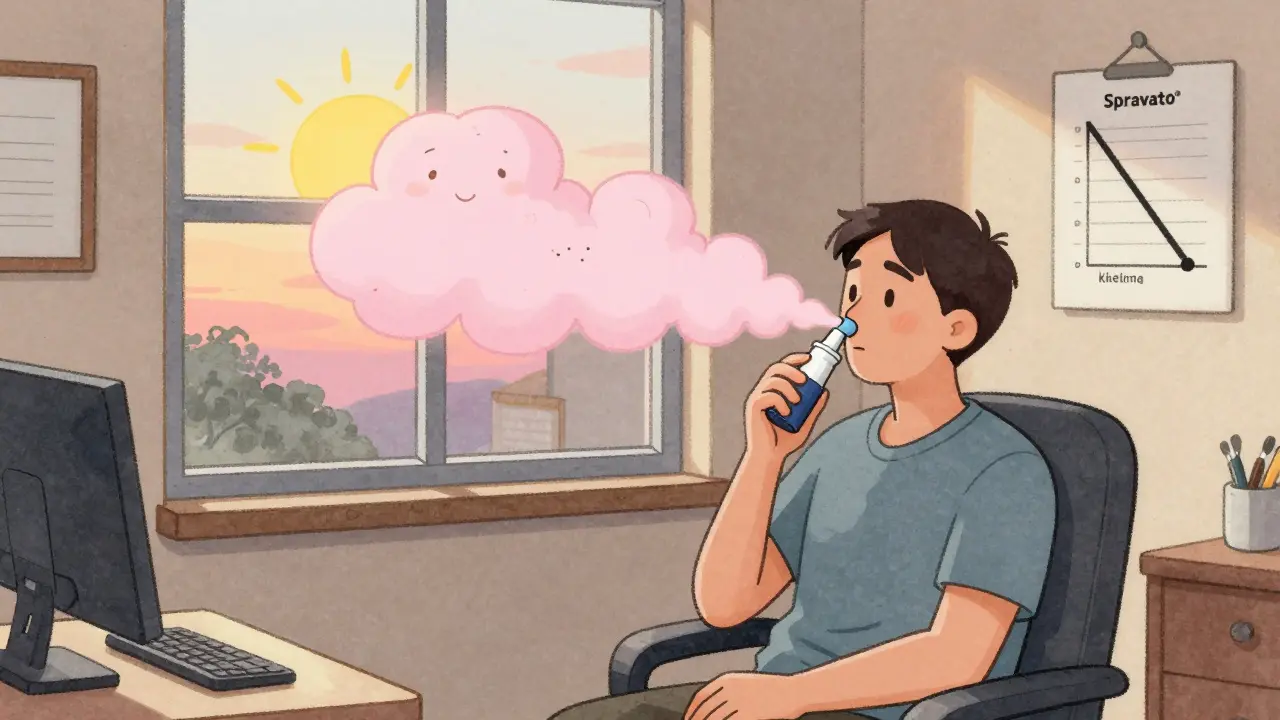
Ketamine is given as an intravenous (IV) infusion, usually at a dose of 0.5 mg per kilogram of body weight, over about 40 minutes. It’s not FDA-approved for depression, but it’s been used off-label for over a decade with strong evidence backing it. Esketamine, branded as Spravato®, is the only FDA-approved nasal spray for depression. It’s dosed at 56 mg or 84 mg, twice a week during the first month, then tapered based on response.
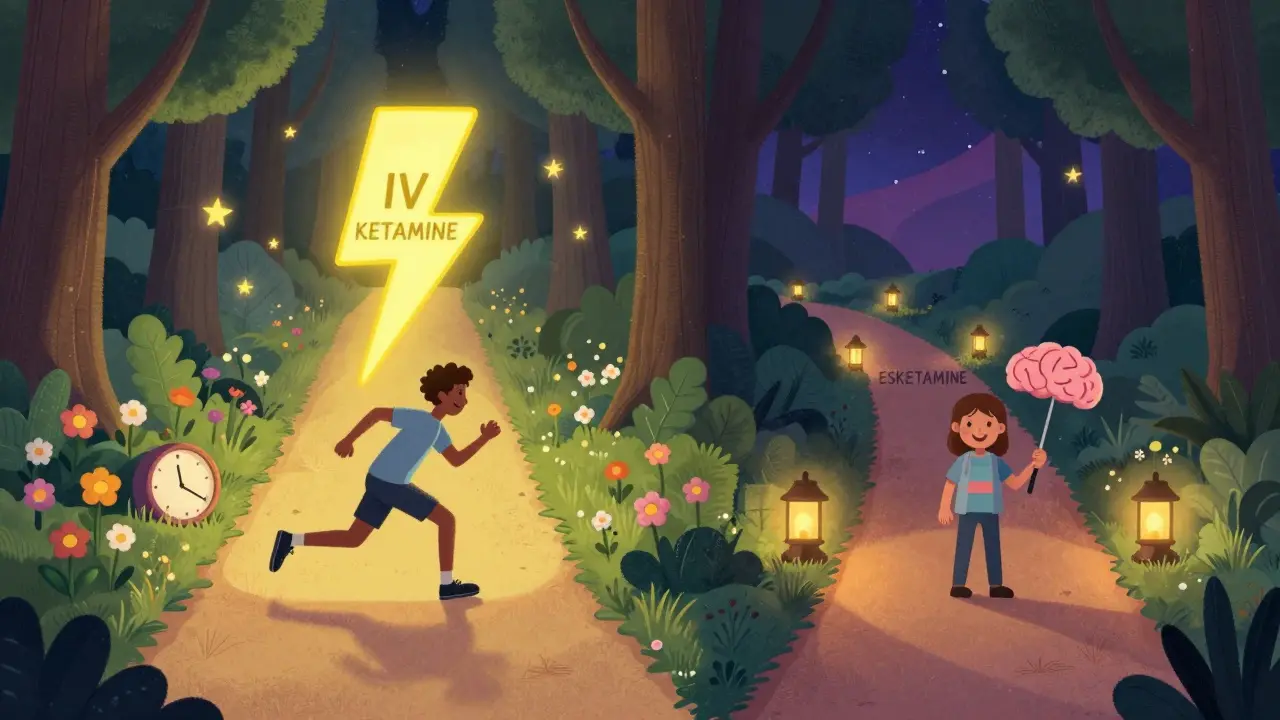
Why does this matter? Because how you get the drug affects how it works. IV ketamine hits the bloodstream fast and full-force. Esketamine is absorbed through the nose, slower and more controlled. That’s why IV ketamine often works after the first session, while esketamine usually needs two or three before you feel a shift.
Which One Works Better?
A major 2025 study from Harvard’s Mass General Brigham followed 153 adults with treatment-resistant depression. 111 got IV ketamine. 42 got esketamine. The results were clear: ketamine won.
After the full course, IV ketamine users saw a 49.22% drop in depression scores. Esketamine users saw a 39.55% drop. That’s not a small gap-it’s clinically meaningful. Ketamine also worked faster. Many patients felt better after just one infusion. With esketamine, improvement didn’t show up until after the second dose.
This lines up with a 2020 meta-analysis that looked at dozens of studies across multiple time points-from 24 hours to eight weeks. The conclusion? Intravenous ketamine consistently outperformed intranasal esketamine in reducing depression symptoms.
Safety and Side Effects
Both drugs can cause dissociation-feeling detached from your body or surroundings. That’s not rare. In the 2025 study, 42.3% of IV ketamine users reported moderate to severe dissociation. For esketamine, it was 28.7%. That’s a 37% lower rate of severe effects with the nasal spray.
Ketamine can also trigger hallucinations, dizziness, nausea, and elevated blood pressure. These are usually short-lived but can be intense. Esketamine’s side effects are similar, but milder for most people. That’s why many patients prefer it: less disorientation, no IV needle, and you can sit in a chair instead of lying on a hospital bed.
But here’s the catch: dissociation isn’t always a bad thing. Some researchers think it’s linked to how well the drug works. The more dissociation you feel, the better your depression might improve. That’s why some clinicians still lean toward ketamine for severe cases-even if it’s harder to tolerate.
Cost and Insurance
Money matters. A full course of eight IV ketamine infusions costs between $4,200 and $5,600. The same number of esketamine treatments? $5,800 to $6,900. So why do people choose the more expensive option?
Insurance. Only 38.2% of commercial insurers cover IV ketamine. But 67.4% cover Spravato®. That’s a huge difference. For many patients, esketamine is the only option they can get covered-even if it’s less effective.
Cost-effectiveness studies show IV ketamine delivers more value. A 2025 JAMA Psychiatry analysis found ketamine costs $14,327 per quality-adjusted life year (QALY) gained. Esketamine? $18,764. That means for every extra year of healthy life you gain, ketamine saves money compared to esketamine.
Who Gets Which Treatment?
There’s no one-size-fits-all. Here’s how experts are deciding:
- IV ketamine is best for severe, life-threatening depression. If someone is suicidal, can’t get out of bed, or hasn’t responded to anything else, speed and strength matter. IV ketamine delivers both.
- Esketamine fits better for people who need maintenance. If you’ve already stabilized on IV ketamine and want to keep the gains with less intensity, the nasal spray is easier to manage long-term.
- Convenience plays a big role. Esketamine can be given in a psychiatrist’s office. IV ketamine needs a clinic with IV access, monitoring, and staff trained in anesthesia.
Real-world feedback backs this up. On mental health forums, 63.2% of IV ketamine users said they felt relief within 24 hours. But 78.4% of esketamine users rated their overall experience as ‘good’ or ‘excellent’-mostly because the process was less scary and didn’t require an IV.
Access Is Still a Problem
Even with all the data, getting treatment is hard. In the U.S., only 12.4% of counties have a certified Spravato® center. Fewer still offer IV ketamine. That’s not just a rural issue-it’s nationwide. In cities like Brisbane, Melbourne, or even New York, patients drive hours or wait months for a slot.
There are 1,087 ketamine clinics in the U.S. today, up from 142 in 2020. That’s progress. But Spravato® is tied to Janssen’s distribution network. You can’t just walk into any clinic. You need to be enrolled in their program. And even then, you must stay for two hours after each dose for monitoring.
What About Long-Term Use?
Neither drug is a cure. Both need maintenance. After the initial phase, most patients need ongoing doses-every 1 to 3 weeks.
A 2024 study tracking patients for six months found that 56.3% of those who responded to IV ketamine stayed in remission with maintenance. For esketamine, it was 48.7%. That gap suggests ketamine’s effects may last longer between doses.
And new research is pointing to brain patterns that predict who will respond. A November 2025 study in Nature Mental Health found that people whose brain activity showed increased gamma wave power in the frontoparietal region after the first dose were far more likely to get better. This could one day help doctors pick the right treatment before the first session.
The Future Is Coming
The FDA just accepted Janssen’s application for a higher-dose Spravato® (112 mg). That could mean faster results with fewer doses. Meanwhile, trials are underway for intramuscular ketamine-injections in the arm or thigh. It could offer a middle ground: faster than nasal, less invasive than IV.
Regulatory bodies are watching. Both drugs are Schedule III controlled substances. That means they’re recognized as having medical value but carry risk of misuse. That’s why clinics are tightly regulated. But as evidence grows, access may improve.
Final Thoughts
Ketamine and esketamine aren’t magic. They’re tools. And like any tool, they work best when matched to the person.
If you’re in crisis, need fast relief, and can access it, IV ketamine is the most effective option we have right now. If you’ve tried everything else, can’t tolerate strong side effects, or your insurance won’t cover IV, esketamine is still a powerful alternative.
The bottom line? For treatment-resistant depression, we finally have options that don’t take weeks to work. And that’s a breakthrough.
Is ketamine FDA-approved for depression?
No, ketamine itself is not FDA-approved for depression. It was approved in 1970 as an anesthetic. Its use for depression is off-label but widely supported by clinical research. Esketamine (Spravato®), a purified form of ketamine, is the only FDA-approved nasal spray for treatment-resistant depression.
How quickly do ketamine and esketamine work?
Ketamine often works within hours after the first IV infusion. Many patients report improved mood, energy, or reduced suicidal thoughts within 24 hours. Esketamine usually takes two doses before noticeable improvement, with full effects appearing after 1-2 weeks.
Can I use ketamine or esketamine without an antidepressant?
For esketamine, the FDA requires it to be used with an oral antidepressant. For IV ketamine, it’s not required-but most clinicians still pair it with an antidepressant to help maintain long-term results. Neither drug is meant to replace standard antidepressants entirely.
Are ketamine and esketamine addictive?
Both are Schedule III controlled substances, meaning they have a moderate risk of dependence. When used under medical supervision for depression, the risk is low. Abuse typically occurs with recreational, uncontrolled use-not in clinical settings. Most patients don’t develop cravings or misuse the treatment.
Do I need to stay at the clinic after treatment?
Yes. Both treatments require at least two hours of monitoring after administration. This is because of potential side effects like dizziness, dissociation, or elevated blood pressure. You can’t drive yourself home. You’ll need someone to pick you up or use a ride service.
Rama Rish
March 24, 2026 AT 16:55Kevin Siewe
March 25, 2026 AT 03:14Darlene Gomez
March 26, 2026 AT 22:28Danielle Arnold
March 28, 2026 AT 09:31James Moreau
March 29, 2026 AT 18:18J. Murphy
March 30, 2026 AT 10:21Jesse Hall
March 31, 2026 AT 14:16Sean Bechtelheimer
April 2, 2026 AT 08:52Seth Eugenne
April 2, 2026 AT 14:11Linda Foster
April 2, 2026 AT 20:42