
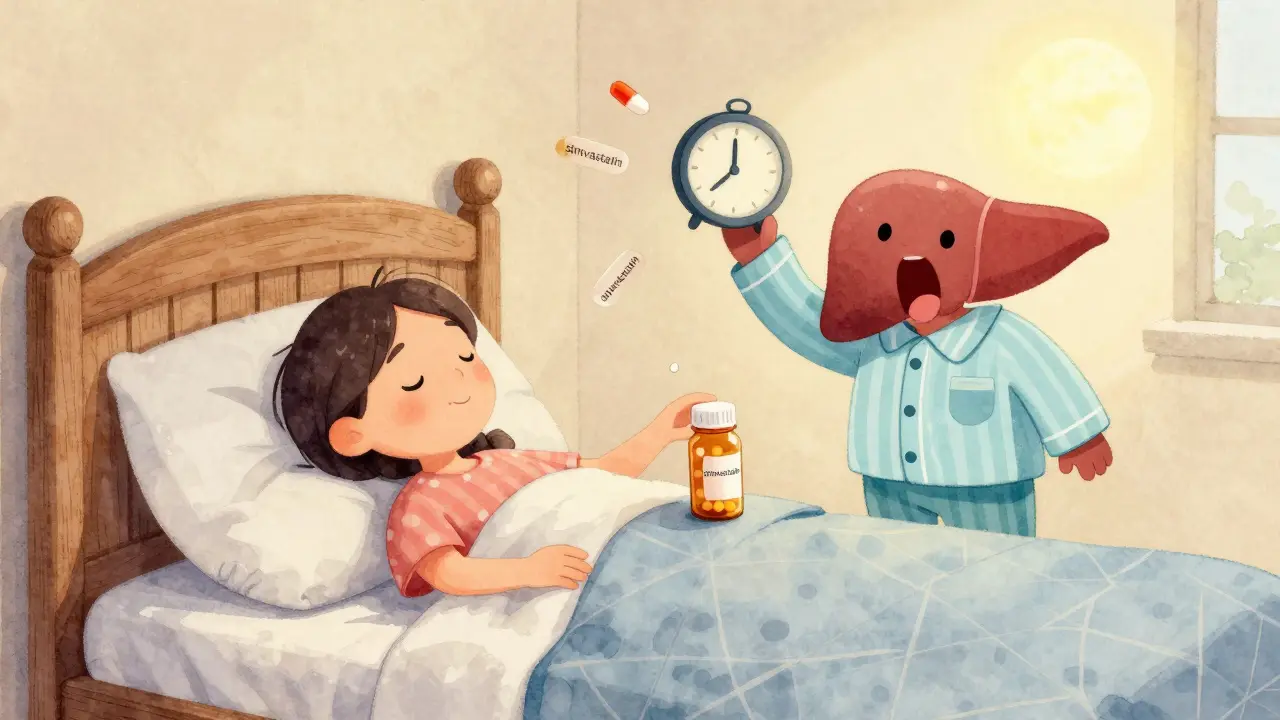
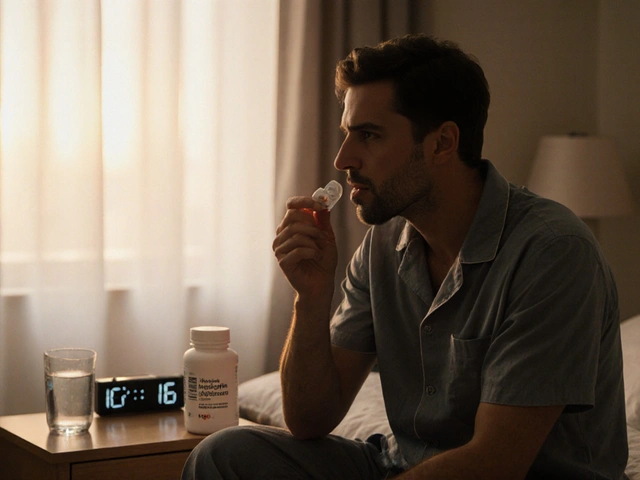
For decades, doctors told patients to take statins at night. The logic was simple: your liver makes most of its cholesterol while you sleep, so hitting it with medication right before bed made sense. But today, that advice is outdated for most people - and clinging to it might actually be hurting your health more than helping it.
Why Timing Used to Matter
Back in the 1980s and 90s, statins like simvastatin, lovastatin, and fluvastatin had short half-lives. That means they cleared out of your system fast - sometimes in just a few hours. Since your body cranks out cholesterol mostly between midnight and 4 a.m., doctors pushed evening dosing to make sure the drug was still active when your liver was most active. Studies showed real differences. One trial found that taking simvastatin at night lowered LDL cholesterol by 21%, compared to just 14% when taken in the morning. That’s a 50% relative improvement - not something you ignore.But That Was Then. This Is Now.
Most statins prescribed today aren’t the old-school versions. About 82% of new prescriptions in 2023 were for long-acting statins like atorvastatin, rosuvastatin, and pitavastatin. These drugs stick around in your bloodstream for 14 to 20 hours - sometimes longer. That means whether you take them at 7 a.m. or 11 p.m., you’re still covered during peak cholesterol production. A 2017 meta-analysis of over 3,300 patients showed that for these newer statins, the difference in LDL reduction between morning and night was less than 3%. That’s not just small - it’s clinically meaningless.Side Effects Don’t Change With Timing
One big worry people have is whether taking statins at night increases muscle pain, liver issues, or diabetes risk. The data says no. Analysis of over 4.2 million statin prescriptions found no difference in side effects based on time of day. Muscle aches? Liver enzymes? Blood sugar spikes? All happened at the same rate whether the pill was taken at breakfast or bedtime. The FDA’s own adverse event database confirms this. If you’re experiencing side effects, it’s not because of when you took it - it’s likely the drug itself, your dose, or another health factor.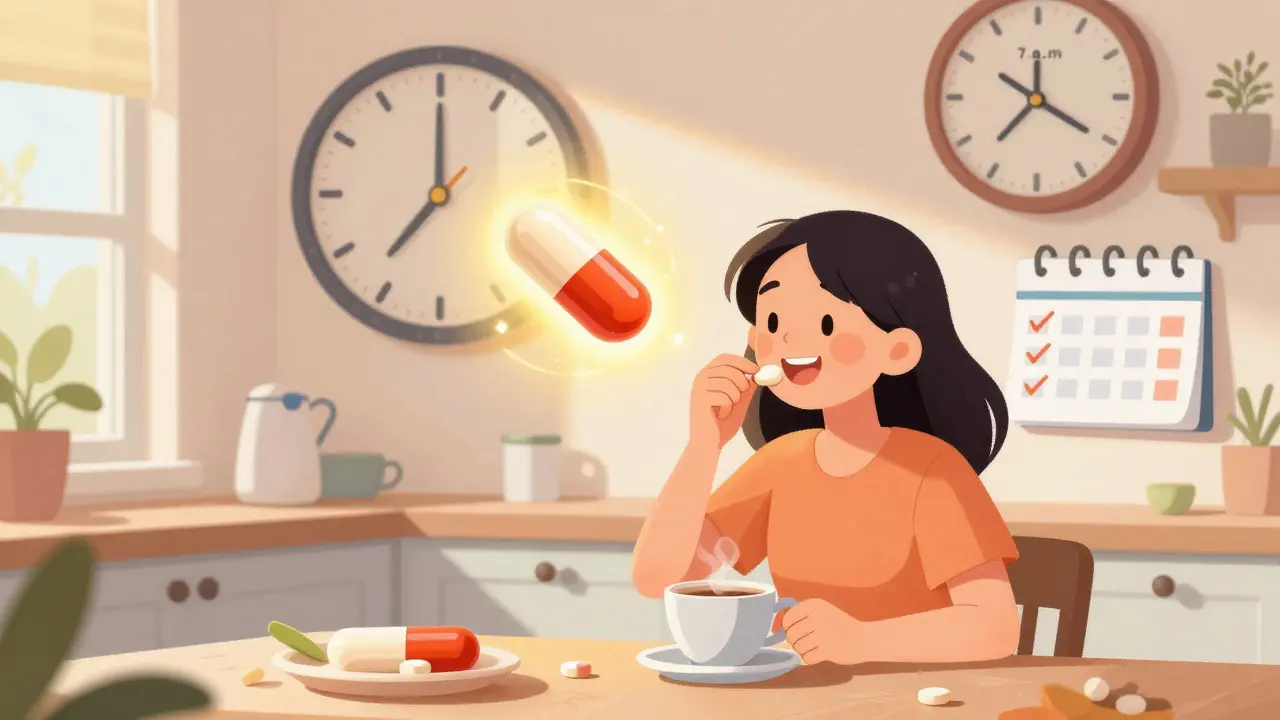
The Real Problem: Forgetting to Take It
Here’s the truth no one talks about enough: adherence is the biggest factor in whether your statin works. A 2019 Mayo Clinic study tracked nearly 12,500 statin users. Those told to take their meds at night had 11.3% lower medication possession rates than those taking them in the morning. That translates to over two extra missed doses per month. One patient on Reddit said it plainly: “I kept forgetting my simvastatin at night. My doctor switched me to morning rosuvastatin - and my LDL actually improved because I never miss a dose now.” That’s not luck. That’s science.What Should You Do?
If you’re on a long-acting statin - which most people are - take it whenever it fits your routine. Morning with breakfast? Fine. Evening with dinner? Also fine. The goal isn’t to match your liver’s rhythm - it’s to make sure you don’t skip doses. If you’ve been taking your statin at night and it works for you, don’t change. But if you’re forgetting it, or your sleep schedule is all over the place, switch to morning. No doctor will tell you to risk your heart health just to follow an outdated rule.What About Short-Acting Statins?
If you’re still on simvastatin, lovastatin, or fluvastatin - and you’re not alone, especially if you’ve been on statins for years - evening dosing still has a small edge. Studies show 8-15% better LDL reduction when taken at night. But even here, the real answer isn’t “always take it at night.” It’s: “Take it when you’ll actually remember.” One 2020 study found that patients on simvastatin who used a smartphone alarm to take their pill at 8 a.m. had better adherence (92%) and nearly the same cholesterol results as those taking it at night (76% adherence). The difference in LDL was just 0.9% - negligible.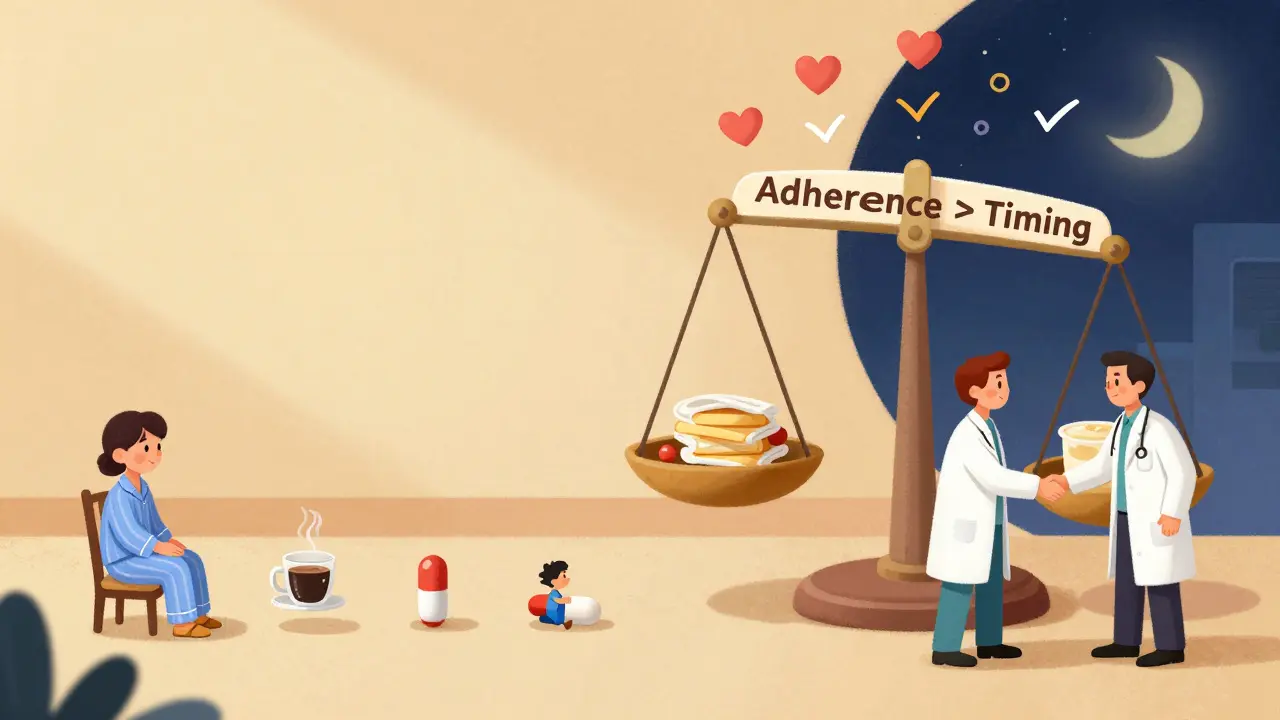
What Your Pharmacist Wants You to Know
Community pharmacists are changing their advice. A 2022 survey found that 68% now recommend morning dosing for all statins unless the patient is specifically on a short-acting version and has no trouble taking it at night. Why? Because they’ve seen too many patients stop their meds because the timing didn’t fit their life. Your pharmacist doesn’t care if you take it at 7 a.m. or 11 p.m. - they care that you take it every day.The Bigger Picture: It’s About Consistency, Not Clock Time
The American College of Cardiology’s 2023 guidelines say it clearly: “Timing should be individualized based on patient preference and lifestyle.” That’s it. No more lectures about midnight dosing. No more guilt trips for forgetting your pill at night. The goal is long-term, sustainable adherence. If taking your statin with your morning coffee helps you remember it for the next 10 years, that’s the right choice - even if your liver is technically making cholesterol at 2 a.m.What’s Next?
Pharma companies are already moving on. Pfizer has a patent pending for a timed-release simvastatin that delivers the drug slowly overnight - so you could take it in the morning and still get the nighttime effect. That’s the future: drugs designed to work with your life, not force you to change it. By 2030, over 90% of statin prescriptions will be for long-acting versions. The debate about night vs morning dosing will fade into medical history - replaced by simpler, smarter approaches.Bottom line: Don’t stress about the clock. Stress about consistency. Take your statin when you’ll actually remember. That’s the only rule that matters.
Do I really need to take my statin at night?
Only if you’re on a short-acting statin like simvastatin or lovastatin - and even then, only if you can take it reliably at night. For the vast majority of people on atorvastatin, rosuvastatin, or pitavastatin, timing doesn’t matter. What matters is taking it every day, at a time you won’t forget.
Can taking statins in the morning cause more side effects?
No. Large studies analyzing millions of prescriptions show no difference in muscle pain, liver issues, or diabetes risk between morning and evening dosing. Side effects are linked to the drug itself or your dose, not the time of day.
I’ve been taking my statin at night for years. Should I switch to morning?
If you’re already consistent and not missing doses, there’s no need to change. But if you’re struggling to remember, switching to morning - especially if you’re on a long-acting statin - could improve your adherence and actually make your treatment more effective.
Is it okay to take statins with food?
Yes. Most statins can be taken with or without food. Lovastatin is the only one that works slightly better with food, but even then, the difference is small. For all others, including atorvastatin and rosuvastatin, food doesn’t affect absorption. Take it however fits your routine.
What if I miss a dose? Should I take it the next morning if I forgot at night?
Yes. If you miss your usual time, take it as soon as you remember - even if it’s the next morning. Don’t double up. Missing one dose occasionally won’t ruin your results, especially if you’re on a long-acting statin. Consistency over weeks and months matters far more than perfect timing.
Are newer statins better than older ones?
Not necessarily “better,” but more convenient. Newer statins like rosuvastatin and atorvastatin have longer half-lives, so they work all day, regardless of when you take them. They’re also more potent, meaning lower doses can achieve the same results. But if you’re doing well on an older statin and have no side effects, there’s no rush to switch.


Maggie Noe
January 8, 2026 AT 16:45OMG I’ve been taking my rosuvastatin at 7 a.m. with my coffee for 3 years and my doctor kept giving me side-eye like I was committing a sin 😂 Finally someone said the truth - it’s not about the clock, it’s about not forgetting. My LDL dropped 20 points after I stopped stressing over bedtime. 🙌
Pooja Kumari
January 9, 2026 AT 08:32Okay but let’s be real - I’m from India and my whole family thinks if you don’t take medicine at night, it’s like throwing money in the Ganges. My aunty even set a 10 p.m. alarm for me with a bell. I switched to morning atorvastatin last year and now I actually take it. No more midnight panic. Also, I sleep at 1 a.m. anyway, so why would I wake up to swallow a pill? The liver doesn’t care if I’m awake watching Netflix - it’s still making cholesterol. And honestly, if I miss a dose, I just take it when I remember. My cholesterol’s stable. Who’s really losing sleep here? The doctors? Nah. The patients? Yeah. And we’re tired.
Jacob Paterson
January 10, 2026 AT 21:18Wow. Just wow. You’re telling me the entire medical establishment got this wrong for 40 years because they didn’t realize people are lazy? That’s not science - that’s a confession of systemic failure. Now we’re just gonna let people take pills whenever they feel like it? What’s next? ‘Take your insulin whenever you’re hungry’? This isn’t personal preference - it’s medical protocol. If you can’t follow a simple schedule, maybe you shouldn’t be on statins at all. Your heart doesn’t care if your routine is ‘convenient.’
Angela Stanton
January 10, 2026 AT 22:29Actually, the 2017 meta-analysis you cited? It had a heterogeneity I² of 68% - borderline high. And the 4.2M prescription study? Retrospective observational - massive confounding by indication. Also, adherence rates are often measured by pharmacy refill data, which doesn’t equal ingestion. You’re conflating compliance with efficacy. The pharmacokinetics still favor nighttime dosing for CYP3A4-metabolized statins. Just because you don’t miss doses doesn’t mean you’re getting optimal LDL suppression. 📊
Gregory Clayton
January 12, 2026 AT 14:10USA: 82% on long-acting statins. India: still on simvastatin because it’s cheap. Meanwhile, the FDA’s got a patent pending for a timed-release simvastatin? Bro, we’re not even getting the old stuff right. Why are we innovating for Americans while the rest of the world is still stuck on 1998 guidelines? This isn’t medicine - it’s a luxury problem. Take your pill when you remember. If you can’t, maybe your life’s too chaotic for a heart attack to be your wake-up call.
Johanna Baxter
January 12, 2026 AT 18:42I took my statin at night for 12 years. Then I started dating someone who snores. I started taking it in the morning. My husband said I was more pleasant to wake up to. My cholesterol didn’t budge. My marriage improved. So yeah. If your statin is making you miserable, change the time. Not because science says so. Because you deserve to sleep through the night. And if your doctor judges you? Tell them I said hi. 😘
Jerian Lewis
January 13, 2026 AT 04:57Consistency matters. But so does biology. If your liver is making cholesterol at 2 a.m. and your drug is gone by 8 a.m., you’re not protected during the peak. Even if you’re on atorvastatin - its half-life is 14 hours, not 20. You’re still leaving a 6-hour window. I’m not saying night is perfect. But morning is a gamble. I’d rather not gamble with my arteries.
Diana Stoyanova
January 13, 2026 AT 10:06Y’all are overcomplicating this like it’s a quantum physics exam. Statin = daily pill. Not a ritual. Not a spiritual practice. Not a test of your discipline. If you take it at 8 a.m. with your oatmeal and you never miss it - you win. If you take it at midnight and you forget half the time - you lose. Your heart doesn’t care if you’re ‘doing it right.’ It only cares if you’re doing it. Period. Stop feeling guilty. Start being consistent. And if you’re still stressing about this? Take it right after you brush your teeth. Morning or night. Just make it part of your routine. Like flossing. Except this one actually saves your life.
Jenci Spradlin
January 14, 2026 AT 22:43my dr switched me from simvastatin to rosuvastatin last year and told me to take it in the mornin. i used to forget it all the time. now i take it with my bran flakes and i havent missed one. my ldl went from 145 to 89. its not magic. its just remembering. also i dont care if the liver is making cholesterol at 3am - if i dont take it, it’s making all of it. so yeah. morning wins.
Elisha Muwanga
January 15, 2026 AT 18:44It’s alarming how quickly medical consensus is being replaced by lifestyle convenience. The American College of Cardiology’s guidelines are not a suggestion box. They are a framework based on decades of clinical evidence. To reduce adherence to a mere behavioral hack is to undermine the entire foundation of preventive cardiology. If we continue to prioritize comfort over biology, we will see a surge in cardiovascular events in the next decade - and it will be on the heads of those who promoted this dilution of standards.
Catherine Scutt
January 17, 2026 AT 11:15My pharmacist told me to take it in the morning because I’m a ‘morning person.’ I laughed. Then I did it. And guess what? I didn’t miss a single dose in 18 months. My doctor didn’t even notice. Neither did my liver. But my sleep did. I stopped waking up at 2 a.m. wondering if I took my pill. That’s the real win.
Kiruthiga Udayakumar
January 18, 2026 AT 00:41My uncle took simvastatin at night for 15 years. Then he switched to morning because he kept waking up to pee. His LDL went up. His doctor blamed him. He stopped taking it. He had a heart attack. Don’t play with your health. If you’re on a short-acting statin - take it at night. No excuses. Your life is worth more than your sleep schedule.
Patty Walters
January 19, 2026 AT 07:23just a quick note - if you're on lovastatin, take it with dinner. food helps absorption. for everything else? time doesn't matter. but if you're confused? call your pharmacist. they're paid to answer this stuff. no judgment. just facts. i do this every day. you're not alone.
Phil Kemling
January 21, 2026 AT 04:23If the goal is adherence, why not design the pill to be taken once a week? Or use a patch? Or a once-monthly injection? The fact that we’re still debating morning vs. night in 2025 means we’re not thinking big enough. We’re optimizing a broken system instead of redesigning it. Statins are a Band-Aid on a leaking dam. The real question isn’t when - it’s why we’re still relying on daily pills for chronic disease management in the first place.