Fracture Risk: What Increases It and How Medications Can Help or Hurt
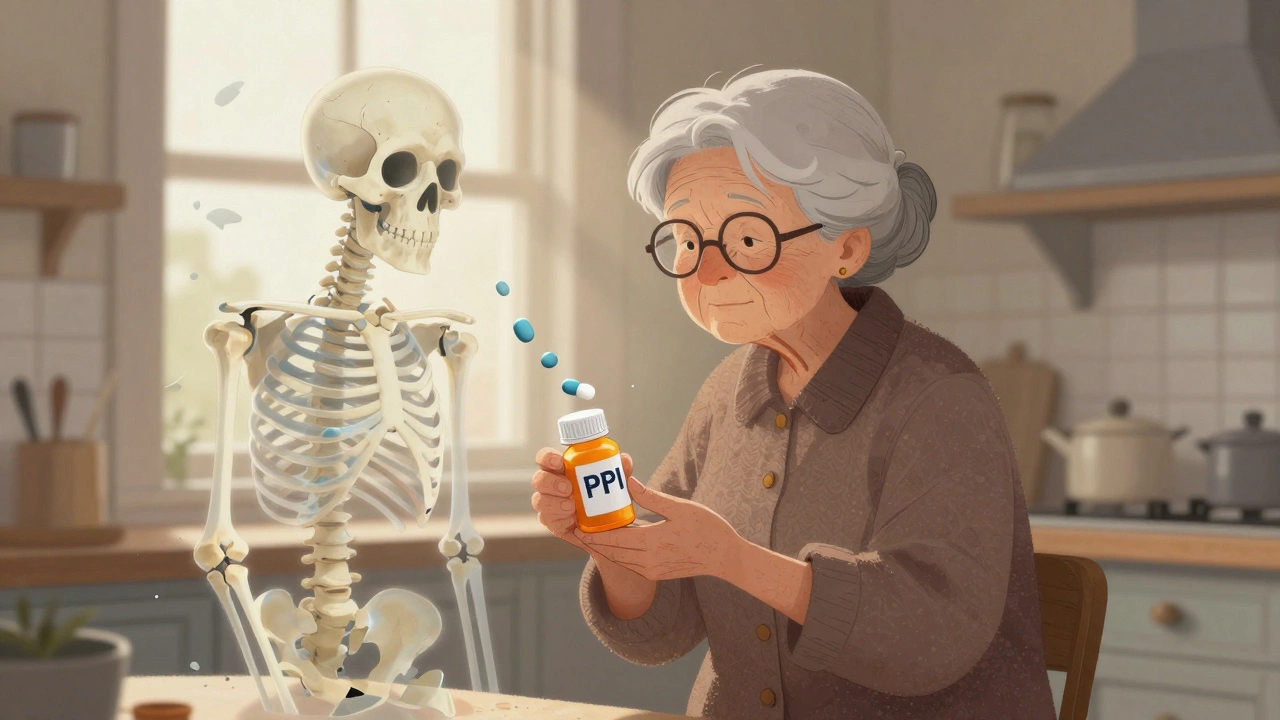
When we talk about fracture risk, the likelihood of breaking a bone due to weakness, falls, or medical conditions. Also known as bone fragility, it’s not just something that happens to older people—it’s often driven by what’s in your medicine cabinet. Many common drugs, from steroids to sleep aids, quietly weaken bones over time. Even drugs meant to help—like proton pump inhibitors for heartburn—can lower calcium absorption and increase your chance of a hip or spine fracture.
One of the biggest hidden drivers of fracture risk, the likelihood of breaking a bone due to weakness, falls, or medical conditions. Also known as bone fragility, it’s not just something that happens to older people—it’s often driven by what’s in your medicine cabinet. is osteoporosis, a condition where bones become porous and brittle, often without symptoms until a break occurs. It’s not just about calcium and vitamin D. Certain antidepressants, anticonvulsants, and even some diabetes meds are linked to faster bone loss. Meanwhile, medication side effects, unintended physical changes caused by drugs, including dizziness, muscle weakness, or balance issues. like dizziness from blood pressure pills or sedation from sleep aids can make you more likely to fall—the real trigger for most fractures.
It’s not all bad news. Some drugs actually protect you. Bisphosphonates, denosumab, and teriparatide are prescribed to rebuild bone density in high-risk patients. But knowing which meds help and which hurt takes more than reading a label. You need to understand how your full list of medications interacts with your bones, your balance, and your daily habits. A pill that’s fine for your heart might be risky for your spine. A supplement that helps your joints might make you dizzy when you stand up.
Fracture risk isn’t just a number on a scan. It’s your morning routine, your bathroom grip bars, your shoes, your caffeine intake, and whether you’re taking five pills that all make you a little unsteady. The posts below dig into the real connections between drugs, bone health, and daily safety—from how long-term steroid use affects your spine, to why restarting an opioid after a break can leave you more vulnerable to falls, to how certain thyroid meds change your bone turnover. You’ll find practical advice on what to ask your doctor, which tests to push for, and how to spot hidden risks in your own medicine cabinet.
-
8 Dec
- Recent
- Popular