Proton Pump Inhibitors: What They Are, How They Work, and What You Need to Know
When you’re dealing with constant heartburn or acid reflux, proton pump inhibitors, a class of medications that block the enzyme in the stomach wall that produces acid. Also known as PPIs, they’re among the most prescribed drugs in the world for conditions like gastroesophageal reflux disease (GERD) and peptic ulcers. These drugs don’t just mask symptoms—they cut off the source of the problem by targeting the proton pumps in your stomach lining, the very cells that pump acid into your digestive tract.
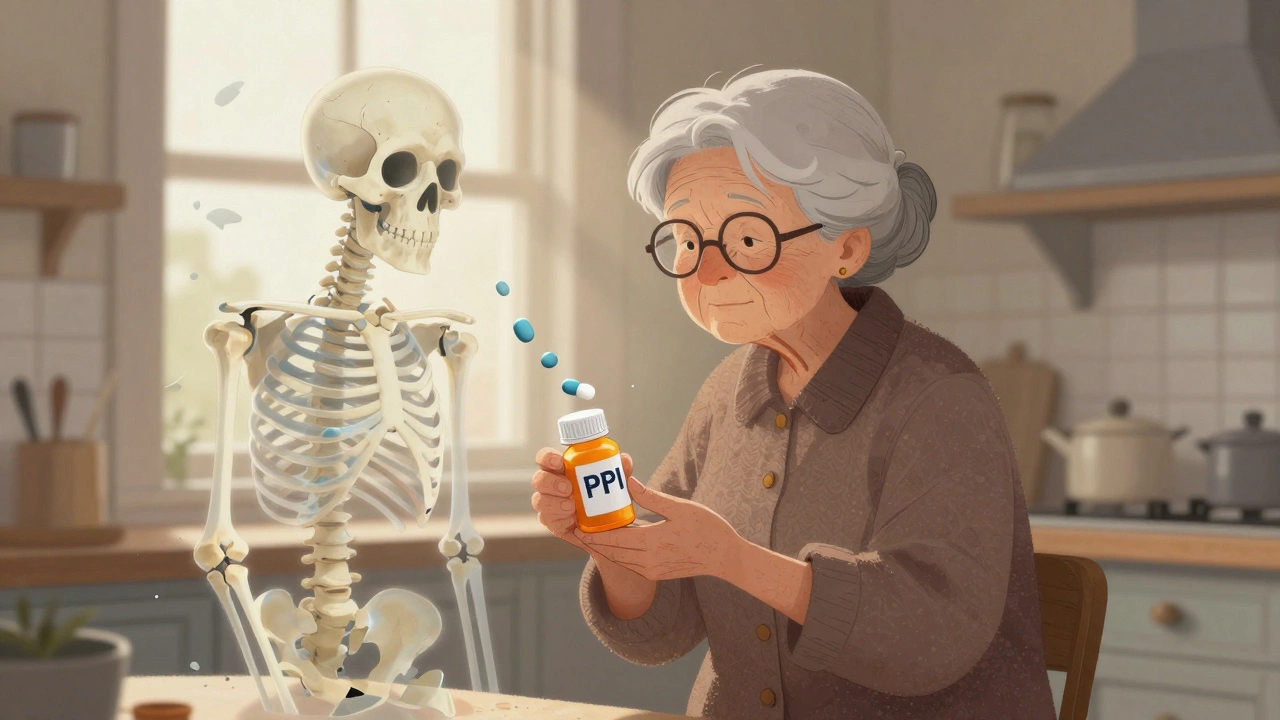
Common PPIs include omeprazole, esomeprazole, lansoprazole, and pantoprazole. You can get some over the counter, but they’re not harmless. Long-term use has been linked to nutrient deficiencies—like low magnesium and vitamin B12—increased risk of bone fractures, and even kidney issues. The FDA has issued warnings about using them for more than a few weeks without medical supervision. And while they’re great for short-term relief, they’re not a fix for poor diet, stress, or hiatal hernias.
Many people don’t realize that PPIs are often prescribed when simpler fixes could work. For example, weight loss, avoiding late-night meals, or cutting out caffeine and spicy foods can reduce acid reflux without drugs. Even probiotics, like those studied in relation to antibiotic side effects, may help restore gut balance after prolonged PPI use. And if you’ve been on them for years, stopping suddenly can cause rebound acid hypersecretion—your stomach overcompensates and makes even more acid. That’s why tapering off under a doctor’s guidance matters.
There’s also a growing conversation around when PPIs are truly necessary. Some cases of GERD are misdiagnosed. Chest pain could be heart-related. A persistent cough might be from postnasal drip, not acid. That’s why understanding your symptoms, tracking triggers, and knowing when to question a long-term prescription is just as important as knowing how the drug works.
In the posts below, you’ll find clear, no-fluff guides on how PPIs fit into the bigger picture of medication safety, drug labeling, and managing chronic conditions like autoimmune hepatitis and hyperthyroidism—where acid suppression might be a side note, not the main event. You’ll also see how generic substitution laws affect your access to these drugs, and why timing and adherence matter even for something as simple as a daily pill. This isn’t just about acid. It’s about knowing when to use these drugs, when to avoid them, and how to protect your health while using them.
-
8 Dec
- Recent
- Popular