

When you pick up a generic pill at the pharmacy, you probably don’t think about how it got there. But behind that simple transaction is a high-stakes game of cost, risk, and precision. The economics of generic drug distribution isn’t about profit-it’s about survival. With average EBITA margins hovering at just 8%, every dollar saved in logistics, every hour cut from delivery time, and every stockout avoided can mean the difference between staying in business or shutting down. And here’s the twist: the cheaper the drug, the riskier its supply chain becomes.
The Affordability Paradox
Generic drugs are meant to be affordable. That’s the whole point. But that affordability comes at a hidden cost. As prices drop due to competition, manufacturers cut corners. They reduce backup suppliers. They run factories at 95% capacity. They eliminate safety stock. And when something goes wrong-a power outage in India, a shipping delay from China, a regulatory inspection in Germany-the whole system stumbles.Eighty percent of the world’s active pharmaceutical ingredients (APIs) come from just three countries. One factory. One shipment. One bottleneck. According to Drug Patent Watch’s 2023 analysis, low-priced generics face a 73% higher risk of shortages than their higher-margin counterparts. Why? Because when margins are razor-thin, there’s no budget left for redundancy. A single disruption can leave hospitals scrambling and patients without their daily medication.
What Efficiency Really Looks Like
Efficiency in this space isn’t about working harder. It’s about working smarter. The top performers don’t just move boxes-they predict demand, monitor conditions in real time, and adjust routes before problems even arise.Take Teva Pharmaceutical’s 2022 supply chain overhaul. They didn’t hire more staff. They didn’t build new warehouses. They implemented AI-powered forecasting and integrated IoT sensors across their cold-chain logistics. The result? A 32% drop in inventory carrying costs and a 98.5% service level maintained across 1,200 SKUs. How? By using the Economic Order Quantity (EOQ) formula-Q = √(2KD/G)-to balance ordering costs against storage. Leading distributors cut stockouts by 30-45% using this math, not guesswork.
Performance metrics tell the real story:
- Overall Equipment Effectiveness (OEE): Top distributors hit 85%+, while the industry average sits at 68-72%. OEE measures availability, performance, and quality-no room for slow machines or defective batches.
- Perfect Order Percentage: Multiply on-time delivery, complete orders, undamaged goods, and accurate documentation. Top players hit 95%+. Most struggle to break 80%.
- Inventory Turnover: Leaders like Nestlé’s pharmaceutical division turn inventory 12.7 times a year. The industry average? Just 8.3.
These aren’t theoretical targets. They’re daily benchmarks. One distributor in Ohio cut order cycle time from 72 hours to 24 hours by automating procurement approvals. No more waiting for three managers to sign off. Just a system that auto-approves based on real-time stock levels and supplier lead times.
Technology That Actually Works
You’ve heard about blockchain, AI, and digital twins. But in generic distribution, only a few tools deliver real ROI.Cloud-based ERP systems are non-negotiable. They give everyone-from warehouse workers to logistics managers-real-time access to inventory, orders, and supplier data. Cardinal Health saw a 3.2% market share gain after investing $150 million in one. Why? Because they could see demand spikes before they happened.
IoT sensors track temperature, humidity, and shock during transit. Why does this matter? Forty-five percent of generic drugs need strict climate control. A single shipment that gets too hot can be ruined. Sensors don’t just alert you-they log proof for regulators and insurers.
AI forecasting is the game-changer. Traditional methods rely on last year’s sales. That’s useless when a new FDA approval suddenly spikes demand for a $0.03 pill. AI looks at hospital admission rates, insurance claims, even social media trends. McKesson’s ‘DemandSignal’ platform cut forecast errors by 37% in trials. That’s not a nice-to-have-it’s a profit lifeline.
But not all tech is worth it. Blockchain verification? It costs $2.5-4 million to implement for a mid-sized distributor. And it adds 6-9 months of delays. For most, it’s overkill. The FDA’s Drug Supply Chain Security Act (DSCSA) already requires electronic traceability. You don’t need blockchain for that-you need a good ERP with barcode scanning.
The Two Models: Just-in-Time vs. Just-in-Case
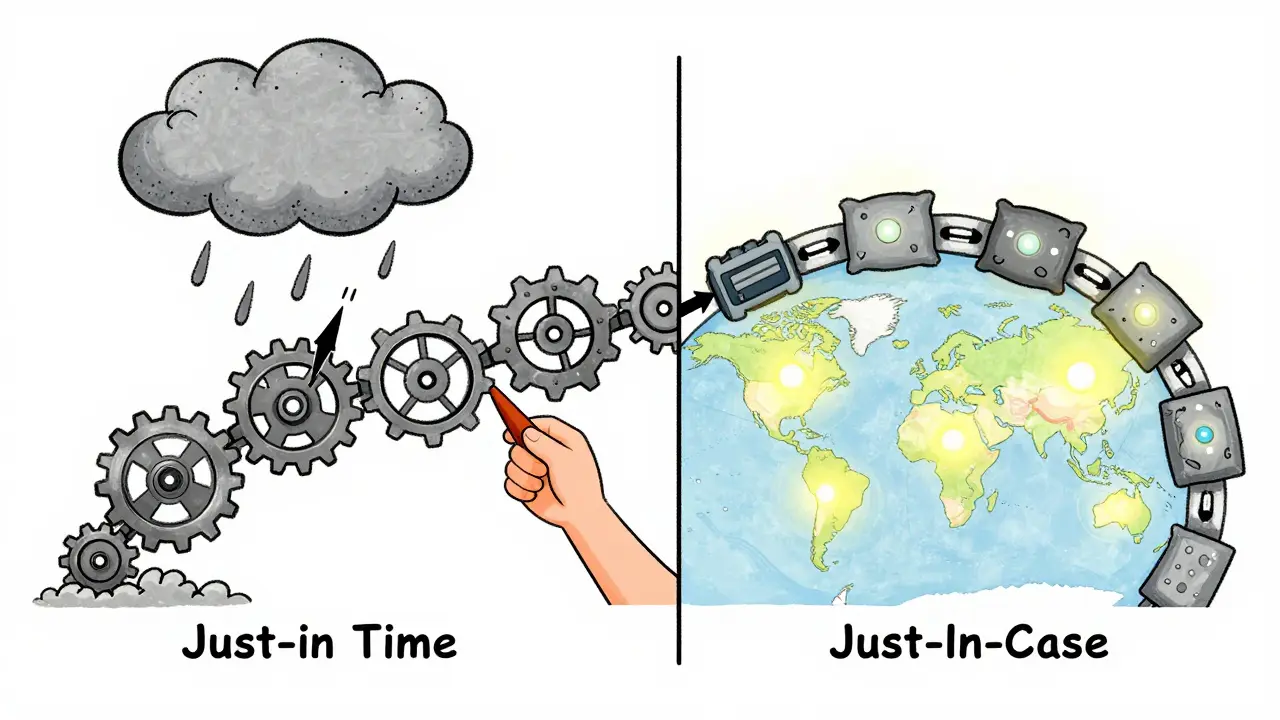
There are two ways to run a supply chain in generics. And choosing the wrong one can cost you.The Efficient Chain Model is the default. It’s lean. It’s cheap. It uses just-in-time (JIT) inventory to slash storage costs by 22-35%. But here’s the catch: it increases stockout risk by 15-20% during disruptions. When a supplier’s factory shuts down, you’re out of luck.
The Just-in-Case (JIC) Model keeps extra stock on hand. It’s expensive-holding costs rise 18-28%-but it cuts stockouts by 40-60%. Sounds crazy? Not if you’re dealing with life-saving drugs. A January 2023 Supply Chain Dive survey found that 68% of distributors who eliminated all safety stock suffered severe shortages within six months.
The smartest players use a hybrid. They keep JIT for non-critical items. But for high-demand, low-substitute generics-like metformin or lisinopril-they maintain a 15% buffer. It’s not waste. It’s insurance.
Who’s Winning-and Who’s Losing
The market is splitting into two camps.On one side: McKesson, AmerisourceBergen, and Cardinal Health. They control 85% of U.S. distribution. They’re investing millions in analytics. They’re cutting costs. They’re raising service levels. And they’re gaining market share-3-5% annually.
On the other side: smaller distributors trying to compete on price alone. They’re stuck with legacy systems. They rely on spreadsheets. They ignore demand signals. Their OEE scores hover at 65%. Their perfect order rate? 72%. Their EBITA margin? Below 6%. They’re not just falling behind-they’re becoming irrelevant.
McKinsey’s 2023 analysis shows a widening gap. Top-quartile distributors now hit 9.2% EBITA margins. Bottom-quartile players? Just 6.8%. That 2.4-point difference isn’t just profit. It’s fuel for innovation, talent, and resilience.
The Human Factor
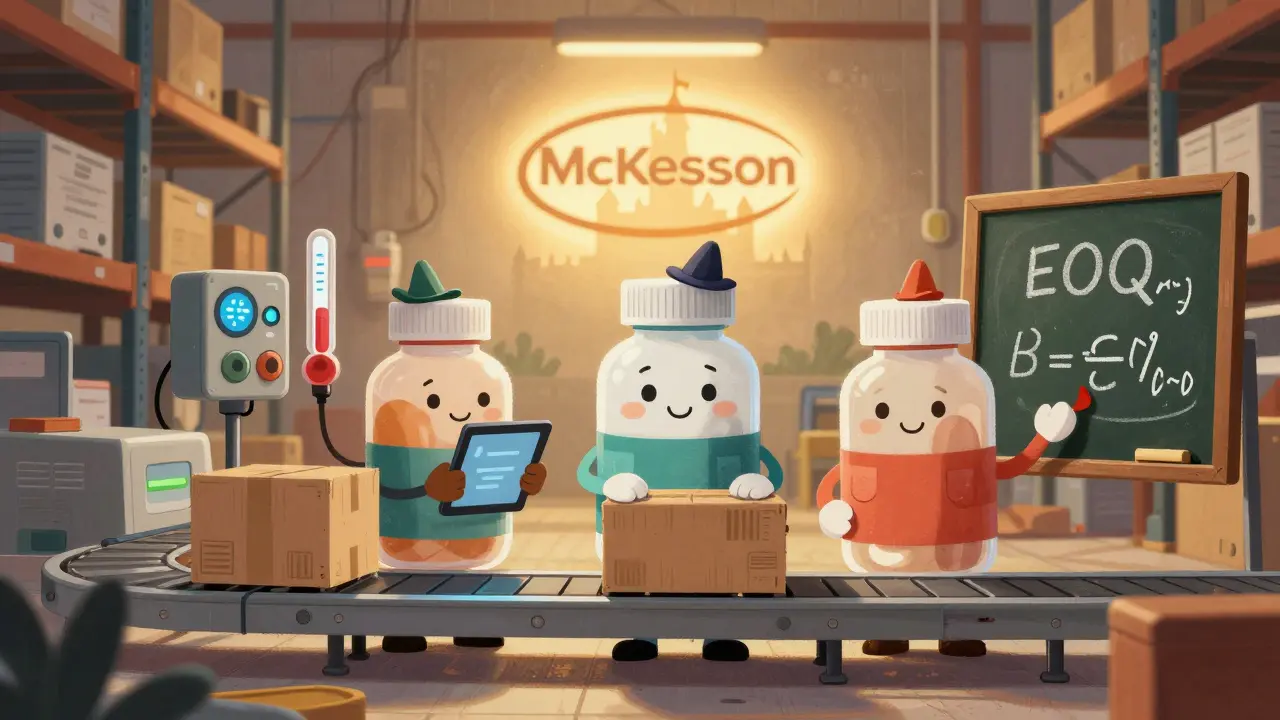
Tech helps. But people decide.LinkedIn threads from 2023 reveal a common pain point: approval chains. One manager at McKesson wrote: “It took three weeks to change a shipping vendor because five people had to sign off.” That’s not efficiency. That’s bureaucracy. Distributors that flattened decision-making saw a 22% drop in expedited shipments-because they weren’t scrambling anymore.
Training matters too. CSCMP’s 2023 survey found 87% of hiring managers prioritize advanced analytics skills over logistics experience. You can’t just hire a warehouse supervisor anymore. You need someone who can read a forecast model, spot a trend in demand spikes, and adjust inventory before the system even alerts you.
And compliance? It’s not optional. The FDA’s DSCSA and the EU’s Falsified Medicines Directive aren’t suggestions. They’re legal requirements. Non-compliance means seized shipments, fines, and lost licenses. The cost? 5-8% added to operational expenses. But the alternative? Losing your license to operate.
What’s Next
By 2027, the top distributors won’t just predict demand-they’ll simulate it. Digital twins of entire supply chains will let them test scenarios: What if a port shuts down? What if a key API supplier fails? What if demand spikes 300% overnight?MIT’s Center for Transportation and Logistics predicts that by then, top players will achieve 95% forecast accuracy and cut inventory costs by 50%. Service levels? Above 99%.
But here’s the hard truth: if you’re not hitting 85% OEE and 95% perfect order rates by 2025, you’re at risk of losing 15-20% of your market share. The era of coasting on low prices is over. Efficiency isn’t a goal anymore-it’s the only way to survive.
Why are generic drug shortages getting worse even though production is increasing?
Because production isn’t the issue-it’s concentration. Over 80% of active pharmaceutical ingredients (APIs) come from just three countries, and many critical generics are made by only one or two manufacturers. When one factory shuts down due to a regulatory issue, power outage, or labor strike, there’s no backup. Increased production doesn’t help if it’s all coming from the same place. The cheaper the drug, the less margin there is to invest in redundancy, making the system more fragile.
Can small distributors compete with giants like McKesson in generic drug distribution?
Yes-but only if they focus on niche markets and operational agility. Big players win on scale and tech investment. Smaller distributors can win by serving regional hospitals, offering faster delivery times, or specializing in hard-to-source generics. They don’t need a $150 million AI platform. They need a good cloud-based inventory system, real-time demand data, and the ability to make decisions without five layers of approval. Agility beats scale in fragmented markets.
Is just-in-time inventory a good strategy for generic drugs?
It depends on the drug. For high-volume, low-risk generics like ibuprofen or amoxicillin, JIT works well. But for life-saving drugs with few substitutes-like insulin or epinephrine-JIT is dangerous. Leading distributors use a hybrid: JIT for most items, but 15% safety stock for critical medications. Eliminating all buffer inventory, as some cost-cutting firms have done, leads to severe shortages during disruptions. The savings aren’t worth the risk.
How much does it cost to upgrade a generic drug supply chain?
It varies. A mid-sized distributor investing in cloud ERP, AI forecasting, and IoT sensors can expect to spend $10-30 million over 12-18 months. Teva spent $28 million over 14 months and cut inventory costs by 32%. Smaller players can start cheaper-$2-5 million-for core systems like inventory tracking and demand forecasting. The key is phased implementation: start with forecasting, then add visibility, then automation. Don’t try to do everything at once.
What’s the biggest mistake distributors make in generic supply chains?
Believing that lower cost equals higher efficiency. Many cut corners by eliminating safety stock, relying on single suppliers, or ignoring data in favor of gut instinct. The result? More stockouts, more expedited shipments, more lost customers. True efficiency isn’t about spending less-it’s about reducing risk while maintaining service. The best performers spend more on tech and training, but they end up saving more in avoided shortages and lost sales.
Are regulatory requirements like DSCSA making supply chains less efficient?
Not if they’re handled right. DSCSA and similar regulations require electronic traceability, which adds 5-8% to costs. But that same system gives you real-time visibility into every package. That means faster recalls, fewer counterfeit drugs, and better inventory tracking. Distributors who treat compliance as a burden lose. Those who use it as a tool for better control gain. The right software turns regulation from a cost center into a competitive advantage.



Jacob Carthy
February 24, 2026 AT 20:22Lisandra Lautert
February 26, 2026 AT 11:22Bhaskar Anand
February 28, 2026 AT 02:13Joseph Cantu
February 28, 2026 AT 08:51David McKie
February 28, 2026 AT 19:53Cory L
March 1, 2026 AT 08:23William James
March 2, 2026 AT 01:29Nick Hamby
March 2, 2026 AT 22:35John Smith
March 3, 2026 AT 10:08Spenser Bickett
March 4, 2026 AT 17:00Gabrielle Conroy
March 4, 2026 AT 23:03kirti juneja
March 5, 2026 AT 19:18Christopher Wiedenhaupt
March 5, 2026 AT 20:21Southern Indiana Paleontology Institute
March 7, 2026 AT 08:02Haley Gumm
March 7, 2026 AT 11:50